
An 18 x 24 canvas hits a sweet spot: big enough for real compositions, small enough to store in a closet or paint at a kitchen table. Whether you’re teaching a class, running weekend paint parties, or building a gallery wall of your own work, the surface you choose shapes how your paint behaves before the first stroke lands.
This guide walks through ten solid options across stretched cotton, canvas panels, and rigid gesso boards. Each one suits a different painter and budget, so you can match the surface to how you actually work.
The Shortlist At A Glance

Creative Mark The Edge Deluxe Cotton Stretched Canvas 18×24, Pack of 3

KINGART Stretched White Canvas Set, 18×24 Inch, 4-Pack

U.S. Art Supply Black Stretched Canvas 18×24, 4-Pack

milo Stretched Artist Canvas 18×24, 4 Pack

ESRICH Stretched Canvas 18×24 Inch, 3-Pack
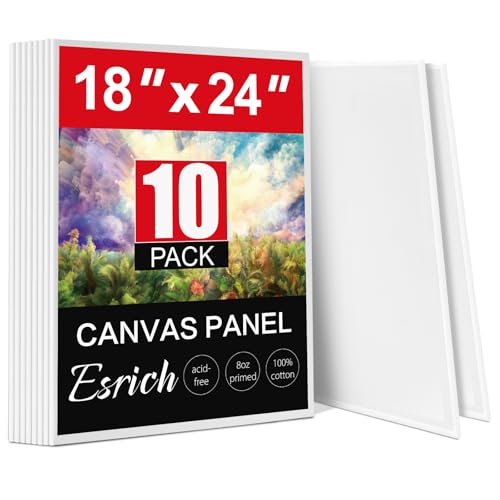
ESRICH Canvas Boards 18×24 Inch, 10-Pack

Ampersand Primed Smooth Gesso Panel 18×24
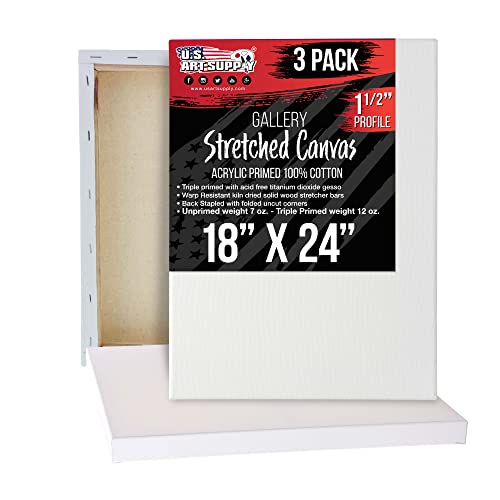
U.S. Art Supply Gallery Depth Stretched Canvas 18×24, 3-Pack

U.S. Art Supply Stretched Canvas 18×24, 3/4″ Profile, 3-Pack

U.S. Art Supply Stretched Canvas 18×24, 3/4″ Profile, 6-Pack
More Details On Our Top Picks
The Creative Mark stands apart from lighter student canvases because of its primed weight: 14 ounces once the gesso goes on, up from an 8-ounce raw weave. That extra primer acts like a raincoat between your paint and the fabric, which matters most with oils that slowly eat into under-prepared surfaces.
The 1-1/2-inch deep bars give you a finished edge you can leave unpainted, and the medium tooth holds brush texture nicely. For anyone working in water-mixable oils, alkyds, or layered mixed media, this is the kind of ground that lets you stop worrying about the substrate.
Strong Points
- Heavy 14oz primed weight gives oils and alkyds a well-sealed barrier, so paint sits where you put it instead of sinking in.
- Hand-stretched tension tends to stay drum-tight over time, meaning fewer re-stretching chores later.
- Universal archival priming accepts acrylics, oils, and mixed media without extra prep coats.
- Deep 1-1/2-inch profile looks finished hanging on a wall with no frame.
Things To Consider
- You pay a premium per canvas compared with basic student packs, so casual doodlers may not need this much protection.
- Deep-edge canvases take up more storage depth in a flat file or closet shelf.
Who It Suits Best
Oil and mixed-media painters who want an archival-grade ground straight out of the box.
Where A Sibling Pick Shines
Acrylic hobbyists painting casually will find the KINGART four-pack covers the same size for less commitment.
Four canvases in one box changes the math for teachers and group hosts. Where the Creative Mark gives you three premium surfaces, the KINGART set trades some heft for quantity, and its triple-gesso acid-free ground is still genuinely ready to paint.
The medium-grain 100% cotton takes even coverage from acrylics, oils, and pours alike. Back-stapled pine bars keep the edges tidy, though the shallower 5/8-inch profile means most owners will frame these rather than hang them bare.
Bright Spots
- Four large canvases per pack keeps a classroom or paint night stocked without repeat orders.
- Triple gesso priming means no sizing or prep work before the first layer.
- Medium cotton grain balances tooth and smoothness for both detail and broad strokes.
Small Caveats
- The 5/8-inch profile is thin for frameless display, so plan on framing or a shadow box.
- Some buyers report checking bar straightness on arrival, since lighter frames can flex in transit.
Made For
Instructors, workshop hosts, and families who burn through canvases quickly and want dependable basics.
Swap It Out When
Anyone wanting a deeper, hangable edge should look at the milo 1.5-inch profile set instead.
Most canvases here start white; this one skips that step entirely. A triple-primed black ground saves you the evening you’d otherwise spend coating a white canvas black, and it gives neon acrylics and metallics a punch that’s hard to fake on light grounds.
The 12-ounce cotton weave and standard 3/4-inch bars match the construction of U.S. Art Supply’s white packs, so quality expectations carry over. Four per box makes it practical for a whole series of dark-toned pieces.
Reasons To Buy
- Factory-black primed surface eliminates hours of base-coating before glow or metallic work.
- Triple priming seals the weave so bright pigments stay vivid against the dark field.
- Four-canvas count supports themed series or group sessions in one purchase.
Points To Note
- Black grounds demand opaque paints; transparent glazes read differently than beginners expect.
- Storage dust shows readily on the primed black face, so keep them wrapped until use.
Right Fit For
Acrylic painters chasing high-contrast, luminous effects without the prep slog.
Another Choice May Suit
Traditionalists who prefer classic white grounds will get more flexibility from the U.S. Art Supply 3/4-inch three-pack below.
The milo splits the difference between budget packs and the heavyweight Creative Mark. Its 11-ounce cotton is beefier than typical student stock, and the 1.5-inch pine frame delivers that deep, gallery-style edge at a friendlier price point.
Triple gesso over a medium texture handles wet media well, and the thicker bars make these easy to hang as-is. Compared with the KINGART’s shallow profile, this is the pick for people whose finished pieces go straight onto the wall.
Plus Points
- Heavier 11oz weave resists sagging on large formats better than thin student canvas.
- Deep 1.5-inch pine frame creates a dimensional look worth displaying unframed.
- Four canvases balance cost and quantity for regular studio use.
Softer Spots
- Gesso coverage is adequate rather than luxurious; heavy oil painters may add a coat or two.
- Corner joints on budget deep frames occasionally need a tap square after shipping, based on commonly reported feedback.
Who Will Love This
Intermediate painters who want gallery depth and decent weight without premium pricing.
Look Elsewhere When
Archival oil work justifies stepping up to the Creative Mark’s 14oz primed surface.
Paint parties live or die on having enough blank surfaces ready, and this three-pack of triple-primed, acid-free cotton canvases fits that rhythm. The brand positions them for oil, acrylic, watercolor, and gouache, which makes them forgiving when guests switch mediums mid-event.
At 18×24 they’re substantial enough for a satisfying evening project yet manageable for first-timers. Think of them as the reliable house wine of this list: nothing exotic, always appropriate.
What We Like
- Multi-medium compatibility means one pack serves acrylic demos, gouache sketches, and oil studies alike.
- Acid-free priming helps finished pieces resist yellowing over years on a wall.
- Three-canvas count matches a typical party or family session without leftovers cluttering storage.
Minor Gripes
- Standard-profile bars mean framing costs if you want a polished presentation.
- Heads-up for planners: exact frame depth isn’t specified by the maker, so measure your display space before committing.
Who Should Grab It
Hosts, art-class organizers, and casual painters who value versatility over specialty specs.
Not Your Match When
Volume needs call for the ten-panel ESRICH board pack, which stretches the same budget further.
Unlike every stretched option above, these are rigid panels: cotton canvas glued over a sturdy interior board. That construction makes them cheaper per piece, immune to sagging, and far easier to stack in a drawer, which is why art teachers lean on them for drills and studies.
The smooth primed surface holds paint well across oil, acrylic, watercolor, gouache, and tempera. Ten at a time means a semester of assignments or a serious practice run without reordering.
Highlights
- Ten panels per box keeps classrooms and study routines supplied for months.
- Rigid backing never sags or dents the way stretched fabric can under pressure.
- Flat profile stores in minimal space, a real advantage in cramped studios.
Trade Offs
- No wrap-around edge, so framing is essentially required for display.
- Panels weigh less than stretched canvas but lack the tactile bounce many painters enjoy under the brush.
Whose Shelf It Belongs On
Students, sketchbook-style practitioners, and instructors stocking a shared supply cabinet.
Reach For A Different Pick When
Finished wall pieces deserve the stretched ESRICH three-pack or the milo deep-frame set.
Every other pick here has fabric weave; the Ampersand doesn’t. Its ultra-smooth acrylic gesso sits on a rigid cradled panel, giving portrait painters and fine-detail artists a glass-flat ground where a hair-thin line stays a hair-thin line.
The 1/8-inch cradle refers to the wooden frame bracing the panel’s back, which adds rigidity and a shadow-gap edge for hanging. No sealing or extra prep is needed, and cleanup wipes are famously clean on this surface.
Standout Traits
- Ultra-smooth gesso supports crisp brushwork and tiny detail that woven canvas blurs.
- Rigid panel won’t flex or bounce, giving steadier control for glazing layers.
- Ready to paint immediately, with no additional sealing required.
- Cradled back allows frameless hanging with a clean floating look.
Honest Caveats
- Smoothness cuts both ways: expressive dry-brush textures that thrive on tooth have nowhere to grab.
- Single-panel pricing runs higher than multipack stretched canvas, so it’s a tool, not bulk stock.
Feature Snapshot
Perfect Match For
Portraitists, realists, and mixed-media artists who prize precision over texture.
Consider Something Else When
Impasto and palette-knife work benefits from the spring of the milo stretched canvas instead.
Resin pourers, take note: this is the only pick here explicitly rated for epoxy alongside the usual paints. The 1-1/2-inch gallery depth gives thick pours room to sit level, and the deeper walls contain a flood better than shallow bars do.
Underneath, it’s the same trusted formula as the brand’s standard packs: 12-ounce triple-primed cotton with a medium grain that holds pigment without over-absorbing. Three per box suits a cohesive triptych or a season of larger pieces.
Upsides
- Epoxy-resin compatibility opens door finishes most student canvases can’t handle.
- Gallery depth reads as professionally framed even with bare painted edges.
- Medium-grain cotton keeps natural tone visible under thin glazes.
Areas To Watch
- Deep frames cost more per canvas than the same brand’s 3/4-inch packs.
- Thicker profiles demand deeper storage; a standard flat file may not close over them.
Built With In Mind
Pour artists, resin finishers, and anyone selling pieces meant to hang frameless.
Skip It When
Budget-conscious practice work is better served by the six-pack standard profile coming next.
This is the baseline every other stretched canvas gets measured against: 12-ounce cotton, triple primed, standard 3/4-inch bars, three to a box. Nothing flashy, and that’s precisely the appeal for someone sampling new media without overspending.
The medium grain holds acrylic, oil, gouache, airbrush color, and tempera without excessive absorption, so your first coat behaves predictably. Owners commonly report consistent tension across the pack, which isn’t always true of bargain brands.
Positives
- Broad media compatibility makes it a safe first canvas for experimenting painters.
- Triple priming removes prep friction; unwrap and start.
- Consistent quality across the pack builds trust for repeat orders.
Worth Noting
- Standard depth usually means framing for display, adding hidden cost to finished pieces.
- Three canvases may run short for classroom settings; the six-pack solves that.
Who It Suits Best
Hobbyists and returning painters rebuilding a habit on dependable, no-surfaces surfaces.
Where Another Pick Suits Better
Detail-driven painters get more from the Ampersand smooth panel’s rigid precision.
Same canvas as the previous pick, doubled. Six 12-ounce triple-primed surfaces at the standard 3/4-inch depth, built for painters who go through blanks fast enough that buying three at a time feels like a chore.
Daily practice, commission queues, community workshops: any scenario where running out mid-session stings. The spec sheet matches the three-pack exactly, so there’s no quality trade-off, just volume.
Best Bits
- Six canvases lower the per-piece cost for high-volume painting habits.
- Identical construction to the smaller pack means predictable results batch to batch.
- Enough stock to run a full workshop without last-minute shopping.
Small Caveats
- Six blank 18×24 canvases demand real storage room; measure your shelf first.
- Overkill for occasional painters who finish one piece a month.
The Right Fit
Productive hobbyists, commission artists, and program coordinators stocking a season of work.
Another Choice May Suit
Occasional painters should stick with the three-pack version to avoid unused backlog.
What Matters Most Before Choosing An 18 X 24 Canvas
Profile Depth Changes Everything
Profile simply means the thickness of the wooden bars under the fabric. A 3/4-inch edge is the everyday standard that usually ends up framed, while 1.5-inch gallery depth hangs beautifully bare and gives resin pours extra containment.
Match depth to your display plan before anything else. Framing later costs more than choosing correctly now.
Weave Weight And Priming
Canvas weight, measured in ounces, tells you how much fabric and primer you’re getting. Lighter 8-to-11-ounce weaves suit acrylics and practice; heavier 12-to-14-ounce primed weights seal better for oils and layered work.
Triple gesso priming means the factory has already applied three protective coats. Skipping your own prep saves hours and keeps early layers from soaking in unevenly.
Stretched Versus Panels
Stretched canvas offers a slight give under the brush that many painters find satisfying, plus optional wrap-around edges. Rigid panels trade that feel for stability, flat storage, and lower cost per piece.
Teachers and daily practitioners often prefer panels; exhibition painters almost always choose stretched.
Buy For Your Actual Volume
An honest look at your output prevents waste. One piece a month calls for a three-pack; weekly sessions justify six or ten at a time.
Buying in bulk only pays off when the blanks actually get used before dust settles on them.
Key Considerations Across These Picks
Traps First Timers Fall Into
The most common slip is ignoring profile depth until framing day, then paying for custom frames. Another is buying heavyweight archival canvas for throwaway practice pieces, which burns money without benefit.
Check bar condition on arrival too; shipping dings happen, and exchanges are easiest right away.
The Case For Spending Up
Higher-tier canvases earn their price through heavier primed weights, tighter hand-stretched tension, and archival materials that age gracefully. For oils, resin, or work you intend to sell, that upgrade protects the piece itself.
For casual acrylic evenings, the difference rarely justifies the cost.
Frequently Asked Questions
Is an 18×24 canvas good for beginners?
Yes, it’s large enough to practice composition without feeling overwhelming. Most beginners find it manageable on a table easel or flat desk.
Can I use watercolors on stretched canvas?
Standard gesso-primed canvas resists water absorption, so watercolor pools rather than soaking in. Watercolor-specific grounds or panels work far better for that medium.
Do I need to prime a pre-primed canvas?
Usually no, since triple-primed surfaces are ready for paint immediately. Oil painters sometimes add a coat or two for extra barrier protection.
How should I store blank canvases?
Keep them flat or upright in a dry space away from direct sunlight. Wrapping them in plastic guards against dust and humidity swings.
What’s the difference between canvas boards and stretched canvas?
Boards mount canvas on rigid backing, making them cheaper, flatter, and easier to store. Stretched canvas has fabric over wooden bars, offering a springier feel and frameless display options.
Wrap Up
The right 18 x 24 canvas depends less on rankings and more on how you paint. Heavyweight archival grounds serve oil painters, deep profiles serve pour artists and frameless displays, and bulk packs serve classrooms and daily practice.
Start with the profile and volume that match your habits, then let the details follow. Whichever surface you land on, the best canvas is the one that gets painted.