
Rotted window sills, chewed trim, a hole in the deck rail that keeps getting bigger. Most homeowners hit one of these eventually, and the fix usually comes down to a two-part epoxy wood filler: resin plus hardener, mixed together, that cures into something harder than the wood around it. The catch is that not every kit suits every job. Some are pastes built to sculpt missing chunks back into shape, others are liquids meant to soak into soft fibers first, and a few are small syringes for quick touch-ups. This list covers the whole range so you can match the product to the damage instead of guessing.
The Shortlist At A Glance

PC Products PC-Woody Epoxy Paste Kit with Mixing Tool, 6 oz, Tan

Boncart High Strength AB Epoxy Putty, 200g Steel Reinforced (White)

Wood Filler Wood Putty Hole Filler, 16 Oz White Repair Kit

J-B Weld 50151 WoodWeld Epoxy Syringe, Light Tan.85 fl oz

PC Products PC-Woody Wood Repair Epoxy Paste, Two-Part 48 oz, Tan
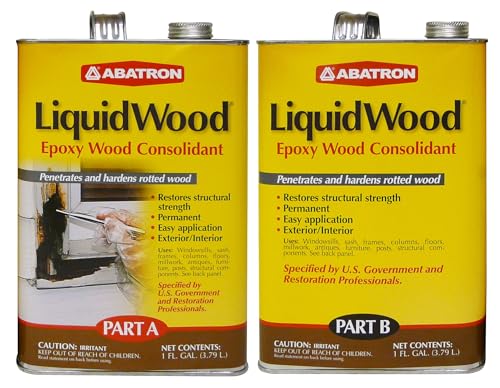
Abatron LiquidWood Kit, 2 Gallon Structural Wood Epoxy Resin
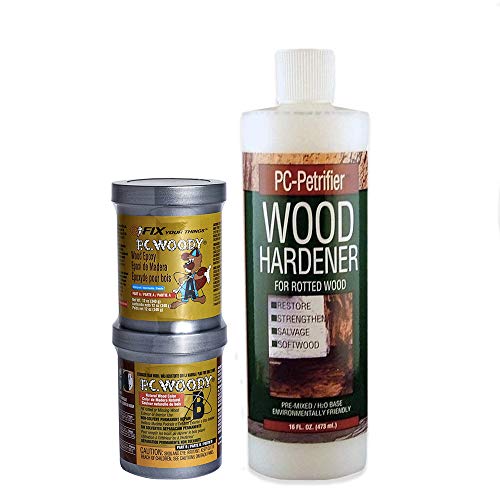
PC-Products PC-Woody 12 oz and PC-Petrifier 16 oz Kit

Abatron Wood Restoration Kit, 4 Quart with LiquidWood and WoodEpox

LiquidWood Epoxy Wood Consolidant

PC Products PC-Woody Wood Repair Epoxy Paste, Two-Part 6 oz, Tan
More Details On Our Top Picks
This version of PC-Woody bundles the familiar tan paste with a mixing tool, which sounds minor until you’re elbow-deep in a rotted windowsill and realize you don’t have anything clean to blend resin and hardener with. The paste itself is made to replace missing or decayed wood rather than just patch surface dings.
It shrugs off dry rot, UV exposure, and both fresh and salt water, so exterior trim, porch posts, and boat-adjacent projects are all fair game. You can apply it anywhere from 35 to 115 degrees Fahrenheit, which gives you a wide seasonal window most epoxies don’t offer.
Strong Points
- Resists dry rot, UV light, fresh water, and salt water once cured
- Wide application range of 35 to 115 degrees F suits spring through fall outdoor work
- Included mixing tool saves a trip to the garage for a stir stick
- Paste consistency stays put on vertical surfaces like door frames
Things To Consider
- The cured service range tops out at 200 degrees F, so keep it away from heat sources like fireplace surrounds
- Two cans mean you’ll need to measure portions yourself; owners commonly report a kitchen scale helps avoid waste
Key Specs
Who It Suits Best
Weekend DIYers tackling their first structural wood repair who want the mixing step made simple.
Where Another Pick Suits Better
Anyone facing large-scale rot across multiple windows will burn through this quickly and should look at the 48 oz PC-Woody below.
Where PC-Woody is a wood specialist, this Boncart putty is a generalist. The steel-reinforced AB formula bonds metal, plastic, stone, tile, ceramic, glass, acrylic, and yes, wood, all from one 200g block you knead together by hand.
That makes it the kind of thing worth keeping in a drawer for the day the pipe joint weeps or a ceramic handle snaps off. Sculptors use putties like this too, since the cured material can be shaped before it fully hardens. For pure woodworking, though, a dedicated wood filler will usually blend better.
What We Like
- Handles ten-plus material types, so one tub covers plumbing, tile, and trim repairs
- Knead-to-mix format means no measuring cups or stir sticks
- Waterproof once cured, useful around sinks and pools
- Doubles as a sculpting medium for decorative fills
Worth Noting
- Working time is short once kneaded, so portion off only what you can place in a few minutes
- White cure color may show through stain-only finishes on visible woodwork
- Gloves are a smart habit here; uncured epoxy putty is sticky and hard to wash off skin
Made For
Handy households that want one repair compound for mixed materials rather than a shelf of specialists.
Consider Something Else When
Your project is purely cosmetic wood filling; the aididan filler later in this list sands and paints more cleanly.
Honest framing up front: this aididan kit leans toward the putty end of the spectrum rather than a true structural two-part epoxy. That’s actually its strength. Nail holes, screw dimples, and shallow gouges in painted trim don’t need industrial strength, they need a smooth finish that disappears under paint.
The white formula is billed as paintable and stainable, and it’s designed to resist cracking, shrinking, and sinking as it dries, three failures that ruin an otherwise good paint job. Excess wipes away easily while wet, which keeps cleanup quick on baseboards and casings.
Highlights
- Blends with any paint color after drying for a seamless result
- Formulated against shrinking and sinking, so patches stay flush
- Adheres well across different wood species
- Generous 16 oz tub covers a whole room’s worth of nail holes
Trade Offs
- Not the choice for deep structural voids or load-bearing rot repair
- Stain matching takes some experimentation; test on scrap first
Right Fit For
Renters and painters prepping trim, doors, and furniture for a fresh coat of paint.
Not Your Match When
The damage goes deeper than a screw hole; J-B Weld’s WoodWeld syringe handles small structural gaps far better.
A dual syringe is the friendliest way to meet two-part epoxy. Squeeze the plunger and resin and hardener dispense side by side in an even 1:1 ratio, no measuring, no leftover cans crusting over in the shed. J-B Weld’s WoodWeld sets in about six minutes and cures within one to three hours.
Once hardened, the light-tan mass can be sanded, filed, tapped, and drilled, and the company rates tensile strength at 1800 PSI. In plain terms, the repaired joint should fail in the surrounding wood before it fails in the glue line. The .85 oz volume is genuinely small, so think chair joints and chipped corners, not porch columns.
Upsides
- Six-minute set time lets you clamp and move on the same afternoon
- Syringe dispensing removes guesswork from the 1:1 mix ratio
- Cures machinable: sand, drill, or tap threads into it
- Rated at 1800 PSI tensile strength for confident structural bonding
Minor Gripes
- .85 ounces runs out fast on anything bigger than a hand-tool-sized repair
- Once mixed, the clock starts immediately; have clamps ready before you squeeze
Quick Facts
Best Suited To
First-time epoxy users and anyone fixing furniture joints, loose dowels, or chipped edges on a tight schedule.
Look Elsewhere When
You’re rebuilding rotted sills by the cubic inch; the PC-Petrifier and PC-Woody bundle is purpose-built for that.
This is the same PC-Woody chemistry as our top pick, scaled up eightfold to 48 ounces across two cans. Anyone restoring a whole house’s worth of exterior trim, or a contractor pricing out sill replacements, knows how fast six ounces disappears. At this size, the math changes.
The high-tack formulation resists drips and sags while curing, which matters when you’re packing a fistful of paste into a column base overhead. Like its smaller sibling, it stands up to UV, salt water, and temperatures from -20 to 200 degrees Fahrenheit in service. One caution: open cans of mixed-component products have a finite shelf life once exposed to air, so plan projects close together.
Bright Spots
- 48 oz supply covers multi-window or multi-door restoration campaigns
- High tack keeps the paste where you press it, even overhead
- Extended working time gives beginners room to shape large fills
- Same proven resistance profile as the smaller kit
Room For Improvement
- Overkill for a single small patch; unused material can degrade in storage
- No mixing tool included, unlike the 6 oz kit version
Who Should Grab It
Contractors and committed DIYers mid-restoration who need bulk volume without reordering every weekend.
A Better Fit Elsewhere
One-off household repairs are better served by the 6 oz PC-Woody kit with its included mixing tool.
Here’s a term worth learning: a consolidant. Unlike a filler, which sits in a void, LiquidWood is a thin two-part epoxy that soaks into punky, softened fibers and turns them back into something structurally sound. Think of it as a treatment rather than a patch.
This two-gallon kit targets serious decay in windows, doors, columns, posts, and trim, including damage from weather and poor original design. It works indoors and out, and Abatron positions it as the primer stage beneath their WoodEpox filler for permanent rebuilds. Restoration professionals lean on this system heavily, and the price reflects that audience.
Standout Traits
- Penetrates deteriorated wood and restores lost strength rather than covering it
- Suits architectural elements: sashes, frames, columns, structural members
- Works as the foundation layer under WoodEpox for full rebuilds
- Large 2-gallon volume supports whole-house projects
Points To Note
- It’s a liquid, not a filler; you’ll still need a paste product for missing material
- Commitment-level purchase for casual users with one small patch
At A Glance
Who Will Love This
Restoration-minded homeowners and tradespeople reviving old windows and columns where rot runs deep.
Skip It When
You just need to fill a visible hole; the Abatron 4-quart combined kit pairs hardener and filler more conveniently.
Most rotted wood isn’t uniformly gone. Usually there’s a soft, spongy zone around a hollow core, and filling the hollow while ignoring the sponge just moves the failure a few inches over. This bundle solves both halves of that problem in one purchase.
PC-Petrifier is a water-based liquid hardener that soaks into decayed fibers and firms them up, restoring sills, frames, beams, and trim. Once treated, you pack the gap with the 12 oz of PC-Woody paste included in the box. The sequence mirrors what pros do, just sized for a homeowner’s project list.
Reasons To Buy
- Two-stage system treats soft wood and fills voids in one order
- Water-based hardener cleans up with soap and water
- Penetrates deep enough to rescue window sills and columns written off as lost
- Sized sensibly for several medium repairs
Softer Spots
- Requires patience between steps; the hardener needs soak time before filling
- More moving parts than a single-can paste for simple holes
The Right Fit
Homeowners facing their first genuinely rotten window sill or door frame who want the professional two-step approach without buying gallons.
Another Choice May Suit
Sound wood with only cosmetic damage needs none of this; the aididan 16 oz filler handles those faster.
If the PC bundle above is the homeowner’s two-step, this Abatron quart kit is the museum-grade version. It pairs LiquidWood, the penetrating hardener, with WoodEpox, a zero-shrink paste used to replace missing sections entirely. Historic preservation crews reach for this combination when original millwork simply cannot be replaced.
Practical numbers help here: LiquidWood offers roughly 30 to 45 minutes of pot life after mixing, meaning the window where the mixture stays workable, and treated wood hardens within hours. Windowsills, clapboards, doors, and furniture all fall within scope, indoors or out.
Plus Points
- Complete harden-and-fill system trusted in historical restoration work
- 30 to 45 minute pot life leaves ample time to position complex fills
- Waterproofs damaged wood as part of the repair
- WoodEpox cures shrink-free, keeping profiles crisp
Small Caveats
- Costs more per ounce than consumer-brand pastes; the premium buys restoration-grade performance
- Two-part workflow demands cleaner discipline than knead-style putties
Feature Rundown
Perfect Match For
Detail-oriented restorers working on older homes, antiques, or architectural salvage where authenticity counts.
Swap It Out When
Budget drives the decision on routine exterior rot; the PC-Woody 48 oz delivers similar coverage for less.
This is the same Abatron LiquidWood chemistry as the two-gallon kit, trimmed down to a 6 oz Part A and 6 oz Part B pair. For anyone curious whether a consolidant belongs in their toolkit, this is the low-commitment way to find out.
The intended surfaces read like a list of everything precious in an older home: sash, frames, floors, millwork, antiques, furniture, posts, even structural components. It strengthens and hardens rotted wood permanently and cures solids-free and shrink-free, so treated areas stay dimensionally stable. A small batch also means less waste if the project turns out smaller than planned.
Best Bits
- Entry-size pairing of parts A and B for trial-scale projects
- Shrink-free cure protects delicate antique joinery
- Restores structural strength permanently, per the manufacturer
- Suitable for fine furniture and floors, not just construction lumber
Honest Caveats
- 12 total ounces won’t stretch across a whole-house restoration
- Still requires a separate filler for any missing volume of wood
Whose Shelf It Belongs On
Furniture restorers and antique caretakers dealing with localized soft spots in irreplaceable pieces.
Reach For A Different Pick When
Volume is the priority; step up to the 2-gallon Abatron kit for whole-room consolidation work.
This listing is the classic 6 oz PC-Woody in two cans, the configuration that built the product’s reputation long before the bundled mixing-tool version arrived. Same tan paste, same resistance to dry rot, UV light, and fresh or salt water, same -20 to 200 degree service range.
The high-tack body resists dripping and sagging during cure, which owners consistently appreciate on vertical trim work. Compared with the kit at number one, you give up the mixing tool and gain nothing else, so choose based on whichever listing suits your cart that day. Either way, six ounces handles a season’s worth of typical household repairs.
Positives
- Proven two-part paste formula with years of field history behind it
- Resists rot, sunlight, and both fresh and saltwater exposure
- High tack holds firm on sills, frames, and other vertical faces
- Application window of 35 to 115 degrees F fits most DIY calendars
Areas To Watch
- No mixing tool included, so have a disposable stir stick ready
- Hand-mixing two cans invites ratio errors; measure carefully
Core Details
Built With In Mind
DIYers who want a dependable, no-frills epoxy paste for recurring trim and sill touch-ups.
Where A Sibling Pick Shines
First-timers nervous about mixing should grab the PC-Woody kit variant with the included tool instead.
What Matters Most Before Choosing 2 Part Epoxy Wood Fillers
Match The Product To The Damage
Start by diagnosing what you’re actually repairing. Sound wood with nail holes wants a paintable putty like the aididan kit. Soft but present fibers call for a liquid consolidant such as LiquidWood. Missing chunks of wood demand a structural paste, and badly decayed members often need both stages in sequence.
Buying a filler for a job that needs a hardener is the most common mismatch in this category, and it shows up a year later as a failed patch.
Working Time Versus Cure Speed
These pull in opposite directions. J-B Weld’s WoodWeld sets in six minutes, ideal for small glued joints but unforgiving on big sculpts. PC-Woody and WoodEpox give you extended working time to shape large fills properly. Decide which failure mode hurts more: running out of time, or waiting longer for results.
Environment And Exposure
Exterior repairs face UV, rain, and freeze-thaw cycles, so check the stated temperature ranges before committing. Interior furniture work relaxes those requirements and shifts priority toward sandability and finish compatibility instead.
Quantity Realism
Estimate honestly. A single sill consumes a few ounces; a whole facade eats cans. Oversized kits waste money and shelf life, undersized ones stall projects mid-repair.
Key Considerations Across These Picks
Traps First Timers Fall Into
The biggest slip is treating every wood filler as interchangeable. A cosmetic putty packed into structural rot fails quietly, and a premium consolidant spent on nail holes is money burned. Skimping on surface prep ranks second: epoxy bonds to sound wood, not loose fibers or dust. Mix ratios matter too, so follow the label exactly rather than eyeballing it.
The Case For Spending Up
Higher-tier kits buy penetration depth, longer pot life, and shrink-free cures. On a historic window or a load-bearing post, that difference decides whether the repair lasts decades or one winter. Routine painted trim rarely justifies the premium.
Frequently Asked Questions
Can I paint or stain over cured epoxy wood filler?
Yes, most epoxy fillers accept paint readily once fully cured and sanded. Stain absorption varies because epoxy isn’t porous like wood, so test on a hidden spot first.
How long does two-part epoxy take to fully cure?
It depends on the formula, ranging from about an hour for fast-set syringes to overnight for thick paste fills. Cooler temperatures slow the chemical reaction noticeably.
Do I need a wood hardener before using epoxy filler?
On sound wood, no. Where fibers are soft or punky, a consolidant like PC-Petrifier or LiquidWood first gives the filler something solid to grip.
Is epoxy wood filler waterproof?
Quality two-part epoxies resist water once cured, and several listed here explicitly handle fresh and salt water. Sealing the surrounding wood still matters for long-term results.
How should I store leftover two-part epoxy?
Keep cans tightly sealed, upright, and away from extreme heat or cold. Mixed leftovers cure solid and are unusable, so portion carefully.
Closing Thoughts
Rot doesn’t wait, but neither do you need to replace every soft board. Match the product to the damage, prep the surface properly, and these ten options cover nearly every scenario a homeowner meets. Start small with a syringe or 6 oz paste, and scale up to the restoration kits as your confidence and your project list grow. Your sills will thank you.