Good fabric is the quiet difference between a cross-stitch you frame and one you abandon halfway. The right cloth holds tension, shows clean holes, and forgives the occasional miscount. This roundup covers pre-cut panels, bulk yardage, colored sets, and evenweave alternatives, so you can match the material to your actual project instead of guessing.
Quick Look At Our Top Picks
The Shortlist At A Glance

Charles Craft Silver Label Aida 18 Count (White)

White 14 Count Aida Cloth Cross Stitch Fabric, 59 x 39 Inch

DMC Charles Craft Silver Label Aida 11 Count, White

Aida Cloth Big Size 18 Count, White Cross Stitch Fabric 39 x 60 Inch

DMC Classic Reserve Gold Label Aida Fabric Box, Antique White, 14 Count

DMC Charles Craft Monaco Cloth – 28 Count – White

Macarrie 6 Pieces Aida Cloth 14 Count Embroidery Fabric

KCS 3 pc 15′ x 18′ Counted Cross Stitch Cotton Aida Cloth, 18CT Grey

DMC Charles Craft Gold Standard Fiddler’s Cloth Lite 16 Count, Light Oatmeal
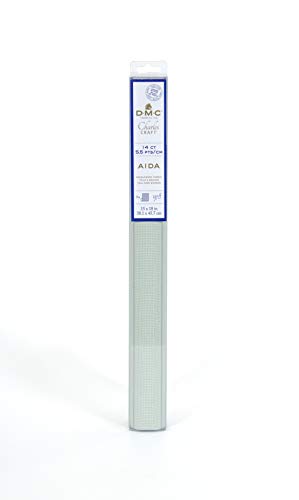
DMC Classic Reserve Gold Label Aida Fabric Box – 14 Count (Light Seafoam)
More Details On Our Top Picks
An 18-count weave packs eighteen stitches into every inch, which means smaller crosses and sharper detail than the standard 14-count most people start on. This Charles Craft panel arrives pre-cut at 15 by 18 inches, sized neatly for samplers, ornaments, and bookmark-scale work without any trimming.
The cotton construction gives you clearly defined squares and visible holes, so your needle finds its place even during long evening sessions. For anyone stitching dense lettering or miniature motifs, that tighter grid is where the payoff lives.
Strong Points
- The 18-count grid handles fine detail that would look chunky on lower counts.
- Pre-cut sizing means zero measuring or edge-fraying prep before you start.
- Visible square pattern keeps counting errors down on intricate charts.
- Pure cotton takes blocking and framing well after finishing.
Things To Consider
- Smaller holes demand good lighting and possibly a magnifier for extended sessions.
- A single 15-by-18-inch panel won’t stretch to large wall-hanging projects.
Who Should Grab It
Confident stitchers working detailed charts who want a reliable name-brand panel straight from the package.
Where A Sibling Pick Shines
Newer stitchers will find the DMC Charles Craft Silver Label Aida 11 Count far kinder, since its larger holes make learning the rhythm much easier.
Where the Charles Craft panel above serves one project, this Papillon bolt hands you roughly five feet by three of 14-count white cotton to slice however you like. Cut ten coaster-sized squares, two pillow fronts, and still have leftovers for practice swatches.
The 14-count rating sits at the sweet spot for most hobbyists: big enough holes to count comfortably, fine enough for readable lettering. Owners commonly report the weave cuts cleanly along a stitched guideline, which matters when you’re dividing a bolt this size.
Bright Spots
- Nearly a yard-and-a-half of width supports several projects from one purchase.
- Standard 14-count suits both beginners and experienced hands.
- Cotton body accepts washing and pressing after completion.
- Works for home decor crafts beyond counted thread, like appliqué backings.
Small Caveats
- You’ll need to finish raw cut edges yourself to stop fraying in storage.
- Folded shipping can leave creases that take a damp press to release.
At A Glance
Made For
Serial crafters who burn through small projects and hate reordering fabric every few weeks.
Swap It Out When
If you’d rather skip cutting entirely, the pre-cut Macarrie six-piece set hands you ready panels in decorative colors instead.
Eleven-count aida has the roomiest holes in this lineup, and that’s exactly why teachers and kit designers reach for it. Each cross sits large and obvious, so a first-timer can see progress happen fast, which is half the battle when you’re building the habit.
This is the same trusted Charles Craft soft-tube format as our top pick, just at a friendlier gauge. The precise square weave lets the needle glide rather than snag, and the finished piece grows quickly enough to keep impatient learners motivated.
Reasons To Buy
- Large holes make counting and needle placement nearly foolproof for newcomers.
- Projects finish visibly faster, a real morale boost on a first sampler.
- Consistent DMC/Charles Craft quality matches other panels in the range.
Points To Note
- Chunky scale limits fine detail; delicate charts will look blocky here.
- Finished pieces need larger frames or mats than higher-count equivalents.
Right Fit For
Kids, classroom groups, and adults picking up a needle for the very first time.
Not Your Match When
Stitchers chasing compact detail should step up to the Charles Craft Silver Label 18 Count reviewed earlier.
Five feet of continuous 18-count width changes what’s possible. Wedding samplers, oversized quote pieces, and multi-panel scenes usually force stitchers to seam fabric together; this CANFOISON panel removes that headache entirely.
You still get the fine 18-count grid from our number-one pick, just on a canvas big enough to share. Compared with the Papillon bolt, this one trades a little length for extra width, which suits wide landscape-format designs better.
Upsides
- True jumbo dimensions accommodate large-format charts without seaming.
- 18-count density keeps ambitious designs crisp at scale.
- Cuts down freely into smaller pieces for future projects.
- Classic white ground flatters traditional color palettes.
Softer Spots
- Large panels need careful rolling storage to avoid permanent fold lines.
- Some owners note slight stiffness out of the package until washed.
Feature Snapshot
Whose Shelf It Belongs On
Ambitious hobbyists planning heirloom-size pieces who refuse to compromise on stitch density.
Look Elsewhere When
Smaller occasional projects suit the single Charles Craft 15-by-18 panel better, since you won’t pay for yardage you’ll never use.
Antique white does something bright white can’t: it softens the contrast behind cream and ecru threads so vintage-style charts read the way their designers intended. DMC’s Gold Label line carries a heavier weight than basic aida, giving the fabric a firm, stable feel under tension.
In practical terms, that heft means less puckering around dense stitch blocks and a more confident drape once framed. The 14-count grid stays beginner-accessible while the finish signals a step up in seriousness.
Plus Points
- Heavier weight resists puckering on densely stitched areas.
- Antique white tone flatters heritage and reproduction charts.
- Even, firm grid keeps stitch tension uniform across the panel.
- Box packaging protects corners during storage between sessions.
Minor Gripes
- The warm tone clashes slightly with pure-white thread palettes.
- Stiffer hand-feel takes some stitchers a session or two to adjust to.
Who Will Love This
Stitchers reproducing antique samplers or gifting framed pieces where fabric tone matters as much as the stitching.
Another Choice May Suit
Anyone wanting the same Gold Label quality in a cool pastel should look at the Light Seafoam version further down this list.
Monaco isn’t aida at all, and that’s its whole appeal. This 28-count evenweave has an evenly spaced thread structure without the blocked squares, so you stitch over two threads to achieve a 14-count appearance with a finer, more elegant texture.
It also opens doors beyond cross-stitch: crewel, ribbon embroidery, punch needle, and stamped designs all behave well on its smooth cotton surface. Compared with everything else here, this is the pick for people whose skills have outgrown blocked grids.
Standout Traits
- Evenweave structure produces finer-looking results than blocked aida.
- Versatile enough for crewel, ribbon work, and machine embroidery.
- Smooth surface lets specialty threads slide without catching.
Trade Offs
- Counting over two threads demands more attention than aida’s obvious squares.
- Beginners may find miscounts harder to spot and fix.
Best Suited To
Intermediate and advanced needleworkers ready to move past beginner grids and expand their technique range.
Reach For A Different Pick When
Anyone still building confidence will get faster wins from the DMC 11 Count Silver Label covered earlier.
Six pre-cut panels in three gradient purple-toned styles, two of each, arrive ready to hoop. At roughly 11.8 by 17.7 inches apiece, they’re sized for hoops, bookmarks, and small wall pieces, no scissors required.
The colored grounds change how finished work reads: white and pale threads pop dramatically against these tints, and the gradient effect adds depth before you’ve made a single stitch. It’s a set built for gift-making marathons and craft-afternoon groups.
What We Like
- Six ready panels eliminate all cutting and edge preparation.
- Gradient colors give finished pieces a designed-in backdrop.
- 14-count holes stay generous enough for group or family stitching.
- Multiple styles let you match fabric mood to each recipient.
Worth Noting
- Colored grounds limit thread choices; dark floss disappears against them.
- Panels run smaller than standard 15-by-18 singles.
Quick Facts
Perfect Match For
Hobbyists producing handmade gifts, party crafts, or teaching small groups where variety keeps things fun.
Consider Something Else When
Traditionalists wanting a neutral ground will prefer the white Papillon bolt, which leaves every floss color open.
Three grey tones, pearl, light steel, and medium, shipped rolled in a plastic box so nothing arrives creased. That alone puts this KCS set ahead of folded competitors, since fold lines in aida can haunt a finished piece permanently.
The starched, stiff finish is deliberate: it holds shape in-hand so many stitchers work without a hoop at all. A quick dip in water softens the fabric afterward whenever you want a relaxed drape for framing.
Highlights
- Rolled packaging prevents the crease lines folded cloth develops.
- Starched stiffness supports hoop-free stitching right away.
- Coordinated grey trio suits modern, minimalist chart palettes.
- Water soak converts the hand-feel from stiff to soft on demand.
Honest Caveats
- Initial stiffness feels unusual until you adapt your grip.
- Grey grounds mute dark floss colors noticeably.
Details At A Glance
Built With In Mind
Stitchers drawn to muted, Scandinavian-style palettes who value tidy storage as much as the fabric itself.
Skip It When
Lovers of classic white grounds should stick with the Charles Craft 18 Count panel at the top of this list.
Fiddler’s cloth trades aida’s uniform squares for a slubby, textured weave, part cotton, part polyester, with a touch of linen in the blend. The result looks like aged farmhouse linen at a fraction of the fuss, and the light oatmeal tone does half your design work before threading begins.
It’s heavy enough that many stitchers skip the hoop entirely, and the 16-count grid splits the difference between beginner comfort and fine detail. Care is simple too: a lukewarm hand wash with mild soap, then dry flat.
Best Bits
- Textured oatmeal surface adds rustic character plain aida can’t offer.
- Cotton-polyester-linen blend resists wrinkling during long projects.
- 16-count balances easy counting with respectable detail.
- Substantial weight supports hoop-free work for many users.
Areas To Watch
- Hand-wash-only care rules out casual machine laundering.
- Uneven texture makes ultra-fine charts slightly harder to count.
Core Details
The Right Fit
Crafters styling primitive, cottagecore, or vintage-inspired pieces where the fabric itself contributes to the look.
Where Another Pick Suits Better
Those needing a smooth, predictable grid for complex counted charts will get cleaner results from the Monaco evenweave.
Think of this as the Antique White Gold Label panel from earlier, reborn in a whisper-soft seafoam green. The gentle tint pairs beautifully with botanical charts, nautical themes, and pastel nursery pieces, grounding whites and creams that would vanish against brighter backgrounds.
You keep the same premium cotton build, even 14-count weave, and convenient 15-by-18-inch boxed format. For seasonal decorating cycles, having a tinted panel on hand saves a dyeing experiment gone wrong.
Positives
- Seafoam tint complements nature and coastal-themed charts naturally.
- Even cotton weave keeps stitch tension consistent throughout.
- Boxed panel stores flat and protected between projects.
- 14-count remains approachable for mixed-skill households.
Room For Improvement
- The tint narrows your floss palette compared with neutral grounds.
- One panel per box means reordering for bigger undertakings.
Who It Suits Best
Decorative stitchers building seasonal or themed collections who want fabric color to do part of the storytelling.
A Better Fit Elsewhere
Chart-driven stitchers needing maximum thread flexibility should choose the Antique White Gold Label version instead.
What Matters Most Before Choosing Cross-Stitch Fabric
Count Changes Everything
The count number tells you how many stitches fit per inch, and it dictates both the look and the difficulty of your work. Lower counts like 11 give big, forgiving holes suited to learners, while 18-count delivers compact detail for experienced hands. Match the count to your eyesight, lighting, and patience before falling for a pretty color.
Size Before You Buy
Pre-cut 15-by-18-inch panels cover most samplers and hoop projects, but oversized charts need bolts like the Papillon or CANFOISON options. Measure your finished design plus four inches of margin on every side for framing. Running short mid-project is the mistake nobody enjoys fixing.
Material And Finish
Pure cotton presses flat, washes cleanly, and behaves predictably, which is why it dominates this category. Blends such as Fiddler’s cloth add texture and wrinkle resistance at the cost of a less uniform grid. Starched finishes support hoop-free stitching but soften after a water dip, so decide which handling style fits you.
Color As A Design Tool
White is the safe default, yet tinted grounds like seafoam, antique white, or grey can elevate themed work instantly. Just remember dark floss disappears on dark fabric, so plan your palette around the cloth rather than fighting it later.
Key Considerations Across These Picks
Traps First Timers Fall Into
Ordering a high count because it looked professional is the classic error; squinting at tiny holes kills enthusiasm fast. Another frequent slip is buying exact-size fabric with no margin, leaving nothing for the framer to grip. Always add breathing room and start at 14-count or below.
When Paying More Pays Off
Premium lines like DMC’s Gold Label cost more for heavier weight, firmer grids, and consistent dye lots, differences you notice most on heirloom or gift pieces. Casual practice swatches don’t justify the upgrade, but anything destined for a frame usually does.
Frequently Asked Questions
What does “count” mean on aida cloth?
It’s the number of stitch squares woven into each inch of fabric. Higher counts mean smaller stitches and finer detail.
Can I wash aida cloth before stitching?
Yes, most cotton aida tolerates a gentle pre-wash to remove sizing and soften the hand. Dry it flat to avoid distortion.
How much extra fabric should I leave around my design?
Add at least two to three inches beyond the stitched area on all sides. Framers need that margin to mount the piece securely.
Is 14-count aida good for beginners?
Absolutely, it’s the most widely recommended starting point. The holes are large enough to count easily while still allowing readable detail.
How do I stop aida from fraying after cutting?
Run a line of fray-check liquid along the edge or whip-stitch the border with cheap thread. Either method holds through months of handling.
Bottom Line
Fabric choice quietly shapes every hour you spend with a needle, so treat it as part of the design rather than an afterthought. Beginners should start with the 11 or 14-count panels here, while detail-focused stitchers will appreciate the 18-count options and the Monaco evenweave. Match the cloth to your next project, not the one after, and enjoy the stitching.