
Anyone who prints regularly knows the pain of a growing bin of failed parts and purge towers. A desktop filament extruder turns that waste back into usable spool material, and some models even convert plastic bottles directly into filament. This roundup covers ten machines across the spectrum, from bottle-recycling hobby units to steel-bodied production extruders, so you can match one to your bench, your budget, and how much scrap you actually generate.
The Shortlist At A Glance

Oztwel Filament Maker PET Bottle Recycler (Red)

Oztwel Filament Maker PET Bottle Recycler (Orange)

Oztwel Filament Maker PET Bottle Recycler (Blue)

3dpany C1 Extruder Maker 1.75mm Waste Recycling Machine

ICZW Filament Extruder Recycler Machine Dual Nozzle 600W
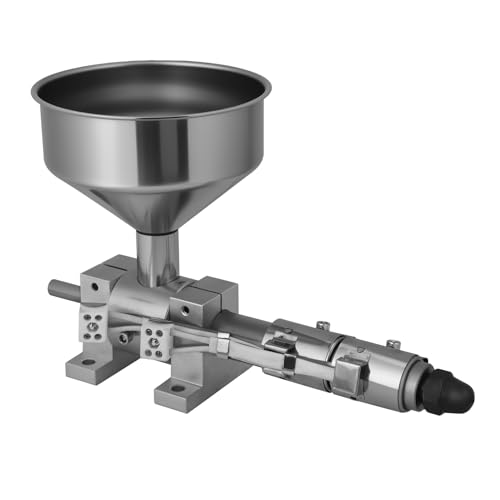
ICZW Single Screw Extruder Parts Accessory 110V (2 Heaters)

3dpany C1 Filament Recycle Machine 1.75mm

Banfluxion SJ25 Single Screw Plastic Extruder 110V

HZFAIGLL Desktop Filament Extruder & Recycler for PLA, ABS, PETG

iumLeap High Precision Filament Recycler with Auto Coil Winding
More Details On Our Top Picks
This red Oztwel unit takes a refreshingly simple approach: feed in clean PET bottles, get out printable filament. The maker positions heating, temperature control, traction, and winding inside one integrated body, so there’s no assembly puzzle before your first run. A real-time LCD shows temperature and speed as you work.
In a classroom or a home workshop, that visibility matters more than raw output. Students can watch the numbers change and connect recycling to printing in a single session, which is exactly the kind of demonstration this machine seems built around.
Strong Points
- Converts standard cola bottles into roughly 10 meters of filament each, cutting consumable costs noticeably over time.
- All-in-one design means heating, pulling, and winding happen without extra modules or wiring.
- The live digital display makes temperature tuning approachable for first-timers.
- Doubles as a teaching tool for environmental science and additive manufacturing lessons.
Things To Consider
- Bottles need thorough cleaning and label removal beforehand, or residue will contaminate the melt.
- Output suits occasional use rather than daily spool production for a busy print farm.
Who It Suits Best
Educators, students, and eco-minded hobbyists who want an easy entry into filament recycling without industrial complexity.
A Better Fit Elsewhere
Shoppers needing higher throughput should look at the 3dpany C1 Extruder Maker, which processes far more material per hour.
Same machine, different coat of paint. The orange variant carries the identical integrated platform as the red model above: bottle-fed PET recycling, adjustable temperature and speed, and a digital readout tracking both. The choice between them comes down purely to aesthetics and what matches your bench or classroom cart.
One practical note from the listing: optional protection plans covering accidental drops, spills, and breakdowns are available at checkout, with round-the-clock support and no added repair cost beyond the plan itself. For a device with a heated barrel and moving parts, that coverage may appeal to shared-workshop owners where bumps happen.
What We Like
- Turns discarded bottles into roughly 10 meters of usable filament apiece, offsetting spool purchases.
- Adjustable speed and temperature give you control over extrusion consistency.
- Optional damage coverage adds peace of mind in busy shared spaces.
Worth Noting
- Prep work dominates: washing, drying, and cutting bottles takes longer than the extrusion run itself.
- Color is cosmetic only, so pick whichever variant is in stock rather than waiting.
Made For
Hobbyists and club leaders who want the friendly bottle-recycling workflow and prefer a warmer color scheme on the desk.
Swap It Out When
Users processing shredded print waste instead of bottles will get more mileage from the ICZW dual-nozzle recycler later in this list.
The blue edition rounds out the Oztwel trio, and functionally nothing changes: you still get the combined heater, puller, and winder, plus the LCD showing live temperature and speed. Where this variant earns its spot is availability. With three colorways listed separately, stock tends to rotate, and grabbing whichever is present often means starting sooner.
Like its siblings, this unit also lists optional accidental-damage coverage with quick claims handling. In our view, that’s most relevant for school labs where equipment gets handled by many hands. The honest caveat applies to all three colors: PET bottle filament needs careful diameter checking before it feeds reliably through every printer.
Bright Spots
- Integrated winding means finished filament coils neatly instead of piling on the floor.
- Beginner-friendly controls lower the barrier for a first recycling project.
- Each standard bottle yields about 10 meters of material, enough for small test prints.
Small Caveats
- Diameter consistency from bottle-fed runs varies, so calipers are a worthwhile companion purchase.
- Moisture in unwashed PET can cause bubbles in the finished strand.
Right Fit For
Budget-conscious makerspaces and after-school programs introducing circular-economy concepts alongside 3D printing basics.
Where A Sibling Pick Shines
For heavier weekly volumes, the 3dpany C1 Filament Recycle Machine handles shredded waste at a steadier clip than any bottle-fed unit here.
Step up from the bottle-fed Oztwel units and the conversation shifts from novelty to productivity. The 3dpany C1 targets 400 grams of filament per hour, roughly 2.5 meters per minute, which translates to a meaningful dent in a week’s worth of failed prints. Its screw is nitrided alloy steel hardened to HRC58-65, a hardness range that resists wear from abrasive fillers far better than soft metals.
The body combines structural steel, aluminum alloy, and plastics in a 480 by 480 by 200 millimeter frame weighing 13 kilograms. That heft keeps vibration down during long runs. Power draw sits modestly too: 500 watts peak, 200 watts cruising, and about half a kilowatt-hour per kilogram of filament produced.
Reasons To Buy
- 400 g/h output makes regular recycling genuinely practical instead of a weekend curiosity.
- Hardened nitrided screw stands up to glass-filled or carbon-filled materials better than basic screws.
- Ambient-to-400°C range opens the door to higher-melting polymers.
- Low energy consumption per kilogram keeps running costs reasonable.
Points To Note
- At 13 kg it isn’t casually portable between rooms or shelves.
- You’ll need a shredder or scissors to prep failed prints into feedstock-sized pieces.
Quick Facts
Who Should Grab It
Print-farm operators and prolific hobbyists who shred their own waste and want dependable hourly throughput.
Consider Something Else When
Desk-space-limited users may prefer the lighter ICZW accessory route, building a compact custom line instead.
Where the 3dpany C1 wins on brute throughput, this ICZW machine wins on control finesse. It uses two independently managed heating zones: a rear preheat section set about 20°C below the front main heater. That staged warming reduces thermal shock on the pellets, and in practice it’s the difference between smooth strands and sputtery ones when running PETG or ABS.
The 120-watt brushless variable-frequency motor adjusts from 0 to 40 RPM, letting you slow extrusion for thicker, more consistent filament. Two nozzles ship in the box, 2.3 mm and 1.75 mm, since molten plastic swells slightly as it exits and lands near target diameter. The 16 mm screw runs a 1:4 compression ratio, a common geometry for melting thermoplastics evenly.
Plus Points
- Dual-zone heating up to 300°C handles PLA, PETG, and ABS with proper preheating.
- Wide 0-40 RPM speed window gives fine control over strand thickness.
- Both nozzle sizes included, saving a separate order.
- Brushless motor runs quieter than brushed equivalents during long sessions.
Trade Offs
- The rear-below-front temperature rule takes a few trial batches to dial in per material.
- 300°C ceiling excludes high-temp polymers like PEEK entirely.
At A Glance
Best Suited To
Intermediate users recycling PETG and ABS who want granular temperature and speed authority over each batch.
Reach For A Different Pick When
Those chasing maximum grams-per-hour should stay with the 3dpany C1, whose 400 g/h rate doubles what this class typically manages.
This entry isn’t a complete machine, and that’s the point. It’s the hot end of an extruder: a single-shaft screw, ceramic heating coils, and a hopper, sold as a build-it-yourself core. The 45# steel screw tolerates continuous service up to 572°F, and the listed configuration includes two 200-watt ceramic heaters wired for standard 110V outlets. A three-heater version exists if your design calls for a longer heated zone.
Material compatibility is broad for an accessory at this level: PE, PP, PS, PVC, POM, PA, PC, ABS, and PET all fall within its working envelope. For tinkerers assembling a custom filament line from sourced components, this saves machining a barrel from scratch, often the hardest part of a DIY build.
Standout Traits
- Complete screw-and-hopper assembly removes the toughest fabrication step from DIY builds.
- Handles nine common polymer families, unusual breadth for a component part.
- Fast-heating ceramic coils simplify wiring compared to band heaters.
Softer Spots
- No motor, controller, or cooling bath included, so budget for those separately.
- Success depends heavily on your own frame alignment and drive design.
Whose Shelf It Belongs On
Hands-on builders comfortable sourcing a motor, speed controller, and spooler to complete their own extrusion rig.
Another Choice May Suit
Anyone wanting a ready-to-run unit out of the box should pick the Banfluxion SJ25 instead, which arrives as an assembled core machine.
This listing is the second storefront appearance of the 3dpany C1 platform reviewed earlier, aimed at 1.75 mm output. Underneath the different title sit the same fundamentals: a 13 kg steel-and-aluminum chassis, ambient-to-400°C heating, and the hardened nitrided alloy screw rated HRC58-65. Output remains approximately 400 grams per hour at around 2.5 meters per minute.
Why include both? Availability and listing placement differ, and depending on region one variant may ship faster or carry different bundled accessories. The honest advice is to compare the two product pages directly and choose based on current stock and shipping terms rather than assuming one differs mechanically. Energy figures carry over too, with cruising power near 200 watts and consumption around 0.5 kWh per kilogram produced.
Highlights
- Same proven 400 g/h throughput as the primary C1 listing.
- Hardened screw shrugs off abrasive filled filaments over time.
- Steel-frame construction damps vibration during multi-hour runs.
Minor Gripes
- Duplicate listings can create confusion about which page carries support.
- Feedstock still requires shredding into small pieces before loading.
The Right Fit
Small print farms standardizing on 1.75 mm consumables who find this listing in stock at the right moment.
Not Your Match When
First-time recyclers wanting guided simplicity will likely be happier with the Oztwel bottle-fed makers at the top of this list.
The SJ25 occupies interesting middle ground: more complete than the bare ICZW accessory, less turnkey than the 3dpany C1. It’s a compact single-screw core unit with a one-inch screw and 400 watts of heating, designed as the centerpiece of a larger extrusion line. You pair it with a die, a cooling bath, and a haul-off unit to form a full filament workflow, all running on household 110V power.
Temperature and speed are both adjustable, which matters because different polymers want different pull rates. The listing notes 30-day returns and customer support, useful reassurance given the item ships from overseas. Compared with the ICZW parts kit, you’re paying for an assembled, aligned machine rather than loose components.
Upsides
- Arrives as an assembled core, skipping the alignment headaches of kit builds.
- One-inch screw offers a solid melt channel for steady output.
- Standard 110V operation fits ordinary garage and basement circuits.
- Integrates cleanly with third-party dies, coolers, and pullers.
Room For Improvement
- It’s a component, not a solution: plan and budget for the rest of the line.
- Overseas shipping may complicate returns compared with domestic sellers.
Core Details
Who Will Love This
Methodical tinkerers planning a staged, modular filament line and happy to source a cooler and haul-off themselves.
Look Elsewhere When
Users wanting everything integrated today should jump to the iumLeap auto-winding recycler closing out this list.
Versatility is this machine’s calling card. The manufacturer lists compatibility stretching from everyday PLA and PETG to TPU, TPE, PCL, and even PEEK, which sits near the top of the difficulty curve for desktop extrusion. Two ABS molds come in the box, one for 1.75 mm and one for 3.00 mm output, covering both modern printers and older large-format machines.
The 120-watt motor adjusts extrusion speed between 300 and 650 millimeters per minute, a narrower but finer window than the ICZW’s RPM-based control. An auxiliary online measurement aid helps track diameter during runs, promoting batch-to-batch consistency. The interface is described as beginner-accessible, though PEEK work realistically demands patience regardless of tooling.
Positives
- Seven-material compatibility list spans flexible, commodity, and engineering polymers.
- Both 1.75 mm and 3.00 mm molds included for mixed printer fleets.
- Inline measurement support helps catch drift before a whole spool goes bad.
- ABS molds resist wear across repeated runs.
Honest Caveats
- Flexible materials like TPU demand slow speeds and careful tensioning to avoid jams.
- PEEK capability depends on reaching and holding very high temperatures consistently.
Details At A Glance
Who Should Grab It
Experimenters rotating through multiple polymer types who value mold options and diameter feedback over raw speed.
Where Another Pick Suits Better
Recyclers focused purely on PETG and ABS volume will find the ICZW dual-nozzle machine’s staged heating more purpose-built.
Closing the list is the most automated option here. The iumLeap pairs a 400°C-capable heater with automatic coil winding, meaning finished filament spools itself instead of requiring you to hand-guide the strand onto a reel. Over a long session, that hands-off step is worth more than it sounds; babysitting a winder is the least fun part of recycling.
Output reaches 500 grams per hour, the highest figure in this roundup, edging past the 3dpany C1’s 400 g/h. The material list covers PLA, ABS, Nylon, wood-filled blends, TPU, and PVA. Wood-filled filament deserves special mention: abrasive fillers chew through soft screws quickly, so a hardened screw and careful maintenance matter here. Optional accident coverage with round-the-clock claims support is also offered on the listing.
Best Bits
- Auto coil winding frees you to prep the next batch while filament spools.
- 500 g/h output leads this entire comparison.
- Handles specialty blends including wood-filled and nylon.
- 400°C ceiling accommodates demanding polymers.
Areas To Watch
- Abrasive wood-filled material accelerates screw wear without diligent cleaning between runs.
- Higher automation means more components that eventually need servicing.
Feature Card
Built With In Mind
High-volume home shops and small studios processing several kilograms of scrap monthly who want minimal hands-on time.
Skip It When
Occasional users recycling a few failed prints a month will find the simpler Oztwel bottle recycler easier to live with.
What Matters Most Before Choosing 3d Filament Extruder Machines
Match The Machine To Your Feedstock
Start with what you actually have. Bottle-fed units like the Oztwel trio accept whole cleaned PET bottles, while shredder-based machines such as the 3dpany C1 need chopped print waste. Buying a machine mismatched to your scrap stream is the fastest route to a dusty shelf.
Check Temperature Ceiling Against Your Materials
PLA melts easily, but PETG, ABS, nylon, and PEEK climb steadily higher on the thermometer. A 300°C unit handles the common three; anything beyond that demands a 400°C-class heater like the ones on the 3dpany and iumLeap platforms.
Weigh Throughput Against Bench Space
Hourly output ranges from roughly 10 meters per bottle to 500 grams per hour. Honest math matters here: estimate your weekly scrap weight, then size the machine accordingly instead of buying capacity you’ll never feed.
Plan The Full Workflow
Extrusion is one link in a chain. You’ll also need cleaning, drying, shredding, diameter measurement, and spooling. Integrated winders save effort; bare accessories shift that burden onto you.
Key Considerations Across These Picks
Traps First Timers Fall Into
The most common misstep is ignoring moisture. Damp PET or PLA produces bubbly, brittle filament no matter how good the extruder is, so a filament dryer or a low oven session pays for itself. Second trap: skipping diameter checks. Calipers cost little and catch problems before they jam a printer nozzle.
What Separates Premium From Basic
Paying more generally buys three things: hardened screws that survive abrasive fillers, higher temperature ceilings for engineering polymers, and automation like auto winding. Casual users rarely need all three, but anyone recycling weekly will feel the difference within months.
Frequently Asked Questions
Can these machines really recycle failed 3D prints?
Yes, provided you chop the waste into small pieces first and keep materials sorted by type. Mixed polymers produce weak, unpredictable filament.
How much filament does one plastic bottle make?
The Oztwel units yield roughly 10 meters of filament per standard cola bottle. That’s enough for small test prints, not full spools.
Do I need a shredder?
Shredder-based machines do require one, since whole prints won’t feed properly. Bottle-fed models avoid that requirement entirely.
Is homemade filament as good as store-bought?
Diameter consistency is usually the gap. With careful speed control and regular caliper checks, many users get perfectly printable results, especially for draft-quality parts.
Are these safe to run indoors?
They involve hot barrels reaching several hundred degrees, so treat them like a soldering station: ventilated space, stable surface, and supervision during runs.
Closing Thoughts
A filament extruder changes your relationship with plastic waste, turning a trash bin problem into raw material. Start small with a bottle-fed unit to learn the process, then scale to a high-throughput machine once recycling becomes routine. Whichever path fits your bench, measure twice, dry thoroughly, and enjoy never throwing away a failed print again.