
Moisture is the quiet killer of good prints. Leave a spool of nylon or PETG out for a week in a humid room and you’ll hear the pops and see the stringing before you ever open a diagnostic guide. The right storage setup fixes that before it starts, whether you run one printer on a desk or a small farm in the garage.
This roundup covers ten different approaches to keeping filament dry and organized: vacuum bag kits, active dryer boxes, sealed bins, racks, and even a full dehumidifying cabinet. Each suits a different workspace and budget, so match the option to how many spools you own and how humid your room runs.
The Shortlist At A Glance

Vacbird Filament Vacuum Storage Kit with USB Pump, 20 Pack

Creality Space Pi SE Filament Dryer Box Pro for 1KG Spools

Polymaker Polydryer Filament Storage Box for 1kg Spools

Razzi Fidel 9-Tier Filament Storage Rack, Holds 54 Spools

ELEGOO 20pcs Filament Storage Bags with Auto Pump

CXffvaO 3-Tier Heavy Duty Metal Spool Shelf for 30 Rolls

RJOKMT 180L Filament Storage Cabinet with Dehumidifier
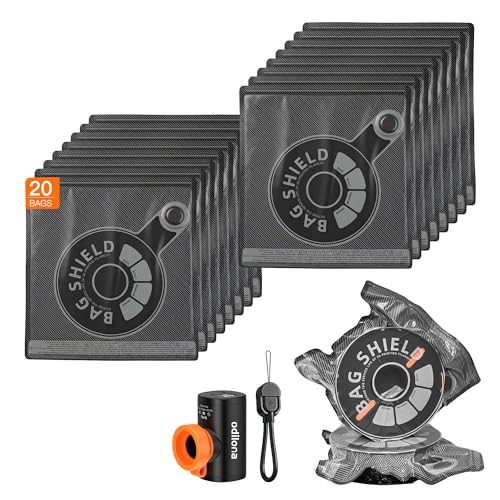
Odilona Filament Storage Bags with USB Vacuum Pump, 20 Pack

FANGSUN 3D Printer Filament Storage Box, 21 Spools

Vtopmart Filament Storage Box, 6 Pack, Clear
More Details On Our Top Picks
Twenty vacuum bags sized at roughly 12.6 by 13.4 inches give you enough capacity to seal an entire filament haul in one afternoon. The two-tone construction is the detail that separates this kit from plain clear bags: one side lets you identify the spool at a glance while the other blocks light, which matters because UV exposure degrades some resins over months on a sunny shelf.
The included USB pump handles the air extraction, so you’re not borrowing the kitchen vacuum sealer every time a new spool arrives. For anyone storing 0.5kg through 1kg spools in 1.75mm, 2.85mm, or 3mm diameters, the sizing covers essentially the whole standard range.
Strong Points
- Light-blocking side helps prevent sun-related filament degradation during long storage.
- Twenty bags mean you can re-bag partial spools without rationing supplies.
- USB pump works from a laptop or wall adapter, no dedicated appliance needed.
- Fits the common 0.5kg to 1kg spool formats most hobbyists actually buy.
Things To Consider
- Vacuum bags compress nothing structurally, but sharp spool edges can stress seams over repeated reuse, so inspect older bags periodically.
- You’ll want to add your own desiccant packs, since the kit centers on air removal rather than moisture absorption.
Who It Suits Best
Makers building their first dry-storage system on a tight budget who want bulk coverage for a growing spool collection.
A Better Fit Elsewhere
Shoppers who want desiccant packs bundled in from day one will find the Odilona kit below a more complete package.
A dryer box does what bags can’t: it actively drives moisture out of filament using heat. The Space Pi SE uses a PTC heating element, a self-regulating ceramic heater that holds temperature without runaway risk, paired with a fan that pushes warm air around the chamber in all directions. Creality specifies it reaches 65 degrees Celsius within about 15 minutes, which is fast enough to rescue a damp spool mid-project.
Insulation cotton lines the inner walls, so the exterior stays comfortable to touch during multi-hour prints and the chamber holds its temperature efficiently. The adjustable 45 to 65 degree range covers everything from PLA up through hygroscopic nylons, and the unit runs on standard 110V household power.
Highlights
- PTC element self-regulates, reducing the overheating worries that come with basic resistive heaters.
- 360-degree fan circulation means the whole spool dries evenly, not just the outer wraps.
- Insulated walls keep the outside safe to touch during long drying sessions.
- Precise sensor control across 45 to 65 degrees suits both forgiving and demanding materials.
- Doubles as a feed station, so filament can print directly from the box.
Minor Gripes
- It holds one 1kg spool at a time, so large collections still need backup storage like the Vacbird bags above.
- It needs an outlet, which rules out shelf-and-forget placement far from power.
Feature Snapshot
Made For
Printers working with moisture-sensitive materials like nylon, TPU, or PETG who dry spools regularly rather than occasionally.
Where A Sibling Pick Shines
For passive overnight storage between print sessions, the Polymaker Polydryer below costs less and needs no outlet at all.
Polymaker builds filament for a living, and that shows in how thoughtfully this box approaches the problem. Instead of heat, it relies on a two-part defense: a gasketed seal that locks humid air out, plus desiccant inside that pulls residual moisture from whatever air remains trapped. Between print sessions, that combination keeps spools in printable condition without any electricity.
In practice, this is the box you keep next to the printer for the material currently loaded. Owners commonly report fewer of the classic moisture symptoms, stringing, bubbling, clogging, and uneven layers, once spools live in a sealed container instead of an open shelf. It’s built for 1kg spools across the usual suspects: PLA, PETG, ABS, ASA, and even PA nylon.
Upsides
- No power required, so it sits anywhere from a desktop to a closet shelf.
- Seal-plus-desiccant design addresses both incoming and trapped humidity.
- Brand-backed design from a company that understands filament chemistry firsthand.
- Helps reduce stringing and bubbling on hygroscopic materials between uses.
Worth Noting
- Desiccant needs periodic recharging or replacement, a small maintenance habit some owners forget until prints degrade.
- Passive storage won’t reverse damage already soaked into a neglected spool; that job belongs to a heated unit like the Creality Space Pi SE.
Right Fit For
Everyday PLA and PETG printers who want dependable between-print protection without adding another powered device to the desk.
Swap It Out When
Anyone running a whole wall of spools will get more value per dollar from the Vtopmart six-pack further down this list.
Fifty-four spools is serious inventory, and this carbon steel rack exists precisely for that scale. Nine tiers stack vertically, so the whole collection occupies a floor footprint closer to a bookcase than a warehouse shelf. Most tiers hold five to six standard 1kg spools, though the maker notes real-world counts shift depending on spool width, boxed packaging, or vacuum bags with valves adding bulk.
Assembly is tool-free, which matters more than it sounds when you’re staring at nine tiers of parts. An anti-tip kit comes included, a sensible safeguard given how top-heavy a loaded rack becomes. Pair it with vacuum-sealed bags from earlier picks and you get organized capacity plus moisture protection in one corner of the workshop.
Reasons To Buy
- Nine vertical tiers turn a small floor area into storage for dozens of spools.
- Carbon steel frame handles the cumulative weight of a fully stocked collection.
- Anti-tip anchoring kit adds stability once shelves fill up.
- Tool-free assembly gets you stacking within minutes of unboxing.
Small Caveats
- Capacity claims assume slim packaging; valve-equipped vacuum bags and retail boxes eat into the per-tier count.
- An open rack stores spools in ambient air, so humid climates still call for bagging or a sealed cabinet.
At A Glance
Who Will Love This
Workshop owners running multiple printers who have outgrown bins and need a permanent, high-density home for their spool library.
Not Your Match When
Desk-based hobbyists with a dozen spools will find the FANGSUN trapezoid rack later in this list a better-scaled companion.
ELEGOO brings brand-name consistency to the vacuum bag category, and the spec sheet reads like a direct answer to the usual complaints about cheap kits. The bags measure 13.8 by 12.6 inches and use 0.21mm thickened plastic, noticeably sturdier than the film-thin bags that split after a few reseals. An upgraded valve pairs with a 60 KPa automatic pump, and the maker states the seal holds airtight beyond 30 days.
Four sealing clips round out the kit for partial spools that don’t need full vacuum treatment. In a busy print room, that mix of twenty bags plus clips covers both long-term archive duty and quick daily turnover.
What We Like
- Thickened 0.21mm bags resist the punctures and seam splits common with budget film.
- Automatic 60 KPa pump removes the guesswork and arm fatigue of manual pumping.
- Stated 30-day-plus airtight hold means less frequent re-vacuuming.
- Upgraded valve speeds air extraction compared to earlier-generation designs.
Points To Note
- Like most bag kits, desiccant packs are not part of the bundle, so plan to add your own for best results.
- Larger 13.8-inch bags take slightly more drawer or bin space than compact alternatives.
Core Details
Whose Shelf It Belongs On
Printers who archive spools for weeks at a time and want a trusted brand behind the seal quality.
Reach For A Different Pick When
Shoppers who want desiccants thrown in should look at the Odilona kit reviewed next, which bundles twenty packs alongside its bags.
Where the Razzi Fidel rack goes tall, this one goes tough. Three wide shelves of heavy-duty iron, each reinforced with crossbars, carry up to 80 pounds apiece and hold ten 1kg rolls per level assuming average spool thickness around 6.4 centimeters. That rating leaves generous headroom, useful in garages where shelves also end up holding tools, resin bottles, or spare parts.
Adjustable feet are the underrated feature here. Uneven concrete garage floors are the enemy of wobbly shelving, and four leveling points let you square the unit against a wall without shimming it with cardboard. It accepts 200g, 500g, and 1kg rolls alike, so mixed-size collections sort neatly onto one unit.
Plus Points
- 80-pound per-shelf rating tolerates heavy spools plus incidental workshop clutter.
- Reinforced crossbars keep shelves flat under full loads instead of bowing.
- Adjustable feet solve the uneven-floor problem common in garages and basements.
- Accepts 200g, 500g, and 1kg rolls for mixed inventories.
Softer Spots
- Iron construction means checking for scratches in the coating over time, especially in damp spaces where bare metal can corrode.
- Open-air shelving offers zero moisture control on its own.
Spec Overview
Who Should Grab It
Garage and basement printers who prioritize rugged load capacity and floor stability over enclosed protection.
Consider Something Else When
Space-tight rooms benefit more from the vertical nine-tier Razzi Fidel rack, which stacks higher while occupying less floor.
This is the endgame option: a 180-liter cabinet with a built-in molecular sieve dehumidifier that actively manages relative humidity between 25 and 60 percent. Unlike a bag or a bin, the cabinet continuously scrubs moisture from the entire interior volume, so every spool inside stays in a controlled dry zone regardless of what the weather outside is doing.
The dehumidifier runs silently, which matters in a home office or studio where compressor hum would wear thin fast. Sealed doors keep the environment stable once set. For anyone in a coastal or tropical climate where ambient humidity regularly climbs past the point where bags and desiccants struggle, this cabinet replaces a shelf full of consumables with one permanent fixture.
Bright Spots
- Active humidity regulation between 25% and 60% RH protects even the most hygroscopic filaments.
- Molecular sieve dehumidifier operates quietly enough for shared living spaces.
- 180-liter volume swallows a substantial spool collection plus tools and parts.
- Sealed construction maintains the dry zone without recurring bag or desiccant costs.
Areas To Watch
- It occupies real floor space and needs a power outlet, so plan placement before ordering.
- The upfront commitment is significant compared to bag kits, making sense mainly for large or expensive inventories.
Details At A Glance
Best Suited To
Dedicated makers and small studios in humid climates who treat filament as a long-term investment worth protecting properly.
Another Choice May Suit
Hobbyists with modest collections get comparable everyday protection from the Polymaker Polydryer at a fraction of the footprint and cost.
Most vacuum kits make you buy desiccant separately, and that’s exactly the gap this Odilona bundle closes. You get twenty reusable bags sized for 1kg spools, twenty desiccant packs, five sealing clips, and a USB-C pump in one purchase, which makes it the most complete starter package in this lineup. Air removal plus moisture absorption together beat either method alone.
The pump’s USB-C connection draws from laptops, power banks, or phone chargers, so sealing a fresh shipment doesn’t require hunting for a specific adapter. Compared with the Vacbird kit at the top of this list, the trade here is straightforward: Vacbird offers light-blocking bags, while Odilona counters with included desiccants and modern USB-C charging.
Standout Traits
- Twenty desiccant packs arrive in the box, completing the dry-storage equation immediately.
- USB-C pump charges or runs from nearly any modern 5V source.
- Reusable bags suit makers who cycle spools in and out frequently.
- Five clips handle short leftover segments that don’t warrant a full bag.
Honest Caveats
- Clear bag material offers no light shielding, so keep stored spools away from direct sun.
- Desiccant packs are consumables; they’ll need recharging or replacing as they saturate over months.
The Right Fit
Newcomers assembling their first complete dry-storage setup who want every component included without piecing the kit together.
Look Elsewhere When
Sunny-room storage calls for the light-proof Vacbird bags, whose darkened side shields filament from UV exposure.
Most spool racks are straight towers, and straight towers tip. FANGSUN angles the whole structure into a trapezoid, a wider base narrowing toward the top, so the center of gravity stays low even when every tier is loaded. Reinforced iron tubing carries the weight, and the patent-pending shape also angles spools toward you, making them easier to grab without disturbing neighbors on the tier.
Twenty-one spools hits a sweet spot between the desk-scale organizers and the industrial nine-tier rack earlier in this list. It’s the kind of piece that sits beside a printer looking intentional rather than improvised, which counts for something in a shared living space.
Positives
- Trapezoid geometry resists shifting, tilting, and sagging under a full load.
- Angled tiers present spools forward for quick, one-handed retrieval.
- Reinforced iron tubing supports long-term daily use.
- 21-spool capacity bridges the gap between desktop bins and workshop racks.
Trade Offs
- Open design exposes spools to room humidity, so pair it with bags or a dryer box in damp climates.
- The angled profile takes slightly more depth against a wall than a flat tower.
Built With In Mind
Home-office printers who want visible, attractive spool organization within arm’s reach of the machine.
Skip It When
Collectors past thirty spools should step up to the Razzi Fidel nine-tier rack, which doubles the capacity in a similar footprint.
Six identical clear boxes solve storage the way good kitchen containers do: simply, uniformly, stackably. Each measures 9.68 by 4.72 by 9.72 inches and fits standard 1.75mm 1kg spools across PLA, ABS, PETG, TPU, and nylon. A thickened silicone gasket runs the lid perimeter, and snap locks press it closed against dust and humid air.
Clear walls mean color-coded spool libraries stay identifiable without opening anything, a small convenience you’ll appreciate weekly. Drop a desiccant pack in each lid and these become a low-cost passive system for a whole shelf. Against the single Polymaker Polydryer, you’re trading a premium gasket system for six times the covered spools.
Best Bits
- Six-pack coverage protects a mid-size collection in one order.
- Thickened silicone seal plus snap-lock lid blocks moisture and dust.
- Transparent bodies let you spot colors and materials instantly.
- Uniform dimensions stack cleanly on shelving units.
Room For Improvement
- Owners commonly report the snap tabs deserve gentle handling during repeated opening to preserve seal tension over time.
- Desiccant packs are not included, so budget for a separate pack of rechargeable silica.
Quick Facts
Perfect Match For
Organized hobbyists with shelving space who want uniform, see-through protection for half a dozen spools at a time.
Where Another Pick Suits Better
Single-spool desk users get a more refined seal from the Polymaker Polydryer, purpose-built for one active spool.
What Matters Most Before Choosing 3d Print Filament Storages
Match The Method To Your Material
PLA forgives a lot; nylon does not. Materials are ranked by how eagerly they absorb airborne water, and the thirstier the filament, the more active your storage needs to be. A sealed bin with desiccant handles PLA and PETG comfortably in most homes, while nylon, TPU, and PVA really want heated drying or a dehumidifying cabinet. Start by listing what you actually print, then let that list dictate the tier of protection.
Count Your Spools Honestly
Storage scales badly when underestimated. Ten spools today becomes twenty-five faster than expected once multi-color projects enter the picture. Bag kits cover volume cheaply but consume drawer space, racks organize visibly but leave spools in open air, and cabinets protect everything at a higher entry cost. Sketch your collection twelve months out, not as it stands today.
Factor In Your Climate And Room
A dry basement and a humid coastal apartment demand different answers. Ambient relative humidity above roughly 50 percent steadily undermines passive storage, which is why active options earn their keep in certain regions. Check a cheap hygrometer reading for the room where prints happen before committing to a storage philosophy.
Think About Workflow, Not Just Storage
The best container is one you’ll actually use. Bags add a sealing step to every spool swap, dryer boxes plug in and run continuously, and open racks offer zero friction but zero protection. Honest self-assessment here prevents the most common outcome: great gear sitting unused because it interrupts the printing rhythm.
Key Considerations Across These Picks
Traps First Timers Fall Into
The classic error is buying bags and skipping desiccant, since removing air doesn’t remove the moisture already inside the bag. Another frequent misstep is sizing for today’s collection rather than next year’s, forcing an awkward second purchase. Finally, many shoppers place open racks in humid garages and blame the filament when prints start hissing.
When Paying More Pays Off
Higher-tier options buy automation and permanence. A dehumidifying cabinet or a precision dryer box eliminates the recurring cost and attention that bags and silica demand, and over years of heavy nylon printing that math favors the upgrade. Occasional PLA printers, on the other hand, rarely recoup the difference, and a solid bin system serves them well indefinitely.
Frequently Asked Questions
Do vacuum bags alone keep filament dry?
They remove most of the moist air, but residual humidity and off-gassing remain inside. Pairing bags with desiccant packs gives noticeably better long-term results.
How long can filament sit in storage before going bad?
Sealed and dried properly, spools last years with minimal degradation. Exposed to humid open air, sensitive materials like nylon can show printing problems within weeks.
Can I store filament in the same room as my printer?
Yes, provided the storage method matches the room’s humidity. A hygrometer reading tells you whether passive bins suffice or active drying is warranted.
Do I need a dryer box if I use sealed containers?
Not necessarily. Dryer boxes actively remove water already absorbed into the filament, while containers only prevent further absorption. Heavily saturated spools need heat to recover.
Are storage racks bad for filament?
Racks themselves cause no harm, but they leave spools exposed to ambient air. In dry climates that’s fine; elsewhere, bag spools before racking them.
Closing Remarks
Dry filament is the cheapest print-quality upgrade available, and one of these ten options fits nearly every workspace and budget. Match the method to your materials, your climate, and honestly, your habits, since the system you maintain beats the system you admire. Whichever route you take, your future prints will thank you for it.