
Printing parts that actually get used, brackets, enclosures, jigs, replacement knobs, demands more than a toy-grade machine. It takes a printer that holds tolerance, filament that survives stress, and a small arsenal of finishing tools so the part fits the first time. This roundup covers both sides of that equation: capable machines like the Sovol SV08 MAX, QIDI Q2, and Flashforge AD5M Pro, plus the tool kits and raw extrusion that keep a functional-printing bench running. Whether you’re fitting a part into a machine at work or prototyping in a garage corner after dinner, there’s a setup here that matches your ambition and your space.
The Shortlist At A Glance
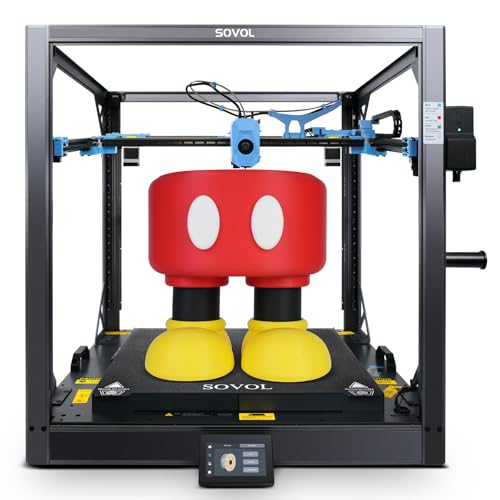
Sovol SV08 MAX CoreXY 3D Printer

Intarsio 68Pcs 3D Printer Tools Kit

Creality 74Pcs 3D Printing Tool Wrap Kit

AEORUM 124Pcs 3D Printing Accessory Tools

SARDVISA 22-in-1 Smoothing Tool Kit 80W
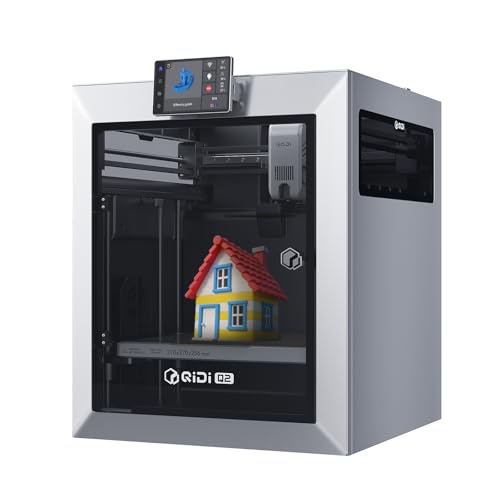
QIDI Q2 3D Printer PPS-CF

FLASHFORGE AD5M Pro CoreXY Printer

Fuitnerd 142Pcs 3D Printer Tools Kit

IXGNIJ 3030 T Slot Aluminum Extrusion 1220mmX4

Funtigee 51Pcs 3D Printer Tools Kit
More Details On Our Top Picks
Most large-format machines ask you to trade speed for size. The SV08 MAX refuses that bargain, pairing a 500mm cube of build space with a 700mm/s top speed on full linear rails along every axis. Because it’s based on the open-source Voron 2.4 design, the community documentation runs deep, which matters when you’re modifying or repairing a machine this size.
For functional work, the appeal is obvious: brackets, machine guards, and furniture-scale prototypes come off the bed in one piece instead of four glued sections. The included camera lets you check a long print from another room, and eddy-current sensor leveling handles first-layer calibration automatically.
Strong Points
- A true 500×500×500mm chamber fits full-scale parts without splitting them into sections
- XYZ linear rails keep motion smooth at high speeds, which shows up as cleaner surface finish on tall prints
- Eddy current sensing automates bed leveling, saving setup time between jobs
- Voron 2.4 heritage means abundant community mods and troubleshooting knowledge
- Onboard camera supports remote monitoring of multi-hour production runs
Things To Consider
- The footprint is substantial; measure your bench before ordering, since this machine dominates a small room
- Open-source designs put maintenance in your hands, so basic mechanical comfort helps over time
Key Specs
Who It Suits Best
Workshops and advanced hobbyists who need big, strong parts printed fast and don’t mind dedicating floor space to get them.
Where A Sibling Pick Shines
The QIDI Q2 suits engineers working with carbon-fiber filaments in a smaller footprint, thanks to its heated chamber.
A new printer without tools is half a workshop. The Intarsio kit covers the whole post-print routine in one case: deburring blades for cleaning layer lines, scrapers for stubborn beds, files for fitting holes, and a hand drill with ten bits for opening up undersized bores. Everything ships in a storage case, so nothing migrates into a junk drawer by week three.
Compatibility is broad, covering Bambu Lab, Ender 3, and Kobra machines alike, and the tool set works the same regardless of which brand sits on your desk. Owners commonly report the wire cutters and pliers handle PLA trimming cleanly, which is the job you’ll do most often.
What We Like
- Hand drill with ten bits opens pilot holes for heat-set inserts and fasteners
- Five file types let you true up mating surfaces until parts actually fit
- Lidded storage case keeps all 68 pieces organized between sessions
- Works across Bambu Lab, Ender 3, Kobra, and other popular FDM printers
Worth Noting
- Blade-based tools deserve careful storage around kids or shared spaces
- At 68 pieces, some items will see little use depending on your typical projects
Made For
First-time printer owners who want one purchase to cover removal, trimming, drilling, and finishing from day one.
Swap It Out When
The Creality 74-piece wrap kit is the better call for teachers or club members who carry tools between rooms.
Where the Intarsio kit lives in a box, this Creality set rolls up. The wrap-style organizer lays every tool flat and visible, then folds into something slim enough to slide onto a bookshelf or toss in a bag. For anyone sharing a printer bay, classroom, or hackerspace, that portability is the whole point.
The 74 pieces span assembly and teardown as much as finishing: screwdrivers and wrenches for printer maintenance, nozzle-cleaning gear for clogs, plus cutting, scraping, and grinding tools for the prints themselves. Brand-agnostic by design, it serves any FDM machine you’re likely to encounter.
Bright Spots
- Roll-up wrap keeps tools visible and travels well between workspaces
- Maintenance tools cover printer upkeep, not just print finishing
- Nozzle cleaning supplies address the most common mid-print failure
- Suits beginners and experienced operators equally
Small Caveats
- Fabric wraps offer less crush protection than a hard case in a crowded drawer
- No powered tools here, so heavy material removal means elbow grease
Right Fit For
Educators, club members, and anyone whose printing happens in more than one location.
Another Choice May Suit
The AEORUM 124-piece bag set gives dedicated home benches a deeper finishing lineup in exchange for less portability.
Finishing is where functional prints earn their keep, and this AEORUM set treats it as the main event. At 124 pieces, it goes well beyond the basics: an electric rotary tool heads the list, joined by deburring hardware, nozzle-cleaning needles, removal scrapers, and a spread of shaping implements. The soft-sided tool bag keeps the collection together without eating bench space.
Compared with the Intarsio kit earlier in this list, the difference is depth. Where that set covers essentials, this one anticipates the second and third problem you’ll hit, chamfering an edge, smoothing a bore, dressing a seam. Hobbyists who sell prints or fit parts into existing assemblies tend to reach for this tier.
Highlights
- Electric rotary tool powers through trimming jobs hand tools grind at
- Dedicated nozzle-cleaning section keeps clogs from killing a print run
- Comfortable grips matter during long finishing sessions
- Tool bag format balances capacity against shelf footprint
Points To Note
- With 124 pieces, expect a sorting session before everything earns its slot
- Beginners may find the sheer variety overwhelming at first
Feature Snapshot
Whose Shelf It Belongs On
Intermediate hobbyists and small-batch makers who finish parts to a sellable standard.
Reach For A Different Pick When
The Fuitnerd 142-piece kit adds a heat gun and cordless rotary tool for shops wanting powered options across the board.
Here’s a niche most tool kits ignore: heat-set inserts. An 80W soldering iron with a brass adapter seats threaded brass nuts into printed holes, giving functional parts metal threads that survive repeated assembly far better than printed ones. Nine interchangeable tips extend the iron into smoothing, cutting, and detail work on PLA and similar materials.
The kit rounds out with six multi-size heat-set nuts to start with, a stand, tweezers, and two sanding sticks. Unlike the general-purpose kits elsewhere on this list, everything here orbits thermal work, which makes it a smart companion piece rather than a standalone purchase.
Plus Points
- Heat-set insert capability adds durable metal threads to printed parts
- Nine brass tips handle smoothing, trimming, and fine detail tasks
- Insulated silicone sleeve improves handling comfort during long sessions
- Included stand keeps a hot iron safely parked between operations
Softer Spots
- Only six heat-set nuts are included, so ongoing projects need their own supply
- Thermal tools demand ventilation and patience; melted plastic fumes aren’t pleasant indoors
Who Should Grab It
Enclosure builders and anyone designing parts that bolt together repeatedly and need threads that last.
Not Your Match When
Pure beginners still learning bed adhesion will get more immediate value from the Funtigee 51-piece starter kit.
Carbon-fiber nylon and PPS-CF are the filaments functional printing dreams of, stiff, stable, heat-tolerant, and miserable to print without a heated chamber. The Q2 solves that with a 65°C chamber and a 370°C nozzle, unlocking materials most desktop machines simply can’t run. Parts come out with the kind of dimensional stability that matters for fixtures and load-bearing brackets.
The clever bit is leveling: the nozzle itself acts as the sensor, contacting the bed directly for first-layer accuracy independent of surface texture. QIDI positions this as a single machine spanning beginner-to-expert use, and the approachable interface backs that up. Compared with the Sovol’s huge volume, the Q2 trades size for material capability.
Reasons To Buy
- 65°C heated chamber tames warp-prone engineering filaments
- 370°C nozzle ceiling opens PPS-CF and other high-temp materials
- Nozzle-as-sensor leveling delivers consistent first layers across bed surfaces
- Grows with your skills rather than being outgrown in a year
Trade Offs
- Build volume is modest next to large-format rivals like the SV08 MAX
- Exotic filaments cost significantly more per spool than PLA
Quick Facts
Best Suited To
Engineers and serious makers printing end-use parts from nylon and carbon-fiber blends.
Look Elsewhere When
Desk-space-limited users printing mostly PLA will find the Flashforge AD5M Pro faster, quieter, and easier to place.
Not everyone has a garage workshop. The AD5M Pro squeezes CoreXY speed into a 220mm cube footprint that lives happily on a desk, and Flashforge rates it near 50dB, quiet enough to run beside you during a workday. Speed tops out around 600mm/s, so functional parts arrive quickly despite the modest size.
The quick-swap hotend ships in both 0.4mm and 0.6mm nozzles rated to 280°C, letting you trade detail for stronger, faster layers without tools drama. A built-in camera covers remote monitoring, and the bundle includes 250g of PLA so your first print isn’t waiting on a filament order.
Standout Traits
- CoreXY architecture delivers high speed in a compact frame
- Near-50dB operation suits offices, bedrooms, and shared living spaces
- Tool-free hotend swaps between 0.4mm and 0.6mm nozzles in moments
- Included 250g PLA gets you printing immediately
Minor Gripes
- No heated chamber, so engineering filaments stay off the menu
- 220mm limits part size for larger brackets and housings
The Right Fit
Apartment dwellers and office makers who want speed and quiet without sacrificing a whole room.
Consider Something Else When
Anyone printing carbon-fiber parts should step up to the QIDI Q2’s heated chamber instead.
This is the toolbox you graduate into. Fuitnerd packs 142 pieces into a four-layer slotted case, and the headline additions are powered: a cordless rotary tool and a heat gun join the usual deburring, scraping, and cutting lineup. A PTFE anti-stick nozzle treatment rounds out the maintenance side, addressing the sticking issues that plague worn brass nozzles.
Set beside the AEORUM kit reviewed earlier, the pitch is simple: more power, more coverage, more case. Veteran makers designed the assortment around machines like Bambu Lab, Ender 3, Flashforge, and Anycubic, so compatibility worries are minimal. You pay for breadth, though, and casual users won’t touch half of it.
Upsides
- Cordless rotary tool handles aggressive trimming and hole cleanup
- Heat gun enables controlled reshaping and adhesive work
- Four-layer slotted case assigns every tool a visible home
- PTFE anti-stick treatment extends nozzle life between replacements
- Tuned for Bambu Lab, Ender 3, Flashforge, and Anycubic ecosystems
Areas To Watch
- Recharging the rotary tool becomes part of your routine
- The case occupies real bench or shelf space compared with wrap kits
Details At A Glance
Built With In Mind
Dedicated home shops running multiple printers who want powered finishing under one lid.
Skip It When
Occasional printers should save money and shelf space with the Intarsio 68-piece kit instead.
Some functional printing projects outgrow plastic entirely, and that’s where raw extrusion enters. This pack brings four black 3030-profile aluminum rails, each 1220mm long, with T slots that accept standard nuts and brackets for bolt-together frames. Printer builds, CNC conversions, laser mounts, workbenches, camera rigs: the profile system reuses and reconfigures endlessly.
Rigidity is the selling point. Printed brackets bolted to aluminum stock form structures far stiffer than any all-plastic assembly, and the anodized black finish resists scuffing in a busy shop. Assembly needs only hex keys and patience, no welding or special skills.
Positives
- Four 1220mm lengths support full-size frames from one purchase
- T-slot geometry accepts modular fasteners for tool-free reconfiguration
- Anodized black coating shrugs off shop wear better than bare aluminum
- Serves printers, CNCs, lasers, benches, and custom fixtures alike
Honest Caveats
- Shipping long aluminum can occasionally arrive with dinged ends; inspect on delivery
- You’ll need corner brackets and fasteners separately to build anything
Who Will Love This
DIY machine builders and fixture designers who think in frames rather than single parts.
A Better Fit Elsewhere
Shoppers wanting finished tools rather than raw stock should look at the Fuitnerd 142-piece kit above.
What separates this budget kit from the pack is a detail most competitors skip: spare nozzles. Three MK8 brass nozzles in 0.2, 0.4, and 0.6mm sizes ride along with ten cleaning needles, so a clogged or worn tip costs you minutes, not a waiting week for parts. Around them sit the expected essentials: scrapers, spatula, files, tweezers, brushes, and deburring blades.
Against the Intarsio kit, you give up the drill and some variety but gain nozzle coverage and a lower entry point. For a first Ender-style printer, that trade often makes sense.
Best Bits
- Three MK8 nozzles in multiple sizes keep you printing through failures
- Ten cleaning needles tackle clogs the moment they appear
- Storage case keeps the compact set contained
- Covers removal, trimming, and finishing without overlap bloat
Room For Improvement
- No drilling or powered tools for heavier modification work
- MK8 nozzles won’t fit every modern machine, so check yours first
Core Details
Perfect Match For
Budget-minded beginners with an MK8-nozzle printer who want spares and basics in one go.
Where Another Pick Suits Better
Owners of newer Bambu or Kobra machines should choose the Intarsio kit for broader compatibility.
What Matters Most Before Choosing
Match The Machine To Your Material
PLA forgives almost anything, but nylon, PETG, and carbon-fiber blends demand heat. A printer like the QIDI Q2 with its 65°C chamber exists because warped brackets waste filament and weekends. Decide what your parts must survive, load, heat, vibration, before comparing speed claims.
Volume Versus Bench Space
Large-format machines such as the Sovol SV08 MAX print big parts in one piece, which beats gluing sections for strength. The cost is footprint and power draw. Measure your workspace honestly, including clearance for the door and airflow.
Budget For The Tools On Day One
A printer alone leaves you stuck. Scrapers, deburring blades, flush cutters, and spare nozzles turn a frustrating week into a productive one, which is why half this list is tooling. Plan roughly a fifth of your budget for finishing gear.
Think In Systems, Not Single Purchases
The best functional setups pair a capable printer with inserts, extrusion for mounting, and organized storage. Buying with the whole workflow in mind saves repeat shipping and mismatched parts later.
Key Considerations Across These Picks
Traps First Timers Fall Into
Chasing maximum speed specs is the classic error; real-world quality depends more on rigidity and tuning than headline numbers. Another common slip is skipping spare nozzles and needles, then stalling mid-project. Finally, many shoppers underestimate footprint, ordering a 500mm machine for a 600mm desk.
What Separates Premium From Basic
Higher-tier printers buy heated chambers, all-metal hotends, and linear rails, the ingredients that make engineering filaments printable and parts dimensionally reliable. Paying up pays off the moment your design needs to bear load or survive heat. Below that threshold, a solid mid-range machine plus good tools does the job.
Frequently Asked Questions
What makes a 3D printer good for functional parts?
Rigidity, consistent temperatures, and material range matter more than raw speed. Machines with heated chambers and quality motion systems produce parts that hold tolerance under stress.
Do I really need a tool kit for 3D printing?
Yes, removal, trimming, and nozzle maintenance are unavoidable. A basic kit prevents damaged prints, scratched beds, and days lost waiting for a single scraper.
Are carbon-fiber filaments worth it for functional prints?
For load-bearing or heat-exposed parts, they add stiffness and stability that PLA can’t match. They require higher nozzle temps and usually a heated chamber, so plan accordingly.
How important is build volume?
It determines whether parts print whole or in glued sections, which affects strength. Choose the largest volume your space and budget genuinely allow.
Can I upgrade my printer with aluminum extrusion?
Absolutely, and it’s a popular path. T-slot profiles let you build stiffer frames, enclosures, and mounting systems using printed brackets and standard fasteners.
Closing Thoughts
Functional printing rewards the right pairing: a machine matched to your materials, tools ready before the first failed print, and framing stock for when plastic alone won’t hold. Start with the printer that fits your space and filament ambitions, add the tool kit that matches your skill level, and grow from there. Your first properly fitted bracket will tell you everything you need to know about where to invest next.