
Painting a miniature you printed yourself hits different. The problem is picking a machine that actually resolves tiny faces and sword hilts without a week of calibration headaches. This shortlist covers both resin and filament options, from kid-friendly starters to detail-hungry workhorses, so you can match the printer to your desk, your budget, and your patience level.
The Shortlist At A Glance

Creality HALOT R6 Resin Printer for Beginners
FLASHFORGE AD5X Multi-Material 4-Color 3D Printer

ANYCUBIC Photon Mono 4 10K Resin Printer

FLASHFORGE AD5M CoreXY 3D Printer

Entina Tina2C Mini Starter 3D Printer

Creality SPARKX i7 Combo Multi-Color 3D Printer
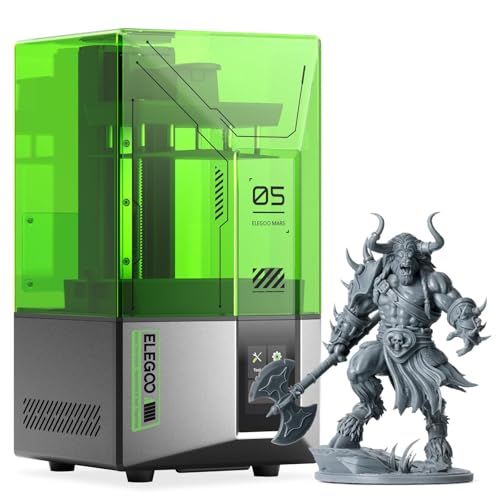
ELEGOO Mars 5 Resin 3D Printer

Phrozen Sonic Mini 8K S LCD Resin Printer

ANYCUBIC Photon Mono 4 Ultra 10K Resin Printer

Portable Compact FDM 3D Printer
More Details On Our Top Picks
Resin printing scares a lot of first-timers, and the HALOT R6 is Creality’s answer to that fear. It arrives fully assembled with a built-in boot guide that walks you through networking and basic setup, so the box-to-first-print gap stays short even if you’ve never touched liquid resin before.
The body is deliberately compact, roughly two-fifths the size of a conventional resin machine, which makes it realistic for a bedroom desk or shared craft corner. You give up some build volume compared with bigger HALOT models, though for single miniatures and small squads that trade rarely stings.
Strong Points
- Fully assembled out of the box, no frame-building session required
- Built-in boot guide handles networking and configuration step by step
- Small footprint fits crowded desks where larger resin printers won’t
- Optional protection plans cover accidental drops, spills, and broken parts with parts, labor, and shipping included at no extra cost
Things To Consider
- Limited build volume means big dioramas or full armies need multiple batches
- Resin handling still requires gloves, ventilation, and isopropyl cleanup regardless of how friendly the machine is
Who It Suits Best
Absolute beginners who want a guided, low-footprint entry into resin miniatures without assembling anything.
Where A Sibling Pick Shines
The ANYCUBIC Photon Mono 4 suits you more if finer screen resolution matters than hand-holding setup.
Filament printers rarely make a miniatures list, yet the AD5X earns its spot for terrain, bases, and multi-color display pieces. Its four-color system swaps filaments mid-print, so a dungeon wall can come off the bed already striped in stone gray and moss green.
Speed is the headline here: up to 600mm/s with acceleration reaching 20,000mm/s², figures that put it in fast-modern-FDM territory while the full-auto leveling sensor maps multiple bed points before every job. Compared with the slower portable FDM pick later in this list, this is the machine for people who print often and hate waiting.
Highlights
- Four-color printing opens up pre-colored terrain and signage without painting
- 600mm/s top speed keeps long print queues moving
- Full-auto bed leveling measures several points, cutting first-layer failures
- Filament backup support reduces abandoned prints when a spool runs dry
Trade Offs
- Filament layer lines mean surface prep before any serious miniature painting
- Multi-color systems add purge waste between color changes, which owners commonly report as the main consumable cost
At A Glance
Made For
Hobbyists building game terrain, cosplay accents, and colorful props who value throughput over microscopic detail.
Skip It When
Painter-focused miniature fans should look at the ANYCUBIC Photon Mono 4 instead, since resin resolves facial detail FDM simply cannot.
This is the machine most tabletop painters picture when they hear “resin printer.” The 7-inch 10K monochrome LCD drives pixels down to 17 by 17 microns on the X and Y axes, which translates directly into readable belt buckles, chainmail texture, and clean eyes on 28mm sculpts.
Anycubic’s LighTurbo matrix light source sits behind that screen, delivering the even exposure that keeps fine details consistent across the whole plate. Against the entry-level HALOT R6 above, you’re trading guided hand-holding for noticeably sharper output, and in our view that’s the right trade once you’ve printed a dozen minis.
Reasons To Buy
- 17-micron pixel pitch captures facial and armor micro-detail
- 10K screen resolution supports dense multi-mini plates
- LighTurbo matrix lighting promotes uniform cure quality edge to edge
- Monochrome LCD cures faster than older RGB panels, shortening batch times
Minor Gripes
- The FEP-style film will eventually cloud or dent and needs periodic replacement, a routine cost most owners plan for
- No bundled wash-and-cure station, so budget for post-processing gear separately
Right Fit For
Intermediate hobbyists printing 28mm to 75mm miniatures who want sharp detail without paying flagship prices.
Another Choice May Suit
Anyone chasing maximum resolution per dollar on tiny sculpts may prefer the Phrozen Sonic Mini 8K S further down.
CoreXY describes a motion system where both motors drive the print head along fixed rails, keeping the heavy bed still. That design damps vibration, and it’s why the AD5M holds its line quality at speeds up to 600mm/s where lighter bedslinger machines start ringing like a bell.
The 220 x 220 x 220mm chamber gives you room for large terrain tiles or a whole squad of chunky display figures in one run. Fully automatic calibration handles the setup math, and the quick-swap nozzle means a clog becomes a two-minute fix rather than an evening teardown. Next to the four-color AD5X, this sibling drops the multicolor system in exchange for a simpler, easier-to-maintain package.
Upsides
- All-metal CoreXY structure resists wobble during fast moves
- One-click fully automatic calibration removes guesswork from setup
- Quick-swap nozzle keeps maintenance downtime short
- Cube-shaped build volume fits tall scenery and busts comfortably
Softer Spots
- Single-color output only, unlike the AD5X’s four-color system
- Enclosed-frame footprint takes more shelf depth than open-bed designs
Whose Shelf It Belongs On
Makers splitting time between miniatures, functional prints, and terrain who want one dependable fast FDM machine.
Consider Something Else When
Pure miniature painters get better surface fidelity from the ELEGOO Mars 5 resin option reviewed below.
Buying a printer for a curious ten-year-old changes the requirements completely: safety, simplicity, and instant gratification outrank raw spec sheets. The Tina2C ships fully assembled and gets you to a first print in about eight minutes using guided setup through the Poloprint Cloud app.
The built-in library of over 3,000 ready-made models plus 20-plus creative DIY modules means kids can print something fun tonight without learning CAD software first. Auto leveling quietly handles the part adults usually fumble. Honest caveat: the small build volume caps you at trinket-sized figures, so treat this as a gateway machine rather than a miniatures production tool.
Bright Spots
- Fully assembled with app-guided setup in roughly eight minutes
- Auto leveling eliminates the trickiest beginner task
- 3,000+ model library delivers printable fun with zero design skills
- WiFi and app control let parents queue prints from another room
Points To Note
- Mini build volume limits output to small figurines and charms
- Entry-level components mean you’ll likely upgrade within a year of steady use
Quick Facts
Best Suited To
Families and STEM classrooms introducing kids aged roughly eight and up to their very first 3D prints.
Swap It Out When
Serious hobbyists should step up to the Creality HALOT R6, which adds resin-level detail while staying beginner friendly.
Ever wanted a figurine of yourself? The SPARKX i7’s CubeMe AI feature turns an uploaded portrait into a printable 3D model in seconds, skipping modeling software entirely. For gift-makers and custom-figure fans, that alone justifies a closer look.
The rest of the package backs it up: a CFS Lite multi-color unit, high-speed motion, 95% pre-assembly so unboxing to first print takes minutes, automatic bed leveling, and quick-swap essential parts for maintenance. The generous 10.24-inch cubic build area dwarfs the AD5M’s chamber, fitting full diorama bases in one go. Where the FLASHFORGE leans on raw speed, this Creality leans on workflow cleverness, and depending on what you print, either philosophy wins.
Plus Points
- AI portrait-to-model generation creates custom figures without CAD skills
- Multi-color CFS Lite system prints pre-colored characters and props
- 95% pre-assembled with auto leveling for a near-instant start
- Large 10.24-inch build volume accommodates big display pieces
- Quick-swap essential parts simplify long-term upkeep
Worth Noting
- AI-generated models sometimes need touch-up slicing before they print cleanly
- Combo systems carry more components, giving you more hardware to maintain over time
Who Will Love This
Gift-makers, streamers, and custom-figure enthusiasts who want personality-driven prints without learning sculpting tools.
Not Your Match When
Detail-obsessed miniature painters will find truer surfaces on the ANYCUBIC Photon Mono 4 Ultra covered next.
ELEGOO built its reputation on making resin printing boring in the best way, and the Mars 5 continues that streak. One click triggers automatic leveling, so the calibration dance that used to eat an evening disappears entirely. Unbox, power on, print.
A smart mechanical sensor watches the process and flags problems before a failed print wastes half a bottle of resin, which is the kind of quiet safeguard you appreciate around month three. Set beside the Photon Mono 4, the Mars 5 trades a little screen resolution for a friendlier failure-detection net, and for many home users that’s the smarter balance.
What We Like
- One-click automatic leveling suits every skill level
- Smart mechanical sensor catches issues early, protecting resin and parts
- Straightforward unbox-and-print workflow with minimal fuss
Small Caveats
- Vat film wear is inevitable; owners commonly report swapping it every few months of regular use
- Screen resolution trails the 10K-class ANYCUBIC panels in this list
Core Details
The Right Fit
Busy home users who want dependable resin results with the least possible tinkering between prints.
Reach For A Different Pick When
First-time resin users wanting extra guidance may find the Creality HALOT R6’s boot guide more reassuring.
Twenty-two microns. That’s the XY resolution figure that makes the Sonic Mini 8K S the detail benchmark of this list, fine enough to render skin pores and individual scales on jewelry-scale sculpts. Painters working on 15mm or smaller figures will notice the difference immediately.
The 7.1-inch monochrome LCD pairs with precise Z-axis calibration for even, accurate layers, and the compact body carries a surprising 22-pound load capacity. Open-source slicer support covering Lychee, Chitubox, and Tango keeps your software choices wide open. The honest trade-off is build volume: at roughly 16.5 x 7.2 x 17cm, you’re printing hero pieces and small squads, not massed ranks.
Standout Traits
- 22-micron XY resolution renders extreme micro-detail
- 8K mono LCD produces smooth, artifact-free surfaces
- Z-axis calibration promotes consistent layer accuracy
- Works with popular slicers including Lychee and Chitubox
- Beginner-friendly operation despite pro-grade output
Areas To Watch
- Small build volume restricts batch sizes for army painters
- High-resolution prints demand careful support placement to avoid damaging delicate features during removal
Perfect Match For
Display-piece painters and sculptors who prize per-millimeter fidelity over print quantity.
Look Elsewhere When
Volume-oriented army builders get more usable plate space from the ANYCUBIC Photon Mono 4.
Think of the Ultra as the Photon Mono 4 with a turbo button. Its ACF release film, a low-friction layer between the screen and vat, works with Anycubic’s Intelligent Release Algorithm to push print speeds up to 120mm/h while keeping surfaces free of the frosted texture slower releases can leave behind.
You keep the 10K-class precision and 7-inch HD mono screen from its sibling, so detail doesn’t suffer for the pace. For painters clearing a backlog of unpainted plastic, shaving hours off every batch compounds fast. The catch is consumable cost: ACF film runs pricier than standard FEP, something worth factoring into yearly running expenses.
Positives
- ACF film enables smoother, faster layer separation
- Print speeds reach 120mm/h for quicker batch turnaround
- 10K-class precision preserves fine sculpt detail at speed
- Intelligent Release Algorithm protects delicate features during lifting
Honest Caveats
- ACF replacement film costs more than conventional vat film over time
- High-speed settings may require test prints to dial in per-resin exposure
Details At A Glance
Who Should Grab It
Experienced painters producing miniatures in volume who want flagship speed without sacrificing resolution.
Where Another Pick Suits Better
Budget-conscious starters get nearly identical detail more affordably from the standard ANYCUBIC Photon Mono 4.
Not everyone needs a workshop centerpiece. This unbranded compact FDM unit squeezes into a dorm shelf or office cubby, printing through a 0.4mm nozzle onto a removable build plate that snaps out for easy part removal and cleaning.
The 100 x 100 x 100mm volume handles single miniatures, tokens, and small accessories, and compatibility with both rigid PLA and flexible TPU gives you material variety rare at this size. Setup leans on a quick-start guide plus step-by-step video tutorials, and the box includes starter PLA, a TF card, tools, and a Type-C power adapter. Manage expectations: layer lines are visible up close, so finished pieces need sanding and priming before paint.
Best Bits
- Removable build plate simplifies part removal and bed cleaning
- Accepts both PLA and flexible TPU filament
- Video-guided modular assembly suits complete novices
- Ships with starter filament, TF card, tools, and Type-C adapter
Room For Improvement
- 100mm cube build volume rules out terrain and large busts
- Visible layer lines require finishing work before painting
- Generic-brand support and spare-part availability can be less predictable than established names
Feature Snapshot
Built With In Mind
Students, apartment dwellers, and cautious first-timers testing the hobby on a minimal budget.
A Better Fit Elsewhere
Committed hobbyists outgrow this quickly; the Entina Tina2C offers a friendlier app ecosystem at a similar scale.
What Matters Most Before Choosing 3d Printers For Printing Miniatures
Resin Or Filament First
Resin printers cure liquid photopolymer layer by layer with light, which is why they dominate miniature printing: surfaces arrive nearly paint-ready. Filament machines extrude melted plastic and show visible layer lines, but they excel at terrain, bases, and larger props. Most dedicated miniature painters end up owning resin, while gamers building whole tables often pair one of each.
Resolution And Build Volume Trade Off
Pixel size on the LCD determines how fine a detail survives printing; anything in the 17 to 22 micron range handles 28mm faces convincingly. Bigger build areas let you print entire squads in one sitting, but they raise price and resin consumption. Decide whether you print heroes or armies before comparing screens.
Post-Processing Reality
Every resin print needs washing in isopropyl alcohol and curing under UV light, plus gloves and decent ventilation. Budget for a wash-and-cure station, nitrile gloves, and filters alongside the printer itself. Skipping this planning is the fastest way to sour on the hobby.
Support And Consumables Over Time
Vat films, FEP or ACF, wear out with use, and nozzles clog on filament machines. Quick-swap nozzle designs and widely available spare parts matter more six months in than any headline spec, so favor brands with established parts ecosystems.
Key Considerations Across These Picks
Traps First Timers Fall Into
Chasing the highest resolution number while ignoring build volume is the classic error; a razor-sharp screen on a tiny plate won’t help an army painter. The second trap is forgetting post-processing costs, which can rival the printer itself. Check consumable availability before committing to any machine.
What Separates Premium From Basic
Higher-tier models buy speed, automation, and reliability: ACF film systems, mechanical fault sensors, and auto calibration all reduce failed prints. Casual users printing weekly may never feel the difference, but anyone producing miniatures in batches recovers the premium through saved time and wasted resin avoided.
Frequently Asked Questions
Are resin printers safe to use indoors?
Yes, with precautions. Work in a ventilated space, wear nitrile gloves, and keep uncured resin away from skin and pets.
Can a filament printer make good miniatures?
It can make usable ones, especially at larger scales. Fine facial detail generally requires resin, though filament excels at terrain and bases.
How long does a plate of miniatures take to print?
Most resin plates finish in two to six hours depending on height and exposure settings. Faster machines with ACF film shave meaningful time off large batches.
Do I need special software to prepare models?
A slicer converts 3D files into printable layers, and free options like Lychee or Chitubox cover most needs. Several picks here also offer app-based libraries requiring no design skills at all.
How often do printer parts need replacing?
Vat film typically lasts a few months of regular use, and nozzles vary with filament choice. Both are inexpensive, widely stocked consumables worth keeping as spares.
Closing Thoughts
The right machine depends less on specs and more on what lands on your table: single painted heroes point toward the Phrozen or ANYCUBIC resin options, while terrain builders lean FLASHFORGE or Creality filament combos. Start honest about your space, your ventilation, and how much post-processing you’ll actually do. Whichever pick matches that reality is the one that’ll still be printing happily next year.