
Small projects deserve small machines that still behave like serious tools. Whether you’re printing desk organizers in a dorm, replacement knobs in an apartment, or classroom models between bells, the right compact printer saves space without saving on quality. This shortlist covers beginner-friendly minis, fast mid-size workhorses, multicolor machines, and one upgrade kit for older printers, so you can match a machine to your actual desk, budget, and patience level.
The Shortlist At A Glance

Bambu Lab A1 FDM 3D Printer for Beginners

Bambu Lab P1S FDM 3D Printer

Flashforge Adventurer 5M 3D Printer (600mm/s)

Entina TINA2S WiFi Mini 3D Printer

FLASHFORGE Adventurer 5M Kids & Beginners (220x220x220mm)
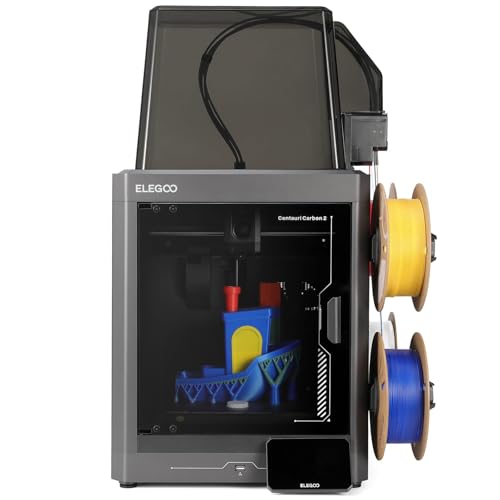
ELEGOO Centauri Carbon 2 Combo Multicolor

Anycubic Kobra X Native 4-Color Printer

HEPHi3D TINA2S Fully Assembled Mini Printer

Creality CR Touch Auto Leveling Kit

Bambu Lab A1 mini + LED Lamp Kit
More Details On Our Top Picks
The A1 is the machine most first-time makers end up recommending to their friends, and it’s easy to see why. Its open-frame design keeps the footprint modest while the motion system pushes prints along at speeds that would have cost far more a few years ago. Add the optional AMS lite unit and you get multi-color output from day one.
In a shared apartment or a busy family room, that combination matters: you get finished parts quickly without dedicating a whole corner of the house. The trade-off is noise and odor compared with enclosed rivals like the P1S below, so placement is worth a thought.
Strong Points
- High acceleration figures translate into noticeably shorter waits on small parts
- AMS lite support opens up colorful, multi-material projects without extra fuss
- Arrives ready to use, which removes the usual assembly weekend
- Optional damage coverage plans add peace of mind for households with kids
- Beginner-oriented software keeps the learning curve gentle
Things To Consider
- The open frame means drafts and curious pets are worth planning around
Key Specs
Who It Suits Best
First-time hobbyists and families who want speed, color options, and minimal setup in one approachable package.
Where Another Pick Suits Better
Anyone printing ABS-style materials or wanting a quieter, enclosed chamber should look at the Bambu Lab P1S instead.
Where the A1 stays open-air, the P1S wraps its mechanics in a fully enclosed body. That single design choice changes what you can print: temperature-sensitive filaments behave more predictably, and the machine runs quieter in a living space. Speed sits at the top of its class too, with very high acceleration figures that make long jobs feel shorter.
Pair it with a Bambu Lab AMS unit and the color ceiling rises dramatically, though that module is a separate purchase. Owners commonly report the enclosure also helps keep dust off the build area, a small thing that pays off over months of use.
What We Like
- Enclosed chamber supports a wider range of filament behavior
- Extremely fast travel speeds cut waiting time on bigger builds
- Expands to many colors when connected to a compatible AMS unit
- Coverage plans are available for drops, spills, and breakdowns
Worth Noting
- The AMS color system requires separate hardware, so budget beyond the printer itself
- Larger body demands more shelf depth than the A1 or any mini on this list
Made For
Hobbyists who have outgrown entry-level machines and want enclosed reliability plus serious speed.
Consider Something Else When
Tight desks and tight budgets point toward the Flashforge Adventurer 5M, which delivers much of the pace in a smaller, simpler package.
Speed is this machine’s calling card. A Klipper-based engine drives travel at up to 600 mm/s with aggressive acceleration, and the high-flow hotend plus ceramic heater gets the nozzle working temperature in about half a minute. For anyone churning out small brackets, clips, or prototype iterations, that adds up to hours saved each week.
The direct-drive extruder handles flexible materials better than bowden setups, and automatic bed leveling with dozens of probe points takes first-layer guesswork out of the equation. Compared with the pricier P1S, you give up the enclosure but keep most of the tempo.
Highlights
- 600 mm/s top speed makes batch printing small parts genuinely practical
- Direct drive at high nozzle temperatures widens your material choices
- Pressure-sensor auto leveling produces reliable first layers unattended
- Textured PEI plate helps finished parts release cleanly by hand
Trade Offs
- Open frame limits exotic-filament printing versus enclosed rivals
- Fast motion means regular belt and nozzle checks to stay dialed in
At A Glance
Right Fit For
Makers who value throughput, such as teachers prepping class sets or sellers producing small batches.
Not Your Match When
Absolute beginners who want the smallest possible machine will find the Entina TINA2S easier to live with.
This is the printer you buy when desk space is the constraint, not ambition. The TINA2S arrives fully assembled, levels its own bed, and connects over WiFi so prints can be sent from a phone or laptop across the room. A bundled memory card ships with ready-made models, meaning a first successful print can happen within minutes of unboxing.
For kids and cautious beginners, that instant gratification is half the battle won. The honest caveat is scale: the compact build area suits figurines, keychains, and small repairs rather than large props. Treat it as a gateway machine and it earns its spot easily.
Upsides
- Zero assembly required, so there’s no intimidating build phase
- WiFi cloud printing lets you start jobs from another room
- Preloaded model library removes the need to learn design software first
- Auto leveling spares newcomers the trickiest calibration step
Minor Gripes
- Small build volume caps project size from the start
- Entry-class components mean slower prints than the Adventurer 5M
- Cloud features depend on a stable home network connection
Who Will Love This
Kids, students, and apartment dwellers who want a genuine printer in a genuinely tiny footprint.
Look Elsewhere When
Growing hobbyists needing bigger parts should step up to the HEPHi3D TINA2S sibling list’s larger option, the Flashforge Adventurer 5M.
Think of this as the friendlier face of the Adventurer 5M line, tuned for households and classrooms. One tap triggers a full automatic leveling routine that compensates for bed imperfections on its own, which is precisely the feature that keeps young users from getting discouraged. The 220 mm cube build area comfortably fits school projects and household replacements alike.
Underneath the simple interface sits the same quick Klipper-driven motion found on the standard 5M above, so prints finish briskly. Families commonly report the one-button workflow is what sells it: no menus to decode, no paper-shim rituals.
Bright Spots
- Single-tap auto leveling delivers strong first layers with zero skill needed
- Fast travel speeds keep impatient younger users engaged
- Generous 220 mm build volume handles school and craft projects
- Simple controls make it a low-friction family machine
Points To Note
- Open frame means filament choices lean toward forgiving materials like PLA
- Bed surface benefits from occasional cleaning to maintain adhesion
Perfect Match For
Parents, teachers, and club leaders introducing groups of beginners to 3D printing for the first time.
A Better Fit Elsewhere
Solo adults chasing maximum speed and material range will prefer the standard Flashforge Adventurer 5M reviewed earlier.
Multicolor printing usually means buying a printer, then buying a color system, then hoping they cooperate. The Centauri Carbon 2 Combo skips that dance by bundling the CANVAS four-color unit with the machine. Instant color switching, smart filament detection, automatic refills, and tangle alerts all run in the background while you focus on the design itself.
ELEGOO also emphasizes broad material compatibility through refined temperature control, stretching from basic PLA toward engineering-grade stocks. Against the Anycubic Kobra X later in this list, the difference is packaging: here the color hardware arrives together, which simplifies setup for anyone who dislikes mixing ecosystems.
Reasons To Buy
- Integrated CANVAS system delivers four-color prints out of the box
- Auto refill and tangle detection reduce failed long prints
- Wide material range suits both casual and technical projects
- Combo packaging removes compatibility guesswork entirely
Softer Spots
- Color changes consume purge filament, so multi-color jobs use more material
- The combined unit needs more shelf width than a solo printer
Quick Facts
The Right Fit
Creative makers who want working multicolor capability immediately, without assembling a system from separate parts.
Swap It Out When
Shoppers planning to grow toward a huge color palette may prefer the Anycubic Kobra X and its expansion path.
The Kobra X treats color as a core feature rather than an accessory. Four colors come built in from the start, and the platform scales to nineteen shades when you add up to four ACE 2 Pro feeder units. Anycubic also targets the biggest annoyance in multicolor printing, wasted purging, with a system designed to cut changeover time roughly in half.
Setup is pitched as straightforward, which matters because color systems historically scared beginners off. One compatibility note worth flagging: only ACE 2 Pro units work here, since earlier ACE Pro hardware doesn’t pair with this machine. Plan your expansion around that.
Plus Points
- Native four-color output works from the first print
- Expansion path reaches up to nineteen colors with added feeders
- Reduced purging saves both time and filament on color-heavy jobs
- Approachable setup lowers the barrier for color-curious newcomers
Small Caveats
- Only ACE 2 Pro feeders are compatible, so existing ACE Pro owners must buy new
- Each added feeder adds cost and desk footprint to the station
Feature Snapshot
Who Should Grab It
Designers and gift-makers whose projects live or die on color variety and clean transitions.
Another Choice May Suit
Anyone wanting color hardware included in one purchase will find the ELEGOO Centauri Carbon 2 Combo more convenient.
Like the Entina version earlier, this TINA2S variant is built around one promise: printing within minutes of opening the box. Everything comes assembled, the bed levels itself, and the companion cloud app puts thousands of ready-to-print models a tap away. No slicer tutorials, no belt tensioning, no first-weekend troubleshooting marathon.
That makes it a natural fit for STEM lessons and family crafting sessions where attention spans are short. The differences from the Entina edition come down to branding and bundle emphasis, so compare current listings before choosing between them. Either way, expect mini-scale results rather than workshop-sized parts.
Standout Traits
- Fully assembled and self-leveling, removing nearly all setup friction
- Cloud app library offers thousands of printable models instantly
- Compact size fits a child’s desk or a crowded classroom shelf
- Gentle learning curve builds confidence before upgrading later
Honest Caveats
- Mini build volume rules out larger functional parts
- App-dependent workflow frustrates anyone preferring offline control
Built With In Mind
Young learners, families, and STEM educators who want guaranteed early wins over raw performance.
Reach For A Different Pick When
Teens and adults ready for bigger builds will get more mileage from the Flashforge Adventurer 5M for Kids & Beginners.
Not everyone needs a new printer; some just need their old one to stop failing at the first layer. This CR Touch sensor kit brings automatic bed leveling to a long list of Creality machines, including the Ender 3 family, Ender 5 variants, and CR-10 models running 32-bit V4.2.2 or V4.2.7 boards. The probe maps the bed and compensates for its imperfections automatically.
Installation involves wiring and firmware steps, so it suits tinkerers more than absolute novices. Done right, though, it transforms a temperamental hand-leveled printer into something closer to the set-and-forget machines higher on this list, at a fraction of the cost.
Best Bits
- Adds automatic leveling to popular Ender and CR-series printers
- Costs far less than replacing a working machine outright
- Compatible with common 32-bit Creality mainboards
- Consistent first layers mean fewer failed prints and less waste
Areas To Watch
- Requires firmware updating and careful mounting, which deters some users
- Only fits the listed Creality models, so verify your board revision first
Whose Shelf It Belongs On
Budget-conscious Ender or CR-10 owners comfortable with a screwdriver and a firmware flash.
Skip It When
You’d rather skip DIY entirely and buy modern convenience built in, which points straight at the Bambu Lab A1.
The A1 mini already ranks among the easiest entry points in 3D printing, with automatic calibration handling the fiddly work behind the scenes. This bundle adds an LED lamp kit, turning printed lampshade designs into actual working lights for desks, shelves, and handmade gifts. It’s a rare combo that gives beginners a finished, useful object almost immediately.
Naturally, the mini format means a smaller build area than the full-size A1 at the top of this list, so large prints stay off the menu. As a starter machine with a creative hook, though, few bundles compete.
Positives
- Automatic calibration makes first prints nearly effortless
- Included LED kit converts printed shades into functional décor
- Compact body suits bedrooms, dorms, and office desks
- Gift-friendly outcome: a working lamp made by your own hands
Room For Improvement
- Reduced build volume limits project scale versus the standard A1
- Lamp projects require compatible model files to light up properly
Core Details
Best Suited To
Gift-makers, students, and décor fans who want charming, functional results from a desk-sized machine.
Where A Sibling Pick Shines
Larger ambitions call for the full-size Bambu Lab A1, which adds build volume and AMS lite color options.
What Matters Most Before Choosing 3d Printers For Small Projects
Footprint Versus Build Volume
Desk space and part size pull in opposite directions. A mini like the TINA2S occupies barely more room than a coffee maker, yet caps you at trinket-scale output. Measure both your available surface and the largest object you realistically want, then buy for the bigger number.
Speed Claims In Context
Manufacturers quote peak travel speeds under ideal conditions. Real-world gains depend on acceleration, hotend flow, and cooling, which is why the Adventurer 5M’s 600 mm/s figure pairs with a high-flow nozzle and ceramic heater. Fast machines reward you most on repeated small parts, not one-off showpieces.
Color Capability Costs
Multicolor printing sounds magical until you meet purge waste and extra hardware. Bundled systems like the Centauri Carbon 2 simplify ownership, while modular routes like the Kobra X spread cost across future upgrades. Decide how often you’ll actually print in color before paying for the privilege.
Open Frame Or Enclosed
Open frames suit PLA and ventilated rooms; enclosures tame warping-prone filaments and dampen noise. Households with pets, kids, or drafty windows tend to appreciate the P1S-style sealed chamber despite the extra bulk.
Key Considerations Across These Picks
Traps First Timers Fall Into
The classic error is buying for the spec sheet instead of the desk. A blazing-fast printer crammed into a wobbly shelf produces failed layers, not masterpieces. Another slip: ignoring consumables. Filament, spare nozzles, and bed adhesive are recurring costs, so factor them into any comparison. Finally, check connectivity expectations early, since cloud-reliant minis disappoint offline households.
What Separates Premium From Basic
Higher-tier machines earn their price through motion quality, enclosed chambers, and integrated color systems. You’re paying for fewer failed prints, quieter operation, and materials beyond basic PLA. Casual users printing occasionally won’t feel that gap; daily makers prototyping or selling small batches will recover the difference in saved time and material within months.
Frequently Asked Questions
Are mini 3D printers good for beginners?
Yes, models like the TINA2S arrive assembled and self-leveling, which removes the hardest early hurdles. Their small build area is the only real limitation.
Do I need an enclosure for PLA?
No, PLA prints happily on open frames like the A1 in a draft-free room. Enclosures mainly benefit temperature-sensitive engineering filaments.
How much desk space does a compact printer need?
Most minis fit within roughly a square foot, while mid-size machines like the Adventurer 5M need closer to two. Always leave clearance around moving parts.
Is multicolor printing wasteful?
Somewhat, since color changes purge leftover filament from the nozzle. Systems with efficient purging, like the Kobra X, reduce that loss considerably.
Can I upgrade an older Ender 3 instead of replacing it?
Absolutely. A CR Touch leveling kit restores first-layer reliability cheaply, provided your mainboard matches the supported versions.
Closing Remarks
Small projects don’t demand small thinking, just the right-sized tool. Match the machine to your space, your materials, and your patience, whether that’s a gift-ready A1 mini bundle or a speed-focused Adventurer 5M. Start with the project you actually want to make, and the rest of the decision tends to sort itself out.