
Anyone who has sanded a print for an hour knows the frustration: visible layer lines, stringing, and rough corners that ruin an otherwise good model. The machines below are built to fight that problem, pairing fast CoreXY motion systems, auto bed leveling, and refined extruders with surface quality in mind. A couple of finishing tools round out the list, because even a great printer benefits from a light touch-up now and then. Whether you’re printing display pieces, functional parts, or gifts, there’s a fit here for your bench and your budget.
The Shortlist At A Glance
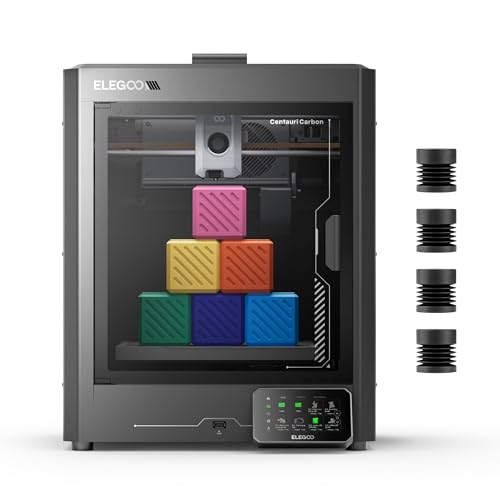
ELEGOO Centauri Carbon CoreXY 3D Printer

Creality Ender-3 V3 KE 3D Printer

Creality K2 Combo Multicolor 3D Printer
Creality K1C High-Speed 3D Printer

FLASHFORGE AD5M CoreXY 3D Printer

SARDVISA 22-in-1 Smoothing Tool Kit
Creality K1C Fast Speed Auto Leveling 3D Printer

Creality CR Touch Auto Leveling Kit

Bambu Lab A1 Combo + LED Lamp Kit

FLASHFORGE AD5M Pro with 250g PLA
More Details On Our Top Picks
The Centauri Carbon arrives fully assembled and pre-calibrated, which means your first print can happen the same evening you unbox it. Its CoreXY motion system keeps the moving mass low, so fast travel doesn’t shake layer edges into ridges you’d have to sand later.
A 256x256x256mm chamber gives you room for helmets, large vases, or batch runs of smaller parts, and the 320°C nozzle opens the door to higher-temp filaments beyond basic PLA. The built-in camera lets you check progress from another room instead of hovering over the machine.
Strong Points
- Fully assembled with auto calibration, so setup takes minutes rather than a weekend of tinkering
- 500mm/s top speed shortens long prints dramatically compared with entry-level bedslingers
- 320°C nozzle headroom suits PLA through tougher engineering materials
- Integrated camera makes remote monitoring practical for overnight jobs
Things To Consider
- The enclosed footprint needs a dedicated spot; measure your shelf before ordering
- Owners commonly report the stock build plate benefits from a wash between material swaps
Who It Suits Best
Beginners who want a no-fuss start and experienced makers who value speed in equal measure.
Where Another Pick Shines
Shoppers chasing multicolor output will find the Creality K2 Combo’s CFS system a better match.
The Ender name has long been the default first printer, and the V3 KE carries that torch with modern hardware. A Sprite direct-drive extruder feeds filament close to the hotend, which improves retractions and helps surfaces come off the plate cleaner than bowden setups manage.
At up to 500mm/s with strong acceleration, it’s quick for its class, though you may find the sweet spot for cosmetic parts sits somewhat lower. The 220x220x250mm volume handles most hobby models comfortably, and the touch UI with live model preview keeps operation approachable.
What We Like
- Direct extrusion gives better control over stringing and small details than budget bowden designs
- 300°C-capable hotend with ceramic heater and bi-metal heatbreak widens your filament options
- Auto-leveling removes the manual paper-shim ritual older Enders demanded
Minor Gripes
- An open frame means drafts from nearby windows or vents can affect outer-wall finish
- At maximum speeds, some owners report sacrificing a little surface polish for time saved
Right Fit For
Hobbyists upgrading from an aging Ender 3 who want modern speed without a premium price tag.
Skip It When
You need a fully enclosed machine for ABS or ASA; the ELEGOO Centauri Carbon above is the sturdier choice there.
Painting a print by hand is where most surface-quality dreams go to die, so the K2 Combo attacks the problem at the source: color. The bundled CFS unit feeds four spools, and daisy-chaining up to four units gets you sixteen colors in a single model.
The 260x260x260mm build area covers the majority of everyday projects, and 95% pre-assembly means you’re bolting on a few parts rather than building a kit. A smart AI camera watches for failed layers, and Silent Mode keeps noise down during long evening runs.
Highlights
- CFS multicolor system eliminates post-print painting for decorative models
- 600mm/s capability trims hours off larger multi-color jobs
- AI camera catches spaghetti failures early, saving spool and time
- Auto leveling plus near-complete assembly gets you printing quickly
- Quiet mode suits shared living spaces and home offices
Small Caveats
- Color changes add purge waste, so multi-hue prints consume noticeably more filament
- The combo occupies more desk space than single-spool machines like the AD5M
Quick Facts
Made For
Makers who sell or gift decorated figures and want factory-clean color straight off the plate.
Another Choice May Suit
Single-material functional printing is cheaper on the Creality K1C, reviewed next.
Carbon-fiber-filled filaments are brutal on standard nozzles, wearing them into rough bores that scar every outer wall. The K1C answers with a clog-resistant direct extruder and a tri-metal “Unicorn” nozzle designed to shrug off abrasive blends while keeping flow consistent.
Its lightweight CoreXY frame pushes 600mm/s with 20,000mm/s² acceleration, and vibration damping holds surface quality steady at pace. The AI camera and silent operation round out a package aimed squarely at people printing brackets, enclosures, and drone parts weekly.
Upsides
- Abrasion-ready nozzle handles carbon fiber blends without constant tip swaps
- High acceleration with damping keeps curved walls smooth even in fast modes
- 300°C ceiling supports nylon and other demanding materials
- AI camera adds a safety net for unattended prints
Points To Note
- Abrasive filaments still consume nozzles faster than PLA; keep spares on hand
- Enclosed design traps heat, which is great for ABS but means waiting before reaching in
Who Will Love This
Engineers and tinkerers printing functional parts in tough filaments several times a week.
Consider Something Else When
Pure beginners on a tighter budget get more approachability from the Ender-3 V3 KE earlier in this list.
Bed leveling is the number-one cause of ugly first layers, and the AD5M removes it entirely with one-click full auto calibration. Press a button, walk away, and the machine maps the plate itself before laying down a consistent base.
The all-metal CoreXY structure keeps motion precise at up to 600mm/s, and the quick-swap nozzle design turns a clogged tip from a half-hour teardown into a two-minute job. At 220x220x220mm, the volume suits figurines, organizers, and most household replacement parts.
Bright Spots
- Full auto calibration delivers reliable first layers, the foundation of a smooth finish
- Tool-free nozzle swaps make maintenance realistic for non-tinkerers
- Rigid metal frame resists the wobble that shows up as banding on tall prints
Honest Caveats
- No built-in camera on this base model, unlike the AD5M Pro later in this roundup
- Open sides mean ambient temperature swings can influence warp-prone materials
Details At A Glance
Who Should Grab It
First-time owners who want dependable results without learning calibration menus.
Swap It Out When
Remote monitoring matters to you; the FLASHFORGE AD5M Pro includes a camera and ships with filament.
Even the best printer leaves seams, and this kit is how you erase them. The 80W soldering-style iron comes with nine interchangeable brass tips, letting you melt away zits, blend layer steps on curves, and weld small cracks invisibly.
Beyond smoothing, the assortment doubles as general maintenance gear: six sizes of heatset brass nuts for embedding threaded inserts, sanding sticks for flat faces, tweezers, and a stand that keeps the hot iron safe between passes. The insulated silicone sleeve makes extended handling comfortable.
Reasons To Buy
- Nine tip shapes cover seam removal, detail blending, and nut insertion in one tool
- Heatset inserts give printed parts real screw threads that survive repeated assembly
- Sanding sticks handle flat areas where a hot tip would leave marks
Trade Offs
- Hot-tip smoothing takes practice; expect a few scrap parts before results look clean
- Works only on thermoplastics like PLA and PETG, not resin prints
Whose Shelf It Belongs On
Prop makers, cosplayers, and anyone finishing display models where visible seams aren’t acceptable.
Reach For A Different Pick When
Your bottleneck is bed adhesion rather than finishing; the CR Touch kit below solves that instead.
This listing sits alongside the K1C reviewed earlier, sharing the same compact CoreXY chassis and 600mm/s capability. The headline difference is emphasis: this version leans hard into speed with vibration resistance tuned so outer walls stay crisp even when you push the pace.
The clog-free direct extruder and quick-swap tri-metal hotend carry over, giving you the same abrasive-filament tolerance and easy maintenance. For anyone torn between the two listings, the honest read is that both deliver the same core machine; choose based on current bundle and availability.
Plus Points
- Vibration control preserves corner sharpness at full sprint speeds
- Auto leveling means consistent first layers without manual fiddling
- Compact CoreXY body fits desks where bedslinger frames won’t
Softer Spots
- Listing provides fewer accessory details than the other K1C bundle, so verify contents before checkout
- High-speed profiles benefit from quality filament; bargain spools may show artifacts
Best Suited To
Enthusiasts who prioritize raw throughput and already own their finishing tools.
Not Your Match When
You want multicolor capability; the Bambu Lab A1 Combo further down handles that far better.
Millions of Ender 3-series printers are still running without bed leveling, and warped first layers are the usual symptom. This CR Touch sensor kit retrofits automatic probing onto Ender 3, Ender 3 Pro, Ender 3 V2, Ender 3 Max, Ender 5, Ender 5 Pro, and CR-10 machines using 32-bit V4.2.2 or V4.2.7 boards.
Once installed, the probe maps the bed and compensates for tilt in firmware, so squished corners and lifted edges largely disappear. It’s the cheapest route to visibly better bottom surfaces if you already own a compatible machine.
Standout Traits
- Broad compatibility across the most popular budget printer family ever sold
- Automatic mesh compensation fixes first-layer flaws that manual leveling never fully solves
- Genuine Creality part avoids the firmware headaches generic probes sometimes cause
Room For Improvement
- Installation requires wiring and firmware flashing, which intimidates absolute newcomers
- Probe offset needs careful calibration after mounting, per commonly reported owner experience
Core Details
The Right Fit
Tinkerers keeping an older Ender alive who want modern leveling without replacing the whole machine.
Where A Sibling Pick Shines
Anyone starting fresh should skip retrofitting entirely and buy the ELEGOO Centauri Carbon with leveling built in.
Bambu Lab changed expectations for what a consumer printer should do out of the box, and the A1 Combo bundles the AMS lite feeder for automatic multi-color swaps. This particular package adds an LED lamp kit, turning printable lampshade designs into working lights without sourcing electronics separately.
The A1’s bed-slinger design is quieter and gentler on desks than CoreXY rivals, and its speed and precision hold surface quality well on decorative work. Gift makers and décor hobbyists get a complete creative pipeline in one purchase.
What We Like
- AMS lite automates color changes for polished, paint-free finished pieces
- Included LED kit converts prints into functional lamps immediately
- Refined motion system produces consistently clean outer walls
- Approachable software ecosystem shortens the learning curve considerably
Worth Noting
- AMS lite uses an open spool holder, so humidity-sensitive filaments need dry storage
- Open-frame design limits higher-temperature materials compared with enclosed picks here
Perfect Match For
Creators selling handmade lamps, nightlights, and colorful gifts at markets or online.
Look Elsewhere When
Engineering-grade materials are your focus; the Creality K1C’s enclosure and 300°C hotend fit that brief better.
The AD5M Pro takes the base AD5M formula and adds the two features people end up wishing for: a built-in camera and genuinely quiet running at around 50dB. That noise level is closer to a quiet conversation than typical printer whine, which matters in apartments and shared offices.
The bundle also throws in 250g of PLA, so your first print isn’t delayed by a separate spool order. Dual 0.4mm and 0.6mm quick-swap hotends rated to 280°C let you trade fine detail for faster infill coverage depending on the job.
Positives
- 50dB operation makes bedroom and office placement realistic
- Included PLA spool gets you printing on day one
- Two nozzle sizes cover detailed miniatures and chunky functional parts alike
- Camera enables remote checks on long prints
Areas To Watch
- Same open-frame limits as the base AD5M for temperature-sensitive filaments
- 250g of filament goes quickly once you’re past test prints
Feature Snapshot
Built With In Mind
Apartment dwellers and office makers who need capable hardware that won’t annoy housemates or coworkers.
Another Choice May Suit
Shoppers wanting multicolor output should weigh the Bambu Lab A1 Combo instead of adding a second single-color machine.
What Matters Most Before Choosing A Smooth-Finish Printer
Motion System And Frame Rigidity
CoreXY designs move the print head on both axes while the bed stays put, which reduces wobble at speed. That stability shows up directly as cleaner corners and fewer ripples on curved walls. Bedslinger machines can still look great at moderate speeds, so don’t dismiss them outright.
First-Layer Reliability
Nothing ruins a finish faster than a squished or detached first layer. Auto bed leveling, whether built in or added via a kit like the CR Touch, compensates for plate tilt automatically. Prioritize machines that handle this step for you.
Enclosure And Material Range
An enclosed chamber keeps ambient temperature stable, which matters for ABS, ASA, and nylon. Open frames print PLA and PETG beautifully but struggle in drafty rooms. Match the frame style to the filaments you actually plan to run.
Nozzle And Extruder Design
Direct-drive extruders push filament right at the hotend, improving retraction control and reducing stringing. Hardened or tri-metal nozzles resist wear from abrasive carbon-fiber blends. These components determine how much maintenance your surface quality demands over time.
Key Considerations Across These Picks
Traps First Timers Fall Into
Chasing maximum advertised speed is the classic error; cosmetic parts usually look better at 60 to 70% of a machine’s peak rate. Skipping filament storage is the second, since damp spool causes fuzzy walls no printer can fix. Buy one good dry box before buying a second printer.
What Separates Premium From Basic
Higher-tier models spend money on rigidity, quieter drivers, cameras, and automated calibration, all of which reduce your hands-on time. The upgrade pays off once you print weekly; casual monthly users rarely feel the difference. Spend on filament quality first, hardware second.
Frequently Asked Questions
Do faster printers actually produce smoother surfaces?
Not inherently. Speed only looks clean when the motion system controls vibration well, which is why CoreXY machines dominate this list.
Is auto bed leveling really necessary?
For consistent first layers, yes. Manual leveling works but drifts over time, and every drift shows up in your bottom surface.
Can I smooth prints without extra tools?
Light sanding works on flat areas, but seams and curves respond far better to a heated tool like the SARDVISA kit included above.
Does an enclosure improve print quality?
It stabilizes temperature, which reduces warping and cracking on ABS and ASA. For PLA indoors, an open frame is usually fine.
How much filament should I keep on hand?
Two to three spools covers most hobbyists comfortably, stored dry. Multi-color printing consumes more due to purge waste between swaps.
Closing Thoughts
A smooth finish starts with stable hardware and ends with patient finishing, and the ten items above cover both ends of that pipeline. Match the machine to your space, your materials, and how often you’ll actually print, then let auto calibration handle the tedious parts. Whichever direction you go, cleaner layers are well within reach this year.