
Carrying two guitars to every gig gets old fast, and most players eventually look for a way to leave the acoustic at home. That’s the gap acoustic simulator pedals fill: they reshape an electric guitar’s signal so it reads as an acoustic instrument through a PA, mixer, or amp. The ten options below cover the full range, from budget single-purpose boxes to studio-grade amp and cab modelers. Some are dedicated simulators, while others pair the effect with preamps, EQ, delay, or reverb so you can build a complete direct-to-board rig in one footprint. Whether you play coffeehouse sets, church services, or bedroom recordings, there’s a fit here for your budget and your board space.
The Shortlist At A Glance
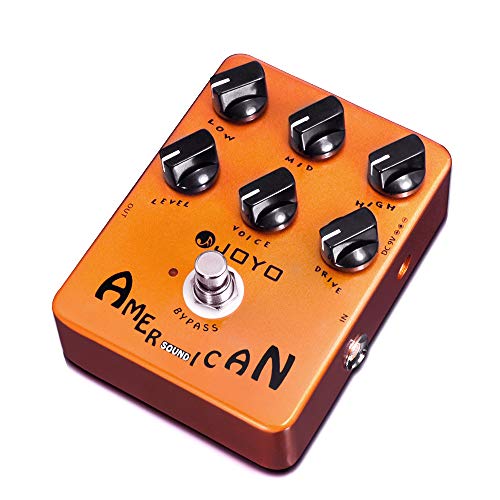
JOYO American Sound JF-14 Tube Amp Simulator Pedal

BOSS CH-1 Super Chorus Pedal

SONICAKE Levitate Delay Reverb Pedal

SONICAKE Sonic Wood Acoustic Multi Effects Pedal

BOSS AC-3 Acoustic Simulator Pedal

Strymon Iridium Amp & IR Cab Pedal

SONICAKE IR Cabinet Simulator Loader Pedal
JOYO British Sound JF-16 Amp Simulator Pedal

DigiTech DROP Polyphonic Drop Tune Pedal

SONICAKE Tone Group 10-Band EQ Pedal
More Details On Our Top Picks
The JF-14 models classic American tube amps, which means scooped, glassy cleans on one end of its range and mid-forward Tweed-style breakup on the other. Six knobs give you control over gain, level, and tone shaping, and a built-in cabinet simulation makes it viable straight into a mixer or PA. Coffeehouse and worship players who want to ditch the amp entirely tend to get the most mileage from it.
In practice it behaves like a preamp as much as a distortion pedal, so it can sit at the front of a chain or replace your amp head altogether. The honest read: it won’t fool anyone at stadium volume, but in small rooms and recordings it holds up well.
Strong Points
- Six-knob layout covers gain, EQ, and output without menu diving
- Built-in cab sim means no separate speaker emulation box needed
- Works direct into a PA or audio interface for silent-stage setups
- Owners commonly report convincing American-style breakup at low cost
Things To Consider
- Plastic housing feels lighter than metal-cased rivals, so pack it carefully
- Like most compact pedals, it needs a 9V center-negative supply bought separately
Who It Suits Best
Gigging guitarists on a budget who play clean-to-crunch styles and want one pedal to replace an amp.
Where Another Pick Suits Better
Players chasing British-flavored crunch will prefer the JOYO British Sound JF-16 later in this list.
Chorus splits your signal and detunes a copy against the original, creating that shimmering doubled sound heard on countless records. The CH-1 has been doing this since 1989, and its design has barely changed because it never needed to. Unlike the amp simulators elsewhere here, this one adds width rather than replacing your core tone.
The stereo outputs let the effect travel between left and right speakers, which sounds noticeably wider than mono chorus in a live room. Keyboardists benefit too, since the circuit handles synth signals gracefully. Three controls keep setup quick even mid-set.
What We Like
- Mono and stereo connectivity widens your sound across two speakers
- Simple three-knob interface works for beginners and setlist changes alike
- Handles both guitar and keyboards without tonal weirdness
- Decades-long production run suggests parts and reliability are well proven
Worth Noting
- Only depth, rate, and effect level are adjustable, so extreme tones are off the table
At A Glance
Made For
Lead players who want clean, cutting modulation that sits politely under vocals in a band mix.
Consider Something Else When
Acoustic players needing preamp and EQ alongside their effects should step to the SONICAKE Sonic Wood instead.
Delay repeats your notes like an echo; reverb recreates the sense of playing in a room. The Levitate packs both digital effects into one compact housing, with delay time stretching to 2000 milliseconds, long enough for ambient washes. A tap tempo switch lets you lock repeats to song tempo during live shows, which solo loopers especially appreciate.
The reverb side offers a plate-style character with adjustable decay, and a trail function lets effects ring out naturally after you switch off. Buffer bypass circuitry keeps your dry signal intact when the pedal is engaged. Power comes from any standard 9V center-negative supply, sold separately.
Highlights
- Two essential time-based effects in a single small enclosure
- Tap tempo keeps echoes locked to the beat on stage
- Adjustable decay and trail control suit both subtle and ambient playing
Trade Offs
- No power supply included, so budget for one before your first rehearsal
- Single delay and reverb types limit experimentation compared to multi-mode units
Right Fit For
Beginners and budget-conscious players building a first pedalboard around essentials.
Not Your Match When
Tone shapers wanting surgical frequency control will get more from the SONICAKE Tone Group 10-band EQ.
Where the BOSS AC-3 fakes an acoustic guitar from an electric signal, the Sonic Wood is built for actual acoustic-electric instruments. An analog preamp with two-band EQ recreates the warmth of a classic acoustic amplifier, while chorus, delay, and reverb cover the effects most singer-songwriters actually use. One pedal, one power jack, one line to the board.
The XLR output is the headline feature here: it connects directly to a PA, mixer, or audio interface without adapters or a DI box. Tap tempo plus a tail on/off switch gives you fine control over how effects decay between songs. For open-mic nights and busking kits, that simplicity counts for a lot.
Upsides
- XLR output plugs straight into mixers and interfaces, no DI box required
- Analog preamp with 2-band EQ warms up thin piezo pickup signals
- Chorus, delay, and reverb cover typical acoustic set needs
- Tap tempo and tail switching allow polished transitions between songs
Minor Gripes
- Only two EQ bands, so feedback-prone rooms may need an external notch filter
- Power adapter is not bundled, a common omission at this tier
Quick Facts
Who Will Love This
Solo acoustic performers and worship musicians who plug straight into house systems every week.
Look Elsewhere When
Electric guitarists wanting amp simulation rather than acoustic enhancement belong with the JOYO American Sound JF-14.
This is the pedal that answers the question every traveling electric player asks: what if the venue wants acoustic songs and you brought only one guitar? The AC-3 uses COSM modeling, BOSS’s term for its composite object sound modeling technology, to reshape electric output into something resembling a mic’d acoustic body. Flip it on mid-set and the transition lands convincingly in a live mix.
It sits in BOSS’s standard tank-style chassis, so it survives being stomped nightly and slots into any chain. Compared to the Sonic Wood reviewed earlier, this one transforms rather than enhances, which is exactly the point. Studio users find it handy for sketching acoustic parts without booking a session player.
Bright Spots
- COSM modeling delivers believable acoustic body resonance from an electric
- Rugged BOSS enclosure stands up to years of stage foot traffic
- Saves hauling a second guitar to gigs and rehearsals
- Useful in the studio for quick acoustic-textured overdubs
Points To Note
- Close listening reveals synthesized character, especially on aggressive strumming
- Single-purpose design offers no EQ or effects beyond the simulation itself
Feature Snapshot
Perfect Match For
Guitarists in cover bands and duos who need instant acoustic textures without a second instrument.
A Better Fit Elsewhere
Players who already own an acoustic-electric and need preamp plus effects are better served by the SONICAKE Sonic Wood.
An impulse response, or IR, is a detailed sonic snapshot of a real speaker cabinet, and the Iridium builds its entire approach around them. Stereo amp simulation, IR-based cab convolution, onboard room reverb, buffered bypass switching, and 300 preset slots all live inside one pedal. That’s essentially a recording rig minus the computer.
Home recorders and late-night players get the clearest payoff: headphones or an interface replace the amp entirely, neighbors stay friendly, and tones stay consistent take to take. Against the budget JOYO sims earlier in this list, the Iridium trades affordability for depth, stereo imaging, and preset storage. You pay more, and you get measurably more.
Reasons To Buy
- 300 presets store complete amp-and-cab setups for instant recall
- Stereo output creates wide, realistic room images on recordings
- Onboard room reverb removes the need for a separate ambience pedal
- Buffered bypass protects signal integrity in long pedal chains
Honest Caveats
- Premium pricing puts it well above entry-level simulator options
- Deep feature set rewards reading the manual before your first session
Core Details
Whose Shelf It Belongs On
Serious home recorders and apartment-bound players who want amp-quality tone at whisper volume.
Swap It Out When
Players who mainly need affordable live crunch will find the JOYO British Sound JF-16 covers the basics for far less.
Most cab simulators lock you into whatever voices the manufacturer chose. This one doesn’t: it loads third-party impulse response files via drag-and-drop, with the pedal appearing as a USB drive when connected to your computer. Eleven onboard classic guitar and bass cabinet simulations come preinstalled, and a volume knob tames level jumps between IRs.
An XLR balanced output runs straight to a mixer, interface, or PA, making it a tidy last stop in a direct rig. Tinkerers who collect IR packs online will treat this as a playground; players who just want plug-and-play may find file management unnecessary fuss. It runs on any regular 9V center-negative supply.
Plus Points
- Drag-and-drop IR loading via USB requires no special software
- Eleven built-in cabinet simulations work immediately out of the box
- Balanced XLR output feeds mixers and PAs cleanly
- Works for bass cabinets as well as guitar
Small Caveats
- Volume control matters, since different IR files arrive at wildly different levels
- No amp modeling onboard, so it shapes cabinets only
Who Should Grab It
Home studio players who already own an amp sim or preamp and want flexible, loadable cab voicing behind it.
Another Choice May Suit
Anyone wanting amp and cab together in one unit should look at the Strymon Iridium instead.
Think of the JF-16 as the JF-14’s transatlantic sibling. Instead of American cleans, it chases the warm harmonic overdrive and full-bodied crunch associated with legendary 60s and 70s British rock amplifiers. The same six-knob layout carries over, including a compressor-style control that tightens low-end response under heavy strumming.
Like its sibling, it includes built-in cabinet simulation and drives a PA or mixer directly, so ampless rigs remain fully on the table. Owners frequently mention the sheer range of tones available from the six controls, from barely-broken-in growl to saturated lead voice. Classic rock and indie players will feel at home fastest.
Standout Traits
- Six knobs span gain, compression-style tightening, and full EQ shaping
- Built-in cab sim supports direct-to-mixer rigs without extra gear
- Covers everything from light crunch to saturated British-style leads
- Complements the American-voiced JF-14 for players building a two-pedal rig
Areas To Watch
- High-gain settings can get fizzy at bedroom volumes, a common report among owners
- Same lightweight housing as the JF-14, so handle transport with some care
Best Suited To
Classic rock, blues-rock, and indie guitarists who want vintage British crunch without lugging a tube head.
Reach For A Different Pick When
Sparkling clean tones matter more than crunch, and the JOYO American Sound JF-14 fits that brief better.
Polyphonic pitch shifting processes every string independently, which is what allows the DROP to retune your whole guitar down to a full octave without tracking glitches. One semitone to twelve semitones of drop tuning sit on a single dial, so switching between standard and dropped songs takes a stomp, not a restring. Bands covering down-tuned material save themselves a second guitar entirely.
The momentary/latching switch adds a performance dimension: in momentary mode, dips and trills become playable effects rather than static settings. True bypass keeps your unaffected tone untouched when disengaged. This bundle also arrives with a power supply and patch cable, which several other picks here omit.
Best Bits
- Drop tuning from one semitone to a full octave on a single dial
- Momentary mode turns pitch dips into expressive performance tricks
- True bypass preserves clean signal path when switched off
- Ships with power supply and patch cable included
Softer Spots
- Extreme octave-down settings can sound synthetic on complex chords
- Narrow focus means it does one job rather than many
The Right Fit
Cover bands and songwriters who alternate tunings nightly and refuse to haul multiple guitars.
Where A Sibling Pick Shines
Players wanting broad tone shaping rather than pitch tricks will get daily use from the SONICAKE Tone Group EQ below.
Every simulator on this list changes your tone; this one lets you correct it. The Tone Group is a fully analog 10-band equalizer with eleven sliders, each band offering up to 15dB of boost or cut. Fine slices of the frequency range mean you can tame a boomy low end or add presence without touching anything else, something a simple tone knob simply cannot do.
True bypass wiring keeps the signal path clean when disengaged, and the design suits a variety of instruments beyond guitar. Paired behind the JOYO sims or the DigiTech DROP, it functions as the final polish station on a direct rig. Sliders move precisely and hold their positions, which matters when you’re tweaking between songs.
Positives
- Ten bands with ±15dB range allow surgical tone corrections
- 100% analog circuit preserves natural feel and dynamics
- True bypass keeps your dry signal untouched when off
- Eleven sliders enable fast, precise adjustments mid-performance
Room For Improvement
- No power supply in the box, so plan for a 9V center-negative adapter
- Slider-heavy panel takes slightly more board space than mini pedals
Details At A Glance
Built With In Mind
Tone-focused players running direct rigs who want final authority over their frequency balance.
Skip It When
Beginners still learning basic controls will find the simpler three-knob BOSS CH-1 less intimidating.
What Matters Most Before Choosing Acoustic Simulator Pedals
Match The Pedal To Your Signal Chain
Start by deciding where the pedal lives in your setup. Direct-to-PA players need built-in cab simulation and ideally an XLR or balanced output, which points toward the Sonic Wood or the SONICAKE IR loader. Players keeping a traditional amp can prioritize color and texture instead, where the CH-1 or the DROP earn their spot. Buying the wrong category first is the costliest mistake in this niche.
Count Your Footswitches And Knobs Honestly
A six-knob preamp rewards players who enjoy dialing in tones; a three-knob chorus rewards those who set and forget. Neither approach is wrong, but mismatching complexity to your habits leads to pedals that gather dust. Solo performers juggling vocals rarely have spare attention for deep menus mid-song.
Weigh Power And Bypass Realities
Several picks here ship without a power supply, so factor a quality 9V center-negative adapter into your budget. Bypass type matters too: true bypass preserves your dry signal completely, while buffered designs protect tone across long chains. Either works; mixing them thoughtfully matters more than dogma.
Think About Where You Play Most
Small coffeehouses forgive modest modeling; loud stages expose it. Bedroom recorders benefit most from preset storage and stereo outputs, as the Strymon Iridium demonstrates. Honest self-assessment about your main venue beats chasing specifications you’ll never hear.
Key Considerations Across These Picks
Traps First Timers Fall Into
The most common slip is buying a simulator to fix a guitar problem it can’t address, such as poor pickups or bad strings. Simulators reshape tone; they don’t repair fundamentals. Another frequent misstep is ignoring power requirements, then discovering mid-rehearsal that no adapter came in the box. Check bypass type and output connections against your existing rig before committing.
What Separates Premium From Basic
Higher-tier units like the Iridium spend their extra cost on processing depth, preset memory, stereo paths, and loadable IR support. Entry-level pedals nail one or two sounds and stop there. The upgrade pays off once you record regularly or play varied venues; until then, a focused budget pedal often covers 90% of real-world needs.
Frequently Asked Questions
Can an acoustic simulator really replace an acoustic guitar?
For casual gigs and recordings, modern modeling gets surprisingly close in a full mix. Discerning listeners will still notice the difference in solo fingerstyle passages.
Do these pedals work with bass guitars?
Most guitar-focused models do not optimize for bass voicing. The SONICAKE IR loader explicitly includes bass cabinet simulations, making it the safer choice for four-string players.
Why don’t some pedals include a power supply?
Manufacturers at budget tiers trim bundled accessories to hit lower price points. Any standard 9V center-negative adapter works, and isolated supplies reduce unwanted noise.
What does true bypass actually mean?
When disengaged, a true bypass pedal routes your signal around its circuit entirely, untouched. Buffered bypass instead actively drives the signal, which helps over long cable runs.
Can I run these pedals directly into a computer?
Yes, provided the pedal has appropriate output. Models with XLR or balanced outputs connect to audio interfaces cleanly, while others may need an interface’s instrument input.
Closing Thoughts
Choosing among these ten comes down to one honest question: what does your rig lack today? Ampless players should start with the JOYO sims or the Sonic Wood, recorders with the Iridium, and everyone else with whichever single gap bothers them most. Start narrow, learn the pedal deeply, and expand only when a real limitation appears. Your board, and your back, will thank you.
