
Acrylic painting rewards you fast: quick drying, bold color, and surfaces that range from canvas to rocks to wood. The catch is that most starter setups fall apart at the boring parts, like rinsing brushes without turning your sink into a pigment swamp or finding canvases that don’t warp after one coat. This roundup covers ten supplies that solve those everyday problems, from texture brushes to pour-painting risers. Whether you’re setting up a kitchen-table hobby corner or stocking a serious studio, there’s a fit here for your budget and your style.
The Shortlist At A Glance

GACDR Comb Grainer Brush Set (4 Pcs)

JEChrochen Paint Brush Rinser Cup

ESRICH Canvas Boards 12 Pack Multi-Size

Nicpro 80PCS Acrylic Paint Canvas Set with Easel

Artbreezing 48 Colors Acrylic Paint Set

Styquenzer Mini Canvas Stands 12 Pcs

Fuumuui 26pcs Professional Paint Brush Set
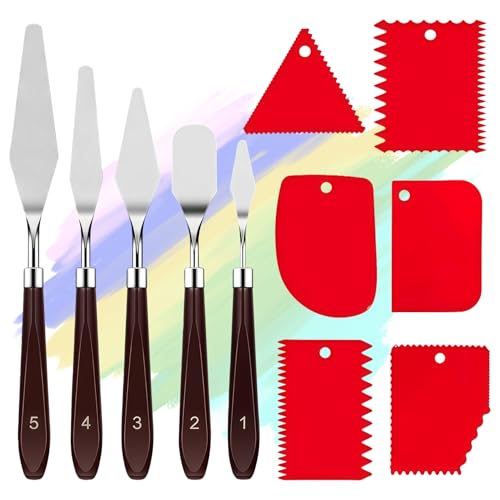
CllyCnny Palette Knife Set 5 Knives + 6 Scrapers

Shuttle Art 36 Colors Acrylic Paint Set 2oz Bottles

MyLifeUNIT Paint Brush Cleaner with Palette
More Details On Our Top Picks
Most brush sets give you rounds and flats and call it a day. This one skips the basics entirely and goes straight for texture: four comb-tip grainer brushes sized at roughly a quarter inch up to five-eighths of an inch, built on a filbert grainer shape with Korean synthetic nylon bristles. Drag one through wet acrylic and you get parallel lines that read as fur, grass, feathers, or wood grain.
The niche focus is exactly why it earns a spot here. General sets like the Fuumuui 26-piece kit below cover broad technique, while this set covers the one thing they can’t: convincing hair and grain effects without hours of stippling.
Strong Points
- Four graduated widths let you match stroke scale to subject, from fine whiskers to wide plank grain.
- Synthetic nylon holds its comb shape better than natural hair when loaded with heavy acrylic body color.
- Works across acrylic, watercolor, and oil, so one purchase serves several mediums.
- Comb tips cut fur and feather detailing time dramatically compared to painting strand by strand.
- Small footprint makes storage painless alongside an existing brush roll.
Things To Consider
- This is a specialty tool, not a starter set; you’ll still need general brushes for blocking in shapes.
- Comb bristles need prompt rinsing, since dried acrylic wedged between tines is hard to clear fully.
Who It Suits Best
Pet portrait artists, wildlife painters, and anyone adding realistic texture to landscapes will get the most mileage here.
Where A Sibling Pick Shines
Beginners building a first kit should start with the Fuumuui 26pcs Professional Paint Brush Set instead, then add this once fundamentals are covered.
Anyone who has painted with acrylics knows the routine: swish, watch the water turn to mud, walk to the sink, repeat. This ABS plastic rinser attacks that loop with a gravity-and-valve design that circulates fresh water and swaps dirty water with a single touch. It triples as a brush cleaner, a brush holder, and a small paint tray, which matters in tight spaces where counter real estate is scarce.
In a busy home studio or a classroom cart, that one-touch water change is the difference between staying in flow and constantly breaking concentration. Compared to the simpler MyLifeUNIT basin later in this list, this one automates what the other leaves manual.
Bright Spots
- One-touch rinsing keeps water clearer longer, so colors stay true between strokes.
- All-in-one layout replaces three separate items on a crowded desk.
- ABS plastic construction shrugs off drops and daily handling.
Minor Gripes
- The valve mechanism has moving parts, so occasional rinsing of the unit itself is part of ownership.
- Plastic bodies can stain over months of heavy pigment use, a common report among similar cups.
Made For
Hobbyists and beginners who paint at a desk and hate interrupting a session to change water will love this.
Swap It Out When
Painters who want a dead-simple, lid-equipped basin for travel should look at the MyLifeUNIT Paint Brush Cleaner instead.
Practice painting burns through surfaces fast, and stretched canvas gets expensive at that pace. These cotton-primed panels arrive twelve to a pack across four sizes: 4×4, 5×5, 5×7, and 8×10 inches. That spread is smarter than it sounds, since the small squares suit studies and rock-painting-style minis while the 8×10 handles a proper composition.
Boards also store flat in a drawer, unlike framed canvas, which is a quiet win for apartment dwellers. They accept acrylic, oil, gouache, and tempera, so kids’ craft sessions and adult practice share the same stack.
Reasons To Buy
- Four sizes in one pack cover thumbnails through finished pieces without extra shopping.
- Cotton priming gives tooth that grips thick acrylic passes well.
- Flat panels slide into shelves and portfolios, saving studio space.
- A dozen boards mean you can experiment freely without rationing surfaces.
Softer Spots
- Rigid boards lack the bounce and gallery depth of stretched canvas for display pieces.
- Edges are bare board, so framing or edge-painting is on you.
- Very heavy impasto may stress thinner panel cores over time.
Right Fit For
Students, teachers stocking a class, and painters logging daily studies benefit most from this pack.
Another Choice May Suit
Anyone wanting paint included with their surfaces should step up to the Nicpro 80PCS set, which bundles panels with 36 colors and an easel.
Starting from zero usually means five separate orders and a week of waiting. This 80-piece kit collapses all of that into one box: 36 artist-grade acrylic colors in 36ml tubes, ten canvas panels in three sizes, a table easel, twelve brushes, sixteen sheets of 8×10 paper, plus a palette, cleaning cup, palette knife, sponge, and color wheel. Unbox it and you’re painting the same afternoon.
The buttery consistency of the paint suits blending and layering, and the included color wheel quietly teaches mixing theory to newcomers. Against buying the Artbreezing paints and ESRICH boards separately, this bundle trades some per-item refinement for sheer convenience.
Highlights
- One purchase covers paint, surfaces, tools, and a workspace easel.
- 36ml tubes hold far more usable volume than typical starter pods.
- The color wheel helps beginners mix intentional colors instead of mud.
- Paper sheets stretch practice beyond the ten included panels.
- Table easel sets up anywhere from a dorm desk to a patio table.
- Palette knife and sponge open texturing techniques on day one.
Points To Note
- Kit brushes are serviceable rather than professional grade; upgrading later is common.
- With 80 pieces, storage and organization take a little planning.
At A Glance
Who Should Grab It
Complete beginners, gift shoppers, and anyone restarting a dormant hobby get everything needed in one delivery.
Look Elsewhere When
Experienced painters who already own brushes and easels will find better value in the Artbreezing 48-color set alone.
Color range is where cheap paint sets disappoint first, usually offering twelve near-identical hues. Artbreezing goes wider with 48 colors in 22ml pots, spanning warm earth tones through cool blues and greens. Each pot carries a pigment-rich formula designed to blend smoothly, dry quickly, and keep its strength and brightness once cured.
For painters who mix deliberately rather than squeeze straight from the tube, having both warm and cool versions of key hues makes skin tones and shadows far easier. You may find the 22ml size runs down faster than the 36ml Nicpro tubes during heavy sessions, which is the honest trade-off for the broader palette.
Upsides
- 48 distinct shades reduce how much mixing you must do to hit a target color.
- Smooth, fast-drying formula suits layered acrylic techniques.
- Good color development means less repainting faded passages.
Worth Noting
- Pots need tight lids between sessions, since acrylic dries permanently in an open container.
- No brushes or surfaces are included, so plan separate purchases.
Who Will Love This
Intermediate hobbyists and color-driven painters who already own brushes will appreciate the expanded range.
Not Your Match When
Households painting with kids may prefer the Shuttle Art 36-color set, whose larger bottles and bundled brushes suit shared use.
Pour painting has one brutal requirement: your canvas must sit elevated while paint drips off every edge. These twelve plastic risers, each about 1.57 by 1.57 by 1.18 inches, lift mini canvases and panels just high enough for runoff to clear the surface underneath. Solid-color plastic wipes clean, though dried acrylic on the tops is part of the deal.
Beyond pouring, they double as feet for staining cabinet doors, gluing projects, or drying varnished crafts. Twelve pieces mean you can run several small canvases simultaneously, something a single large stand can’t manage.
Plus Points
- Elevation keeps poured edges from welding themselves to your table.
- Twelve units support batch work across multiple canvases at once.
- Compact size stores in a pencil drawer between sessions.
Small Caveats
- Heavy pours can tip lightweight risers, so placement on a level surface matters.
- Paint pooling on top requires scraping or peeling after each session.
Perfect Match For
Fluid-art hobbyists working on mini canvases and crafters finishing doors or furniture panels.
Reach For A Different Pick When
Standard-size canvas painters should pair the ESRICH 12-pack boards with larger supports instead of these mini feet.
Brush quality shows up in two moments: the stroke itself and the hundredth session. This 26-piece set targets both, using soft synthetic nylon bristles chosen for strong paint load, smooth color flow, and elasticity that springs back instead of splaying under pressure. Owners commonly report the ferrules stay tight, which matters because loose ferrules are the usual death of budget brushes.
The assortment covers landscape work especially well, with shapes suited to skies, foliage, and water across acrylic, oil, watercolor, and gouache. Cleaning is straightforward, and the bristles tend to return to shape after rinsing. Next to the GACDR comb set’s specialty tips, this is the general-purpose backbone of a brush collection.
Standout Traits
- High load capacity means fewer dips back into the paint mid-stroke.
- Shape retention under pressure keeps edges crisp on detailed passages.
- Secure ferrules resist the shedding that plagues cheaper sets.
- Multi-medium compatibility lets one set serve acrylic and watercolor days alike.
- Easy cleanup keeps maintenance low for frequent painters.
Honest Caveats
- Twenty-six brushes need a roll or cup to stay organized and protected.
- Synthetic tips soften slightly with years of hot-water washing, a known trait of nylon.
Quick Facts
Best Suited To
Landscape painters and advancing students who want dependable brushes without natural-hair prices.
Consider Something Else When
Texture specialists chasing fur and grain effects should add the GACDR Comb Grainer Brush Set alongside, or instead of, a general kit.
A palette knife, for the unfamiliar, is a flexible steel blade used to mix paint and lay it onto canvas in thick slabs. This eleven-piece set pairs five stainless steel knives with six plastic scrapers, covering everything from delicate mixing to aggressive texture work. Stainless resists rust even after sitting damp in a rinse jar overnight, a real advantage over plain carbon steel.
The plastic scrapers earn their keep on big jobs: spreading medium, cleaning the palette, or lifting dried mistakes. One honest note, the knives also see kitchen duty for cake decorating, so expect them to pull double duty in creative households.
Best Bits
- Five blade shapes handle mixing, spreading, and impasto application.
- Rust-resistant steel survives wet storage between sessions.
- Six scrapers protect the steel knives from grunt work, extending their life.
Areas To Watch
- Blades should be wiped dry after washing to keep the finish bright long term.
- Thin steel flexes intentionally, but heavy prying can bend tips permanently.
The Right Fit
Impasto painters, mixed-media artists, and texture-heavy abstract workers get the widest use here.
Skip It When
Brush-only painters who never mix on a palette can pass; the Nicpro kit already includes a single basic knife for occasional needs.
Family paint sessions go through color fast, and tiny craft pots empty in an afternoon. Shuttle Art answers with 36 highly pigmented colors in generous 2oz (60ml) squeeze bottles, including metallic gold and silver that kids gravitate toward instantly. Twelve brushes and a palette come bundled, so the kit works straight out of the box on canvas, rocks, ceramic, and wood.
The creamy body blends and layers cleanly, giving consistent coverage across porous craft surfaces. Squeeze bottles also waste less than open pots, since you dispense only what a project needs. Compared to the Artbreezing pots, these favor volume and family durability over sheer shade count.
What We Like
- 60ml bottles last through many group sessions before running dry.
- Metallic gold and silver expand craft project options considerably.
- Bundled brushes and palette make gifting simple.
- Adheres well across canvas, rock, ceramic, and wood surfaces.
Trade Offs
- Bottle tips can clog between uses, so a quick wipe after each session helps.
- Thirty-six colors offer less mixing range than the Artbreezing 48-shade set.
Feature Card
Whose Shelf It Belongs On
Parents, teachers, and camp leaders stocking shared craft stations will get the most value.
Where Another Pick Suits Better
Solo adult painters seeking finer color control should compare the Artbreezing 48 Colors Acrylic Paint Set first.
Some tools succeed by refusing to complicate things. This grey plastic unit combines a lidded brush washer, a flat mixing palette, and a wash basin in one compact piece that slips into a tote bag. The lid seals in odor and moisture between sessions, and the whole thing weighs little enough to carry to a class or a friend’s kitchen table.
Where the JEChrochen rinser automates water changes with valves, this one stays manual and nearly indestructible, which suits painters who value simplicity over gadgets. Durable plastic shrugs off years of scrubbing, and the integrated palette means fewer dishes to wash afterward.
Positives
- Lidded design contains mess and smell during storage and transport.
- Three functions in one unit trim clutter from a portable kit.
- Lightweight build travels easily to classes and workshops.
Room For Improvement
- Manual water changes mean more trips to the tap than valve-based designs.
- Grey plastic may show pigment stains after extended heavy use.
- The basin depth limits soaking of very long handled brushes.
Core Details
Built With In Mind
Students, traveling hobbyists, and workshop attendees who carry their setup back and forth.
A Better Fit Elsewhere
Desk-bound painters who want hands-free water circulation should choose the JEChrochen Paint Brush Rinser Cup instead.
What Matters Most Before Choosing Acrylic Paint Supplies
Match Your Medium And Surface
Acrylic behaves differently on primed cotton canvas than on raw wood or ceramic, and your supplies should reflect where you actually paint. Canvas boards suit practice, while bottles of craft-friendly paint adhere broadly across porous surfaces. Pour artists need risers and fluid consistency; portrait artists need fine brushes and rich pigment.
Brush Quality Over Quantity
A dozen floppy brushes frustrate faster than four good ones. Look for synthetic nylon with documented shape retention and secure ferrules, the metal band joining bristle to handle. Loose ferrules shed hairs into wet paint, and nothing ruins a glazed sky quicker.
Think About Cleanup From Day One
Acrylic dries waterproof, so rinse tools promptly and plan where dirty water goes. A dedicated rinser cup or lidded basin protects both your sink and your brushes, and it keeps long sessions flowing without interruption.
Start With A Kit Or Build Piece By Piece
Complete kits like the Nicpro bundle remove decision fatigue and cost less than assembling separately. Experienced painters usually prefer sourcing individual components, trading convenience for control over quality at each slot.
Key Considerations Across These Picks
Traps First Timers Fall Into
The most common mistake is buying huge brush counts with unknown bristle quality, then replacing them within months. Another is skipping cleanup gear entirely, which shortens brush life and stains sinks. Check tube or pot volumes too, since tiny craft portions vanish quickly on real projects.
What Separates Premium From Basic
Higher-tier paint carries denser pigment loads, meaning stronger coverage with fewer coats and truer color after drying. Premium brushes hold their edge under pressure and survive hundreds of wash cycles. Paying up pays off once you paint weekly; casual seasonal users rarely notice the difference.
Frequently Asked Questions
Do acrylic paints work on surfaces besides canvas?
Yes, they bond well to wood, rock, ceramic, and paper with proper prep. Sealing porous surfaces lightly improves adhesion and finish.
How fast does acrylic paint dry?
Thin layers typically become touch-dry within minutes to under an hour depending on humidity. Thick impasto passages can take much longer to cure fully.
Are synthetic brushes good enough for acrylic painting?
Modern synthetic nylon performs very well with acrylics and cleans more easily than natural hair. Most working artists now rely on synthetics for this medium.
How do I keep acrylic paint from drying on my palette?
Use a stay-wet palette or mist your palette periodically during long sessions. Squeeze-bottle paints also help because you dispense only what you need.
Can kids and adults share the same paint set?
Sets like the Shuttle Art 36-color kit are formulated for shared family and classroom use. Larger bottles and bundled brushes make group sessions practical.
The Takeaway
Building a satisfying acrylic setup comes down to honest self-assessment: know your surfaces, your session length, and your patience for cleanup. Beginners get the fastest start from the Nicpro kit, while growing painters should invest in the Fuumuui brushes and a broader palette like Artbreezing’s. Add the small helpers, a rinser, risers, a comb brush, as your style demands. Whichever direction you lean, pick the item that matches how you actually paint, and let the rest follow.
