
Foam board is unforgiving. Use the wrong glue and the foam melts, curls, or peels away a week later, leaving you with warped insulation or a crooked school project. This list covers both sides of the problem: construction adhesives that bond foam panels to walls and studs without eating through them, plus self-adhesive boards, sheets, and tapes for crafters and presenters who want zero mess. Whether you’re insulating a basement on a weekend or mounting photos for a classroom display, there’s a match here for your job size and skill level.
The Shortlist At A Glance

DAP Foamboard Construction Adhesive, White, 28 oz.

DAP Foamboard Construction Adhesive, White, 10.3 Oz

3M Double Sided Foam Tape 1600T, White

MEARCOOH Self Adhesive Foam Sheets 9×12 (White)

Loctite PL300 Foamboard Adhesive 28 fl oz

Loctite PL300 Foamboard Adhesive 10 fl oz Cartridge
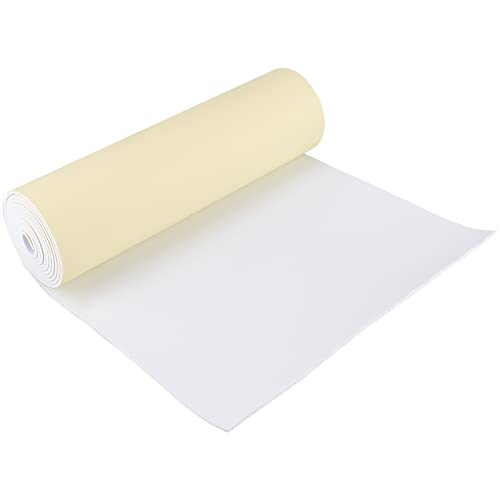
BENECREAT Self-Adhesive EVA Foam Roll 3mm Thick

Mat Board Center 9×12 Self Adhesive Foam Board
Mat Board Center 11×14 Self Adhesive Foam Board

Mat Board Center 8×10 Self Adhesive Foam Board
More Details On Our Top Picks
This big 28-ounce tube is built for the day you decide to insulate an entire wall. Its instant-grab formula holds foam paneling in place right away, which means less bracing and clamping while you work, and fewer mechanical fasteners punching holes through your insulation. That grab matters most overhead or on vertical stud walls, where a slow-bonding adhesive lets gravity win.
The white color also disappears behind seams, so sloppy beads won’t haunt you at the edges of a panel. For anyone sheathing a basement or garage in foam board, this is the tube you keep loaded all weekend.
Strong Points
- Instant grab cuts down clamping time dramatically on vertical installs
- Large capacity covers multiple full-size panels before you need a reload
- Formulated specifically for foam, so it bonds without dissolving the material
- Reduces fastener count, preserving the insulation value of each board
- White bead blends in against pale foam edges
Things To Consider
- A 28-ounce tube is heavy to maneuver one-handed; plan your gun grip accordingly
Key Specs
Who It Suits Best
DIYers tackling whole-room foam insulation who want speed and holding power over dainty application.
Where Another Pick Suits Better
Anyone patching a single panel will find the smaller DAP 10.3-ounce tube easier to handle and store.
Same family as the 28-ounce DAP above, just sized for smaller jobs. The 10.3-ounce cartridge fits any standard caulk gun, weighs almost nothing, and leaves you with less half-used product drying out in the garage. That makes it a sensible choice for replacing one damaged panel, gluing foam backing to a workbench, or knocking out a shed project over a Saturday morning.
You give up coverage per tube, obviously, but you gain control. In our view, first-time users actually do better with this size because the lighter gun is easier to lay a straight, even bead with.
What We Like
- Lightweight cartridge is easy to control for precise beads
- Instant-grab chemistry still reduces bracing on small installs
- Less leftover waste than a big tube after minor repairs
Worth Noting
- One tube handles only a couple of full panels, so big rooms mean buying multiples
- Opened cartridges have a limited shelf life once cured adhesive plugs the nozzle
Made For
Weekend DIYers and renters handling spot repairs, small sheds, or single-panel replacements.
Consider Something Else When
Insulating more than two or three large panels? Step up to the 28-ounce DAP tube for better coverage per dollar.
No gun, no curing time, no mess. This 1600T tape from 3M is a half-inch wide, runs 18 feet per roll, and uses a viscoelastic foam core, meaning the squishy middle conforms to slightly uneven surfaces while both adhesive faces grip. It bonds aluminum, glass, tile, plastic, painted wood, and yes, foam board itself, which makes it handy for attaching trim pieces, signage, or lightweight panels where liquid adhesive would ooze everywhere.
The honest caveat: it’s aggressive enough to pull paint off drywall on removal, so treat it as semi-permanent on finished walls. On hard, non-painted surfaces, though, it’s about as convenient as bonding gets.
Highlights
- Conformable foam core bridges small gaps and textured surfaces
- Works across metal, glass, tile, plastic, and hardwood
- 18 feet of tape covers plenty of mounting strips per roll
- Zero cure time, parts are held immediately on contact
Trade Offs
- Can lift paint from drywall when removed, so avoid finished interior walls
- Half-inch width limits load-bearing use to lightweight items
Quick Facts
Right Fit For
Crafters and office organizers mounting lightweight foam-backed signs, mirrors, or trim on hard surfaces.
Not Your Match When
Structural insulation work calls for a wet adhesive like the Loctite PL300 instead of tape.
Here the foam itself does the sticking. Each pack gives you ten white EVA sheets, 9 by 12 inches and 2 millimeters thick, with adhesive already applied to one side under a peel-away liner. Kids can cut shapes with safety scissors and press them onto cardstock, photo frames, or poster board without a drop of glue, which is why these show up constantly in classrooms around holiday season.
The EVA material is soft, low-odor, and dense enough to hold clean cut edges. One thing worth considering: the backing sticks best to smooth, dry surfaces, so dusty or textured paper may need extra pressure.
Upsides
- Peel-and-stick backing eliminates glue mess entirely for young crafters
- 2mm thickness gives cut shapes a raised, dimensional look
- Low-odor EVA is comfortable for indoor crafting sessions
- Ten sheets stretch across a whole class project or party activity
Minor Gripes
- Adhesion weakens on rough or powdery surfaces, so prep matters
- Sheets are craft-grade, not meant for structural or outdoor use
- Once the liner peels, placement is final, repositioning risks tearing
Who Will Love This
Teachers, parents, and scrapbookers running hands-on projects with kids or making layered paper crafts.
Look Elsewhere When
Longer continuous runs suit the BENECREAT roll better; these fixed sheets favor small cut shapes.
PL300 is the name most contractors reach for when foam meets framing, and the 28-fluid-ounce size is the production version. It’s a water-based latex adhesive, which translates to low VOC fumes, something your sinuses will appreciate in a closed-up room. High initial grab holds panels without excessive fasteners, it sets in roughly 20 minutes, and it cures fully over seven days into a permanent bond.
Crucially, it’s engineered not to burn through polystyrene foam, the failure mode that ruins panels when generic solvent adhesives are used. Wood, gypsum board, concrete, and brick are all fair game as substrates, indoors or out.
Reasons To Buy
- Water-based, low-VOC formula keeps indoor air manageable during installs
- Bonds foam to wood, concrete, brick, and drywall without melting the foam
- High grab means fewer mechanical fasteners piercing your insulation
- 20-minute set time lets you move to the next panel quickly
- Rated for both interior and exterior applications
Points To Note
- Full cure takes up to seven days, so don’t stress the bond early
- Water-based cleanup works best before the adhesive skins over
At A Glance
Best Suited To
Homeowners and contractors insulating basements, garages, or additions where fumes and foam damage both matter.
A Better Fit Elsewhere
Single-panel fixes are cheaper and lighter with the 10-ounce PL300 cartridge below.
Identical chemistry to the 28-ounce PL300, packaged in the standard 10-fluid-ounce cartridge every caulk gun accepts. You get the same low-VOC latex body, the same no-burn-through promise on polystyrene, and the same 20-minute set with a week-long full cure. The difference is purely practical: this size suits a one-wall refresh, a crawl space, or a workshop shelf where a jumbo tube would half-dry before you finish it.
Compared with the DAP tubes earlier in this list, PL300 leans on its documented substrate range, including masonry, which some foam-specific formulas skip.
Plus Points
- Standard cartridge fits tools most households already own
- Safe on all foamboard types, including delicate polystyrene
- Adheres to brick and concrete, expanding your project options
Small Caveats
- Seven-day full cure demands patience before loading the wall
- Smaller volume costs more per ounce than the bulk tube
Perfect Match For
Occasional DIYers doing targeted insulation patches or a single small room.
Skip It When
Whole-house foam installs justify the economy of the 28-ounce PL300 version instead.
Where the MEARCOOH sheets give you fixed rectangles, this BENECREAT roll hands you nearly six and a half feet of continuous 3-millimeter EVA foam, about 78.7 by 12 inches, with a strong sticky backing. Cut gaskets, drawer liners, camera case padding, weather seals, or craft borders to whatever length the job needs. The high-density foam absorbs shock, dampens sound, and provides decent insulation against drafts, which is why owners commonly report using leftover strips as door and window sealing.
It’s thicker than craft sheets, so scissors need a bit more effort, but the payoff is durability.
Bright Spots
- Continuous roll length supports custom cuts far beyond fixed-sheet sizes
- 3mm density adds real cushioning for tool cases and drawers
- Doubles as a draft and rattle seal around the house
- Strong adhesive backing holds on smooth wood, glass, and metal
Honest Caveats
- Dense foam resists dull scissors; a sharp blade gives cleaner edges
- Backing loses grip on dusty or oily surfaces, so wipe first
- Roll ships coiled and may need weighting flat before precision cutting
Core Details
The Right Fit
Makers and home improvers who need custom-length foam padding, gaskets, or sealing strips.
Swap It Out When
Pre-cut convenience for kids beats flexibility, and the MEARCOOH sheets are the friendlier option there.
This flips the usual setup: instead of gluing foam to something else, the foam board comes ready to receive your artwork. Each of the ten boards measures 9 by 12 inches with a 3/16-inch core, and one face carries a peel-and-stick adhesive layer for cold mounting prints, charts, or signs. Cold mounting simply means pressing artwork onto a tacky surface by hand rather than using a heated press, and it’s gentler on photos that heat could warp.
Lay your print gradually from one edge to avoid bubbles, and you’ve got a stiff, presentation-ready mount in minutes.
Standout Traits
- Peel-and-stick face turns any print into a rigid display board
- Cold mounting avoids heat damage to photos and inkjet prints
- Ten-board pack covers a semester of school projects
- 3/16-inch thickness stays stiff yet cuts easily with a hobby knife
Softer Spots
- Placement is permanent once artwork touches the adhesive, so measure twice
- Exposed sticky areas collect dust if left uncovered between steps
Who Should Grab It
Students, teachers, and office workers building displays, science fair boards, and framed-style photo mounts.
Another Choice May Suit
Poster-sized artwork deserves the roomier 11×14 version from the same brand.
Same cold-mounting concept as the 9×12 boards, scaled up to 11 by 14 inches, which happens to be a common print and certificate size. That alignment matters more than it sounds: artwork drops in with minimal trimming, and the extra surface area suits posters, enlarged photos, and presentation graphics. You still get ten boards per pack, each 3/16 inch thick with one adhesive face under release paper.
The larger format does demand a steadier hand during mounting, since a long print laid slightly crooked is harder to forgive than a small one.
Best Bits
- 11×14 matches popular frame and print dimensions with little trimming
- Generous area fits posters and multi-image layouts
- Self-adhesive face skips spray glue and its fumes entirely
- Consistent 3/16-inch core gives a professional, rigid feel
Areas To Watch
- Large sheets are less forgiving of misalignment during mounting
- Boards can bow slightly in humid storage, so keep them flat
Built With In Mind
Photographers, presenters, and hobby framers mounting standard-size prints without a dry-mount press.
Reach For A Different Pick When
Small photo-booth prints and kids’ art fit the 8×10 pack more economically.
The smallest sibling in the Mat Board Center trio trims down to 8 by 10 inches, another classic frame size, while keeping the same 3/16-inch thickness and single adhesive face. Ten boards come in the pack, and the compact footprint makes them easy to store flat in a closet or classroom cabinet until needed. For wallet-conscious shoppers mounting snapshots, recipe cards, or small signs, this is the entry point that still delivers proper cold-mount behavior.
Handling is easier too, since short edges align faster than long ones, a genuine advantage for beginners.
Positives
- 8×10 size matches everyday photo frames with zero trimming
- Small sheets are beginner-friendly to align and mount
- Easy to store flat without dedicating much space
Room For Improvement
- Too small for posters or certificate-sized documents
- Per-board coverage is modest, so bigger projects add up in packs
Whose Shelf It Belongs On
Casual crafters and families mounting small prints, greeting cards, and tabletop displays.
Where A Sibling Pick Shines
Larger artwork belongs on the 11×14 Mat Board Center pack, which offers far more mounting area per sheet.
Choosing Between These Adhesives For Foam Board Without Regret
Match The Adhesive To The Job Size
Coverage drives everything. A 28-ounce tube makes sense when you’re bonding a dozen insulation panels; the same purchase becomes waste after one repair. Count your panels before ordering, then buy the smallest container that finishes the job with a little margin. Crafters should think in sheets and rolls rather than ounces.
Respect Foam Chemistry
Polystyrene foam dissolves on contact with aggressive solvent-based adhesives, a mistake that ruins panels instantly. Formulas labeled for foamboard, like the latex-based PL300 or DAP options here, are engineered to skip that reaction. Generic construction adhesives are a gamble your materials shouldn’t pay for.
Surface And Location Matter
Masonry, bare wood, and drywall each bond differently, and exterior walls face temperature swings that stress joints. Check that your pick lists your substrate explicitly. Indoor craft projects have it easier, but smooth, dust-free surfaces still determine whether peel-and-stick backing holds for years or weeks.
Cure Time Versus Convenience
Liquid adhesives offer strength but demand patience, often days for a full cure. Tapes and pre-glued boards trade some ultimate strength for instant results. Decide which currency your schedule values more.
Key Considerations Across These Picks
Traps First Timers Fall Into
The most common error is grabbing a multipurpose adhesive off the shelf and watching it eat through polystyrene. The second is underestimating quantity, then bonding panels with skimpy beads that fail later. Buy foam-rated products, estimate generously, and test-fit everything dry before any adhesive touches a surface.
What Separates Premium From Basic
Higher-tier tubes typically bring low-VOC formulations, broader substrate lists including concrete and brick, and controlled grab that holds panels without constant bracing. Paying up earns comfort and versatility on big jobs. For a single craft afternoon, none of that matters, and budget options serve fine.
Frequently Asked Questions
Will regular construction adhesive melt foam board?
Solvent-heavy formulas can dissolve polystyrene foam on contact. Choose products specifically labeled safe for foamboard to avoid ruined panels.
Can I use double-sided tape on painted walls?
Aggressive tapes like the 1600T may lift paint during removal. Stick to hard, unpainted surfaces or accept possible touch-ups later.
How long does foamboard adhesive take to fully cure?
Loctite PL300 sets in about 20 minutes but reaches full strength over seven days. Avoid stressing the bond during that window.
Is self-adhesive foam board reusable?
No, the adhesive layer is designed for one-time placement. Repositioning usually tears foam or leaves residue behind.
Do I still need screws with construction adhesive?
High-grab formulas reduce fastener count substantially, though many installers keep a few screws for insurance on ceilings. Follow local building practice for structural work.
Bottom Line
Your project decides the winner here, not the rankings. Insulating a room points you toward the Loctite PL300 or DAP tubes, sized to your panel count. Mounting prints and displays favors the Mat Board Center packs, matched to your frame size. Crafters splitting the difference should look at MEARCOOH sheets or the BENECREAT roll. Match the product to the surface, buy a little more than you think you need, and take your time on placement. That’s the whole formula.
