
Fabric projects live or die by the bond. A hem that peels after one wash, a quilt sandwich that shifts mid-seam, upholstery foam that lets go at the corner: these are the frustrations that send people hunting for the right spray. This roundup covers ten adhesive sprays for fabric built for different jobs, from permanent garment repair to temporary quilt basting, so you can match the can to the task instead of guessing.
Quick Look At Our Top Picks
The Shortlist At A Glance

Scotch Super 77 Multipurpose Adhesive Spray 10.7 oz

Aleene’s Fabric Fusion Spray Pump 4 fl oz

Mod Podge Fabric 8-ounce Transparent

Odif 505 Spray and Fix Temporary Fabric Adhesive

AK Trading Multipurpose Spray Adhesive 12-Ounce

WEICON Adhesive Spray Extra Strong 500 ml

MAGIC Premium Quilting & Crafting Spray 2 Pack
Fast Tack Spray Adhesive 17 fl oz

PHIXBEAR Mighty Fabric Glue with Brush 50ml
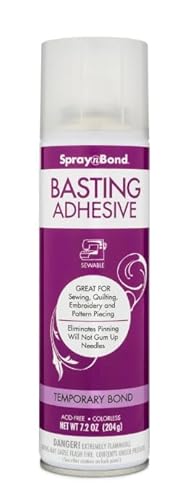
Spray’Bond’ Quilt Basting Adhesive Spray 7.2 oz
More Details On Our Top Picks
The reason this can sits at the top of most craft-room shelves is range. Scotch engineered Super 77 to grab fabric, cardboard, plastic, metal, wood, and felt with one formula, which means you stop swapping products mid-project. The aggressive initial tack grabs lightweight materials fast, and the low soak-in keeps glue from bleeding through thin fabric.
In practice, that matters most when you’re laminating fabric to poster board or attaching felt to a wood backing. You get a short working window before the bond sets, so alignment needs to happen quickly. For most household craft sessions, that trade-off is easy to live with.
Strong Points
- One can handles fabric, foam, cardboard, metal, and wood, so your supply shelf stays simple.
- Fast drying means less clamping and waiting between steps.
- Resists seep-through, so delicate fabrics stay clean-faced.
- Aggressive tack holds pieces in place almost immediately.
Things To Consider
- The quick set gives you limited repositioning time; owners commonly report needing to plan placement before spraying.
- Overspray is real, so mask surrounding surfaces and work in a ventilated space.
Key Specs
Who It Suits Best
General crafters juggling mixed materials who want one dependable can instead of a drawer of specialty glues.
A Better Fit Elsewhere
Garment-only repairs call for the Aleene’s Fabric Fusion Spray Pump, which is formulated specifically for washable clothing fabrics.
Where Super 77 spreads itself across many surfaces, Aleene’s narrows its focus to cloth, and that focus shows. The pump bottle delivers an even mist designed for woven fabrics like cotton, denim, polyester, and canvas, holding trims, patches, and appliqués through wear. A four-ounce bottle is small enough to store in a sewing kit drawer.
Two practical notes shape ownership. First, prime the pump with three to five presses before the first use, or you’ll get sputter instead of spray. Second, skip stretchy knits, spandex, jersey, felt, and plastic-backed patches; the formula isn’t built for them, and forcing it usually ends in disappointment.
What We Like
- Permanent bond rated for washable garments, so repairs survive the laundry cycle.
- Pump sprayer applies evenly without aerosol propellant fumes filling the room.
- Compact bottle tucks into a sewing basket for on-hand mending.
Worth Noting
- Not suited to stretch fabrics, felt, or plastic-backed patches, which limits its range compared with broader sprays.
- Requires priming before first use; skipping this step is the most common complaint among new owners.
Right Fit For
Menders and apparel crafters working mostly with stable wovens who want a wash-safe, low-fuss application.
Swap It Out When
Stretchy jersey or spandex projects fit the PHIXBEAR Mighty Fabric Glue better, since its brush-on liquid handles flexible garment repairs more gracefully.
This one bends the category a little: Mod Podge Fabric is a brush-on glue, sealer, and finish in a single jar rather than an aerosol. That makes it the pick for decoupage, applying paper prints or fabric swatches onto totes, banners, and clothing where you also want a protective topcoat. It dries clear with a smooth gloss, so finished pieces read polished rather than glued-together.
The honest caveat is speed. Brush-on application takes longer than a spray pass, and cleanup happens while the formula is still wet. In our view, that patience pays off on display pieces and wearable art where a sealed, uniform surface matters more than assembly speed.
Bright Spots
- Three functions in one jar: adhesive, sealer, and glossy finish.
- Dries transparent, keeping paper prints and fabric swatches looking crisp.
- Decades-long track record in the decoupage community speaks to reliability.
Small Caveats
- Brush application is slower than spraying, and tools need rinsing before the residue sets.
- Not the right tool for quick structural bonds like foam or upholstery.
Made For
Decoupage artists and tote-and-banner decorators who value a sealed, glossy finish over raw bonding speed.
Where A Sibling Pick Shines
Speed-driven mixed-material assembly suits the Scotch Super 77 far better than a brush-on sealer ever will.
Ask a room of quilters about basting spray and 505 comes up constantly, and the spec sheet explains why. It’s odorless, colorless, acid-free, and formulated not to gum needles or leave stains, which are precisely the failures that ruin a quilt sandwich. “Temporary” here means the bond releases cleanly once your stitching is done, unlike the permanent grabs of Super 77 or AK Trading’s can.
You may find the smaller can runs out faster than expected on king-size quilts, since coverage depends on how generously you mist. Still, for appliqué positioning and layering batting without pins, few products have this reputation for leaving fabric clean afterward.
Reasons To Buy
- Won’t gum sewing machine needles, keeping stitch quality consistent through long sessions.
- Odorless and colorless, comfortable for indoor use and invisible on light fabrics.
- Acid-free chemistry protects heirloom quilts and keepsakes over time.
- Holds layers steady so point matching goes faster.
Points To Note
- Temporary hold only; pair it with stitching or a permanent adhesive for lasting bonds.
- Can size is modest, so large quilts may need a second can on hand.
Quick Facts
Who Will Love This
Quilters and appliqué artists who baste layered sandwiches regularly and care about residue-free finishes.
Consider Something Else When
Budget-conscious quilters trying basting spray for the first time may prefer the Spray’Bond’ 7.2 oz can as a lower-commitment entry point.
Upholstery foam and acoustic panels punish weak adhesives: they’re porous, thick, and heavy, and a light-duty mist simply lets go. AK Trading built this can around a high-solids formulation that grips uneven and porous surfaces where thinner sprays struggle, and it offers both temporary and permanent bonding depending on how you apply it. Made in the USA, it’s aimed squarely at workshop-scale jobs.
The dried bond stays flexible and waterproof while remaining transparent, which matters on visible seams and anything near moisture. Compared with the Scotch Super 77, this is the step up when weight and thickness enter the picture rather than paper-thin craft stock.
Plus Points
- High-solids formula bites into porous foam and rough substrates.
- Waterproof, flexible cured bond survives handling and humidity.
- Dries transparent for clean-looking joints on visible work.
- Supports both temporary tacking and permanent attachment.
Softer Spots
- Overkill for delicate paper crafts; the strong grab can tear lightweight stock.
- Ventilation is non-negotiable during application, as with any high-solids aerosol.
At A Glance
Who Should Grab It
DIY upholsterers, studio builders, and anyone mounting foam panels who needs serious holding power.
Not Your Match When
Lightweight school-project materials are better served by the 17-ounce Fast Tack Spray Adhesive, which covers more area gently.
WEICON brings industrial-grade thinking to fabric bonding, and the numbers back it up. The German-made can specifies a flash-off time of five to ten minutes, an open time of up to forty-five minutes, heat resistance from minus twenty to plus eighty degrees Celsius, and roughly four square meters of yield per can. Translation: you get a generous working window to position carpet, leather, or felt before the bond locks, then a joint that tolerates temperature swings.
The dosing spray head gives controlled output on rough, uneven surfaces, a genuine advantage over basic nozzle cans. Against the AK Trading option, WEICON trades some foam-specific grip for documented specs and a wider material list including rubber and foil.
Standout Traits
- Up to forty-five minutes of open time allows careful alignment on large installs.
- Heat resistance from -20°C to +80°C suits cars, sunlit rooms, and workshops.
- Dosing head controls output for precise, low-waste application.
- Bonds felt, foam, leather, rubber, carpet, wood, and foil alike.
Trade Offs
- Flash-off waiting adds steps compared with instant-grab craft sprays.
- Large-can format is more storage than a casual crafter needs.
Technical Sheet
Whose Shelf It Belongs On
Serious DIYers tackling carpet, automotive trim, or leatherwork who want documented performance data.
Reach For A Different Pick When
Quick indoor craft fixes favor the Scotch Super 77, whose faster set skips the flash-off wait entirely.
Here’s a twist: this MAGIC can isn’t an adhesive at all, but a starch-based pressing and stiffening spray that pairs naturally with the basting options above. It flattens seams and wrinkles, stiffens fabric for cleaner cuts, and reduces stretching during point matching. Fragrance-free and flake-free, it won’t leave white residue on dark quilting cottons, a common gripe with older starch products.
The two-pack format suits frequent sewists who go through pressing spray quickly. Used alongside something like the Odif 505, it covers the prep side of quilting that adhesives can’t touch.
Highlights
- Stiffens fabric for noticeably straighter cuts and piecing.
- Flattens stubborn seams and wrinkles before assembly.
- Fragrance-free and flake-free, friendly for sensitive noses and dark fabrics.
- Two-can pack keeps a spare in the sewing room.
Areas To Watch
- Provides no bonding; you’ll still need a separate adhesive or thread.
- Aerosol cans add up in cost for very large quilts.
Built With In Mind
Quilters chasing crisp points and flat blocks who press and piece weekly.
Another Choice May Suit
Shoppers wanting actual layer adhesion should look at the Spray’Bond’ basting spray instead of a stiffening aid.
Coverage is this can’s headline: seventeen fluid ounces stretched across up to 190 square feet with a light, even pass. For classroom teachers, hobby-display builders, and anyone gluing felt, cardboard, foam, or textiles to wood, metal, concrete, or glass, that’s a lot of project per purchase. Actual coverage shifts with spray thickness and surface porosity, so plan on less for absorbent materials.
One boundary worth respecting: polyethylene, polypropylene, and PTFE plastics resist this formula, as they do most spray adhesives. Within its range, though, it’s a straightforward workhorse at a friendly size.
Positives
- Up to 190 square feet of coverage stretches across many projects.
- Fast tack speeds up multi-piece assembly.
- Handles fabric, carpet, leather, and cardboard against hard substrates.
Honest Caveats
- Ineffective on PE, PP, and PTFE plastics, so check your substrate first.
- Coverage drops on porous surfaces, meaning heavier passes burn through the can sooner.
Feature Rundown
The Right Fit
Teachers, scout leaders, and hobbyists running high-volume craft sessions on a budget.
Look Elsewhere When
Structural foam and upholstery work demands the stronger grip of the AK Trading 12-ounce can.
Not every repair calls for a cloud of spray. PHIXBEAR packages fifty milliliters of permanent, washable liquid fabric glue in a nail-polish-style glass bottle with a brush built into the cap, which solves two classic annoyances at once: lost applicators and glue that dries out in storage. The glass container seals tighter than squeeze tubes, so the last quarter of the bottle stays usable.
It’s aimed at detail work: securing patches, closing hems, and repairing leather accents where a spray would overspray everything nearby. The waterproof, washable cure means repaired clothes can return to regular laundry duty, assuming you let the bond fully set first.
Upsides
- Cap-integrated brush enables precise lines along hems and patch edges.
- Glass bottle resists drying out between uses better than tube packaging.
- Waterproof, washable bond suits everyday clothing repairs.
Minor Gripes
- Small volume covers little area; big projects need multiple bottles.
- Brush-on pace is slower than spraying for broad surfaces.
Perfect Match For
Menders fixing individual garments, patches, and leather details by hand at a desk or kitchen table.
Skip It When
Whole-garment or large-surface bonding fits the Aleene’s Fabric Fusion Spray Pump much better.
Rounding out the list is a budget-minded answer to the same problem the Odif 505 solves: holding quilt backing, batting, and tops together without pins. This 7.2-ounce can lays down a temporary, repositionable bond, so you can peel a layer back and smooth it again until the sandwich sits right. The clear, odorless formula leaves no visible residue and won’t clog machine needles, keeping your stitching clean.
As a generic-brand option, it trades some brand pedigree for accessibility, which makes it a sensible first basting spray. Embroidery fans will appreciate hoop-free stabilizing too, since the hold replaces pins that leave marks.
Best Bits
- Repositionable hold lets you adjust layers repeatedly before sewing.
- Clear and odorless, comfortable to use indoors.
- Needle-friendly formula avoids gummed-up machines.
Room For Improvement
- Hold strength varies with fabric type; dense battings may need firmer pressure during smoothing.
- Single-can pack means reordering for king-size projects.
Who Should Grab It
New quilters and embroiderers testing pin-free basting without committing to premium pricing.
Where Another Pick Suits Better
Heirloom-quality work justifies stepping up to the Odif 505, whose acid-free formula is gentler on keepsakes.
What Matters Most Before Choosing Adhesive Sprays For Fabric
Match The Bond To The Job
The single biggest decision is permanence. Permanent formulas like Scotch Super 77 lock pieces together for good, while temporary options such as Odif 505 release cleanly after stitching. Buying a permanent spray for quilt basting wastes fabric; buying a temporary one for upholstery guarantees a callback.
Know Your Substrate
Fabric rarely bonds to fabric alone. Foam, cardboard, wood, and metal each demand different grip levels, and porous or uneven surfaces need high-solids formulations like the AK Trading can. Smooth plastics such as PE and PTFE defeat most sprays entirely, so verify compatibility before committing.
Think About Application Style
Aerosols cover fast but overspray widely, demanding masking and ventilation. Pump bottles like Aleene’s offer fume-light control, and brush-on liquids such as PHIXBEAR give surgical precision on small repairs. Your workspace and lungs should influence this choice as much as the project does.
Factor In Wash And Wear
Anything worn or laundered needs a washable, flexible cure. Rigid bonds crack and peel in the dryer, so check that the product explicitly supports washing before trusting it on clothing.
Key Considerations Across These Picks
Traps First Timers Fall Into
The most common mistake is grabbing one multipurpose can for every task. A spray that excels on poster board can soak through chiffon or fail on upholstery foam. Test on scrap fabric first, and always spray from a distance of several inches to avoid saturated spots that show through thin material.
What The Higher Tier Buys
Premium cans justify their cost with documented specs: longer open times, defined heat ranges, and cleaner chemistry. WEICON’s published flash-off window and the Odif 505’s acid-free formula cost more because engineering them costs more. Frequent makers recoup that through fewer ruined projects.
Frequently Asked Questions
Can adhesive spray survive the washing machine?
Only products specifically labeled washable, like Aleene’s Fabric Fusion or PHIXBEAR, should face laundering. Always let the bond cure fully before the first wash.
Will spray adhesive stain my fabric?
Quality formulas such as Odif 505 are colorless and stain-resistant when applied correctly. Heavy application or wrong-distance spraying can leave marks, so test on scraps.
How do I remove overspray from a table?
Most spray adhesives wipe away while wet with a cloth and mild solvent recommended by the manufacturer. Dried residue typically needs gentle scraping plus solvent.
Is basting spray safe for my sewing machine?
Needle-friendly options like 505 and Spray’Bond’ are designed not to gum needles. Clean your needle periodically during long sessions regardless.
Can I reposition fabric after spraying?
Only with temporary-bond products. Permanent sprays like Super 77 grab within seconds, leaving little adjustment room.
Bottom Line
Matching the can to the task beats chasing a single universal adhesive every time. Quilters should start with the Odif 505, garment menders with Aleene’s, and general crafters with the Scotch Super 77. Whichever direction your next project pulls, the right bond is one honest test swatch away.
