
Anyone who has watched a car headliner sag or a craft project peel apart knows the frustration of a weak bond. The right aerosol glue spray fixes that in seconds, laying down an even layer of adhesive without brushes, drips, or mess. This list covers nine options across automotive repair, woodworking, and everyday crafts, so you can match the can to the job instead of guessing at the shelf.
The Shortlist At A Glance

3M Headliner & Fabric Adhesive, 18.1 oz

Scotch Super 77 Multipurpose Adhesive Spray, 10.7 oz
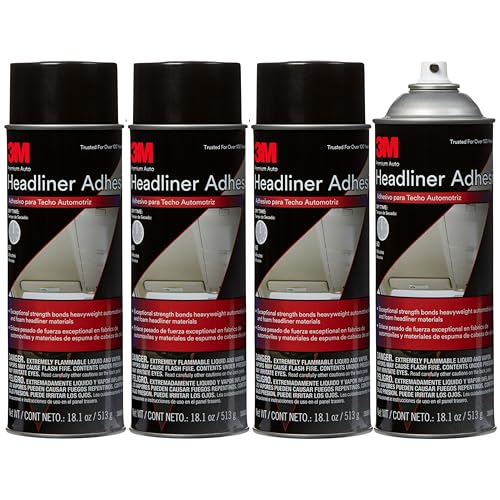
3M Headliner & Fabric Adhesive Spray 18.1 oz, 4-Pack

3M Hi-Strength Spray Adhesive 94ET, Low VOC, 19.8 oz

Gorilla Ultimate Spray Adhesive, White, 12.2 oz

3M Hi-Strength Spray Adhesive Glue 90 CA, 19 oz

Adhesive Guru CA Glue Accelerator Spray, 3.38 fl oz

Gorilla Heavy Duty Spray Adhesive, Clear, 14 oz, 2-Pack

Elmer’s Multi-Purpose Craft Spray Adhesive, 11 oz
More Details On Our Top Picks
A sagging headliner is one of those jobs that looks harder than it is once you have the right adhesive. This 3M formula was built specifically for automotive interiors, bonding heavyweight fabric and foam to metal surfaces where ordinary craft sprays give up.
The adjustable nozzle lets you direct a controlled, even layer onto large panels, which matters when you are working overhead inside a cabin. It dries clear within roughly 30 to 60 minutes depending on temperature and material, so most single-headliner jobs wrap up in an afternoon.
Strong Points
- Holds heavyweight headliner fabric against gravity, the toughest test an interior adhesive faces
- Dries clear, so no dark lines show through thin upholstery material
- Adjustable nozzle gives you control over coverage width on broad panels
- Fast set time means you can reinstall trim the same day
Things To Consider
- Aerosol cans like this need upright storage in a cool spot, and owners commonly report clogging when the nozzle is not cleared after use
- One can covers roughly a single headliner job, so larger vehicles may need a second
Who It Suits Best
Weekend restorers and DIYers tackling their first headliner or carpet repair will find this the most purpose-built option here.
Where Another Pick Suits Better
For general household gluing beyond the garage, the Scotch Super 77 Multipurpose Adhesive Spray offers broader material versatility at a lighter weight class.
Where the 3M above specializes, this one generalizes. Scotch Super 77 has been the default shop-can spray for decades because it grabs fabric, cardboard, plastic, metal, wood, and felt with equal confidence, all from a single 10.7 ounce can.
The tack is aggressive but the formula resists soaking into paper and fabric, which keeps posters flat and fabric edges crisp. In a busy craft room or home workshop, having one can that handles almost everything beats keeping five specialists on the shelf.
What We Like
- One can replaces several specialty adhesives across a typical project list
- Low soak-in keeps paper and fabric from wrinkling or showing bleed-through
- Fast grab speeds up layered builds like foam board displays
Worth Noting
- It targets lightweight materials, so heavy headliner fabric calls for a dedicated automotive formula instead
- Overspray travels, so mask surrounding areas before spraying indoors
At A Glance
Made For
Crafters, teachers, and hobbyists who want one dependable multipurpose can rather than a shelf of niche adhesives.
Consider Something Else When
Automotive interiors exposed to cabin heat suit the 3M Headliner & Fabric Adhesive better, since its formula is engineered for that environment.
This is the same automotive-grade idea as the single can ranked first, sold as a four-pack for people who restore cars regularly or run a small upholstery side business. Four 18.1 ounce cans cover several headliners, door panels, and carpet installs without a mid-project supply run.
The formula bonds fabric, foam, and upholstery to metal, plastic, or wood, and it stands up to the heat and humidity a parked car endures. That resistance is what separates it from craft sprays, which tend to soften on a dashboard in summer.
Highlights
- Four-can supply suits shops and multi-vehicle restoration plans
- Heat and moisture resistance helps headliners stay put through hot summers
- Fine, even mist prevents oversaturation that can soak through thin fabric
- Clear finish keeps repairs invisible behind upholstery
Trade Offs
- Buying four cans only makes sense with real volume ahead of you; occasional users waste the surplus
- Aerosol stock has a shelf life, so storage conditions matter over a long horizon
Right Fit For
Detailers, upholsterers, and serious restorers who go through automotive adhesive often enough to justify bulk.
Look Elsewhere When
A single headliner job fits the lone 3M Headliner & Fabric Adhesive can far more economically.
VOC stands for volatile organic compounds, the solvents that evaporate as an adhesive cures and drive most of the smell. This 94ET version keeps them under 20 percent while still delivering the high initial grab 3M is known for, which makes it easier to live with in a basement workshop or finished room.
The standout spec is the 60-minute bonding range. You can position a large laminate sheet, step back, nudge it into alignment, and still get a permanent hold. Anyone who has ruined a countertop by misplacing it ten seconds too early will appreciate that window.
Upsides
- Hour-long open time allows careful alignment on big panels
- High initial grab supports quick handling without clamps
- Adjustable-width web pattern delivers consistent coverage
- Bonds wood, laminate, metal, carpet, flooring, and select rubbers
Minor Gripes
- The generous open time works against you on small, quick jobs where instant set is preferable
- At 19.8 ounces the can is heavier than craft-oriented options
Quick Facts
Best Suited To
Woodworkers and installers laminating countertops or laying flooring who need alignment time more than instant grab.
A Better Fit Elsewhere
Projects demanding immediate permanence match the Gorilla Ultimate Spray Adhesive, whose aggressive tack locks parts on contact.
Gorilla built its reputation on holds that refuse to quit, and this flagship spray carries that DNA. The web-spray formula delivers instant aggressive tack on wood, metal, leather, laminate, rubber, and plastics, forming a permanent contact bond meant for both indoor and outdoor service.
The nozzle deserves special mention. An anti-clog design offers three spray widths plus low, medium, and high output settings, giving you finer control than most cans in this price tier manage. Car headliners, foam, felt, cork, ceramics, canvas, and laminate all fall within its range.
Bright Spots
- Three nozzle settings adapt coverage from detail work to broad panels
- Anti-clog tip reduces the dried-gunk problem common with aerosol adhesives
- Resists heat and moisture for outdoor-rated durability
- Instant tack eliminates clamp-and-wait steps
Softer Spots
- Once contact is made there is no repositioning, so dry-fit everything first
- Aggressive formulas demand good ventilation during application
Feature Snapshot
Who Will Love This
DIYers who bounce between garage repairs and outdoor builds and want one tough can for both.
Skip It When
Delicate paper crafts call for the gentler Elmer’s Multi-Purpose Craft Spray Adhesive instead.
This is the contractor-grade sibling of the 94ET reviewed earlier, trading some of that can’s repositioning time for raw holding strength. It is a contact-type adhesive, meaning both surfaces get coated, briefly dwell, then press together for a permanent high-tack lock.
The substrate list reads like a construction site inventory: laminate, wood, concrete, metal, plastic, insulation, melamine, even polyethylene and polypropylene, plastics most glues slide right off. With VOC content under 25 percent, it also clears the compliance bar many commercial jobsites enforce.
Reasons To Buy
- Permanent contact bond handles structural-feeling loads on countertops and paneling
- Sticks to difficult plastics other sprays reject
- Low-VOC formula suits occupied homes and regulated worksites
- Large 19 ounce net weight covers big surface areas per can
Points To Note
- Contact cement technique takes practice; mistakes become permanent quickly
- Overkill for light crafts, where its strength simply goes unused
Perfect Match For
Remodelers and cabinet installers bonding laminate, veneer, and insulation on real job sites.
Another Choice May Suit
Alignment-heavy work favors the 3M 94ET, whose longer open window forgives slower positioning.
Read the label carefully: this is not a glue. It is an activator, a mist you pair with cyanoacrylate (CA) super glue to force near-instant curing. One spray on either surface, add the glue, press, and the joint sets in as little as three seconds according to the maker.
That speed changes how you work. No clamps, no tape, no holding pieces together while your arm cramps. It functions across most plastics, MDF, wood, chipboard, ceramics, rubber, leather, PVC, aluminum, and dissimilar-material pairs, covering trim, cabinetry, plumbing, and hobby repairs alike.
Plus Points
- Second-scale cure times eliminate clamping entirely
- Works on dissimilar materials, a classic super glue pain point
- Weathering-resistant joints hold up outdoors
- Small can stores easily in a toolbox or kitchen drawer
Small Caveats
- Useless on its own; budget for a quality CA glue alongside it
- Ultra-fast setting leaves no correction window, so placement must be right the first time
Key Specs
Who Should Grab It
Handy homeowners and hobbyists already using CA glue who want faster, stronger joints without clamps.
Reach For A Different Pick When
Large-surface bonding needs a true spray adhesive, and the Gorilla Heavy Duty Spray Adhesive fills that role directly.
Not every Gorilla needs to be the aggressive one. This two-pack of 14 ounce cans softens the brand’s usual bite into something friendlier for crafts, photos, and decor, while keeping a genuinely strong permanent bond for indoor and outdoor projects.
The wide-pad nozzle lays down a fine, controlled mist, and the bond stays repositionable for up to 10 minutes before locking permanently. That grace period is rare at this level and saves plenty of crooked photo mounts. The clear formula also resists yellowing, though direct UV exposure can affect color over time.
Best Bits
- Ten-minute repositioning window forgives imperfect placement
- Non-yellowing clear finish keeps photos and paper crafts looking clean
- Two-can pack spreads cost across many projects
- Fine mist avoids lumps and drips on delicate surfaces
Areas To Watch
- Direct sunlight may shift colors despite the non-yellowing base
- Less aggressive than the Ultimate version for structural outdoor loads
The Right Fit
Scrapbookers, teachers, and home decorators who mount photos and fabric often enough to burn through a single can.
Swap It Out When
Maximum holding power on headliners or outdoor gear points back to the Gorilla Ultimate Spray Adhesive.
Elmer’s name carries a lot of trust in classrooms, and this 11 ounce spray explains why. It applies evenly, dries clear and fast, and resists bleed-through on paper, the failure mode that ruins most school and scrapbook projects.
Compared with the Scotch Super 77 earlier in this list, it leans lighter and gentler, better matched to paper, cardboard, leather, plastic, and metal craft work than to shop-floor duty. The honest read is that it trades muscle for cleanliness, and for most craft tables that is exactly the right trade.
Positives
- Dries clear with no bleed-through, keeping paper projects crisp
- Even spray application avoids the lumps liquid glue leaves behind
- Fast-drying permanent bond keeps classroom sessions moving
Room For Improvement
- Not built for heavy fabrics or load-bearing repairs
- Single 11 ounce can runs out quickly on large group projects
Core Details
Whose Shelf It Belongs On
Teachers, parents, and scrapbook enthusiasts who need tidy, invisible bonds on paper-based projects.
Where A Sibling Pick Shines
Heavier mixed-material builds get better mileage from the Scotch Super 77 Multipurpose Adhesive Spray.
What Matters Most Before Choosing Aerosol Glue Sprays
Match The Can To The Material
Spray adhesives are tuned for specific weight classes. Automotive headliner formulas such as the 3M options above resist cabin heat, while craft sprays prioritize clean finishes on paper. Bonding heavy fabric with a light-duty can is the fastest route to a failed repair, so check the substrate list before anything else.
Open Time Versus Instant Grab
Some cans, like the 3M 94ET, allow up to an hour of repositioning. Others, including the Gorilla Ultimate, lock on contact. Long open time rewards careful installers working on large panels; instant tack suits quick fixes where clamping is impractical. Decide which mistake hurts more: a crooked bond or a slow workflow.
Ventilation And VOC Levels
VOC content drives both odor and indoor usability. Low-VOC formulations under 25 percent make sense in finished living spaces, garages attached to homes, and occupied job sites. Whatever the number, spray in a ventilated area and keep ignition sources away, since every aerosol adhesive carries solvent vapors.
Coverage Math And Pack Size
A single 11 to 14 ounce can typically handles one substantial project, whether that is a headliner or a wall of photo mounting. Frequent users save money and interruptions with multi-packs, while occasional users should buy small to avoid storing partially used cans that degrade over time.
Key Considerations Across These Picks
Traps First Timers Fall Into
The most common error is grabbing a craft spray for an automotive job, then wondering why the headliner sags again by July. Overspraying is the second trap: two light coats beat one soaked coat on fabric and foam. Skipping surface prep, dust and grease kill adhesion faster than any formula weakness.
What Separates Premium From Basic
Higher-tier cans buy you engineering, not just more glue. Adjustable nozzles, anti-clog tips, heat resistance, and controlled web patterns all cost more to manufacture, and they show up as cleaner results and fewer do-overs. Paying up pays off on visible or load-bearing work; basic cans remain fine for disposable craft projects.
Frequently Asked Questions
How long does an aerosol glue spray take to dry?
Most formulas tack within seconds and fully cure between 30 minutes and a few hours. Always check the specific product’s stated dry time before handling the bonded piece.
Can I use craft spray adhesive on a car headliner?
Craft formulas generally lack the heat resistance automotive interiors demand. A dedicated headliner adhesive such as the 3M options listed here is the safer choice.
Is spray adhesive removable once it dries?
Permanent-bond formulas are designed not to release. Repositionable variants offer a short window, sometimes up to 10 minutes, before the bond becomes fixed.
Do I need to prepare the surface first?
Yes. Clean, dry, dust-free surfaces bond dramatically better than greasy or dirty ones. Wipe down both surfaces and let them dry before spraying.
How should I store leftover aerosol adhesive?
Store cans upright in a cool, dry place away from heat sources, and clear the nozzle with a short inverted burst after each use to prevent clogging.
Closing Remarks
Aerosol glue sprays reward matching the tool to the task more than any other purchase decision in this category. Pick the automotive formula for the car, the gentle clear-dryer for the craft table, and the repositionable workhorse for big panels. Get that pairing right and the bond will outlast the project around it.
