
Air dry clay removes the biggest barrier to pottery at home: the kiln. You shape it, leave it on a shelf for a day or two, and it hardens on its own. That simplicity makes it a natural fit for first-timers, parents stocking a craft corner, teachers planning class projects, and adults who want a low-pressure creative hobby after work.
The catch is that not every clay suits every project. Some formulas crack as they dry, some stay too soft for detailed carving, and kids’ kits trade sculpting quality for color variety. This shortlist covers both sides of that split: natural earth clays that behave like real pottery, plus guided kits that make the first hour fun instead of frustrating.
The Shortlist At A Glance

ReArt Air-Dry Clay Modelling 2.2 lbs (Terracotta)

LINPHCEY Air Dry Clay Tools for Kids Ages 8+

EIGTWEN 100ml Air Dry Clay Glaze and 29pcs Tools Kit

ARTPAR Air Dry Clay Kit, 12 Desserts
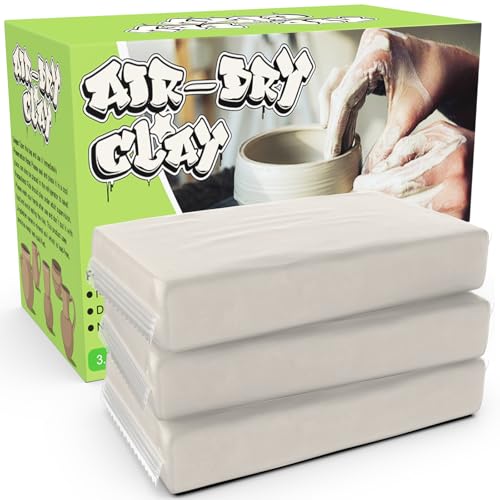
Aujazyble Pottery Clay for Kids, 3.3 lbs

ARTPAR Air Dry Clay Kit, 12 Animals

Cra-Z-Art Air Dry Clay 5lb Bucket Natural White

Air-Dry Clay Projects For Beginners by Nella Quenwick

ZEHIQ Air Dry Clay 2.2 lbs Natural White

FAGNBED Air Dry Clay 138 Colors
More Details On Our Top Picks
This terracotta block behaves the way real studio clay does, which is rare at this price point. The fine, even grain holds crisp detail, so fingerprints on a pinch pot or the edge of a carved leaf actually show up instead of smearing away.
It self-hardens without firing, and a quarter-inch slab dries within roughly a day under normal room conditions. Once cured, you can sand, drill, or carve it further, which opens the door to refinishing work most starter clays can’t survive.
Strong Points
- Ultra-fine texture captures small details cleanly
- Cured pieces can be sanded, drilled, or carved for corrections
- Minimal shrinkage means fewer warped bowls and cracked rims
- Natural earth formula suits hand-building and wheel-style shaping alike
- Kiln drying remains an option later if your skills grow
Things To Consider
- Thicker sections need patience; rushing the dry often causes hidden damp cores
- Single-color terracotta means painting is required for colorful results
Key Specs
Who It Suits Best
Adults and teens who want their first sculptures to look intentional rather than lumpy will get the most from this one.
Where Another Pick Suits Better
Households with young kids will find the CRA-Z-Art bucket easier to portion out across many small hands.
Clay without tools limits what small hands can do, and this plastic set fixes that. The grips are sized for children, so cutting, poking, and texturing feel controlled rather than fumbly during a Saturday craft session.
The kit covers the basics of sculpting, shaping, and carving, which pairs naturally with any of the bulk clays on this list. Rated for ages eight and up, it also works fine for adults who just want lightweight tools that won’t scratch a table.
What We Like
- Easy-grip handles fit smaller hands comfortably
- Covers shaping, carving, and texturing in one set
- Plastic construction wipes clean in seconds
- No sharp edges, so supervision demands stay low
Worth Noting
- Plastic tips flex under heavy pressure, so firm clays like ReArt may resist deep cuts
- Clay itself isn’t included; budget for a separate block
Right Fit For
Parents building a first craft kit for an eight-to-twelve-year-old who already owns or is about to receive clay.
Consider Something Else When
Adults wanting finishing supplies should look at the EIGTWEN glaze-and-tools bundle instead, since it adds varnish to the mix.
Most beginner kits stop at shaping, and that’s where finished pieces start failing. This bundle adds a 100ml gloss varnish that seals cured clay against scratches, scuffs, and everyday moisture, then dries to a clear high-gloss coat.
The 29 included tools handle carving, trimming, smoothing, texturing, and hole-poking, covering nearly everything a first project asks for. Compared with the LINPHCEY set, you’re trading kid-specific ergonomics for a broader tool range plus the sealer, which matters more once you’re gifting finished pieces.
Highlights
- Gloss glaze protects dried pieces from chips and scuffs
- Waterproof coating lets trinket trays survive a damp bathroom shelf
- 29 tools span cutting, edging, modeling, and surface texture work
- Suits hobbyists and professionals, not only newcomers
Small Caveats
- Varnish application takes a steady hand; drips show on glossy finishes
- Tool count can overwhelm a young child on day one
Feature Snapshot
Made For
Beginners who want their first bowls and ornaments to hold up to handling, not just photograph well.
Swap It Out When
Shoppers focused purely on kid-safe basics will be happier with the simpler LINPHCEY grip-focused set.
Open-ended clay can paralyze a beginner, and this dessert-themed kit solves that with twelve illustrated projects: cakes, macarons, lollipops, Swiss rolls, and more. Each sealed tin holds four color compartments, so mixing shades stays tidy.
The clay itself is lightweight, soft, and low-stick, which keeps tables clean and frustration down. Four sculpting tools come in the gift box, making this a ready-to-open present for a birthday or rainy weekend.
Bright Spots
- Illustrated guide walks through twelve specific builds
- Non-sticky formula means less mess on furniture and clothes
- Individual tins keep unused colors fresh between sessions
- Gift-ready packaging skips extra wrapping effort
Points To Note
- Dessert focus narrows the creative range compared with open palettes
- Small tins suit miniatures more than large sculptures
Who Should Grab It
Kids around six to ten who follow along better with pictures than freeform instructions.
Another Choice May Suit
Animal fans will prefer the sibling ARTPAR animals kit, which swaps desserts for creatures they’ll recognize instantly.
Mini pottery wheels burn through clay fast, and this 3.3-pound supply anticipates that. It’s formulated soft and workable enough to center and pull up into cups and bowls on a kid-sized wheel, though hand-building works equally well.
The package splits into three individual packs, which keeps unused portions from drying out between sessions. That matters more than it sounds; one hardened brick of clay has ended many a young potter’s enthusiasm.
Reasons To Buy
- Three separate packs preserve freshness over weeks of use
- Soft body centers easily on small wheels
- Handles cups, bowls, animal figures, and freehand sculpture
- Generous quantity supports repeated do-overs
Softer Spots
- Soft formulas can slump on tall, thin forms until technique improves
- Plain coloring means paint comes later for decorated pieces
Quick Facts
Whose Shelf It Belongs On
Families who already own a mini pottery wheel and need a dependable refill that won’t dry out mid-project.
Reach For A Different Pick When
Detail-oriented sculptors should step up to the ReArt terracotta block, whose finer grain rewards careful fingers.
This is the dessert kit’s sibling, rebuilt around creatures: chicken, dog, owl, bear, deer, and seven more, each with its own step-by-step tutorial. Twelve reusable tins carry four vibrant colors apiece, plus sculpting tools inside the box.
The ultra-soft, non-sticky formula bends smoothly without crumbling, which helps when tiny hands are shaping ears and tails. Extra clay beyond the twelve tutorials leaves room for original creations once the guided projects run out.
Plus Points
- Twelve animal tutorials give structure to early sessions
- Reusable tins extend the life of leftover clay
- Surplus clay supports freestyle building afterward
- Non-crumbly texture suits detailed features like beaks and paws
Honest Caveats
- Lightweight foam-style clay won’t hold heavy structural loads
- Finished figures are decorative; rough play can dent them
The Right Fit
Young makers who light up at animals and want a clear path from unboxing to a shelf of finished characters.
Look Elsewhere When
Kids drawn to sweets and baking themes will connect faster with the ARTPAR desserts version of this same kit.
Classrooms go through clay like kindergartners go through glue sticks, and this five-pound bucket is built for that pace. One tub covers a whole table of students through multiple sessions of sculpting, molding, and pinch-pot work.
The natural white tone takes paint and marker decoration cleanly once dry, giving teachers a two-stage activity from a single purchase. Compared with the Aujazyble packs, you’re getting more than triple the volume in exchange for less portion control.
Standout Traits
- Five pounds serves groups, camps, and back-to-back lessons
- White base accepts painted finishes evenly
- Bucket lid reseals to slow drying between classes
- Simple formula suits preschool through elementary ages
Areas To Watch
- Once the bucket sits open, edges crust quickly; portioning into bags helps
- Texture runs coarser than artist-grade blocks, limiting fine detail
At A Glance
Built With In Mind
Teachers, daycare staff, and camp counselors who need affordable volume more than boutique texture.
Not Your Match When
Solo adult hobbyists will waste most of this tub; the ZEHIQ two-bag format fits single users far better.
Clay is only half the equation; knowing what to build and how to avoid cracks is the other half. Nella Quenwick’s digital guide walks through bowls, trinket trays, ornaments, mini vases, and handmade gifts with no kiln anywhere in sight.
It also tackles the two problems that sink most first attempts: uneven drying and unfinished surfaces. Crack-free drying technique and painted finishing advice turn a bag of clay into repeatable results, delivered straight to any device you read on.
Positives
- Step-by-step structure removes guesswork from each project
- Covers drying science, the most common failure point
- Project list doubles as a gift-making plan
- Instant digital access works alongside any clay on this list
Minor Gripes
- A book teaches but shapes nothing; pair it with actual clay
- Digital-only format won’t suit anyone who prefers print at the workbench
Who Will Love This
Self-taught adults starting from zero who want a curriculum, not scattered internet tutorials.
Where A Sibling Pick Shines
Hands-on learners who’d rather watch than read will get more immediate traction from the EIGTWEN tool-and-glaze bundle.
Cracking is the heartbreak of air dry clay, and ZEHIQ’s artist-grade formula targets exactly that. The two 1.1-pound bags use a professional blend designed to dry naturally without firing while resisting the shrinkage cracks that ruin thin-walled bowls.
The maker recommends keeping the surface moist during early drying, a small habit that pays off noticeably on wider pieces. Like the ReArt block, it can optionally be kiln-fired later, leaving a growth path open as skills develop.
Upsides
- Formula specifically resists cracking during the dry-down phase
- Two-bag split keeps half fresh while the first project cures
- White surface takes acrylic paint and sealers cleanly
- Optional kiln firing suits long-term skill progression
Trade Offs
- Early-stage misting adds a maintenance step some will skip
- Two pounds fills fewer group projects than the Cra-Z-Art bucket
Core Details
Best Suited To
Paint-first crafters making white vases, ornaments, and keepsakes where a smooth, crack-free surface is non-negotiable.
Skip It When
Anyone wanting warm terracotta tones out of the box should pick the ReArt block instead of painting over white.
Color-mixing is half the fun for young builders, and 138 shades remove the waiting. The set includes an instruction booklet and five sculpting tools, so a child can go from box to finished figure in one sitting.
The clay is soft, comfortable to press, and non-stick, meaning shapes release cleanly from fingers and tabletops. Unlike the ARTPAR kits’ themed tutorials, this one leans open-ended, which suits kids who already know what they want to make.
Best Bits
- 138 colors support blending without needing paint
- Five tools cover basic shaping and detailing
- Booklet offers starter guidance for unsure beginners
- Non-stick texture keeps cleanup to a wipe
Room For Improvement
- Individual portions run small, so large sculptures need combining several colors
- Lightweight foam-clay feel differs from true pottery texture
Details At A Glance
Perfect Match For
Rainy-day households and gift-givers who want maximum creative range per dollar for kids five and up.
Where Another Pick Suits Better
Children who thrive on guided steps will do better with either ARTPAR kit’s illustrated project path.
What Matters Most Before Choosing Air Dry Clays For Beginners
Formula Type Decides Everything
Natural earth clays like ReArt and ZEHIQ dry hard, carve cleanly, and accept paint like miniature ceramics. Foam-based magic clays such as FAGNBED and ARTPAR stay lighter and squishier, ideal for toys but poor for functional bowls. Match the formula to the end goal before anything else.
Quantity Versus Portion Control
Bulk buckets win on cost per pound but punish careless storage, since exposed edges crust within hours. Multi-pack formats cost slightly more and save entire batches from hardening. Solo hobbyists benefit from split bags; classrooms benefit from volume.
Drying Behavior And Cracking
Thin sections dry overnight; thick ones trap moisture for days and crack from the inside out. Formulas marketed as crack-resistant still reward slow, even drying away from direct sun or heaters. Plan wall thickness accordingly.
Tools And Finishing Change The Outcome
Hands alone cap what beginners achieve. A basic tool set extends reach into carving and texturing, while a gloss sealer turns fragile dried pieces into durable keepsakes. Bundles like EIGTWEN cover both gaps in one order.
Key Considerations Across These Picks
Traps First Timers Fall Into
The most common mistake is buying foam clay for functional projects, then wondering why a bowl slumps overnight. The second is ignoring storage: leaving any air dry clay uncovered ruins it faster than almost anything else. Read the formula type first, and reseal everything after each session.
What Separates Premium From Basic
Higher-tier clays justify their cost through finer grain, lower shrinkage, and post-drying workability, which is why ReArt and ZEHIQ cost more per pound than classroom buckets. That difference shows up in detail retention and fewer cracked pieces. Casual play rarely needs it; display-worthy work usually does.
Frequently Asked Questions
How long does air dry clay take to fully harden?
Thin pieces typically dry within 24 hours, while thicker sections can take several days. Drying speed depends on humidity, thickness, and airflow around the piece.
Can air dry clay be used on a pottery wheel?
Yes, softer formulas like the Aujazyble clay center and pull up well on mini wheels. Firmer artist blocks demand more strength and technique.
Do I need to seal air dry clay after it dries?
Sealing isn’t mandatory, but a gloss varnish protects against moisture, scuffs, and chipping. Pieces displayed in humid rooms benefit most from a coat.
Is air dry clay safe for young children?
Foam-based kits are generally the gentlest option for small hands, with several picks here aimed at ages five and up. Always check the listed age guidance on the specific product.
Can dried air dry clay be painted?
Absolutely, and white or terracotta bases both take acrylic paint well. Let the piece cure completely before applying any finish.
Closing Remarks
Start by matching the clay to the maker: guided kits for kids, artist-grade blocks for adults chasing real results. Add a simple tool set and a sealer once the first few pieces survive the drying rack. Whichever pick fits your shelf, the best next step is the same one: open the box and make something slightly imperfect today.
