
Anyone who has wrestled a serger’s looper threads at midnight knows the pain this category solves. Air threading models and their supporting cast of threaders, cones, and beginner-friendly machines take the most frustrating part of overlock sewing and shrink it to seconds. Whether you’re hemming knit dresses, finishing denim seams, or stocking up on supplies, the ten items below cover both the machines themselves and the small tools that keep them running smoothly.
The Shortlist At A Glance

Brother ST4031HD Strong & Tough Serger

StiVerse Serger Thread Cones 12 Pack
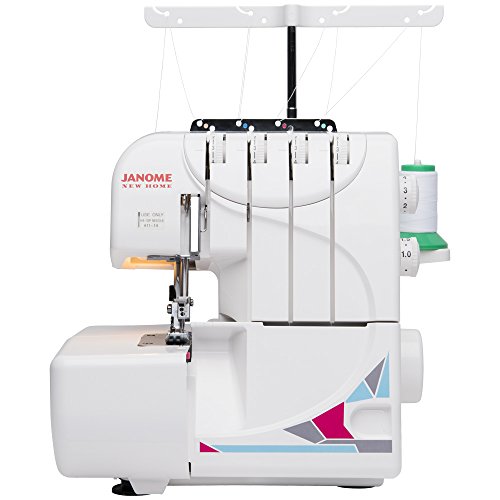
Janome MOD-8933 Lay-In Threading Serger

SINGER Serger Needle Threader Long Handle

Juki MO-50E 3 or 4 Thread Serger

FEIYUE FY505 Overlock Serger

Hemline Serger Looper & Needle Threader Set

SINGER S14-78 Overlock Serger White

FUNZON Black & White Serger Thread Cones

Cutex Overlock Threading Wires 12 Pack
More Details On Our Top Picks
The ST4031HD is built around a full metal frame, which is exactly what you want when you’re pushing fleece, denim, or canvas through at speed. Its carbon steel blade holds an edge longer than standard blades, so cut edges stay clean instead of going fuzzy after a few heavy sessions.
At up to 1,300 stitches per minute, production-style projects move quickly; a batch of tote bags that eats an afternoon on slower machines becomes a morning job. The included extension table gives bulky quilts or long curtain panels somewhere to rest instead of dragging off the bed.
Strong Points
- All-metal internal frame resists vibration, so seams stay even during long runs
- Carbon steel cutting blade delivers smoother edges on thick, dense fabric
- High maximum speed trims hours off multi-garment or batch projects
- Large extension table supports oversized work without fabric pull
- Three accessory feet included, covering common finishing tasks out of the box
Things To Consider
- Owners commonly report the machine runs fast enough that beginners need practice slowing down on curves
- The sturdy build adds weight, so it lives on a table rather than traveling to classes
Who Will Love This
Confident home sewists who regularly serge heavyweights like denim, fleece, or upholstery scraps will get the most from this tank.
A Better Fit Elsewhere
Total newcomers will likely find the Janome MOD-8933’s gentler pace and color-coded threading path easier to learn on.
Sergers drink thread. Four spools per project adds up fast, which is why a bulk cone set like this one belongs next to any overlock machine. Each of the twelve cones holds 1,800 yards, giving you 21,600 yards total, enough to keep a four-thread setup fed through months of regular sewing.
The spun polyester construction works across serging, coverstitching, and even longarm quilting, so nothing sits idle in your stash. For anyone running a machine like the Brother ST4031HD above, having matching cones on hand means fewer mid-seam thread changes.
What We Like
- Twelve large cones mean far fewer reloads during long sewing sessions
- Polyester build with added lubrication glides smoothly through tension discs
- Works as overlock, coverstitch, general machine, and quilting thread
Worth Noting
- Color selection is limited compared with buying individual cones, so bold palettes may need separate purchases
- Cone storage takes shelf space; a dedicated rack keeps them from toppling
Made For
Home sewists who serge weekly and want to stop rationing thread mid-project will appreciate the bulk format most.
Swap It Out When
Shoppers needing only black and white basics can stretch further with the FUNZON cone set later in this list.
Lay-in threading is the feature that turns sergers from intimidating to approachable: instead of fishing thread through tiny holes, you lay it into a channel and snap a cover shut. The MOD-8933 pairs that system with color-coded guides, so rethreading after a break becomes a two-minute task rather than a tutorial video marathon.
It converts between three-thread and four-thread configurations, and differential feed lets you tame knits that would otherwise wave or stretch at the seam. In our view, this is the machine a first-time serger owner should learn on before chasing heavier builds like the Brother above.
Reasons To Buy
- Lay-in tensions with color-coded paths make threading genuinely manageable for newcomers
- Convertible 3/4-thread design covers both seam finishing and sturdier construction seams
- Differential feed prevents wavy hems on jersey and other stretchy knits
Small Caveats
- No air-threading automation, so you’ll still follow the manual path each time you change colors
- Lighter-duty internals mean dense layers deserve patience rather than force
Quick Facts
Right Fit For
Fashion-sewing beginners working mostly with knits and everyday garment fabrics will feel at home here.
Where A Sibling Pick Shines
Those wanting automatic lower-looper assistance should step up to the Juki MO-50E reviewed shortly.
Serger needles sit recessed behind guards where fingers and standard threaders simply don’t fit. This tool’s extra-long neck, measuring over five inches, reaches those awkward positions so you can thread most serger needles without contorting or removing needle plates.
It works like a familiar handheld wire threader: slip the fine loop through the eye, catch the thread, and pull back. Anyone who has squinted at a serger needle under poor lighting knows how much frustration five dollars of plastic and wire can erase.
Bright Spots
- Extra-long neck accesses deeply recessed serger needles ordinary threaders can’t reach
- Works with most overlock machines, not just one brand
- Simple wire-loop operation needs zero learning curve
Points To Note
- The thin wire loop is delicate; rough handling can bend it, so store it in its packaging or a notion tin
- It covers needles only, leaving loopers to a dedicated tool like the Hemline set below
The Right Fit
Sewists with any brand of serger who dread needle changes will use this constantly once it lands in the notions drawer.
Reach For A Different Pick When
Looper threading is your main bottleneck, and the GUZE-US two-piece set handles both needles and loopers in one kit.
Juki built its reputation on industrial machines, and the MO-50E carries some of that DNA into a home-priced package. The standout is the automatic lower looper threader, which handles the single most fiddly thread path on any serger; combined with lay-in tensions, setup feels closer to the Janome MOD-8933 than to old-school machines.
An adjustable, calibrated knife lets you control exactly how much fabric gets trimmed, useful when seam allowances matter. A built-in rolled hem setting means napkins and scarf edges come straight off the machine finished, no accessory foot swap required.
Upsides
- Automatic lower looper threader removes the hardest threading step entirely
- Calibrated knife adjustment gives precise control over trim width
- Built-in rolled hem capability saves time on lightweight fabric edges
- Differential feed keeps stretchy material feeding evenly
Minor Gripes
- The feature set is focused; sewists wanting decorative stitch variety may find the range narrow
- Knife adjustment takes a careful touch, and owners suggest checking scrap fabric before each project
Feature Snapshot
Who Should Grab It
Sewists who value dependable mechanical simplicity and do lots of rolled-hem work will click with this machine.
Consider Something Else When
Those wanting a wider spread of stitch types across one purchase may prefer the SINGER S14-78 further down.
Where the Juki MO-50E starts at three threads, the FY505 drops down to two, adding a narrower chainstitch-style option for delicate edges. That 2/3/4 flexibility makes it a genuine all-rounder: two-thread work for sheers, four-thread for garment construction, everything between for finishing.
The metal frame construction gives it more stability than its compact footprint suggests, and owners generally find it holds tension settings well between sessions. For someone outgrowing a first serger without jumping to premium pricing, this hits a sensible middle ground.
Plus Points
- Two, three, and four thread modes cover sheer to heavyweight fabric work
- Metal frame construction damps vibration for steadier stitching
- Multiple thread thicknesses open up varied stitch patterns from one machine
Softer Spots
- Switching between thread configurations takes practice, and first conversions can feel slow
- Documentation is thinner than the big-name brands, so expect to lean on community videos early on
At A Glance
Who It Suits Best
Intermediate sewists experimenting with different fabrics and stitch styles will enjoy the flexibility here.
Not Your Match When
Brand-support priority points toward the Janome MOD-8933, whose dealer network and manuals are more established.
This two-piece set splits the job sensibly: one tool for needles, another with a fine wire eye sized for loopers, the hidden thread carriers most machines bury deep inside the housing. The ABS plastic and metal construction feels sturdier than disposable wire-only threaders, and the extra length reaches spots fingers can’t.
Compared with the single-purpose SINGER threader earlier in this list, the trade-off is clear: slightly less refinement, broader coverage. You may find the looper piece becomes the one you reach for most, since looper threading causes the most swearing per minute in any sewing room.
Standout Traits
- Covers both needles and loopers in one affordable pair
- Fine wire eye slips through tight looper openings without snagging
- ABS and metal build withstands daily handling better than flimsy alternatives
Honest Caveats
- The wire eyes remain the weak point; bending them repeatedly shortens their life
- Fit varies by machine model, so check clearance around your loopers before relying on it
Built With In Mind
Anyone whose serger hides its loopers behind covers, especially older or budget machines, gains real time savings here.
Another Choice May Suit
Minimalist setups that only ever struggle with needles are better served by the simpler SINGER long-handle threader.
The S14-78 positions itself as a do-everything household serger, and its 2-3-4 stitch capability backs that claim. Decorative edges, rolled hems, standard seam finishes, and sturdy construction seams all fall within its range, which means fewer reasons to switch machines mid-project.
SINGER’s included accessory bundle helps new owners start serging immediately rather than shopping for add-ons. Against the FEIYUE FY505, this model trades some raw flexibility for a more polished support ecosystem and clearer documentation, which matters more than spec sheets admit during your first month.
Highlights
- Full 2-3-4 stitch range handles garments and home décor alike
- Included accessories reduce startup costs for first-time serger owners
- Established brand support makes troubleshooting straightforward
Areas To Watch
- Threading still follows a manual path, so pairing it with one of the threaders in this list is wise
- Some owners report tension dials need occasional recalibration between very different fabric weights
Details At A Glance
Whose Shelf It Belongs On
Generalist home sewists bouncing between clothing repairs, kids’ garments, and curtain hems will find this fits nearly everything.
Look Elsewhere When
Speed-focused production sewing points back to the Brother ST4031HD and its faster maximum rate.
Most serged seams hide inside garments anyway, which is why black and white cones cover the majority of real-world overlocking. This eight-cone pack splits evenly between the two, with each spool holding 3,000 yards of medium-weight two-ply polyester, noticeably longer than the 1,800-yard cones in the StiVerse set.
The polyester construction brings solid strength and colorfastness, and the generous yardage means fewer interruptions when you’re chaining through a stack of mending. It won’t replace a rainbow stash, but for utility sewing it’s hard to argue with.
Positives
- 3,000-yard cones outlast standard spools by a wide margin
- Four black plus four white covers most invisible seam work
- Colorfast polyester holds up through washing and wear
Trade Offs
- Only two colors, so visible topstitching or decorative work needs other thread
- Medium weight suits general serging but isn’t specialized for heavy upholstery thread demands
Perfect Match For
Menders, alterations hobbyists, and anyone running a four-thread machine primarily on dark or neutral garments.
Where Another Pick Suits Better
Sewists wanting broader color variety across their cones will get more mileage from the StiVerse twelve-pack.
Brass twisted threading wires are the old-school answer to serger threading, and this dozen-pack embraces that simplicity. Push the wire through the needle or looper eye, pass thread through its loop, withdraw, done. There’s no mechanism to jam and no handle to break, just a reliable loop doing one job.
Because they’re inexpensive and consumable, keeping several scattered through your sewing kit, machine case, and classroom bag costs almost nothing. Compared with the handled GUZE-US set, these offer less grip comfort but far more redundancy per dollar.
Best Bits
- Twelve wires mean losing one never stalls a project
- Brass twist construction slides through tight looper eyes smoothly
- Works identically on needles and loopers across overlock machines
Room For Improvement
- No handle, so users with limited dexterity may prefer the longer tools elsewhere in this list
- Fine wires kink if stored loose in a drawer; a small case keeps them straight
Who Should Grab It
Sewing teachers, club organizers, and anyone maintaining multiple machines will appreciate having a dozen backups on hand.
Skip It When
Ergonomics matter most, and the Hemline two-piece set with proper handles offers a more comfortable grip.
What Matters Most Before Choosing Air Threading Sergers
Match The Machine To Your Fabric Diet
Knit-heavy wardrobes demand differential feed, which adjusts front and rear feed dogs independently to stop stretching and puckering. Denim and canvas sewists should prioritize metal frames and hardened blades instead. Write down your last five projects and buy for those, not for hypothetical ones.
Count Your Threads Honestly
Four-thread machines create strong, wearable seams. Two- and three-thread configurations handle edging, rolled hems, and delicate fabrics. Machines offering the full 2/3/4 range cost a little more but eliminate the need for a second unit later, which usually makes them the smarter long-term spend.
Factor In The Hidden Costs
Sergers consume thread roughly four times faster than a standard machine, so budget for cone stock like the sets covered above. Add a needle threader or two as well; the small tools prevent the frustration that makes people abandon otherwise good machines.
Support And Learning Curve
Established brands such as Janome, Juki, Brother, and SINGER offer manuals, dealer networks, and abundant tutorials. Newer brands sometimes price aggressively but leave you piecing together guidance from community forums. Beginners should weigh support quality heavily against raw specs.
Key Considerations Across These Picks
Traps First Timers Fall Into
The most common mistake is buying on speed alone, then discovering the machine fights every knit you own. Skipping the thread budget is the second; a great serger starved of cones sits unused. Buy for your actual fabrics, then stock supplies alongside the machine.
The Case For Spending Up
Higher-tier machines earn their price through metal framing, calibrated knives, and assisted threading features like the Juki’s automatic lower looper threader. Those upgrades translate directly into fewer skipped stitches, cleaner cuts, and faster setup, which compounds over hundreds of projects.
Frequently Asked Questions
Do I really need a serger if I own a sewing machine?
A serger finishes raw edges professionally and constructs stretch seams a regular machine can’t match. Garment sewists notice the difference immediately, while occasional menders may not.
How difficult is threading a serger without air threading?
Modern lay-in systems with color-coded paths make it manageable within a few practice sessions. Wire threaders and looper tools cut the remaining difficulty substantially.
Can I use regular sewing thread on a serger?
Yes, though cones designed for overlocking reduce reloading and run more smoothly through tension discs. Standard spools work acceptably for occasional use.
What is differential feed and why does it matter?
It lets the front and rear fabric feeds move at different speeds, gathering or stretching material as needed. Knits and wovens stay flat instead of waving or puckering.
How often do serger knives need replacing?
Heavy users typically replace blades yearly, while casual sewists go several years between changes. Clean-cut edges turning ragged is the usual signal.
Wrap Up
Your best choice depends on what actually sits on your cutting table. Heavy fabric loyalists should lean toward the Brother ST4031HD, knit-focused beginners toward the Janome MOD-8933, and rolled-hem enthusiasts toward the Juki MO-50E. Pair whichever machine you choose with bulk cones and a couple of threaders, because the small supplies keep the big purchase in service. Take your fabric list, compare the picks above, and let your real projects make the call.
