
Rainy afternoons, birthday parties, homeschool projects: a good craft kit solves all of them at once. The right set keeps kids busy without screens, gives adults a relaxing creative outlet, and cleans up fast when the fun is over. This roundup covers ten art and craft kits spanning rock painting, scratch paper, clay lanterns, and giant supply boxes, so you can match one to your child’s age, attention span, and storage space.
The Shortlist At A Glance
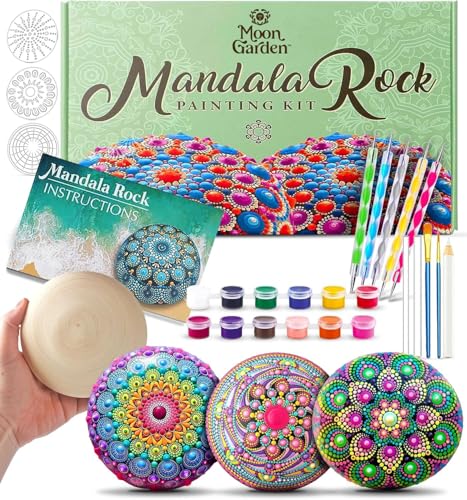
MoonGarden Mandala Rock Painting Kit

FUNNYB&G Rainbow Scratch Paper Art Kit

MHMYDIS Make Your Own Clay Luminaries

Sundaymot Arts and Crafts Supplies 2000+Pcs

Itopstar 3000 Kids Arts and Crafts Supplies
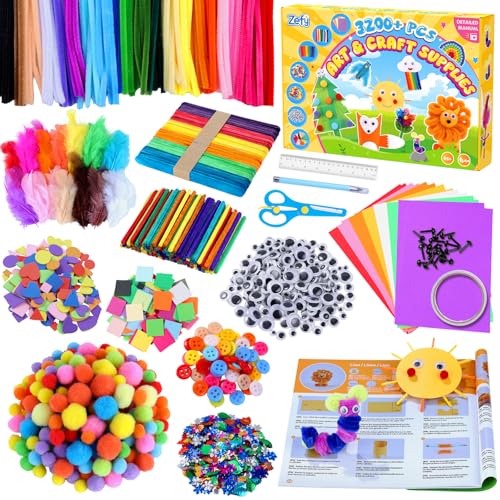
Zefy 3200+ Pcs Arts and Crafts Supplies

Zefy 3800+ Pcs Arts and Crafts Kit

A&R CO. 3000+ Pcs Arts and Crafts Supplies

Itopstar Crafts for Kids 3000pcs+

SMILESSKIDDO Kids Arts and Crafts 1000+ PCS
More Details On Our Top Picks
Most painting kits hand you supplies and leave you guessing. This one starts with smooth wooden rocks, so there’s no hunting riverbanks or scrubbing dirt off stones before the first dot goes down. Mandala dotting, in case you’re new to it, means building circular patterns from concentric dots of paint, and the included stencils keep those rings even.
The toolset stretches well beyond rocks. The stencils also work on canvas, ceramics, and even nail art, and they handle watercolor, gouache, acrylic, and oil paints. That flexibility makes this a rare kit that grows with skill rather than getting outgrown.
Strong Points
- Pre-cut wooden rocks mean you can start painting within minutes of opening the box.
- Stencils transfer to canvas, ceramics, and nail art, so nothing sits idle after the first project.
- Suits both adult hobbyists and supervised kids, which makes shared craft time easier.
- Works across multiple paint types, from acrylics to oils.
Things To Consider
- Detailed mandala work rewards patience; younger children may find the precision demanding.
- Acrylic dots need drying time between layers, so finished pieces take more than one sitting.
Key Specs
Who It Suits Best
Teens and adults who want a calm, repeatable hobby with satisfying results will get the most from this kit.
A Better Fit Elsewhere
Families with children under eight will find the MHMYDIS clay luminaries kit far more forgiving, since molding clay asks less precision than dotting paint.
Where the MoonGarden kit rewards patience, this one delivers instant payoff. Kids drag the wooden stylus across the black-coated surface and bright rainbow colors appear underneath, no paint, no glue, no waiting. For parents who dread cleanup, that alone earns it a spot on the shelf.
You get 50 sheets of scratch paper, 50 styluses, and four drawing stencils, so siblings or a whole playdate group can work at once without arguing over tools. The brand positions it for ages 3 to 12, though the sweet spot in most households lands around 6 to 8, when kids start writing notes and trading drawings with friends.
Highlights
- Zero-mess format makes it ideal for cars, restaurants, and waiting rooms.
- 50 styluses mean every child gets their own tool, no sharing squabbles.
- Stencils help hesitant artists produce shapes they’re proud of.
- Finished sheets double as notes and gifts for family members.
Worth Noting
- Each sheet is single-use, so heavy users burn through the pack quickly; consider rationing a few per week.
- Stylus tips can dull with pressure, and replacements aren’t standard household items.
Right Fit For
This suits parents of mixed-age children who want an activity that works for a 4-year-old and a 10-year-old at the same table.
Swap It Out When
Kids who prefer building over drawing will get longer engagement from the SMILESSKIDDO box, which offers three-dimensional projects instead of flat sheets.
A luminary is a small lantern that glows from within, and this 47-piece kit walks kids through making their own from soft polymer clay. Two luminary molds plus star and heart molds let several children create simultaneously instead of lining up for a turn, a detail that matters enormously during birthday parties.
The process has three stages: shape the clay, bake it in a home oven at 135°C (275°F) for about 20 minutes with adult help, then drop in one of the four flameless LED tea lights. Mixing clay colors produces marbled, camouflaged, or patterned glows, which keeps older kids experimenting long after the first lantern is done.
Bright Spots
- The finished lantern actually gets used as room decor, not tossed in a drawer.
- Flameless LED candles make it safe for bedrooms and nightstands.
- Multiple molds support group crafting without turn-taking friction.
- Color mixing teaches blending skills alongside the main project.
Small Caveats
- Oven baking requires adult supervision, so this isn’t an independent-play kit for young kids.
- Polymer clay residue can linger on hands and surfaces until washed with soap.
Quick Facts
Made For
Kids roughly 6 through their early teens who enjoy hands-on building and want a keepsake at the end.
Reach For A Different Pick When
Households without oven access should look at the FUNNYB&G scratch paper kit instead, since it needs nothing beyond a tabletop.
Open-ended supply kits live or die by storage, and Sundaymot’s reusable canvas bag is the detail that sets it apart from the rigid boxes elsewhere on this list. Soft-sided storage slides into a closet, a car trunk, or grandma’s spare room, which makes it a natural travel kit for weekends away.
The 2000-plus pieces lean toward jewelry making and wearable crafts: beads, letter beads, elastic thread, chains, gemstone stickers, plus staples like pom poms, felt, feathers, fuzzy sticks, safety scissors, and googly eyes. The brand targets ages 6 to 10, and the mix supports school projects and room decor alongside the bracelet-and-neckline crowd.
Upsides
- Canvas bag doubles as a tote for sleepovers and road trips.
- Jewelry components give kids something wearable to show off at school.
- Broad material range covers DIY decor, gifts, and homework dioramas alike.
Points To Note
- A soft bag organizes less precisely than divided trays; small beads can migrate between pockets.
- No illustrated project guide is listed, so beginners may want inspiration from elsewhere.
Whose Shelf It Belongs On
Families with kids aged 6 to 10 who already know what they like to make and mainly need abundant materials.
Consider Something Else When
First-time crafters who want step-by-step direction will be better served by the Zefy 3200-piece kit and its illustrated tutorial booklet.
Itopstar’s three-layer folding case is the closest thing here to a proper craft station. Each tier opens flat to expose its own compartments, so pipe cleaners stay separate from feathers and paper stays uncrumpled, and the whole thing folds shut into a portable cube when craft hour ends.
Roughly 3000 pieces span multicolor feathers, craft paper, pom poms, and pipe cleaners, aimed at girls and boys around 8 to 12. Compared with the Sundaymot bag reviewed earlier, this trades soft portability for hard-shell organization, a trade most playroom owners will welcome.
What We Like
- Three-tier layout lets kids find materials themselves without emptying everything onto the floor.
- Folding design stores flat on a bookshelf between sessions.
- Volume supports months of open-ended projects before restocking.
- Age range fits upper elementary kids working independently.
Room For Improvement
- The plastic case takes up more shelf space than a fabric bag would.
- With no project booklet mentioned, self-directed kids thrive while direction-seekers may stall.
At A Glance
Who Will Love This
Independent creators aged 8 to 12 who like inventing their own projects rather than following instructions.
Not Your Match When
Younger crafters around preschool age will do better with the SMILESSKIDDO kit, whose smaller piece count suits little hands.
Zefy’s 3200-piece box answers the question every parent eventually hears: “but what do I make?” Twelve illustrated tutorials run from easy to advanced, giving structure to kids who freeze when facing a pile of raw materials. That guidance is what separates this from the freer-form Sundaymot and Itopstar boxes earlier in the list.
The inventory itself is deep: 1800 tissue papers, 500 sequins, 200 googly eyes, 150 feathers, 100 each of pipe cleaners, pompoms, matchsticks, and foam stickers, plus cardstock, buttons, doll noses, tape, pencil, ruler, and scissors. Everything arrives individually wrapped inside one large gift-style box, and cleanup means closing the lid.
Plus Points
- Illustrated guides build confidence in kids who don’t know where to start.
- Individually wrapped portions keep materials tidy and portion-controlled.
- Difficulty spread means the box stays relevant as skills improve.
- Gift-ready packaging saves wrapping effort for birthdays.
Softer Spots
- Matchsticks warrant sensible supervision with the youngest crafters.
- Once wrappers are opened, re-sorting hundreds of small pieces takes discipline.
Core Details
Best Suited To
Parent-child duos and kids aged 5 to 10 who want guided projects with room to improvise afterward.
Another Choice May Suit
Larger groups or classrooms needing maximum volume should step up to the Zefy 3800-piece version covered next.
This is Zefy’s bigger sibling, expanding the 3200-piece box to more than 3800 pieces across 36 distinct supply types. Where the smaller kit leans on tissue paper and sequins, this one adds pony beads, shaped beads, wooden beads, felt squares, wooden discs, building sticks, and gem stickers, broadening the range from pure collage into jewelry and wood-based builds.
In practice, that extra variety matters most when several children share one box. Four kids at a kitchen table can each pull a different material category and still find plenty left over. Households with a single crafter may find the smaller Zefy kit plenty.
Reasons To Buy
- 36 supply categories cover collage, beading, woodworking, and sticker art in one purchase.
- Generous bead selection supports real jewelry projects, not just glued collages.
- Volume holds up under group use at parties or in classrooms.
Honest Caveats
- More categories mean more loose parts to sort after big sessions.
- Box footprint demands dedicated shelf or closet space.
The Right Fit
Teachers, daycare providers, and families with three or more craft-loving kids will stretch every inch of this box.
Look Elsewhere When
Solo crafters on a budget get nearly the same experience from the Zefy 3200-piece kit at a smaller scale.
Ninety-nine guided activities put this A&R CO. box ahead of most rivals on structured content. The included booklet walks kids through decorations, wearable accessories, and standalone creations, and with more than 3000 pieces behind it, there’s ample stock for improvising past the printed projects.
The two-level compartment box keeps everything sorted, and the stated age span of 3 to 12 is among the widest here. Younger members of that range will need help with scissors and small parts, but the breadth means a 5-year-old and an 11-year-old can genuinely share one kit.
Standout Traits
- 99-project booklet provides the longest guided runway of any kit here.
- Two-tier sturdy box survives repeated opening and stacking better than flimsier cases.
- Wide age range suits families with children years apart.
- Project variety spans decor, wearables, and imaginative builds.
Minor Gripes
- Small components demand close supervision for kids under five.
- Booklet projects consume specific pieces, so popular items may run low before others.
Details At A Glance
Who Should Grab It
Homeschooling parents and caregivers of mixed-age siblings benefit most from the guided booklet and wide age band.
Where A Sibling Pick Shines
Preschool-only households will find the SMILESSKIDDO kit gentler, with simpler materials matched to tiny hands.
Think of this as the classroom edition of the Itopstar box from pick five. Same three-layer folding plastic case, same pipe cleaners, pom poms, and feathers at its core, but positioned explicitly for school, homeschool, and kindergarten settings where supplies get consumed fast and organization has to survive many hands.
For homeschool families, the appeal is practical: one purchase covers art lessons for months, and the folding case tucks beside a desk between sessions. Compared with the A&R CO. box, this skips the activity booklet in favor of sheer open-ended volume, which suits educators who already have lesson plans.
Positives
- Layered case supports quick setup and teardown between lessons.
- Supply depth absorbs heavy group consumption without frequent restocking.
- Open-ended format slots into existing curricula and lesson plans.
Areas To Watch
- No guided projects are included, so direction-dependent kids may need external ideas.
- Plastic compartments can pop loose if the case is carried by the lid rather than the base.
Built With In Mind
Homeschool parents, kindergarten teachers, and daycare coordinators stocking a recurring craft session will rely on this daily.
Where Another Pick Suits Better
At-home gift shoppers wanting a ready-made activity flow should choose the A&R CO. kit with its 99-project booklet instead.
Every other box on this list targets school-age kids, but SMILESSKIDDO starts at toddler level. Its 1000-plus pieces are scaled for preschoolers, with the brand citing suitability from ages 2-4 through 6-8, and the reduced piece count keeps overwhelm at bay for short attention spans.
The storage box keeps materials contained between sessions, and the mix supports room decor, kindergarten homework, and party activities. Parents commonly report that kits like this shine as a first craft box, big enough to feel exciting, small enough to manage. Instructions exist for kids who want them, while freeform DIY remains the default mode.
Best Bits
- Toddler-safe scale makes it a genuine first craft kit, not a hand-me-down compromise.
- Smaller piece count means faster cleanup and less lost-parts chaos.
- Screen-free play builds concentration and fine motor skills through hands-on making.
- Storage box keeps the collection corralled in one place.
Trade Offs
- Older kids past age 8 will exhaust the possibilities quickly compared with the 3000-piece boxes.
- Small parts still warrant supervision with children under three.
Perfect Match For
Parents of toddlers and preschoolers introducing crafts for the very first time will find this the gentlest entry point.
Skip It When
Families with elementary-aged kids craving volume and variety should jump to the Zefy 3200-piece kit instead.
What Matters Most Before Choosing Art And Craft Kits
Match The Kit To The Child’s Age
Age ranges on packaging are honest signals, not marketing fluff. A kit built for 8-to-12-year-olds usually assumes scissor confidence and patience for multi-step projects, while toddler-oriented sets favor chunky pieces and simple outcomes. Buying too advanced leads to frustration; buying too simple leads to boredom within a week.
Storage Decides Whether It Gets Used
The best craft kit in the world fails if reopening it means twenty minutes of sorting. Rigid compartment boxes suit dedicated playrooms, canvas bags suit families short on shelf space, and individually wrapped portions suit households that value tidy resets. Picture where the kit will live before ordering.
Guided Projects Versus Open-Ended Supplies
Some children follow a booklet happily; others treat instructions as suggestions. Guided kits like those with illustrated tutorials build confidence in beginners, while freeform supply boxes reward kids who already have ideas. Neither approach is superior, but mismatching them wastes money.
Supervision And Cleanup Reality
Oven-baked clay needs an adult present, matchsticks and scissors need watchful eyes, and glitter finds its way into grout regardless. Choose a kit whose supervision demands fit your actual availability, not your idealized Saturday afternoon.
Key Considerations Across These Picks
Traps First Timers Fall Into
The most common mistake is buying on piece count alone. Ten thousand sequins sound impressive until you realize the box contains nothing but sequins. Scan the category list, not just the total, and confirm basics like scissors, tape, or adhesive are actually included. Another slip: ignoring storage. A lidless tray of loose parts becomes background clutter within days.
What Separates Premium From Basic
Higher-priced kits typically earn it through structure and durability: illustrated project guides, sturdy multi-tier cases, and curated material mixes that work together. Budget boxes deliver raw volume and expect creativity to fill the gap. Paying up makes sense for gift-giving and for kids who need direction; saving makes sense once a child has proven they’ll craft weekly regardless.
Frequently Asked Questions
What age is best for starting with art and craft kits?
Most children can begin simple crafting around age three with supervision. Chunky-material kits designed for toddlers make the earliest sessions safe and rewarding.
Are these kits suitable for group activities like birthday parties?
Yes, especially the larger supply boxes with duplicate tools and multiple molds. Kits with individual styluses or several molds prevent turn-taking conflicts.
Do any of these kits require adult supervision?
The MHMYDIS clay luminaries kit requires oven baking with adult help. Scissors and small parts in the larger boxes also call for a watchful eye with younger children.
How long does a typical craft kit last?
A 3000-piece box generally sustains weeks to months of regular use depending on project size. Single-use formats like scratch paper deplete faster per child.
Can these kits support homeschool art lessons?
Several picks, notably the Itopstar classroom box and the A&R CO. kit with its 99-project booklet, map naturally onto scheduled lessons. Open-ended supply depth lets you adapt projects to any curriculum theme.
Closing Thoughts
Choosing among these ten comes down to knowing your crafter. Toddlers start happily with SMILESSKIDDO, guided learners thrive with Zefy or A&R CO., and patient teens get lasting value from the MoonGarden mandala set. Whichever you choose, the real win is the same: an afternoon where the TV stays off and something handmade ends up on the fridge.
