
Tracing tools solve an old problem: getting a shape onto paper without the frustration of freehand drawing. Whether you’re shopping for a preschooler who wants to draw a dinosaur or you’re an adult hobbyist lining up diamond painting canvases, the right projector or light pad removes the guesswork. This roundup covers ten options across kids’ projectors, optical copy boards, rechargeable light pads, and even a filming stand for craft content creators. Each entry breaks down what works, what doesn’t, and who should actually spend their money there.
A Quick View Of The Lineup

RNGODO Trace and Draw Projector with 72 Stencils

RNGODO Trace and Draw Projector with 72 Stencils
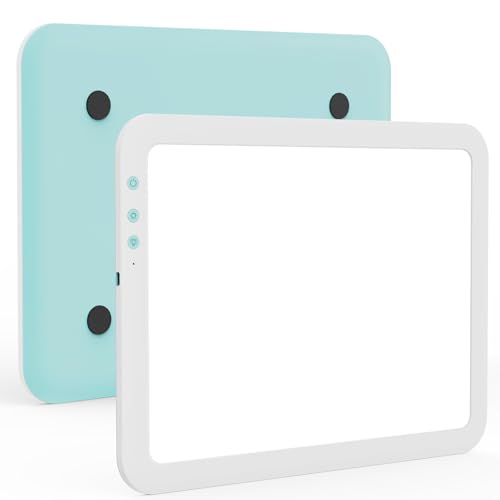
TOHETO A4 Rechargeable LED Light Pad

LEERFEI Kids Adjustable Art Drawing Projector & Sketcher Toy Set

ChromLives Overhead Phone Tripod Stand

PENINSULA LOVE B5 Optical Tracing Copy Board

MFEESYOB Smart Art Sketcher Projector

MFEESYOB Smart Art Sketcher Projector

Sumsoltic Drawing Projector Kit with Unicorn Stickers

imireux Preschool Art Tracing Kit
What Each Pick Brings To The Table
Seventy-two projection images is a lot of runway for a four-year-old’s attention span, and that’s the core appeal here. Kids swap slides themselves, so the toy keeps offering something new long after the box is opened.
The focus button sharpens the projected outline, which matters more than it sounds: a crisp line is far easier for small hands to follow than a fuzzy one. Setup stays simple enough that most children manage it without help.
What Stands Out
- 72 stenciled images keep play sessions varied week after week
- Focus adjustment produces cleaner outlines for easier tracing
- Includes 12 markers and an art book, so drawing starts immediately
- Slide swapping builds independence in young users
Things To Consider
- Plastic construction means gentle handling; drops from table height are commonly reported as the main failure point
- Small slide discs are easy to misplace without a storage routine
Who Will Love This
Preschoolers between three and six who are just discovering drawing and need a confidence-building starting point.
A Better Fit Elsewhere
Older kids up to eight will get more mileage from the MFEESYOB Smart Art Sketcher Projector, whose age range stretches further.
This listing shares its design with the RNGODO unit above, differing mainly by variant, so your choice comes down to availability rather than capability. Both deliver the same 72-image library, focus control, and bundled markers.
In households with two young children, having a second identical set ends arguments over whose turn it is. That practical angle is worth more than any spec difference here.
Good Reasons To Consider
- Identical 72-stencil content gives siblings equal creative material
- Focus dial keeps traced lines legible for early writers
- Marker and art book inclusion rounds out the kit
Points To Note
- Same plastic housing as its twin, so durability expectations stay modest
- You may find the marker ink dries out when caps go missing, a common household issue
At A Glance
Right Fit For
Families buying for two children close in age, or anyone wanting a backup unit for grandparents’ houses.
Where A Sibling Pick Shines
Households wanting a bigger table surface and music features should look at the Sumsoltic Drawing Projector Kit instead.
A light pad works differently from a kids’ projector: it backlights paper so you trace through it, which suits adults doing diamond painting, vinyl weeding, or sketching. The TOHETO runs on a built-in 3500mAh lithium battery, cutting the cord entirely.
That cordless design changes where you work. Craft groups, couches, and hotel rooms all become viable studios, something the wall-powered competition can’t match.
Key Advantages
- 3500mAh battery supports genuinely portable sessions away from outlets
- Three color modes adapt to different media, from graphite to adhesive vinyl
- Stepless dimming lets you dial brightness precisely rather than jumping between presets
- Physical keys avoid accidental touches that plague touch-sensitive pads
Small Caveats
- Battery capacity fades over years of charge cycles, a normal lithium behavior worth expecting
- A4 size limits you to letter-and-below artwork; larger pieces need tiling
Who Should Grab It
Diamond painting and vinyl-craft enthusiasts who move between rooms or attend craft meetups regularly.
Swap It Out When
Anyone wanting zero charging at all will prefer the PENINSULA LOVE B5 Optical Tracing Copy Board, which needs no power source whatsoever.
The flexible projector head is this set’s defining trait. Unlike fixed-angle units such as the RNGODO, you tilt and resize the image until it lands comfortably under your child’s hand, which helps shorter kids reach the paper without hunching.
It runs on three AA batteries, keeping cords off the play table. The trade-off is ongoing battery cost, though low-draw LEDs stretch each set a long way.
Practical Pluses
- Adjustable head controls both projection angle and image size
- Four slide discs carry 32 patterns spanning animals and vehicles
- Soft LED output stays easy on young eyes during longer sessions
- Screen-free format builds hand-eye coordination without tablet time
Less Ideal Details
- Batteries aren’t included, so plan a store trip before gifting day
- 32 patterns offer less variety than the RNGODO’s 72-image library
Feature Snapshot
Made For
Toddlers and young preschoolers whose first tracing experience should feel forgiving rather than rigid.
Consider Something Else When
Kids past kindergarten age will outgrow the pattern count quickly; the MFEESYOB Smart Art Sketcher Projector serves older ranges better.
This isn’t a tracer itself but the companion piece craft creators keep asking about: an overhead arm that holds a phone above your desk for filming tutorials, livestreams, or process shots of whatever you’re tracing. At 1.5 pounds, it moves between desks without complaint.
The gooseneck arm bends into position and holds still-life framing steady. No table clamp means no scratched furniture edges, a detail renters tend to appreciate.
Positive Takeaways
- 1.5 lb weight makes repositioning effortless mid-session
- Clamp-free base protects tabletop surfaces
- Phone holder accepts devices from 2.3 to 3.4 inches wide, covering nearly every current smartphone
- Folds flat for storage in a drawer or craft bag
Where It May Fall Short
- Lightweight frames flex slightly during aggressive tapping or camera adjustments, based on widely reported user feedback
- Phone-only mount excludes tablets and dedicated cameras
Quick Facts
Whose Shelf It Belongs On
Hobbyist instructors and craft-content creators filming overhead tutorials from a home desk.
Reach For A Different Pick When
Creators needing rock-solid stability for heavy gear should skip this category entirely; none of the tracing boards here fill that role.
An optical reflection board sounds fancy but works simply: the acrylic lens reflects a reference image onto your paper, letting you trace the ghost outline directly. No batteries, no bulbs, no charging cables anywhere in the equation.
Compared with the TOHETO light pad, you give up adjustable brightness but gain total freedom from power management. For occasional sketchers, that trade usually lands in this board’s favor.
A Few Highlights
- Zero power requirement means it works anywhere, indefinitely
- Acrylic lens film resists cracking while keeping reflections clear
- Reduces shadow interference for a cleaner tracing view than basic mirrors
- Skips printing references, saving paper versus light-pad workflows
Honest Caveats
- Reflection visibility depends heavily on ambient lighting; dim rooms make tracing harder
- B5 footprint (about 10.2 x 7.5 inches) constrains large-format work
- Acrylic surfaces scratch if cleaned with abrasive cloths, so use soft materials
Core Details
Who It Suits Best
Teen and adult beginners practicing sketching fundamentals on a tight budget.
Not Your Match When
Artists working in low-light environments will get brighter results from the TOHETO A4 Rechargeable LED Light Pad.
Age range tells you a lot about a kids’ projector. Where the LEERFEI tops out around early elementary, this MFEESYOB model targets three through eight, meaning a five-year-old won’t abandon it within a year.
The smart sketcher framing leans educational: color perception, hand-eye coordination, and artistic confidence all get explicit attention in how the projections guide drawing. In practice, that translates to graduated difficulty rather than one flat challenge level.
Everyday Perks
- Five-year age span extends useful life well beyond typical toddler toys
- Supports creativity alongside coordination and color-recognition development
- Suits both boys and girls without gendered styling limits
Factors To Consider
- Older children approaching eight may want more advanced subject matter than beginner patterns provide
- As with most plastic projectors, careful storage between uses preserves the lens and housing
The Right Fit
Parents wanting one projector that grows with a child from preschool through second grade.
Another Choice May Suit
Gift recipients who value sheer accessory volume will find the MFEESYOB B0FBGMVR64 variant bundles more supplies per box.
This is the sibling listing to pick seven, carrying the same three-to-eight age window and educational emphasis. The meaningful difference sits in the package contents, which lean heavier on included supplies.
For birthdays and holidays, that fuller box matters. A gift that opens with a projector plus a stack of drawing materials lands better than one requiring a separate art-supply run.
Where It Helps
- Generous bundled supplies make it gift-ready without add-on purchases
- Same broad 3-to-8 age coverage as its twin listing
- Educational framing encourages structured creative play
Details To Watch
- More components mean more cleanup; a storage bin solves most of it
- Listing details vary between variants, so confirm contents before ordering either version
Perfect Match For
Shoppers marking a birthday or holiday who want maximum unboxing impact from a single purchase.
Skip It When
Minimalist households preferring fewer loose parts may favor the simpler imireux Preschool Art Tracing Kit.
Nine projection discs, thirty-six writing instruments, stickers, stamps, a scrapbook, and music: this kit approaches craft time like a variety show. Nothing else on this list ships with remotely comparable volume.
The upgraded table runs larger than the previous generation, giving kids aged six to eight real workspace. Difficulty tiers across the discs let a cautious tracer start simple and graduate upward, which quietly teaches persistence along the way.
The Helpful Details
- Nine discs provide the deepest pattern library among the kids’ kits here
- Includes watercolor pens, pencils, crayons, eraser, and drawing book in one box
- Unicorn stickers, stamps, and scrapbook extend play beyond tracing itself
- Enlarged table surface accommodates growing artists comfortably
Trade Offs
- Dozens of small pieces demand a dedicated storage system from day one
- Unicorn-heavy styling narrows appeal for kids outside that interest zone
Essential Details
Whose Shelf It Belongs On
Girls four and up who love unicorns and treat craft time as the main event of the afternoon.
Look Elsewhere When
Neutral styling matters more than accessory count; the LEERFEI Kids Adjustable Art Drawing Projector keeps things theme-free.
Some first art toys drown a child in options. The imireux takes the opposite route: one durable projector, four discs holding 32 animal and fruit images, twelve crayons, and a paper pad. That’s it, and for many three-year-olds, that’s plenty.
Setup takes minutes, and the contained piece count makes post-play cleanup a two-minute job rather than a negotiation. Compared with the Sumsoltic kit’s forty-plus components, this is the low-fuss option.
What It Does Well
- Streamlined component list keeps cleanup fast and losses rare
- Animal and fruit imagery matches preschool recognition skills
- Sturdy projector housing handles typical toddler handling
- Everything needed to start drawing arrives in one box
Softer Spots
- 32 images will feel repetitive sooner for kids who trace daily
- Crayons only; older children used to markers may want finer tools
Product Snapshot
Built With In Mind
First-time tracers around ages three to five whose attention spans favor short, satisfying sessions.
Where Another Pick Suits Better
Children ready for hundreds of patterns and richer supplies will outgrow this quickly; the RNGODO Trace and Draw Projector offers more depth.
Choosing Between Projectors, Pads, And Boards
Match The Tool To The Artist
Kids’ projectors cast an image onto paper from above, making them ideal for ages three to eight who can’t yet hold a reference picture in their head. Light pads and optical boards assume steadier hands and self-directed work, which places them firmly in teen and adult territory. Buying a precision light pad for a four-year-old wastes money; buying a toddler projector for a ten-year-old insults them.
Power And Portability Trade-Offs
Corded and battery-powered units deliver consistent brightness anywhere, but they add charging routines and eventual battery wear. Optical boards never need power yet depend on decent room lighting to produce a visible reflection. Frequent travelers and craft-group regulars consistently prefer rechargeable pads; home-bound sketchers often do fine with passive options.
Content Volume Versus Quality
A projector with nine discs beats one with four on longevity, assuming the drawings themselves hold appeal. Look for adjustable focus on kids’ models, since blurry projections frustrate young tracers faster than anything else. Pattern themes matter too: animals and vehicles have broad staying power, while heavily themed kits risk quick burnout once the obsession passes.
Key Considerations Across These Picks
Wrong Turns To Avoid
The most common mistake is matching the tool to the wrong age band, handing a delicate light pad to a toddler or a basic projector to a middle schooler. Another frequent slip: ignoring storage. Kits with dozens of slides, markers, and stickers need a bin plan on day one, or pieces vanish within weeks.
When Paying More Pays Off
Higher-tier units justify their cost through adjustable optics, larger working surfaces, and deeper content libraries. You’re paying for years of use rather than months. Occasional users get full value from budget boards; daily tracers rarely regret stepping up.
Frequently Asked Questions
What age works best for a kids’ drawing projector?
Most models suit children between three and eight, with the sweet spot around four to six. Younger kids enjoy the light and colors, while older ones use it for actual drawing practice.
Do optical tracing boards really work without electricity?
Yes, they reflect ambient light through an acrylic lens to overlay a faint image on your paper. Bright, even room lighting produces the clearest results.
Can a light pad be used for activities besides tracing?
Absolutely. Diamond painting, vinyl weeding, calligraphy practice, and tattoo stenciling are all common uses. Any task involving semi-transparent layers benefits from backlighting.
How do I clean an acrylic tracing lens safely?
Use a soft microfiber cloth, slightly damp if needed, and wipe gently. Paper towels and household cleaners can leave micro-scratches that dull reflections over time.
Are projector slides replaceable if lost?
Replacement availability varies by brand, and most manufacturers don’t sell discs separately. Storing slides in a labeled container right out of the box prevents the problem entirely.
Closing Remarks
Every pick here earns its place for a specific person: the RNGODO pair for preschool starters, the TOHETO pad for mobile crafters, the ChromLives stand for creators documenting their work. Match the tool to the artist’s age, space, and ambitions, and any of these will pull its weight. Start with the profile that sounds most like your household, then check current details on the product page before deciding.
