
Working artists don’t have room for gear that fights back. A wobbly drawing board, a light pad that dies mid-session, a brush holder that tips over at the worst moment, these small failures eat hours you can’t get back. This roundup covers nine tools and kits chosen for people who draw, paint, or draft on a regular basis, whether that’s a home studio, a classroom, or a café table between meetings. Each option earns its place through specific strengths, and each comes with honest trade-offs so you can match the tool to your actual workflow instead of guessing.
A Quick View Of The Lineup

Prismacolor Colorless Blender Pencils, 12 Pack

YINGWOND Rechargeable A4 LED Light Pad with Padded Case
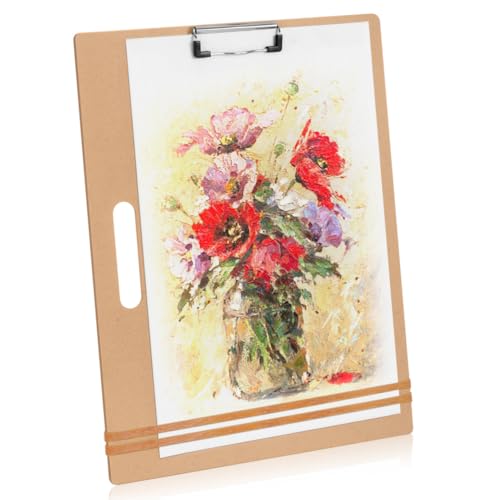
TX liteart 13″x17″ Drawing Board with Clip

HIFORNY 126 PCS Drawing Kit Sketching Pencil Set

Nicpro 58PCS Art Drawing Supplies Kit, Leather Case

Nicpro 22 PCS Compass Geometry Tools with Case

BlackLabMill Rotating Paint Brush Holder, Cherry Hardwood

salbsever 4pcs Artist Blending Sponge Pen Dual Tip

ARTALLY 187Pcs All-in-One Art Painting Kit with Dual Easels
Inside Each Recommended Option
A colorless blender looks like nothing at all: a wood-cased pencil with pigment-free wax inside. Drag it over layered colored pencil and the strokes melt together, which is why so many portrait and botanical illustrators keep one within reach. This twelve-pack means you won’t run dry mid-commission.
The soft core suits Prismacolor Premier’s creamy leads especially well, though it behaves nicely over most wax-based pencils too. Sharpening matters here, since a blunt tip smears rather than blends.
Benefits That Matter
- Soft wax core merges layered color into smooth gradients without muddying hues
- Twelve pencils per pack keeps a fresh tip ready through long rendering sessions
- Works alongside soft-core colored pencils for shading, burnishing, and highlights
- No solvents involved, so blending stays odorless and desk-friendly
Things To Consider
- Soft cores wear down quickly, so frequent sharpening shortens each pencil’s life
- Results depend heavily on the underlying pencil brand and paper tooth
Who Will Love This
Colored pencil artists doing portraits, florals, or detailed illustration work where seamless transitions matter.
A Better Fit Elsewhere
Charcoal and pastel workers will get more from the salbsever sponge pens further down this list.
Most tracing pads chain you to an outlet. This YINGWOND runs on an internal battery, charging over USB-C in roughly two hours and running wirelessly for several hours after, which changes where you can actually trace. Couch, workshop bench, client meeting, none of them require a power strip.
Six brightness levels cover thin sketch paper up to heavier stock, and the padded carry case with shoulder strap protects the panel in transit. Riser stands tilt the pad toward your wrist, a small ergonomic touch that adds up over a long diamond painting session.
Useful Strengths
- Battery power frees you from wall outlets during mobile sessions
- Six brightness steps adapt to different paper weights and room lighting
- Padded anti-scratch case doubles as storage between jobs
- Included riser stands and paper clip improve working posture
Trade Offs
- A4 size limits you to letter-format sheets and smaller canvases
- Wireless runtime depends on your brightness setting, so heavy use drains faster
At A Glance
Who Should Grab It
Diamond painters, tattoo artists, and animators who trace on location rather than at a fixed desk.
Swap It Out When
Studio-bound illustrators needing a rigid outdoor surface may prefer the TX liteart drawing board below.
There’s a reason field sketchers still reach for a board and clip decades into the digital era. This 13 by 17 inch surface gives your hand something firm behind every stroke, indoors or out, without hauling an easel. The spring clip holds paper tight while rubber bands secure loose sheets underneath.
The carry handle makes it genuinely portable, and at this footprint it accepts standard sketch pads without trimming. Compared to the YINGWOND light pad above, this trades illumination for simplicity: no batteries, no charging, just a dependable surface.
Positive Points
- Lightweight board travels easily to parks, cafés, and life-drawing sessions
- Clip plus rubber bands hold multiple sheets securely in wind
- Doubles as a drafting surface or oversized artist clipboard
- Carry handle keeps one-handed transport realistic
Minor Gripes
- No built-in lighting, so low-light venues limit what you can see
- Flat format offers no adjustable angle like a proper drafting table
Whose Shelf It Belongs On
Urban sketchers, students, and plein air hobbyists who value a no-fuss rigid surface over gadgetry.
Reach For A Different Pick When
Tracing existing artwork calls for the illuminated YINGWOND pad instead of a plain board.
Building a graphite kit piece by piece gets expensive fast. This 126-piece set compresses years of gradual collecting into one zipper case: graphite pencils spanning a wide hardness range, charcoal in black and white, woodless graphite sticks, pastel sticks, and blending tools. The included sketchbook is the sleeper feature here.
Its pages come in three tones, white, tan, and black, on 100GSM paper, so toned-paper exercises cost you nothing extra. White charcoal on the black pages teaches contrast faster than almost any drill, and having those surfaces bound together keeps practice friction low.
Everyday Wins
- Full graphite spectrum from hard H grades to rich 14B for deep shadows
- Three-tone sketchbook eliminates separate toned-paper purchases
- Charcoal, woodless graphite, and pastel sticks broaden technique options
- Zipper case keeps 126 pieces sorted and travel-ready
Honest Caveats
- Volume over pedigree: individual pieces may not match standalone premium brands
- Soft 14B leads arrive prone to breakage in transit, a common complaint with wide-range sets
Quick Facts
Right Fit For
Art students and returning hobbyists assembling a complete dry-media starter studio on a budget.
Look Elsewhere When
Inkers wanting consistent line weights should consider the Nicpro mechanical pencil kit next.
Woodcase pencils change character as they sharpen down. Mechanical pencils never do, which is why technical illustrators, inkers, and anyone chasing repeatable line weights gravitate toward this kind of kit. You get metal-body drafting pencils in 0.5, 0.7, and 0.9 millimeter sizes, plus chunkier 2.0 millimeter holders, backed by hundreds of lead refills across HB through 4H and soft 2B to 6B grades.
A dozen fineliners round out the set for linework, and everything slots into a leather roll case that ages well on a studio shelf. Next to the HIFORNY kit’s traditional approach, this one favors consistency and refill economy over tonal range.
Everyday Advantages
- Metal drafting pencils hold up to daily professional handling
- Massive lead refill supply means months of uninterrupted work
- Fineliner assortment covers ink detailing and annotation
- Leather case presents well and survives commuting
Points To Note
- No broad tonal sweep like woodcase B-grade pencils deliver
- Small lead diameters can snap under heavy hand pressure until your grip adapts
Made For
Technical illustrators, comic inkers, and designers who draw precise linework every single day.
Not Your Match When
Expressive sketchers chasing velvety darks belong with the HIFORNY graphite and charcoal set.
One compass rarely fits every job. Study compasses handle quick classroom circles, bow compasses hold radius steady for fine drafting, and larger graphic compasses swing bigger arcs. Having all three, plus a divider for transferring measurements, removes the compromise most single-tool sets force on you.
Beyond the compasses, the case packs two protractors including a swing-arm version, a six-inch ruler, both common triangle squares, mechanical and graphic pencils, erasers, spare leads and needles, and a sharpener. Spare needles matter more than they sound: a bent needle point ruins circle centers, and replacements keep the whole set alive for years.
What Helps Most
- Three compass designs cover small radii through large arcs
- Spare leads and needles extend usable life considerably
- Swing-arm protractor speeds angle layout work
- Durable case keeps twenty-two small parts from scattering
Room For Improvement
- Entry-level build quality means careful handling preserves accuracy longer
- More pieces than casual users will ever touch
Core Details
Who It Suits Best
Architecture and engineering students, pattern makers, and designers laying out geometric construction regularly.
Consider Something Else When
Freehand-focused sketchers gain little here compared to the blending tools from salbsever later on.
Brushes stored bristle-down in jars bend and splay, and brushes crammed in drawers shed ferrule rust onto everything nearby. This rotating holder stores them upright with airflow around each handle, which is gentler on points and lets wet-washed brushes dry evenly. The spin mechanism means the brush you want rotates to you instead of you excavating for it.
Handcrafted from natural cherry hardwood with a smooth finish, it reads as furniture rather than plastic clutter, a nice presence on a studio desk. Large capacity suits painters whose collection has quietly grown past thirty brushes.
The Upside
- Rotating access puts every brush in reach without lifting others out
- Cherry hardwood construction brings warmth and durability to the workspace
- Upright storage protects bristle shapes between sessions
- Large capacity absorbs growing collections
Small Caveats
- Handmade wood varies slightly in grain and tone from unit to unit
- Occasional dusting and care away from damp sinks keeps the finish looking right
Product Snapshot
Best Suited To
Acrylic and watercolor painters with substantial brush collections who work at a dedicated desk daily.
Where A Sibling Pick Shines
Artists short on desk space will find the compact Nicpro leather roll case easier to store.
Blending stumps do fine work on graphite but load up fast with soft pastel and oil pastel residue. Sponge-tipped pens absorb more before they saturate, and these go further still because they wash clean under water and return to duty. Four pens, each carrying two different tip sizes, give you eight working ends across a spread of areas from tight highlights to broad sky gradients.
The small tip measures about half an inch wide against roughly double that on the large end, a useful pairing for moving from detail zones into background washes without switching tools. They also lift and lighten pigment, handy for recovering a highlight lost under heavy charcoal.
Strengths Worth Knowing
- Washable sponge tips rinse clean instead of wearing out like paper stumps
- Dual-tip design doubles your usable ends per pen
- Two sizes cover both fine detail and large-area blending
- Works across oil pastel, soft pastel, charcoal, and graphite
Worth Bearing In Mind
- Dark pigment stains linger in the felt even after washing, mostly cosmetic
- Sponge texture gives softer edges than a firm paper stump delivers
The Right Fit
Pastel painters and charcoal artists who blend heavily and hate throwing spent stumps away.
Another Choice May Suit
Colored pencil users seeking burnishing rather than absorption will prefer the Prismacolor blenders from the top of this list.
Outfitting a paint studio normally means five separate purchases: easel, paints, brushes, canvases, and palette. This 187-piece kit collapses all of it into one box. Two easels anchor the package, an adjustable aluminum tripod for floor work and plein air outings, and a solid beechwood tabletop model for seated detail sessions. Ninety-six tubes split across acrylic, watercolor, and oil, with dedicated brush sets sized for each medium.
Canvas boards and stretched canvas come included, so the first session needs zero additional shopping. In our view, the trade-off is depth over breadth: tube sizes favor exploration over bulk coverage, and serious painters eventually upgrade favorite colors. As a foundation, though, few boxes match this completeness.
Notable Gains
- Dual-easel setup serves both standing large-format and seated detailed work
- Aluminum tripod folds down for outdoor painting trips
- Medium-specific brush sets prevent cross-contamination between paint types
- Surfaces included mean painting starts the day the box opens
Potential Drawbacks
- Paint tubes run modest in volume, so heavy users will restock favorites sooner
- Storing 187 components demands real shelf space between sessions
Essential Details
Built With In Mind
Beginners launching a home studio, art teachers stocking a classroom corner, and gift-givers covering every base at once.
Skip It When
Working painters who already own easels will find the focused Prismacolor or HIFORNY additions more useful.
What Matters Most Before Choosing Art Supplies For Professionals
Match The Tool To Your Medium
Dry media artists live or die by grade range. Graphite work needs hard H pencils for faint construction lines and soft B pencils for shadow, so a set like the HIFORNY earns its space by covering 14B through 5H. Painters face a different calculus entirely: pigment quality and brush shape matter far more than quantity, which is why medium-specific brush sets in the ARTALLY kit beat one generic dozen.
Weight Portability Against Stability
Daily commuters and urban sketchers should prioritize light, self-contained gear. A zipper case, a clipboard-style board, or a cordless light pad all survive a backpack. Studio-bound creators can afford weight and bulk in exchange for stability, which is where a hardwood brush holder or a floor-standing tripod easel pays off.
Count The Refills Before The Tools
Consumables decide long-term satisfaction. A mechanical pencil is only as good as its lead supply, and the Nicpro kits stand out partly because refills ship in the box. Check replacement availability for anything consumable before committing, since a discontinued lead size turns a favorite tool into shelf decoration.
Buy For Your Actual Week, Not Your Fantasy One
The honest question isn’t what could you make someday, it’s what did you make last month. Purchase for that answer and skip the rest.
Key Considerations Across These Picks
Traps First Timers Fall Into
Biggest mistake: buying breadth before skill. A 126-piece kit overwhelms a beginner more than it helps, and unused supplies become guilt on a shelf. Second trap is ignoring consumables; gorgeous tools with unavailable refills die fast. Third, skipping storage planning, since even great gear scattered across a desk slows every session.
When Paying More Pays Off
Higher-tier spending makes sense where contact happens constantly. Brushes touching canvas daily, pencils worn down weekly, easels holding expensive canvases overhead. There, durable materials like metal bodies and hardwood justify themselves. For occasional-use accessories such as blending sponges, budget options perform nearly identically, so save the upgrade money for the tools in your hand every day.
Frequently Asked Questions
Are complete art kits worth it for experienced artists?
Usually only for filling gaps or gifting. Working artists typically own their core tools already, so targeted single purchases serve better than another full set.
Do colorless blender pencils work on all colored pencils?
They perform best on wax-based, soft-core pencils. Harder or oil-based leads resist burnishing somewhat, giving subtler results.
How long does a rechargeable light pad battery last per charge?
Runtime depends heavily on brightness setting, commonly landing in the four-to-six-hour range at moderate levels. Higher settings drain noticeably faster.
How should I clean blending sponge pens?
Rinse the sponge tip under warm water until pigment stops bleeding out, then let it air-dry fully. Some staining remains, but function returns.
What size drawing board suits standard sketch pads?
A 13 by 17 inch board accommodates typical 9 by 12 and similar pads comfortably with margin to spare for clipping.
Closing Thoughts
Good supplies don’t make good art, but bad ones reliably interrupt it. Start with the single gap that frustrates you most this month, whether that’s a wobbling sketch surface, a dying light pad, or forty brushes living in a coffee mug. Fix that first, live with the upgrade for a while, then add the next piece. Your studio grows best one deliberate choice at a time, and there’s no rush to own all nine of these at once.
