
Paint tubes in one drawer, brushes in another, canvases leaning against the wall until they warp. Sound familiar? The right storage turns a chaotic craft corner into a space where you actually want to work, whether you paint at a kitchen table or run a full studio. This roundup covers ten options across every scale, from portable satchels to rolling carts to dedicated canvas racks, so you can match the solution to your supplies rather than forcing your supplies into whatever box you own.
Your Options, Compared

U.S. Art Supply 10-Drawer Artist Tool Supply Box

Aokitsink Rolling Cart with Drawers, 4-Drawer Metal Utility Cart
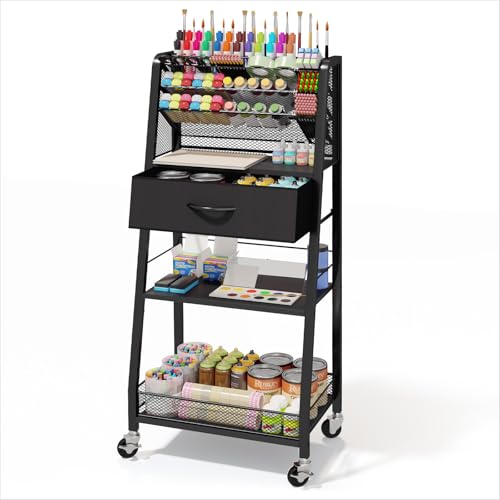
Homsorout 3 Tier Rolling Cart (Black)

Homsorout 3 Tier Rolling Cart (Maple)

Homsorout 3 Tier Rolling Cart (White)

MACOPRO 17QT Clear Plastic Craft Storage Bin

UNZERO Art Canvas Storage Rack with Caster Wheels

MOPALL Craft Organizers Storage Box

ArtBin 6899AZ Super Satchel Double Deep (Clear)

Gifhomfix 3-Layer Plastic Craft Organizer Box
Inside Each Recommended Option
This is the piece of furniture your supplies graduate to. Ten drawers split into multiple segments give pencils, erasers, brushes, and tubes each a home, which matters most once a collection outgrows plastic bins. The elm hardwood and plywood construction, hand-sanded with an elm veneer, reads like workshop furniture rather than disposable storage.
In a teaching studio or a corner where the box stays put year-round, that sturdiness pays off daily. Drawers glide open while you work, and nothing tips when you yank the third one down.
Noteworthy Benefits
- Ten segmented drawers keep small tools sorted without extra organizers inside.
- Elm hardwood body resists the dings and wobble cheaper boxes develop over time.
- Hand-sanded finish means no splinters catching on sleeves or canvas edges.
- Handles a growing collection, so you won’t replace it as your stash expands.
Things To Consider
- Wood needs a dry spot; damp basements can swell the drawers over seasons.
- It’s a stay-put unit, not something you’ll tote to a weekly class.
Key Specs
Who It Suits Best
A committed hobbyist, art teacher, or anyone whose supply drawer has already overflowed twice deserves this level of construction.
Where Another Pick Suits Better
Artists who carry supplies to classes will find the ArtBin 6899AZ Super Satchel far more practical for transport.
Classrooms chew through flimsy plastic carts fast, and that’s exactly the problem this metal-framed design targets. Four drawers ride on a reinforced steel frame topped with wood, rated to hold up to 150 pounds combined. That rating covers loaded drawers, a paper trimmer on top, and then some.
The wheels swivel a full 360 degrees and lock, so the cart parks still during a lesson but rolls between stations without a fight. For shared spaces where several people grab from the same cart, those locks are quietly essential.
What Makes Sense
- 150-pound capacity handles heavy loads like ceramic tools or stacks of sketchbooks.
- Lockable casters keep the cart planted on hard floors mid-project.
- Metal frame outlasts the all-plastic carts common in school settings.
- Wooden top doubles as a small worksurface or printer perch.
Worth Noting
- Assembly is required, and owners commonly report setting aside a patient hour for it.
- Four drawers offer less fine-grained sorting than the U.S. Art Supply box’s ten.
Right Fit For
Teachers, workshop leads, and studio managers who move supplies between tables daily will get the most from the locking wheels and load rating.
Another Choice May Suit
Apartment dwellers with narrow gaps to fill may prefer the slimmer Homsorout 3 Tier Rolling Cart instead.
Narrow spaces reward narrow furniture. At roughly 16.9 inches long by 9.3 wide, this three-tier cart slips beside a desk or into the gap next to a bookcase where nothing else fits, yet its 37.4-inch height gives you three usable shelves stacked vertically.
A fabric drawer adds hidden storage for the messier items you’d rather not display, a thoughtful touch the open-shelf versions skip. In a dorm room or a studio apartment corner, the black finish disappears against most decor while brushes and paints stay within arm’s reach.
Useful Highlights
- Under-10-inch width fits gaps beside desks and radiators.
- Fabric drawer hides clutter that open shelves would expose.
- Wheels let you pull the whole station to wherever you’re working.
- Three tiers separate wet media, dry tools, and paper goods cleanly.
Small Caveats
- The slim frame carries less weight than the Aokitsink’s 150-pound rating, so go easy with dense loads.
- Fabric drawer liners collect dust and need an occasional vacuum.
Made For
Students, renters, and anyone squeezing a creative habit into a bedroom or dorm benefits most here.
Consider Something Else When
Heavy equipment users should step up to the Aokitsink 4-Drawer Metal Utility Cart for its stronger frame.
Same cart as the black version above, different personality. The maple finish warms up a living room or home office in a way industrial black never will, which matters when your art station shares square footage with your sofa. Dimensions stay identical: about 16.9 by 9.3 inches of floor space, 37.4 inches tall, three shelves plus a fabric drawer.
You get the same mobility story too. Roll it to the window for morning light painting, tuck it back against the wall afterward. Functionally there’s no wrong answer between the two colors; this one simply earns its place in rooms where the furniture is part of the decor.
Where It Excels
- Maple tone blends with wood furniture instead of clashing with it.
- Compact 9.3-inch depth keeps walkways clear in shared rooms.
- Fabric drawer conceals half-finished projects from guests.
- Rolling base makes cleanup after a session a two-minute job.
Potential Sticking Points
- Light finishes show scuffs more readily than the black variant.
- Shelf height limits taller items like easel palettes.
Key Specs
Who Will Love This
Home-based creatives whose workspace lives in a decorated room, not a garage, will appreciate the warmer look.
Swap It Out When
Anyone wanting maximum concealment in a utility area may favor the white Homsorout variant or the MACOPRO lidded bin.
White furniture has a way of making a small room feel bigger, and that’s the argument for this third colorway of the Homsorout cart. You still get the same 16.9-by-9.3-inch footprint, three shelves, fabric drawer, and rolling base as its siblings, tuned for apartments where every inch counts.
It slots neatly beside a bathroom vanity for nail supplies, next to a sewing machine, or along a hallway wall holding kids’ craft kits. One honest note: white surfaces show paint smudges and marker ghosts faster than darker finishes, so wipe-downs become part of the routine.
The Good Stuff
- Bright finish visually opens up cramped rooms.
- Identical slim footprint to the other Homsorout variants.
- Fabric drawer keeps small notions out of sight.
- Wheels make repositioning around tight apartment layouts painless.
Less Ideal Details
- Shows stains and scuffs sooner than the black or maple versions.
- Open shelves invite dusting in low-use corners.
Best Suited To
Renters and small-space dwellers who want storage that looks intentional rather than utilitarian fit this pick well.
Reach For A Different Pick When
Messy media painters may find the enclosed MACOPRO 17QT Clear Plastic Craft Storage Bin easier to keep clean.
Most lidded bins force a choice: shallow trays for tiny things or deep space for bulky ones. This 17-quart box splits the difference with five removable partition trays sitting above a deep lower well. Small items live sorted up top; yarn skeins, glue guns, and oversized pads drop below.
At about 15.9 by 11.6 by 7.3 inches, it slides under a bed or stacks on a closet shelf. The clear walls mean you can confirm what’s inside before pulling it down, which saves real time when a project spans several bins. For the price bracket, the flexibility here is hard to argue with.
A Favorable Mix
- Five removable trays adapt the layout to beads today, ribbon tomorrow.
- Deep base swallows bulkier gear most flat organizers can’t hold.
- Clear plastic lets you inventory contents at a glance.
- Lid keeps dust off supplies stored on open shelving.
Points To Note
- Plastic trays can crack under rough handling, so pack sharp tools carefully.
- No handle detail for frequent carrying; it’s built more for shelf life than travel.
Feature Snapshot
Who Should Grab It
Crocheters, scrapbookers, and mixed-media hobbyists juggling both tiny embellishments and chunky tools get the best return here.
Not Your Match When
Weekly class attendees who need a handle should look at the ArtBin 6899AZ Super Satchel instead.
Finished paintings deserve better than leaning against a wall, where corners dent and surfaces scratch. This beech wood rack stores canvases from 15 to 57 inches upright, and units can combine to accommodate pieces up to 75 inches. Each vertical rod measures 0.8 inches in diameter and adjusts or removes entirely, letting you widen spacing for thick gallery-wrapped edges.
The whole assembly carries up to 130 pounds and rolls on casters with a handle for repositioning around a studio. Galleries and working painters juggling dozens of pieces will find few alternatives at any tier that protect work this well.
The Upside
- Adjustable rods customize spacing for canvas thickness and frames.
- 130-pound capacity supports a serious body of finished work.
- Beech wood construction feels gallery-appropriate, not makeshift.
- Modular combination extends reach to 75-inch artworks.
- Casters and handle make seasonal rotation of displays simple.
Factors To Consider
- Assembly takes some effort, and owners commonly report needing a second pair of hands.
- Overkill for anyone storing only sketchbooks and small boards.
Core Details
Whose Shelf It Belongs On
Producing painters, art instructors with student portfolios, and small galleries protecting inventory will value this most.
Look Elsewhere When
Flat-supply collectors should choose the U.S. Art Supply 10-Drawer Artist Tool Supply Box for small-item sorting instead.
Desk-side storage lives or dies on visibility. This four-tier box measures just 14.2 by 9.1 by 12.2 inches, yet three translucent light-grey tiers let you identify contents without opening anything. The bottom tier runs extra deep for the awkward items, think tape dispensers or a stapler-sized heat tool, that never fit standard trays.
It sits happily on a desk, a dresser, or inside a cabinet, and the modest footprint means it won’t crowd a shared workspace. Compared with the larger MACOPRO bin, this trades raw volume for speed: less digging, more grabbing.
Notable Upsides
- Translucent tiers reveal contents instantly, cutting search time.
- Oversized bottom tier accepts bulky tools smaller boxes reject.
- Small 14-inch footprint suits desktops and crowded shelves.
- Stacked-tier layout separates categories without extra dividers.
Details To Watch
- Total capacity is limited; a growing collection will outgrow it quickly.
- Translucent plastic can haze over years and wipes clean best with mild soap.
The Right Fit
Jewelry makers, nail artists, and desk-bound crafters keeping everyday essentials within reach will use every inch.
Skip It When
Anyone storing 12-inch paper pads or bulk yarn should consider the Gifhomfix 3-Layer Plastic Craft Organizer Box for its deeper layers.
ArtBin has built its reputation on portability, and the Super Satchel Double Deep shows why. A lift-out tray rides above a divided base, giving you up to eight customizable compartments below plus quick-access space on top. Threads, ribbons, punches, templates, and paint tubes each find a slot, and the dividers reposition as your kit changes.
The clear shell matters more than it sounds: at a crop night or class, you can verify you packed everything before leaving the house. Where the U.S. Art Supply box anchors a room, this satchel follows you out the door, which is precisely the point.
The Practical Payoff
- Lift-out tray separates daily-use tools from reserve stock.
- Up to eight adjustable compartments tailor the base to any craft.
- Double-deep design holds taller items like paint bottles upright.
- Clear walls make pre-class packing checks effortless.
Trade Offs To Consider
- Latches deserve gentle handling; owners commonly report care keeps them secure long-term.
- Wide but shallow shape eats table space at crowded group sessions.
Quick Facts
Built With In Mind
Class-goers, retreat attendees, and craft-group regulars who haul supplies weekly are the natural audience.
A Better Fit Elsewhere
Stationary home studios with bigger collections will get more mileage from the MACOPRO 17QT bin’s deep base.
Small-craft storage doesn’t need to cost much, and this 11-quart, three-layer box proves it. At 10.62 by 9 by 7.67 inches, it holds beads, ornaments, nail polish, and washi tape without hogging a shelf, and the layers switch in number depending on how much separation a given project demands.
Two clear removable trays sit up top for tiny components, while the lower chamber takes midsize gear. A lid and carry handle round out the package, making it a sensible grab-and-go option for kids’ craft sessions too. One limit worth knowing upfront: standard 8.5-by-11-inch paper won’t fit, so card makers should measure first.
Notable Gains
- Flexible layer count adapts between fine sorting and open storage.
- Handle and lid make it genuinely portable between rooms.
- Clear trays surface small parts without rummaging.
- Modest 11-quart size stacks neatly with duplicate units.
Some Limits To Know
- Won’t accept letter-size paper, a dealbreaker for some papercrafters.
- Lightweight plastic flexes under heavy loads compared with the MACOPRO bin.
Who Should Grab It
Bead workers, nail techs building mobile kits, and parents corralling kids’ craft bits will find it does the job without fuss.
Another Choice May Suit
Those needing deeper bulk storage should weigh the MOPALL Craft Organizers Storage Box’s oversized bottom tier.
What Matters Most Before Choosing Art Supply Storages
Match Capacity To Your Actual Collection
Count what you own before shopping, honestly. A watercolor hobbyist with thirty tubes needs a fraction of the space a mixed-media artist with canvases, powders, and tools requires. Oversized bins waste shelf space; undersized ones breed clutter within a month. Measure your largest single item, whether that’s a 24-inch canvas or a heat gun, and confirm any candidate accommodates it.
Portability Versus Permanence
Decide where your crafting happens. Supplies that travel to classes need handles, secure lids, and divider systems, which points toward satchels and handled boxes. Studio-bound collections justify heavier investments like hardwood drawer cabinets or wheeled racks that never leave the room. Splitting the difference usually means owning one of each.
Visibility Saves Time
Clear plastic and translucent tiers exist for a reason: identifying contents without opening containers cuts setup time dramatically. Open shelving offers the same benefit but collects dust, so lidded transparency wins for infrequently used supplies. Opaque storage suits items you reach for daily anyway.
Weight Ratings And Floor Space
Rolling carts vary widely in load capacity, and overloading a light frame shortens its life noticeably. Check the rated capacity against your heaviest realistic load, then measure the floor gap where the unit will live. A cart two inches too wide for its alcove becomes a permanent annoyance.
Key Considerations Across These Picks
Traps First Timers Fall Into
The classic error is buying for the collection you have today rather than the one forming. Another common slip: ignoring dimensions and discovering a beloved paper pad doesn’t fit the trays. Read listed measurements against your actual supplies before committing, and leave yourself twenty percent growth room.
What Separates Premium From Basic
Higher-priced options typically spend their budget on materials, hardwood versus thin plastic, and engineering, like lockable casters or adjustable rods. That spending pays off for daily users and heavy loads. Occasional crafters rarely notice the difference, so paying up only makes sense when frequency and weight demand it.
Frequently Asked Questions
How do I stop small items from mixing together in a big bin?
Use removable partition trays or small sub-containers inside the main box. Both create boundaries without buying new furniture.
Are rolling carts stable enough for heavy art supplies?
Check the manufacturer’s stated load capacity first. Reinforced metal frames rated for 100 pounds or more handle dense supplies comfortably.
What’s the best way to store finished canvases?
Upright vertical storage with padded or wooden rods protects surfaces and edges best. Leaning stacks cause dents and scratches over time.
Do clear plastic boxes yellow over time?
Some do, especially near sunlight. Keeping them shaded and wiping with mild soap slows the process considerably.
Can I mix storage types in one studio?
Absolutely, and most working artists do. Pair a fixed drawer unit for small tools with a rack for canvases and a portable satchel for travel.
Closing Thoughts
The right choice comes down to honest self-assessment: what you make, where you make it, and how often supplies leave the house. Portable crafters thrive with the ArtBin satchel or Gifhomfix box, while studio builders get lasting value from the U.S. Art Supply cabinet or UNZERO rack. Start with your biggest bottleneck, solve that first, and the rest of the organization tends to fall into place naturally.
