
Oil paint rewards patience like no other medium, and the set you start with shapes how much you enjoy the slow drying, the blending, the layering. The problem is that shelves are crowded with student-grade tubes that chalk up or crack within a year. This shortlist sorts through ten sets and singles, from budget starter kits to professional-grade portrait palettes, so your first (or next) purchase matches how you actually paint.
How The Shortlist Stacks Up

PHOENIX Oil Paint Set 24x12ml Tubes

ZenART Professional Oil Paint Set Portrait Colors 8x50ml

MyArtscape Oil Paint Set 12 x 12ml Tubes

Gamblin Artist Oil Colors Introductory Set 37ml

Gamblin 1980 Oil Color Exclusive Set
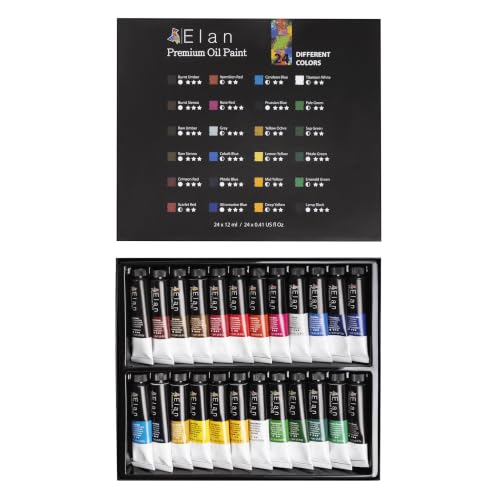
Elan Professional Oil Paint Set 24 Mini Tubes

Winsor & Newton Winton Oil Color Paint Set 20 x 12ml

MEEDEN Artist Oil Paint Set 12 x 60ml Tubes

Gamblin 1980 Oil Titanium White 150ml

Paul Rubens Oil Paint 20 Colors x 50ml Tubes
What Each Pick Brings To The Table
Twenty-four small tubes give a new painter room to experiment without committing to expensive pigments they may never touch again. The formula leans on finely ground pigment in an oil base, so it spreads smoothly across primed canvas, board, or craft surfaces.
In a home studio corner or a kitchen-table setup, this is the kind of kit that lets you mix a full landscape range from one box. Compared with the pricier Gamblin options later in this list, it trades some refinement for sheer variety.
Key Advantages
- Twenty-four hues mean fewer mixing dead ends when you’re still learning color relationships.
- Small 12ml tubes keep storage tidy and reduce waste from dried-out paint.
- Smooth, even application suits both brushwork and simple craft projects.
- The non-toxic formulation makes it a comfortable choice for shared living spaces.
Things To Consider
- Tubes this size run empty quickly once you start painting larger canvases regularly.
- As with most entry-level lines, cap threads can gum up if paint dries there, so wipe rims after each session.
Who It Suits Best
Adults picking up oil painting for the first time who want maximum color exploration at minimum commitment.
A Better Fit Elsewhere
Portrait-focused painters will get more mileage from the ZenART Professional Oil Paint Set’s curated skin-tone palette.
Where the PHOENIX set scatters wide, this one aims deep. Eight earthy tones plus a blue, drawn from the kind of palettes Flemish and Renaissance painters relied on, cover realistic skin tones without endless trial mixing. Each tube holds a generous 50ml, roughly four times the PHOENIX volume.
The paint comes pre-loaded with linseed oil, meaning it behaves buttery straight from the tube for alla prima (wet-on-wet) work, where you blend into wet layers rather than waiting for each to dry. No extra medium needed also means quieter, less smelly sessions in a spare bedroom or apartment studio.
The Case For It
- Single-pigment formulas wherever possible keep mixes clean and predictable.
- Ready-to-use consistency saves money on separate mediums.
- Strong tinting strength means a little goes far across a large canvas.
- Adheres well to primed canvas, boards, metal sheets, and oil paper.
Points To Note
- Eight colors is a narrow range; landscape painters will want to supplement with greens.
- It isn’t water-mixable, so cleanup still calls for solvent or soap-based methods.
At A Glance
Made For
Intermediate and advanced painters working in portraiture, figure study, or classical realism.
Consider Something Else When
Broad-subject beginners will find more flexibility in the Winsor & Newton Winton set’s twenty-hue spread.
This twelve-tube kit sits comfortably between the sprawling PHOENIX box and the focused ZenART palette. Twelve colors is enough to learn real mixing discipline, and the thick, buttery body holds texture well, which matters if impasto (paint applied thick enough to hold brush or knife marks) appeals to you.
For weekend painters working on modest canvases, the honest read is that this covers the fundamentals without fuss. Lightfast pigment helps finished pieces resist fading over time, a quiet benefit you only appreciate years later.
Strong Points
- High-pigment load delivers vivid strokes straight onto canvas.
- Thick consistency supports textured, expressive application.
- Works for both wet-on-wet blending and layered approaches.
Minor Gripes
- Twelve hues limits subtle skin-tone and foliage mixing compared with wider sets.
- Owners commonly report small tubes disappearing fast during intensive practice periods.
Right Fit For
Hobbyists and improvers who want dependable basics and enjoy building color from a compact palette.
Reach For A Different Pick When
Painters burning through white constantly should pair any set with the Gamblin 1980 Titanium White 150ml instead of relying on a 12ml tube.
Nine tubes, thirty-seven milliliters each, and every color chosen to earn its place: cadmium yellows and red light, yellow ochre, burnt umber, alizarin crimson, ultramarine blue, viridian, ivory black, and titanium white. That’s a classic split-primary palette, the structure art instructors have taught mixing with for decades.
You may find nine colors restrictive at first glance, but the constraint teaches you to mix rather than reach for another tube. Against the student-grade Gamblin 1980 line below, these are true artist-grade paints, with richer pigment density and cleaner color behavior in tints and glazes.
Useful Strengths
- Thoughtfully constructed palette supports nearly any painting style.
- Artist-grade quality gives smoother handling and stronger permanence than student lines.
- Larger 37ml tubes outlast typical beginner-set volumes.
- Teaches disciplined mixing habits that transfer to any future brand.
Softer Spots
- No greens included, so landscape painters must mix viridian-based foliage themselves.
- Cadmium-containing colors carry a higher cost per tube when replacing them individually.
Quick Facts
Who Will Love This
Art students and committed hobbyists ready to invest in genuine artist-grade materials.
Swap It Out When
Budget-limited starters get better value-per-color from the Gamblin 1980 Exclusive Set just below.
The 1980 line is Gamblin’s answer to a real problem: student-grade paint that doesn’t feel like a compromise. You get eight 37ml tubes of high-end student color, made in America, backed by the same company behind the artist-grade set above.
The bundle earns its place here through what ships alongside the paint: a cradled wood panel ready to paint on, plus Solvent-free Gel, a medium that lets you thin and extend paint without turpentine. In a shared apartment or a room with poor ventilation, that alone changes how often you’ll actually paint.
What It Does Well
- Includes a cradled wood panel, so you can start painting the day it arrives.
- Solvent-free Gel supports low-odor studio practice.
- Student pricing keeps artist-brand quality within reach.
- Eight 37ml tubes provide a workable core palette.
Worth Bearing In Mind
- Student-grade pigment loads are lighter than the Artist line, noticeable in deep glazes.
- Eight colors means supplementing for specialized subjects.
Product Snapshot
Whose Shelf It Belongs On
Improving students and home-studio painters who want brand-name quality without artist-line prices.
Not Your Match When
Working professionals needing maximum pigment strength should step up to the Gamblin Artist Introductory Set reviewed earlier.
Twenty-four colors in 0.4oz mini tubes, each capped with color coding so you can grab the right hue mid-stroke without squinting at labels. That sounds minor until you’ve painted with paint under your fingernails and dim evening light.
The pigment quality targets intense coverage per stroke, which suits decorative canvas work and craft-adjacent projects as much as traditional painting. Think of it as a versatile all-rounder for adults who dabble across subjects rather than committing to one genre.
Real-World Strengths
- Color-coded caps make selection fast during active painting sessions.
- Wide hue variety handles landscapes, florals, and abstract work alike.
- Mini tubes suit occasional painters who’d otherwise waste half-used paint.
Practical Considerations
- Small tube volume limits large-canvas or heavy-texture work.
- Mini caps can dry shut between infrequent sessions, so store tubes upright and sealed tight.
Best Suited To
Casual adult painters and craft enthusiasts who value variety and convenience over volume.
Another Choice May Suit
Artists painting weekly on bigger surfaces will prefer the MEEDEN set’s substantial 60ml tubes.
Winsor & Newton has supplied fine-art materials since the nineteenth century, and the Winton line distills that heritage into an affordable student range. Twenty essential hues drawn from quality fine-art pigments arrive in 12ml tubes, spanning cadmium hues, scarlet lake, permanent rose, cobalt violet hue, phthalo blue, French ultramarine, and more.
The word “hue” on many labels signals a modern pigment substitute for a traditional heavy metal color, which keeps costs down while preserving similar appearance. For classroom use, gift-giving, or a first serious kit, this breadth is hard to argue with.
Standout Benefits
- Twenty colors cover nearly every subject without immediate supplements.
- Fine-art pigment base gives consistent, reliable behavior across the range.
- Full 55-color Winton line exists separately for expanding later in larger sizes.
- Brand reputation means replacement tubes are easy to find worldwide.
Areas To Watch
- Hue substitutes lack some of the depth of true cadmium pigments.
- 12ml tubes deplete quickly for painters working at scale.
Feature Breakdown
Who Should Grab It
Classroom students, workshop attendees, and gift-givers wanting a trusted name with generous variety.
Look Elsewhere When
Portrait specialists after curated earth tones will serve their subject better with the ZenART Professional set.
Twelve colors, sixty milliliters each. That’s five times the volume of a standard beginner tube, and it changes the psychology of painting: you stop rationing white and start covering canvas freely. For anyone producing work on a regular schedule, that headroom matters more than an extra six hues.
The texture runs smooth and creamy, blending easily whether you’re glazing thin or laying in broad passages. Vibrancy holds up across the range, and the larger format suits both brush and knife application on canvas or panels.
Where It Excels
- 60ml tubes support months of regular painting before repurchase.
- Creamy consistency blends cleanly for professional-looking transitions.
- Vibrant, lasting color stands up on primed surfaces.
- Generous volume suits underpainting and large blocking-in stages.
Small Caveats
- Only twelve colors, so specialized subjects need supplemental purchases.
- Bigger tubes take up more storage space in cramped studios.
The Right Fit
Daily or near-daily painters working on medium-to-large canvases who hate running dry mid-session.
Where A Sibling Pick Shines
Occasional painters will find the Elan 24-tube mini set a lighter, more varied alternative.
Here’s a truth every oil painter learns fast: white disappears first. Mixing tints, softening shadows, lightening skies, titanium white gets consumed at several times the rate of any other color on your shelf. A 150ml tube addresses that directly.
This sits in Gamblin’s 1980 student line, manufactured in Portland, Oregon, and supported by the same company behind its artist-grade range. Pairing it with any smaller set above, the MyArtscape or Winton kits especially, removes the most common frustration of starter palettes.
Where It Helps
- 150ml volume outlasts four or more standard 37ml tubes of white.
- True color and reliable opacity for mixing and highlights.
- Backed by the full Gamblin Artist line’s formulation standards.
Details To Watch
- It’s a single color, obviously, so it complements rather than replaces a set.
- Student-grade white carries slightly less tinting strength than premium artist whites, depending on your mixing style.
Core Details
Built With In Mind
Any painter who mixes extensively and resents paying artist-grade prices for the color they burn through fastest.
Skip It When
Painters wanting a complete standalone purchase should choose the Paul Rubens 20-color set instead.
Twenty colors at fifty milliliters apiece puts this among the most generously stocked sets here, rivaling the MEEDEN on volume while doubling its hue count. Fine-art pigments deliver strong covering power and tinting strength, so mixes stay vivid even when heavily extended with white.
The texture is delicate and creamy, moving easily across canvas or painted wood panels, and it holds brush strokes and knife marks crisply. Texture-driven painters, think palette-knife landscapes or expressive impasto, are the natural audience. One thing worth considering: with this much paint on hand, proper tube sealing between sessions becomes genuinely important.
Strengths Worth Knowing
- High pigmentation provides excellent coverage and tinting strength per stroke.
- 50ml tubes support long projects without frequent restocking.
- Retains brushstroke and knife texture beautifully for dimensional work.
- Blends easily across canvas and wood panel surfaces.
Trade Offs To Consider
- Large-format tubes demand more storage room and careful cap hygiene.
- Owners commonly note the set’s weight makes travel less convenient than mini-tube kits.
The Numbers That Matter
Perfect Match For
Expressive painters working large, especially those favoring knives and bold textural strokes.
Where Another Pick Suits Better
Minimalist mixers who prefer a tight, classic palette will appreciate the Gamblin Artist Introductory Set’s nine-color discipline.
Choosing Between These Sets Without Regret
Grade And Pigment Load
Student-grade paint uses fillers to cut cost, which shows up as weaker tinting strength and faster fading in tints. Artist-grade lines pack more pure pigment per tube. Beginners can absolutely start with student grade, but painters selling work or exhibiting should lean artist-grade from the Gamblin Artist tier upward.
Tube Size Versus Variety
Small 12ml tubes let you explore twenty-four colors cheaply, yet they frustrate anyone painting weekly. Match tube volume to your actual output: occasional dabblers thrive on minis, while regular painters save money long-term on 50ml-plus formats despite the higher upfront spend.
Palette Shape Matters More Than Count
A curated nine-color split-primary set teaches mixing and produces cleaner color than a scattered forty-hue box. Portrait painters need earth tones and muted reds; landscapers need blues, greens, and ochres. Buy for your subject, not for the biggest number on the label.
Surface Compatibility
Most oil paints handle primed canvas, boards, and panels equally well, but check specifics for unusual supports like metal sheets or oil paper. The ZenART set explicitly covers those broader surfaces, worth noting for mixed-media experimentation.
Key Considerations Across These Picks
Traps First Timers Fall Into
The classic error is buying a huge cheap set, using three colors, and letting the rest dry solid in their tubes. Start narrower than feels comfortable. Second trap: ignoring white consumption entirely, then wondering why your palette feels incomplete by week two. A big backup tube solves it.
When Paying More Pays Off
Upgrading buys pigment density, permanence, and smoother handling. Student paint looks fine fresh off the brush; the gap appears in glazes, subtle tints, and how a piece ages over years. Working toward exhibition or sale, artist-grade pays for itself in results.
Frequently Asked Questions
How long do oil paints take to dry?
Thin layers typically become touch-dry in two to twelve days depending on pigment and climate. Thick impasto passages can stay workable for weeks.
Can I mix brands of oil paint together?
Yes, oils from different manufacturers intermix safely since they share the same basic binder chemistry. Stick to one brand per layer for consistent behavior.
Do I need solvents to clean brushes?
Solvent works, but odorless mineral spirits or soap-based brush cleaners handle it too. The solvent-free approach suits apartments and shared spaces.
What surfaces work best for oil painting?
Primed canvas remains the standard, though gessoed boards, panels, and oil paper all perform well. Unprimed surfaces eventually degrade from oil penetration.
Are student-grade paints good enough to learn with?
Absolutely, and most instructors recommend them for the first year. Upgrade once specific limitations, usually weak tints or fading, actually affect your work.
Bottom Line
Match the set to how you actually paint, not how you hope to. Casual explorers should grab the PHOENIX or Elan kits, serious students belong with either Gamblin option, and texture-loving volume painters will be happiest with the Paul Rubens or MEEDEN sets. Whichever direction you go, add a large white tube early. Your future self, halfway through a canvas at midnight, will thank you.
