
Anyone who has stood over a manual press counting seconds knows the appeal of automation. Auto heat press machines handle the clamping, timing, and release for you, so a batch of shirts or tumblers comes out consistent without babysitting. This roundup covers compact minis, hat specialists, wide-format clamshells, and rotating tumbler presses, matched to different workspaces and order volumes.
The Lineup, Simplified

Cricut EasyPress Mini Heat Press (Raspberry)

HTVRONT Auto Hat Press Machine

HTVRONT Auto Hat Press Machine

VEVOR 16×24 Clamshell Heat Press 1700W

HTVRONT 3 in 1 Auto Heat Press 12×10

HTVRONT 15×15 Swing Away Shirt Press

VEVOR Auto Heat Press 15×15 (Green)
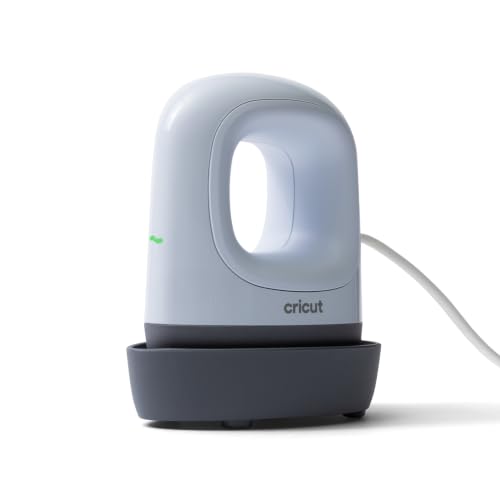
Cricut EasyPress Mini LT (Blue)
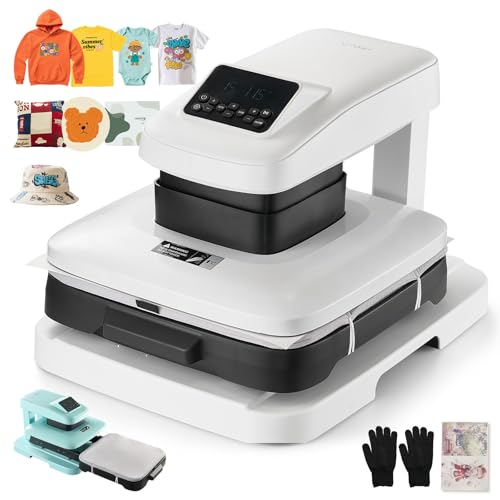
VEVOR Auto Heat Press 15×15 (White)
EENOUR Auto Tumbler Heat Press T03
A Deeper Look At The Lineup
The smallest tool in this lineup earns its spot by doing what big platens can’t: reaching tight spots. Around buttons, along seams, inside shoe tongues, that’s where a full-size press simply won’t fit. The pointed tip gives you control in those awkward zones.
It’s built for small transfers rather than production runs. A chest logo, a onesie monogram, a patch repair, all realistic jobs here. You’ll still want one of the larger machines below for anything bigger than a pocket print.
The Value In It
- Fits into spaces a standard platen physically cannot reach
- Light enough to maneuver with one hand for long detail sessions
- Optional protection plans cover drops, spills, and breakdowns with no extra fees at claim time
- Stores easily in a drawer, unlike any clamshell on this list
Small Caveats
- Not suited to full-shirt designs; coverage area is genuinely mini
- Manual operation means you hold position yourself through each transfer
Who It Suits Best
Crafters who mostly personalize small items and need precision around seams will get the most from this little press.
A Better Fit Elsewhere
For whole-garment work, the VEVOR 16×24 Clamshell covers far more surface per pass.
Hats are notoriously fiddly to press because curved crowns fight flat heat plates. This HTVRONT unit solves that with a dedicated curved form plus an automatic cycle: one touch lowers the head, applies pressure, times the transfer, and lifts back up on its own.
In a studio cranking out caps for a team order, that hands-free loop matters more than raw specs. You load the next hat while the current one presses, which is how small operations quietly double their output.
A Strong Showing
- One-touch automation removes guesswork from pressure and timing
- Curved pressing form matches cap crowns better than flat plates ever will
- Suited to both hobby crafters and small commercial studios
- Consistent results from the first transfer onward, per the design intent
Things To Consider
- Single-purpose machine; shirts and mugs need separate equipment
- Automation adds moving parts, so occasional cleaning of the lift mechanism keeps cycles smooth
At A Glance
Made For
Cap-focused sellers and team-order makers who want repeatable results without standing over the machine.
Where A Sibling Pick Shines
Shoppers wanting hats plus mugs and shirts in one unit should look at the HTVRONT 3 in 1 Auto Heat Press instead.
This second HTVRONT hat press shares the same core idea as pick two: a single button starts an automated press cycle that lowers, holds even pressure, counts down, and releases. The difference is positioning in your workflow rather than capability.
Where the earlier model suits mixed studios, this one reads as a workhorse for anyone whose catalog leans heavily on caps. Running fifty hats for a fundraiser becomes a rhythm of load, tap, load again, no wrist strain by hat thirty.
Advantages To Know
- Automated pressure and timing cut operator fatigue across long batches
- Delivers uniform transfers batch after batch, which matters for client orders
- Simple enough for first-time hat pressers to learn quickly
Potential Sticking Points
- You’re committing counter space to a niche-only machine
- Heat-resistant gloves are wise during loading; hot surfaces are part of the deal
Right Fit For
High-volume cap decorators, school fundraisers, and sports-team sellers who press hats weekly.
Swap It Out When
Occasional hobbyists pressing a few caps a month may prefer the simpler Cricut EasyPress Mini LT for light duty.
Everything before this point has been about convenience. The VEVOR 16×24 is about capacity. A 16-by-24-inch platen swallows oversized prints, full-front designs, and even two standard shirts per cycle, backed by 1700 watts of heating power.
The manufacturer rates the sponge-cored heating pad for roughly 20,000 hours of service, and a soft liner accommodates varied materials while trimming operating odors. A Teflon insulation coating on the surface helps resist residue buildup, which translates directly into less scraping between jobs.
Good Reasons To Consider
- Large platen handles full-back prints and multi-item loads
- High wattage brings the plate up to temperature faster than smaller units
- Teflon-coated surface wipes clean instead of trapping vinyl residue
- Soft heating liner adapts to different fabric thicknesses
Points To Note
- Clamshell design needs vertical clearance above the workspace
- Heavy and bulky; plan its home before delivery day
- Manual operation means you set pressure and timing yourself
Feature Rundown
Who Will Love This
Print-shop owners and serious side-hustlers producing bulk apparel orders belong here.
Another Choice May Suit
Home users short on space will find the HTVRONT 15×15 Swing Away far easier to live with.
Most multi-function presses make you wrestle with screws and brackets to swap attachments. HTVRONT’s answer is a quick-change system the brand describes as a one-second swap between the flat plate, mug attachment, and hat attachment. That’s the headline, and honestly it’s a good one.
The 12-by-10 flat platen suits most shirt fronts, while adjustable pressure lets you tune force for delicate blanks versus thick fabrics. For a crafter selling shirts Monday, mugs Wednesday, and caps Friday, one machine covering all three changes the math entirely.
Useful Highlights
- Rapid accessory swapping eliminates tedious mold replacement
- Adjustable pressure accommodates different materials and blank types
- Includes dedicated mug and hat attachments in the box
- Heat-resistant gloves ship with the unit for safer handling
Less Ideal Details
- 12×10 platen is smaller than the VEVOR’s 16×24 for oversized prints
- More attachments mean more pieces to store between sessions
Quick Facts
Built With In Mind
Sellers diversifying beyond shirts into drinkware and headwear get the widest range per dollar here.
Reach For A Different Pick When
Shirt-only producers chasing maximum platen size should step up to the VEVOR 16×24 Clamshell.
Swing-away presses move the heated plate aside instead of lifting straight up, which does two useful things: it exposes the full platen for layout work, and it keeps hot metal away from your hands while you adjust the garment. Sublimation crafters tend to favor this style for exactly those reasons.
HTVRONT also gave this one a smoother, more modern shell than the industrial gray boxes most presses wear. In a shared living space or a craft room doubling as a guest room, that appearance choice isn’t trivial.
Strong Points
- Swing-away arm clears the workspace fully for garment placement
- 15×15 platen suits standard shirt sizes comfortably
- Refined exterior looks at home in visible living areas
- Handles sublimation and iron-on vinyl workflows alike
Where It May Fall Short
- Swing mechanism needs clearance to the side, not just above
- Manual cycling requires attention through every press
The Right Fit
Home-based sublimation crafters who value safe garment handling and a machine that doesn’t look like shop equipment.
Consider Something Else When
Hands-free automation matters more than styling; the VEVOR Auto Heat Press 15×15 in green handles the release cycle for you.
Here’s the workflow VEVOR describes: lay your material, close the lid, hit start. The machine adjusts pressure, presses, counts down, and releases without further input, cutting manual effort roughly in half. Dual-tube heating spreads warmth evenly across the plate, and up to 231 pounds of force presses fabric, wood, and ceramics.
That combination suits a busy sublimation shop where consistency across dozens of daily cycles matters more than anything else. The digital display keeps settings visible at a glance mid-run.
The Case For It
- Full auto cycle: pressure, countdown, and release handled automatically
- Dual-tube heating promotes even temperature across the platen
- Strong clamping force works on fabric, wood, and ceramic blanks
- Digital display simplifies monitoring during long sessions
Details To Watch
- Auto mechanisms benefit from periodic dusting around the moving parts
- Substantial weight makes relocation a two-person job
Key Specs
Who Should Grab It
Production-minded crafters running mixed-material orders daily will lean on this machine hard.
Look Elsewhere When
Budget-conscious beginners may find the white VEVOR variant later in this list offers the same core behavior at a friendlier entry point.
Compared with the raspberry EasyPress Mini at number one, this LT version strips things down even further: one heat setting, no dials, no decisions. You plug it in, wait for ready, and press. For someone nervous about ruining a first iron-on project, that simplicity is the entire selling point.
The precision tip still reaches around buttons and seams, and popular targets like tees and baby clothes sit squarely in its comfort zone. Think of it as training wheels that actually work well.
Positive Points
- Single-setting operation removes temperature guesswork completely
- Handheld format blends press speed with iron-like convenience
- Precision tip navigates seams, collars, and curved areas
- Ideal starter tool for kids’ clothing personalization
Worth Bearing In Mind
- No adjustable temperature limits it to compatible material types
- Small surface means slow going on larger designs
Whose Shelf It Belongs On
Total newcomers to iron-on crafts, especially parents personalizing kids’ clothes occasionally.
Not Your Match When
Growing hobbyists needing multiple settings will outgrow it fast; the raspberry EasyPress Mini offers more flexibility.
Functionally, this is the same auto-release platform as the green VEVOR at number seven: place the blank, close the lid, press start, and the machine manages pressure, timing, and lift on its own. The white finish is the practical difference, and it’s a real one for bright craft rooms where the darker unit would visually dominate.
Adjustable pressure keeps it flexible across vinyl, sublimation, and thicker blanks, while the digital display tracks each cycle. Owners commonly report the auto-release being the feature they stop noticing, which is the best compliment for automation.
Everyday Advantages
- Hands-free cycle reduces repetitive strain across long sessions
- Adjustable pressure spans delicate vinyl to heavy fabric
- Neutral finish blends into lighter-colored workspaces
- Approachable for all skill levels, per the design brief
Some Limits To Know
- White housing shows scuffs and ink marks more readily than dark shells
- Same substantial footprint as its green sibling
Best Suited To
Home crafters who want dependable automation and a machine that fits a bright, shared space.
Where Another Pick Suits Better
Those needing hat and mug capability alongside shirts should weigh the HTVRONT 3 in 1 Auto Heat Press instead.
Drinkware is the fastest-growing corner of custom crafting, and flat presses can’t wrap a curve. The EENOUR T03 rotates the tumbler through a full 360 degrees against the heating element, producing a seam-free wrap that hand-ironing can’t match. Set it, start it, and it releases when finished.
Pressure is user-settable, and compatibility spans 11 to 32 ounces across sublimation tumblers, mugs, and glassware. For small-batch cup sellers, removing the mid-cycle manual rotation step is where the efficiency gain lives.
What Makes Sense
- Automatic rotation delivers true 360-degree seamless wraps
- Wide size range covers 11oz mugs through 32oz tumblers
- Set-and-start operation suits small-batch production nicely
- Works across tumblers, mugs, and glass blanks
Trade Offs To Consider
- Dedicated to cylindrical blanks only; no flat pressing here
- Correct pressure setting takes a few test runs on new cup sizes
Core Details
Perfect Match For
Tumbler sellers building a drinkware line will find this the most focused tool on the list.
Skip It When
Apparel-first crafters get far more mileage from the VEVOR Auto Heat Press 15×15 in white.
What Matters Most Before Choosing
Match The Platen To Your Products
A 15×15 plate covers nearly every standard shirt front, while 16×24 handles oversized prints and doubles throughput. Measure your most common blank first, then buy slightly larger. Hat and tumbler work demands shaped forms no flat plate provides.
Automation Versus Control
Auto-release machines manage pressure, timing, and lift for you, which pays off across long batches. Manual clamshells and swing-aways cost less effort to learn but demand attention every cycle. High-volume sellers almost always benefit from automation.
Power And Heat Distribution
Higher wattage shortens preheat waits between jobs, and dual-tube systems spread warmth more evenly than single-element designs. Uneven heat shows up as faded patches on sublimation prints, so distribution matters as much as raw power.
Key Considerations Across These Picks
Traps First Timers Fall Into
The classic error is buying for the project you dream about rather than the one you actually do. A tumbler press gathering dust while you only make shirts is wasted counter space. Also check your circuit capacity before choosing a high-wattage clamshell.
Where The Extra Money Goes
Premium models spend their budget on automation hardware, even-heating elements, and stronger clamping force. Those upgrades translate into fewer ruined blanks and less fatigue. Occasional crafters rarely recoup that cost; weekly producers usually do.
Frequently Asked Questions
Do auto heat press machines work with regular iron-on vinyl?
Yes, they handle standard heat transfer vinyl within their temperature range. Always confirm the vinyl’s recommended settings against your machine’s controls.
Can one machine press shirts, hats, and mugs?
Only multi-function models like the HTVRONT 3 in 1 include swappable attachments. Dedicated machines typically excel at their single format.
How much counter space does a 15×15 press need?
Plan for roughly two feet square plus clearance for the lid or swing arm. Swing-away models need side room instead of overhead clearance.
Are mini heat presses suitable for full-size shirts?
They cover small logos and detail work well, but a full-front design exceeds their reach. Pair a mini with a larger press for complete coverage.
How long do these machines typically last?
Build quality varies widely, though some manufacturers rate heating elements for tens of thousands of hours. Regular cleaning of plates and mechanisms extends service life considerably.
Closing Remarks
The right press depends less on specs and more on what lands on your workbench each week. Shirts point you toward the VEVOR or HTVRONT flat presses, caps toward the HTVRONT hat units, cups toward the EENOUR. Start honest about your volume, choose accordingly, and the machine will disappear into the routine.
