
Rolling a fence or brushing cabinet doors by hand eats a whole weekend and still leaves streaks behind. A good automatic paint gun changes that math entirely, laying down even coverage in a fraction of the time. This roundup covers ten options across cordless sprayers, electric handhelds, and air-powered HVLP guns, so you can match the tool to your actual projects rather than settling for whatever’s cheapest on the shelf.
A Fast Comparison Of The Options

DTEZTECH Paint Sprayer for Dewalt 20V Battery, 200W HVLP Cordless Spray Gun
Hotorda HVLP Spray Gun Kit with 1.4/1.7/2.0mm Nozzles, 600cc Cup
Tosucs HVLP Spray Gun with 1.0mm Tip, Gravity Feed

ENDOZER Professional HVLP Spray Gun Set Gravity Feed
LESONJOY 1000W High Power Corded HVLP Paint Sprayer (Yellow)
WIBENTL Electric Spray Paint Gun, 3 Modes & 4 Brass Nozzles

Throohills Siphon Feed Spray Gun 1.8mm Nozzle (Red)
Tilswall Shark700 Cordless Paint Sprayer, Fits Dewalt 20V
Tilswall Shark 600 Ultra-Light HVLP Electric Spray Gun

REFINE HVLP Air Spray Guns 1.0/1.4/1.7mm Nozzle & Regulator, 2-Pack
Taking A Closer Look At The Options
Nobody wants to drag an extension cord across the yard to reach the far side of a fence. This DTEZTECH gun runs on Dewalt 20V MAX lithium-ion batteries you may already own, which makes it a natural fit for anyone with that tool platform. The copper nozzle and adjustable flow control let you dial output down for cabinet doors or open it up for rough siding.
The 200W brushless motor pushes roughly 1600ml of airflow per minute for atomization, meaning paint gets broken into fine droplets instead of spattered blobs. For shed builds, porch railings, and outdoor furniture refreshes, that combination of mobility and steady output covers a lot of ground between battery swaps.
Well-Handled Touches
- No cord means you can spray a full fence line without hunting for outlets.
- Brushless motors tend to run cooler and last longer than brushed equivalents.
- Adjustable flow keeps thin stains from flooding delicate trim.
- Copper nozzle resists wear better than basic plastic tips.
Things To Consider
- The battery ships separately, so budget for one unless your collection already includes Dewalt packs.
- Like most sprayers, leftover paint in the passages needs flushing soon after each session to avoid clogs.
Who It Suits Best
Homeowners with existing Dewalt batteries who spend more time painting outdoors than inside.
A Better Fit Elsewhere
Shoppers who want a ready-to-run kit out of the box will prefer the Tilswall Shark 600, which needs no separate battery purchase.
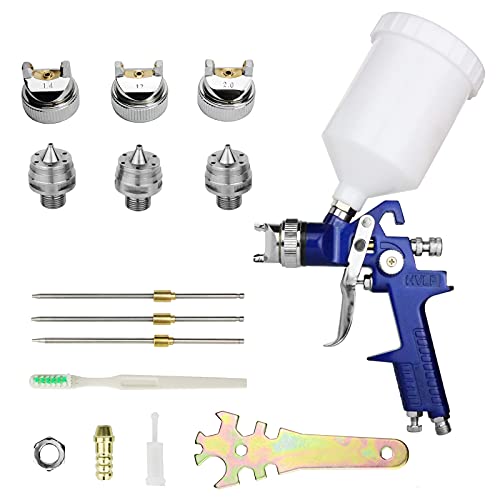
Air-powered guns live or die by their tip selection, and this Hotorda kit arrives with three matched nozzle-and-needle sets at 1.4mm, 1.7mm, and 2.0mm. The smaller opening suits automotive clearcoat where finish quality matters most, while the wider ones move thicker primer without constant thinning. One gun, three personalities.
The 600cc gravity-fed cup sits on top of the body, letting material feed downward under its own weight. That design wastes less paint than siphon setups and leaves less residue stuck in the container. Swap tips between a car panel job and a bookshelf refinishing weekend and you’re covered either way.
Reasons It Performs
- Three tip sizes handle everything from fine topcoats to heavy base layers.
- Gravity feed reduces leftover material compared to bottom-feed designs.
- Matching needles ship with each nozzle, saving you from mixing parts later.
- Suits cars, furniture, walls, and craft surfaces from one purchase.
Small Caveats
- You’ll need an air compressor, which adds cost if your garage is currently compressor-less.
- Beginners commonly report a learning curve getting fan pattern and pressure balanced correctly.
At A Glance
Made For
Hobbyist auto painters and furniture refinishers who already own a decent compressor.
Where A Sibling Pick Shines
Detail-focused touch-up artists working in tiny quantities will find the Tosucs 1.0mm gun with its small 125ml cup far less wasteful.
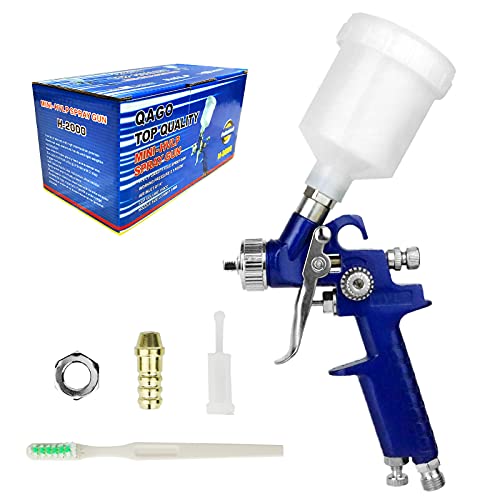
Where the Hotorda kit above chases versatility, the Tosucs narrows its focus to precision. The single 1.0mm tip lays down narrow, controlled patterns suited to spot repairs, model work, and tight corners around window frames. The included 125ml cup holds just enough material for small batches without encouraging overmixing.
Gravity feeding helps here too, since nearly everything in that little cup actually reaches the surface. An inline filter catches dirt particles before they hit the tip, which matters when you’re spraying glossy finishes where every speck shows. In our view, this is the kind of secondary gun worth keeping hung on the wall even after you own something bigger.
Strengths Worth Knowing
- The fine 1.0mm tip excels at touch-ups and detailed trim work.
- Small cup size means minimal leftover paint to store or discard.
- Included filter keeps debris out of smooth finishes.
Points To Note
- Refilling a 125ml cup gets tedious on anything larger than a door panel.
- An air compressor is required, and the tiny tip prefers well-filtered, dry air.
Right Fit For
Crafters and automotive touch-up enthusiasts who value control over coverage speed.
Swap It Out When
Anyone priming whole car panels should step up to the ENDOZER set, whose larger cup and multiple tips suit bigger surfaces.
This ENDOZER reads like a shop tool rather than a weekend toy. The air cap is machined brass with a fifteen-hole pattern designed for uniform atomization, and both the nozzles and needles are genuine stainless steel at 1.4, 1.7, and 2.0mm. Those materials resist corrosion and hold up to solvent-based coatings that would chew through cheaper parts.
The 20-ounce gravity cup feeds a fluid control knob that regulates how much material passes per trigger pull, alongside pattern and air adjustments. A 1/4-inch NPT inlet with matching quick adapter hooks into standard shop plumbing without fuss. For someone spraying cabinets or car parts regularly, the build quality here tends to justify itself over a season of use.
What Makes Sense
- Brass and stainless construction stands up to aggressive solvents.
- Three steel tip sizes cover primer through clearcoat duties.
- Independent fluid, fan, and air controls allow fine tuning.
- Standard 1/4-inch NPT inlet fits common compressor fittings.
Factors To Consider
- Demands a compressor with adequate output; weak tanks will starve the fan pattern.
- Full teardown cleaning after solvent paints takes real time and patience.
Feature Rundown
Who Will Love This
Semi-professional painters and dedicated garage builders running a proper compressor setup.
Reach For A Different Pick When
Casual users without an air system should look at the WIBENTL electric sprayer, which plugs straight into a wall outlet.
Painting entire rooms is where raw wattage starts to matter. This LESONJOY unit draws 1000 watts from a standard outlet, giving it enough push to keep thicker interior latex moving without excessive thinning. Four copper nozzle sizes come in the box, so you can shift from broad wall coverage to narrower furniture passes with a quick swap.
The trade-off for that power is the cord, which anchors you within reach of an outlet. Owners also note that high-output electric sprayers reward prompt cleanup; letting latex dry inside the passages is the fastest way to ruin one. Handled sensibly, though, it turns a two-day bedroom repaint into an afternoon project.
A Favorable Mix
- 1000W motor moves heavier interior paints with less dilution.
- Four copper tip sizes adapt to walls, chairs, and craft pieces.
- Corded power never fades mid-wall the way a draining battery does.
Where It May Fall Short
- The power cord limits range, so large exteriors need extension cords rated for the draw.
- Thorough flushing right after use is essential; dried latex clogs are the most commonly reported failure point.
Who Should Grab It
DIYers tackling multi-room repaints who want serious throughput without buying an air compressor.
Another Choice May Suit
Apartment dwellers doing occasional small projects will find the lighter Tilswall Shark 600 easier to store and maneuver.
First sprayers should feel approachable, and this WIBENTL keeps the controls simple: three spray patterns covering horizontal, vertical, and circular output, plus four brass nozzles ranging from 1mm up to 3mm. Picking the right tip for the job is genuinely half the battle, and having clear guidance on which size fits which material removes most of the guesswork.
Assembly and cleanup were clearly priorities in the design; the parts come apart for rinsing without special tools. Compared to the ENDOZER earlier in this list, there’s less adjustment depth here, but also far less to get wrong. For a first bookshelf or a nursery dresser, that simplicity is worth more than pro-level tuning.
The Case For It
- Three pattern modes make edge work and broad panels equally manageable.
- Four brass nozzles span fine detail through wide coverage.
- Tool-free disassembly keeps post-project cleanup quick.
- Brass tips hold their shape longer than plastic alternatives.
Things That May Matter
- Flow adjustment options are limited next to compressor-driven guns.
- Very viscous paints still need thinning to spray cleanly through the smaller tips.
Quick Facts
Built With In Mind
Complete beginners spraying their first furniture pieces indoors with water-based paints.
Not Your Match When
Automotive painters needing precise pressure control will be happier with the REFINE twin-gun set reviewed below.
Siphon feed works differently from the gravity guns above: the cup hangs underneath, and airflow pulls paint up through a tube. That layout lets you tilt and angle the gun freely without starving the feed, handy when spraying rocker panels or undersides. The 1.8mm stainless nozzle is sized for higher-viscosity coatings like primer and clearcoat.
The 1000cc aluminum cup holds enough material to coat several panels between fills, and six paint strainers come included so every batch goes through clean. The ergonomic handle and light trigger pull reduce hand fatigue during long sessions, which owners of similar designs consistently appreciate on multi-panel days.
Standout Benefits
- Large 1000cc cup minimizes refill interruptions on big jobs.
- Under-cup orientation allows spraying at awkward angles.
- Six strainers keep grit out of glossy finishes.
- Comfortable grip eases fatigue during extended spraying.
Details To Watch
- Siphon systems leave more residual paint in the cup than gravity designs.
- Requires a compressor with solid continuous output to maintain pickup.
Whose Shelf It Belongs On
DIY auto restorers laying basecoat and clearcoat across full vehicle panels.
Consider Something Else When
Finish-focused painters who hate waste will prefer the gravity-fed ENDOZER gun instead.
Tilswall clearly thought about what actually ruins a first spraying experience: wrong paint thickness and delayed cleanup. The Shark700 ships with a viscosity cup, a small measuring vessel that tells you whether your paint has been thinned correctly before you ever pull the trigger. That single accessory prevents most clogging frustration.
Like the DTEZTECH at number one, it borrows power from Dewalt 20V batteries rather than including one. The brand recommends cleaning within fifteen minutes of finishing, sensible advice for any sprayer but especially cordless models with compact internal passages. For fence staining and outdoor furniture, the untethered format earns its keep quickly.
Everyday Perks
- Included viscosity cup takes the guesswork out of thinning.
- Cordless operation reaches sheds, gates, and fences easily.
- Uses the same Dewalt 20V packs as many existing tools.
Points To Keep In Mind
- Battery sold separately, adding to the true entry cost.
- Rapid cleanup after each use is non-negotiable for long-term reliability.
Core Details
The Right Fit
Dewalt platform owners who want guided, beginner-safe cordless spraying outdoors.
Look Elsewhere When
Buyers wanting a complete plug-in kit with zero extra purchases should choose the WIBENTL electric gun instead.
Weight rarely gets mentioned until your wrist aches halfway through a chair set. The Shark 600 leans ultra-light specifically so longer crafting sessions stay comfortable, and it plugs into any household outlet rather than depending on a battery ecosystem. HVLP, short for high-volume low-pressure, means it transfers more paint onto the surface and less into the air around you.
The same practical guidance carries over from its sibling: use the included viscosity cup, and rinse the internals promptly after each project. Compared to the beefier LESONJOY, this one sacrifices some raw power for portability and ease, a trade most hobbyists making decor pieces will happily accept.
Features That Help
- Ultra-light build reduces arm strain on longer sessions.
- Plugs into standard outlets with no battery investment.
- Viscosity cup included for consistent paint preparation.
- HVLP transfer efficiency means less overspray mess indoors.
Softer Spots
- Lower power than 1000W-class units on thick exterior coatings.
- Corded design tethers you near an outlet or extension lead.
Who Should Grab It
Crafters and renters refreshing furniture and decor with light-duty indoor projects.
Skip It When
Whole-house repainters need the muscle of the LESONJOY 1000W model instead.
Proper paint jobs use different guns for primer and topcoat, because switching coatings mid-job means flushing everything twice. REFINE solves that with two die-cast aluminum bodies in one package: a 100ml gun for touch-up detail and a 600ml gun for panels, sharing 1.0, 1.4, and 1.7mm stainless nozzles with brass air caps. A regulator comes along to tame line pressure.
The nozzles adjust through 360 degrees, so ceiling angles and underside work stay manageable. Corrosion-resistant materials throughout make cleanup easier and extend service life. Against the single-gun Hotorda kit, you give up the 2.0mm tip but gain a second complete gun, which matters more on multi-stage automotive work.
What Works In Its Favor
- Two dedicated guns eliminate cross-contamination between primer and topcoat.
- Die-cast aluminum bodies with brass caps resist corrosion.
- 360-degree adjustable nozzle handles overhead and angled surfaces.
- Included regulator stabilizes pressure for consistent fans.
Trade Offs To Consider
- No wide 2.0mm option for very thick coatings.
- An air compressor remains a prerequisite purchase.
Specification Snapshot
Perfect Match For
Budget-conscious automotive hobbyists working through full primer-plus-topcoat projects.
Where Another Pick Suits Better
Those wanting maximum tip flexibility in one gun will get more mileage from the Hotorda three-nozzle kit.
What Matters Most Before Choosing Automatic Paint Guns
Power Source First
Decide between electric, battery, and compressed air before anything else. Electric guns plug in and suit indoor furniture work; battery models free you outdoors but require compatible packs; air guns deliver the finest finishes yet demand a capable compressor. Your existing tools often answer this question for you.
Tip Size And Material
Nozzle diameter determines what flows cleanly. Fine 1.0mm tips suit clearcoats and detail, mid-range 1.4 to 1.7mm handles general topcoats, and 2.0mm or wider moves thick primer. Brass and stainless tips outlast plastic noticeably, especially with solvent-based products.
Cup Size And Feed Style
Gravity cups waste less paint and suit smaller batches, while siphon and larger cups favor big continuous jobs. Match capacity to your typical project length; a 125ml cup on a whole fence means endless refills.
Cleanup Reality
Every sprayer here needs flushing shortly after use, and skipping that step is the leading cause of clogged guns. Water-based paints rinse easily; oil-based coatings require solvents and patience. Honest self-assessment here saves money later.
Key Considerations Across These Picks
Mistakes Worth Dodging
The classic error is buying a gun before checking the hidden requirements, then discovering you also need a compressor or a specific battery. Skipping the viscosity check causes most clogging complaints too. Measure paint thickness, thin properly, and confirm your power situation before ordering.
Why Top Tier Costs More
Higher-priced guns typically spend that difference on metal internals, finer machining, and independent adjustment knobs. Brass caps and stainless needles survive solvents that warp cheap parts. Frequent painters recoup the premium through longevity; once-a-year users usually don’t.
Frequently Asked Questions
Do automatic paint guns need an air compressor?
Only the air-powered HVLP models require one. Electric and battery-powered sprayers run on their own motors and plug in or use rechargeable packs.
Can these guns spray straight from the can?
Most paints need some thinning to flow through a sprayer properly. Many models include a viscosity cup so you can measure and adjust before starting.
How soon should I clean my sprayer after use?
Ideally within fifteen minutes of finishing. Dried paint inside the passages is the most common cause of permanent clogs.
Are cordless sprayers weaker than corded ones?
Generally yes, since battery output limits motor size. They trade raw power for mobility, which suits fences and outdoor furniture well.
What nozzle size should beginners start with?
A 1.4mm or 1.5mm tip handles most general-purpose projects. Move finer for clearcoat detail and wider only for thick primers.
Bottom Line
Your best match depends on where you paint and what you already own. Dewalt battery holders get the most from the DTEZTECH or Tilswall Shark700, while compressor owners should weigh the ENDOZER against the two-gun REFINE set. Indoor hobbyists will be happiest with the lightweight Shark 600 or the beginner-friendly WIBENTL. Whichever direction you lean, pick the one that fits your actual projects and enjoy how much faster the next coat goes on.
