
Anyone who sews knits knows the heartbreak of a snagged tee or a laddered jersey seam. The culprit is usually the needle, not your skill. A sharp point pierces fibers; a ball point glides between them, which is why knit projects demand a different tool entirely. This roundup covers ten options spanning single-size packs, mixed assortments, bulk boxes, and premium combo kits, so you can match the needle to both your fabric and how often you sew. Whether you hem t-shirts on weekends or run a small alterations business out of a spare room, there’s a sensible fit below.
The Leading Options At A Glance

SINGER Stretch 2045 Needles Size 90/14, 10-Pack

MSB Organ Ball Point Jersey Needle Assortment, 30 Pieces

Organ Ball Point Home-Use Needles Size 75/11, 10-Pack
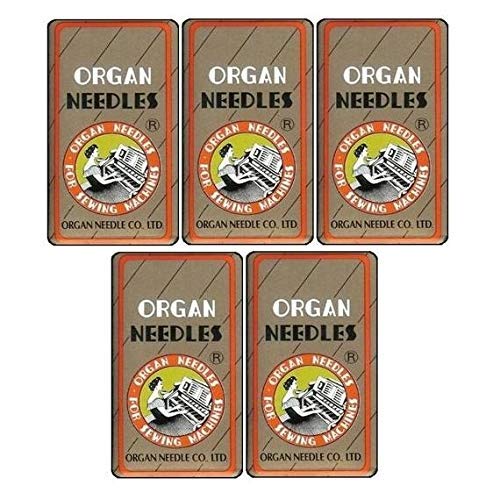
Organ 50-Pack Ball Point Flat Shank Needles 75/11BP

HLARTNET Universal Heavy Duty Needles Sizes 90/14-110/18

SINGER Universal 2020 Needles Assorted Sizes, 50-Pack

Euro-Notions Ball Point Jersey Needles Size 10/70

SCHMETZ Jersey Ball Point Needles Size 90/14

SINGER Ball Point Needles Size 90/14, 5 Count

SCHMETZ Stretch & Jersey Combo Pack with ABC Pocket Guide
Why These Options Stand Out
The Stretch 2045 designation matters here: these are engineered for fabrics with real give, like activewear blends and ribbed knits, rather than stable cotton jersey. At size 90/14, they suit medium-weight material such as sweatshirt fleece or ponte, which covers most of what lands on a home cutting table. Ten needles in one purchase is a sensible middle ground between tiny five-count packs and bulk boxes.
Compared with the Euro-Notions pack further down this list, this one runs heavier and thicker, so it pairs better with denser stretch fabrics than with gauzy tees. SINGER’s wide availability also makes replacements easy to source later.
The Value In It
- Size 90/14 handles medium-weight stretch fabrics without skipped stitches in most setups
- A ten-pack lasts through multiple garment projects before restocking
- The 2045 system fits standard domestic machines from major brands
- Recognized branding makes matching future purchases straightforward
Things To Consider
- Too heavy for sheer knits or delicate silk jersey, where a finer size performs better
- Single-size packaging means you’ll want other packs on hand for varied fabric weights
Who It Suits Best
Intermediate sewists making activewear, leggings, or fleece garments on a standard home machine.
Where Another Pick Suits Better
Lightweight t-shirt knits call for the Euro-Notions Ball Point Jersey Needles Size 10/70 instead.
Assortments solve a real problem: nobody wants three open packs rattling around a drawer when one labeled set does the job. This thirty-piece kit from MSB bundles Organ-brand ball point needles in sizes 10, 12, and 14 under the 15X1 system, which is the flat-shank format most domestic machines accept. Organ is a Japanese manufacturer whose needles many machine brands ship with as original equipment, so compatibility worries are minimal.
The range spans fine to medium, covering interlock, jersey, and lighter sweater knits. Against the single-size Organ packs elsewhere here, you trade some bulk value for flexibility.
What Works In Its Favor
- Three sizes in one assortment mean fewer separate purchases for mixed-knit households
- Thirty needles provide roughly a year of hobby-level sewing before replacement
- Organ manufacturing quality keeps stitching consistent across the size range
- Fits Bernina, Brother, Janome, Juki, Pfaff, Singer, and most other home machines
Worth Noting
- No heavyweight option, so denim-weight or dense fleece still needs a dedicated needle
- You may find yourself burning through one size faster than the others depending on your usual projects
Quick Facts
Made For
Hobby sewists who bounce between t-shirt knits, interlock, and midweight jersey without wanting a drawer of half-empty packs.
Consider Something Else When
Volume sewers working exclusively in one fabric weight get better economics from the Organ 50-Pack Flat Shank Needles.
Size 75/11 sits at the fine end of the everyday range, which is exactly where new sewists should start with knits. Thin cotton jersey, baby clothes, and lightweight tees all behave better with a smaller shaft, since a fat needle punches an oversized hole that shows up as puckering after washing. These Organ home-use needles carry a polished eye and nickel plating, details that help thread slide through with less friction and fewer breaks.
The shank has a flat side ground into it, a small but important feature that locks the needle into correct alignment with the hook during installation. Compared with the MSB assortment, this pack commits fully to one fine size.
What Stands Out
- Fine 75/11 sizing protects lightweight knits from visible needle holes
- Nickel plating and polished eyes reduce thread fraying on delicate polyester threads
- Flat-sided shank prevents incorrect insertion, a common beginner error
- Works in all popular domestic machines, removing guesswork
Trade Offs
- Not built for anything heavier than light-to-medium fabric
- Fine needles bend more easily when sewn over thick seams or pins
Right Fit For
First-time machine owners learning on t-shirt knits and children’s clothing projects.
Look Elsewhere When
Heavier fleece and ponte projects are better served by the SINGER Stretch 2045 pack at size 90/14.
Fifty identical needles sounds excessive until you learn how often they should actually be changed. Industry guidance suggests swapping after every major project, roughly every eight hours of sewing time, because worn points cause the very snags ball points exist to prevent. Buying fifty of one trusted size removes the hesitation that makes people sew too long on a dull needle.
This is the bulk sibling of the ten-pack Organ reviewed earlier, same 15X1/HAx1 flat-shank format and same 75/11BP sizing. The honest read is that it only makes sense if you genuinely sew fine knits regularly; otherwise the smaller packs waste less money.
What Helps Most
- Fifty-needle supply supports frequent needle changes without cost anxiety
- Consistent single sizing simplifies restocking, since you always know what’s in the drawer
- Flat shank design seats correctly in standard domestic machines
- Per-needle cost drops noticeably versus five- and ten-count packs
Minor Gripes
- Storage takes a little discipline; loose needles in a sewing box are a genuine hazard
- Overkill for occasional menders who might take years to use fifty
Core Details
Who Will Love This
Daily sewists, small-batch clothing makers, and anyone running alterations work in fine jersey.
Another Choice May Suit
Casual crafters will find the MSB 30-Piece Assortment more practical thanks to its size variety.
This entry bends the theme deliberately: it’s the outlier for people whose machines see canvas, denim, and leather alongside their knit work. Thirty needles split across sizes 90/14, 100/16, and 110/18 give you a proper escalation ladder, starting at medium weight and climbing to genuinely thick layered seams. The largest size is what you want when topstitching jeans hems or joining upholstery-weight material.
Note these are universal-point needles, not ball points, so they aren’t the right choice for delicate jersey despite appearing in this list. They earn their place as the companion purchase for makers whose project list spans fabric types, complementing a dedicated knit needle rather than replacing one.
Useful Strengths
- Three ascending sizes handle shirts through multi-layer denim seams
- Universal shaft design fits most domestic machines without adapters
- Reinforced shafts resist deflection when punching through dense weaves
- Thirty-piece count covers a long stretch of heavy projects
Room For Improvement
- Sharp points can ladder true knit fabrics, so keep a dedicated ball point pack nearby
- Larger sizes demand slower speeds on basic machines to avoid bent needles
Whose Shelf It Belongs On
Makers alternating between jeans repairs, bag construction, and home decor sewing on a sturdy home machine.
Swap It Out When
Your work is exclusively knitwear; the SCHMETZ Jersey Ball Point pack is the purpose-built alternative.
The 2020 series is SINGER’s general-purpose line, and this fifty-pack arrives as ten sealed sleeves of five needles each, split across sizes 80/12, 90/14, and 100/16. That packaging detail matters more than it sounds: individual sleeves stay clean and organized in a drawer, and you can toss a sleeve into a travel sewing kit without committing the whole box. Woven fabrics, quilting cotton, and medium-weight home decor material are the natural territory here.
Like the HLARTNET set, these carry a universal point, meaning sharp enough for wovens but not gentle enough for fragile knits. Think of it as the household baseline every sewing drawer should hold, with specialty packs layered on top.
The Case For It
- Three assorted sizes cover most woven-fabric needs in one purchase
- Ten individual five-needle sleeves keep storage tidy and portable
- Fifty-needle volume suits families sharing one machine
- SINGER naming makes refills predictable years down the road
Points To Note
- Universal points will snag delicate knits; pair with a ball point pack for jersey work
- Woven-only focus limits usefulness for garment sewists working in stretch fabrics
Who Should Grab It
Generalist home sewers handling quilting, mending, and woven garment projects in mixed weights.
Where A Sibling Pick Shines
Knit-focused makers should look instead at the MSB Organ Assortment for its ball point coverage.
At size 10/70, this is the finest ball point option in the lineup, and that specificity is its whole appeal. Sheer jersey, lightweight interlock, and well-worn vintage t-shirt knits are unforgiving of heavy needles; the wrong gauge leaves a visible stitch hole along every seam. Five needles per package keeps the commitment small, which suits occasional garment repair more than production sewing.
The package itself is slim, roughly four inches tall and under a tenth of a pound, so it slots into even a crowded notions organizer. Compared with the Organ 75/11 pack, this runs one step finer and costs you nothing in compatibility, since the flat-shank format remains standard.
Well-Handled Touches
- Fine 10/70 gauge slips between fibers of delicate knits without laddering
- Five-pack sizing is ideal for trying the size before committing to bulk
- Slim packaging stores easily alongside existing notion supplies
- Ball point geometry reduces runs in loosely knit jersey
Small Caveats
- Only five needles, so frequent sewers will repurchase often
- Too fine for anything beyond lightweight fabric; thick seams risk bending the shaft
Product Snapshot
Built With In Mind
Sewists altering thin t-shirts, baby garments, and lightweight single jersey on a domestic machine.
Not Your Match When
Midweight fleece and ponte call for the larger SINGER Stretch 2045 needles at 90/14.
SCHMETZ has manufactured needles in Germany since the mid-nineteenth century, and that pedigree shows in the consistency of the product. This Jersey line uses a rounded medium ball point that parts knit fibers rather than piercing them, targeting the two failures that ruin stretch garments: skipped stitches and puckered seams. Owners commonly report cleaner stitch formation on jersey and light stretch fabric than with generic alternatives.
Each card holds five needles at size 90/14, the sweet spot for medium-weight knits. Next to the SINGER Stretch pack, you’re paying somewhat more per needle for tighter quality control and color-coded shanks that make size identification instant at a glance.
Everyday Perks
- Medium ball point reduces holes and runs in jersey and stretch knits
- Engineered to minimize skipped stitches on elastic-blend fabrics
- Color-coded shanks let you confirm size without squinting at stampings
- German manufacturing consistency means predictable performance card to card
Honest Caveats
- Five-needle cards run pricier per unit than bulk Organ options
- Single-size purchase again means building a small collection for varied weights
Key Attributes
Best Suited To
Garment sewists who finish knit clothing regularly and want dependable, skip-free seams.
Reach For A Different Pick When
Budget-conscious beginners get comparable results for less with the Organ 75/11 ten-pack.
Small packs have a quiet virtue: they’re the right size for a mending basket, a dorm kit, or a glovebox emergency pouch. Five color-coded needles at 90/14 cover medium-weight knit mending, hemming a stack of tees, or rescuing a stretched-out neckline. The color coding deserves mention because mixed drawers are where wrong-size insertions happen; a glance tells you what you’re holding.
Compatibility extends across SINGER, Brother, and other mainstream domestic machines using the standard flat shank. Versus the ten-count Stretch 2045 from the same brand, this pack trades quantity for grab-and-go convenience at essentially the same needle specification.
A Strong Showing
- Color-coded sizing prevents mix-ups in shared sewing spaces
- Compact five-count format suits travel kits and quick repairs
- Ball point tip slides between knit fibers without creating holes or runs
- Works in SINGER, Brother, and most standard home machines
Potential Drawbacks
- Five needles disappear quickly during an active project season
- Repeated small purchases cost more over time than one bulk box
The Right Fit
Casual menders and students keeping a minimal kit on hand for occasional knit repairs.
Skip It When
Regular garment sewing is on the agenda; the fifty-count Organ pack delivers far better staying power.
Here’s the pick that teaches while it sews. Ten needles arrive split between two SCHMETZ lines: Jersey ball points for stable knits, and Stretch needles with a special eye designed for highly elastic material like swimwear, silk jersey, and velour. Both use the 130/705 H system, the standard shaft format accepted by virtually all home machines, so nothing here needs adaptation.
The included ABC Pocket Guide is the sleeper feature. It’s a small printed reference explaining which needle suits which fabric, effectively a mini course in needle selection. For someone graduating from wovens into knits, that guidance removes most of the guesswork that causes ruined fabric. Compared with the single-line SCHMETZ Jersey card earlier in this list, you gain versatility and knowledge at a modest bump in outlay.
Benefits That Matter
- Two needle types cover stable knits and highly elastic fabrics alike
- ABC Pocket Guide doubles as a lasting reference for future purchases
- 130/705 H system fits nearly every domestic machine sold today
- Stretch needles help prevent skipped stitches on swimwear and silk jersey
- SCHMETZ build quality carries through both included lines
What To Weigh
- Ten needles total won’t last long under heavy weekly use
- Combo format means fewer of any single type than dedicated packs provide
Feature Overview
Who Gains Most
Advancing beginners and intermediate sewists exploring stretch fabrics who want expert guidance bundled in.
A Better Fit Elsewhere
Production-volume knit sewers should stick with the Organ 50-Pack for uninterrupted supply.
What Matters Before You Buy Ball Point Needles
Match The Size To The Fabric
Needle sizing confuses newcomers because it uses paired numbers: the European figure (70, 80, 90) rises with thickness, while the American equivalent (10, 12, 14) mirrors it. Lightweight jersey wants a 70/10 or 75/11, medium knits take 80/12 to 90/14, and dense fleece or ponte tolerates 90/14 comfortably. Using too large a needle leaves permanent holes in knit fabric, since yarns can’t heal around the puncture the way woven fibers can.
A practical habit is keeping at least two sizes on hand and testing on a fabric scrap before committing to a seam.
Know Your Shank And System
Virtually every modern domestic machine accepts the 15X1, HAx1, or 130/705 H needle system, which are different names for the same flat-sided shaft format. The flat side ensures the needle orients correctly relative to the hook, and inserting one backwards is a classic cause of skipped stitches or broken thread. Vintage machines and industrial models occasionally differ, so a quick check of your manual saves frustration.
Quantity Versus Variety
Decide honestly how often you sew. Occasional menders waste money on fifty-packs, while weekly garment makers burn through five-count packs fast enough that bulk pays off within months. Mixed assortments split the difference nicely for households experimenting with different knit weights.
Change Needles More Often Than Feels Necessary
A dull or bent point causes most knit damage, not the wrong brand. Swapping after each sizable project, or roughly every eight sewing hours, keeps stitch quality high and fabric safe. Cheap needles changed frequently beat expensive ones used until they fail.
Practical Notes Worth Keeping Handy
Wrong Turns To Avoid
The most common mistake is buying one universal pack and expecting it to handle everything. Sharp universal points will ladder jersey, and fine ball points will snap in denim. A second trap is ignoring the flat side of the shank during installation, which quietly degrades stitch formation. Store spare needles in their original sleeves rather than loose in a pin cushion, both for safety and to prevent unnoticed bending.
The Upgrade Payoff
Premium brands like SCHMETZ charge more for tighter manufacturing tolerances, consistent coatings, and features such as color-coded shanks and specially shaped eyes on stretch needles. Casual users rarely notice the difference. Anyone sewing elastic fabrics weekly, or finishing garments where visible stitch quality matters, generally finds the upgrade justified within a few projects.
Frequently Asked Questions
Can ball point needles be used on woven fabric?
They can, though results are unremarkable. Wovens don’t damage the needle and stitches form normally, but a universal or sharp point gives crisper penetration on tightly woven material.
How often should I replace a machine needle?
A reasonable rhythm is one new needle per major project or about eight hours of sewing. Dull points cause skipped stitches and fabric snags long before a needle visibly fails.
Will these fit my Brother or Singer machine?
Almost certainly yes. All the picks above use the flat-shank 15X1 or 130/705 H system that Brother, Singer, Janome, Juki, and most other home brands accept as standard.
What’s the difference between a ball point and a stretch needle?
A ball point has a rounded tip that parts knit fibers gently. A stretch needle adds a specially shaped eye and scarf designed for highly elastic fabrics, reducing skipped stitches on materials like swimwear lycra.
Do I need a different needle for each fabric weight?
Yes, ideally. Finer fabrics need smaller needle sizes (70/10 to 75/11), while heavier knits require 90/14 or larger to avoid deflection and broken needles.
Closing Thoughts
Choosing well comes down to honesty about your own sewing habits. Light-touch menders will be happiest with a small SINGER or Euro-Notions pack tucked in the kit, while committed garment makers should lean toward the Organ bulk boxes or SCHMETZ cards. The combo pack with its pocket guide remains a smart bridge for anyone still learning which needle belongs with which fabric. Whichever route you take, changing needles often will do more for your seams than any single purchase on this list.
