
A banjo ukulele gives you the snap of a banjo head in a package that weighs less than your lunch. That mix makes it a favorite for campfire jams, busking corners, and living rooms where a full-size banjo would rattle the windows. This list covers complete starter kits, string upgrades, and one strap worth adding to any setup.
The Main Contenders

Aquila Red Series Banjo Ukulele GCAE String Set
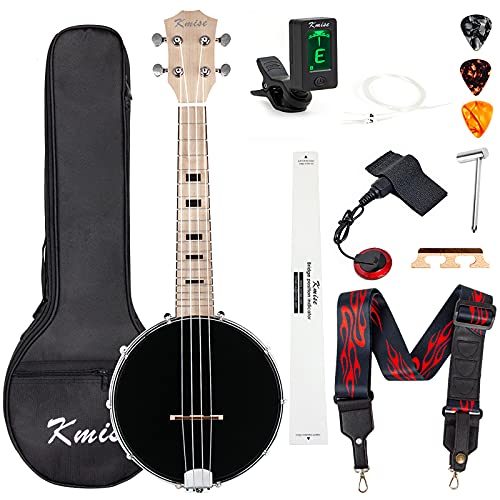
Kmise Banjolele Concert 23 Inch Banjo Ukulele Kit
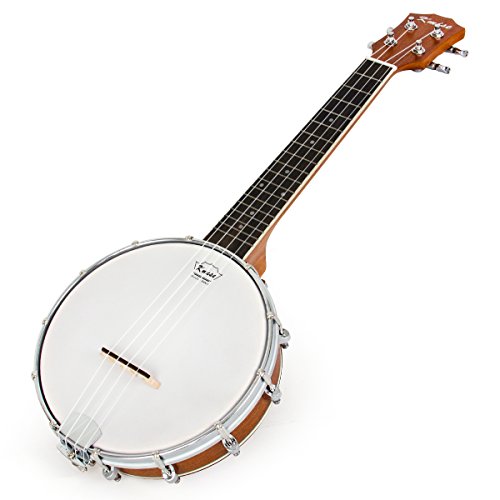
Kmise Banjo Ukulele Concert 23 Inch (Type 4)

Kmise 5-String Banjo 38 Inch Full Size Set

AKLOT Concert 23 Inch Banjo Ukulele Remo Head

MUSIC FIRST Classic Country Style Banjo Strap

Mulucky 4-String Banjo Ukulele BU806 23 Inch Travel Kit

Mulucky 4 String Banjolele BU8017 23 Inch Travel Kit

Vangoa Banjolele 23 Inch REMO Head Beginner Kit

Donner Banjolele 4 String Banjo Ukulele Kit
What Each Pick Brings To The Table
Strings are the cheapest way to change how a banjolele sounds, and Aquila’s Red Series targets the G-C-E-A tuning most four-string players use. The red powder-infused Nylgut material aims to even out the gap between bassy low notes and thin high ones, which matters a lot on a drum-head instrument where highs can get shrill.
You may notice the difference most when strumming chords up the neck. Owners commonly report these hold pitch well once stretched in, and the slightly wider gauge seats fine in standard nut slots without filing.
Real-World Strengths
- Evens out bass-to-treble balance so chord voicings sound more even across the neck
- Stable tuning behavior after break-in, fewer mid-jam retunes
- Fits standard nut slots without modification, an easy swap for most concert banjoleles
Things To Consider
- Nylgut strings are sensitive to humidity swings, so expect some stretch during seasonal changes
Who It Suits Best
Suited to anyone whose existing banjolele sounds bright or uneven and wants a warmer, more balanced voice without touching the instrument itself.
A Better Fit Elsewhere
Players who need a whole instrument rather than strings should look at the Kmise Banjolele Concert 23 Inch kit instead.
This is the box that solves the “what else do I need” problem. Bag, tuner, strap, spare strings, picks, wrench, ruler, bridge, and pickup all ship together, which means a first-timer can unbox and start playing the same evening.
The polyester head responds quickly, and the Italian-made Aquila strings plus closed geared tuners help it stay in tune through practice sessions. Action sits at 3mm at the 12th fret, gentle on fingers still building calluses.
What Stands Out
- Action of 3mm at the 12th fret means less finger pressure for beginners
- Built-in truss rod lets you raise or lower action yourself with the included wrench
- Hook-on strap attaches to the metal frame, so no drilling into the pot
- Polyester head gives quick response for bright, percussive strumming
Small Caveats
- Availability has been inconsistent at times, worth checking the listing before planning around it
- The bundled pickup adds wiring you’ll eventually want to tidy if you play amplified
At A Glance
Made For
Made for absolute beginners who want one purchase to cover instrument, accessories, and setup tools.
Where A Sibling Pick Shines
Anyone wanting just the bare instrument at a lower spend will find the Kmise Type 4 model covers the basics well.
Where the Kmise kit above piles on accessories, this Type 4 version strips back to the instrument itself. That keeps the entry price friendly and suits someone who already owns a tuner and picks from a regular ukulele.
The closed-gear tuning pegs are oiled to resist rust, and the low action plus neatly finished fret wires make first chords less punishing. For a campfire backup or a second instrument, it earns its keep.
The Helpful Details
- Oiled closed-gear pegs tune smoothly and resist corrosion over years of use
- Low action reduces the finger soreness that makes many beginners quit early
- Smoothly finished fretboard protects hands during long strumming sessions
Points To Note
- No gig bag or extras included, budget separately for a case
- Owners commonly suggest checking head tension on arrival, as shipping can loosen brackets
Right Fit For
Right for casual players and gift-givers who want a playable banjolele without paying for accessories they already own.
Consider Something Else When
Complete newcomers starting from zero will get more value from the Kmise Banjolele Concert 23 Inch kit with its bundled bag and tuner.
Strictly speaking this isn’t a banjolele, it’s a full 38-inch five-string banjo, and it earns its slot for readers deciding between the two paths. The removable sapele resonator is the clever bit: closed back gives a fuller, projecting tone, while popping it off yields a cleaner open-back sound closer to old-time playing.
The bundle includes a case, strap, finger picks, spare strings, and tuner, mirroring the completeness of the Kmise concert kit but aimed at bluegrass-style five-string learning.
The Value In It
- Removable resonator switches between full projection and a cleaner open-back voice
- Lacquered finish resists scuffs in shared practice spaces
- Full accessory set means no second shopping trip before your first lesson
Trade Offs
- Five-string tuning differs completely from GCEA, so ukulele skills don’t transfer directly
- At 38 inches it demands more storage space than any concert-scale pick here
Who Will Love This
Adults committed to learning traditional five-string banjo will appreciate the resonator flexibility and complete kit approach.
Swap It Out When
Players chasing the compact ukulele-tuning experience should choose the AKLOT Concert 23 Inch instead.
AKLOT’s first banjolele leans on hardware quality where cheaper builds cut corners. The Remo Fiberskyn head delivers that warm, round, plunky Appalachian character many players associate with vintage recordings, and the deep open-back rim pushes sound forward toward listeners rather than into your chest.
Tuners run at a 15:1 gear ratio, meaning finer adjustment per turn, which shows up as quicker, steadier tuning between songs. A two-way truss rod handles neck relief either direction.
Why It Works Well
- Remo Fiberskyn head produces a warm, rounded plunk prized in folk circles
- 15:1 geared tuners allow precise pitch adjustments that hold through a session
- Two-way truss rod lets you customize action for your own playing style
- Sanded frets over a hard maple fingerboard feel comfortable under fast chord changes
Honest Caveats
- Open-back design projects forward, which is great on stage but louder for late-night neighbors
Quick Facts
Built With In Mind
Built for intermediate players and tone snobs upgrading from a generic starter banjolele.
Not Your Match When
Total beginners on a tight budget may prefer the simpler Kmise Type 4 and put the savings toward lessons.
Standing up with a banjolele changes everything: your fretting hand starts doing double duty supporting the instrument. A wide strap fixes that, and this one uses two inches of yarn-dyed cotton shell fabric with genuine leather ends for durability where stress concentrates.
The included leather strap lockers attach to the metal frame, so you won’t drill holes in your pot or bracket band. Each strap’s pattern varies slightly since pieces are cut from larger fabric runs, which most people treat as part of the charm.
What Earns Its Place
- Two-inch width spreads weight across the shoulder during hour-long sets
- Genuine leather ends handle the pull points that wear out nylon straps first
- Strap lockers clamp onto the frame without drilling or permanent modification
Less Ideal Details
- Cotton fabric benefits from occasional airing out after sweaty summer gigs
- Pattern variation means what arrives may differ a bit from product photos
Whose Shelf It Belongs On
Belongs with buskers and jam-circle regulars who play standing and want comfort with a country-stage look.
Reach For A Different Pick When
Seated-only players get little benefit here and would be better served by the Mulucky BU8017 travel kit’s included accessories.
At roughly 1.6 kilograms with backpack straps on the padded gig bag, the BU806 is built to leave the house. Buskers, festival campers, and van-lifers are the obvious crowd, though honestly anyone carrying gear upstairs appreciates the lightness.
The synthetic WeatherKing head paired with nylon strings splits the difference between crisp banjo twang and softer ukulele warmth. Sapele construction adds humidity resistance, useful in damp climates or a trunk that sees weather.
Good Reasons To Consider
- Lightweight build around 1.6kg keeps long walks to a busking spot manageable
- WeatherKing head and nylon strings blend twang and warmth for varied repertoire
- Kit includes padded bag, clip-on tuner, three celluloid picks, and a starter guide
- Satin-finished sapele body resists humidity better than bare wood
A Few Limitations
- The dark brown satin finish tends to show fingerprints, so keep a cloth in the bag
Feature Snapshot
Who Should Grab It
Street performers and travelers who prioritize portability without giving up a real banjo voice.
Another Choice May Suit
Homebound players focused purely on tone may find the AKLOT’s Remo Fiberskyn head more rewarding.
The BU8017 shares DNA with the BU806 above, same WeatherKing head and sapele body, but runs slightly heavier at about 1.8kg. In practice that difference disappears on a couch, which is where this one spends most of its life: grab-and-go evening practice without setting up a full session.
The padded gig bag doubles as storage between practices, keeping dust off the head. Nylon strings are kinder to fingertips than steel alternatives, a real advantage for daily players building endurance.
Key Advantages
- Nylon strings stay gentle on fingertips through daily practice routines
- Sapele body with satin finish balances resonance against humidity swings
- Complete kit with bag, tuner, picks, and guide removes accessory guesswork
Details To Watch
- Slightly heavier sibling of the BU806, noticeable mainly on long carries
- Synthetic heads can loosen with temperature shifts, occasional re-tensioning keeps tone tight
Core Details
The Right Fit
A strong fit for daily home practice and casual singalongs where convenience beats stage specs.
Look Elsewhere When
Frequent flyers counting every gram will prefer the lighter Mulucky BU806 variant.
Vangoa aimed squarely at teens and first-timers, and the chrome-plated armrest is the detail that seals it. Resting your picking hand there relieves wrist fatigue, which quietly extends practice time, and longer practice is what actually makes beginners improve.
The frosted white Remo head rings bright and clear, while twelve chrome brackets hold it evenly tensioned. AAA-grade mahogany and a five-ply, climate-resistant eight-inch rim give the tone some depth despite the small scale.
Practical Pluses
- Chrome armrest supports the picking wrist through extended sessions
- Frosted Remo head delivers bright, clear articulation rare at this tier
- Twelve brackets distribute head tension evenly for consistent tone
- Closed chrome-geared pegs hold tuning with minimal fuss for new players
- Fits inside a standard suitcase, genuinely travel-capable
Things To Weigh Up
- Bright head character may feel sharp compared with the AKLOT’s warmer Fiberskyn voice
- Concert scale suits smaller hands best, larger players sometimes wish for more reach
Product At A Glance
Who Should Grab It
Ideal for teenagers and adult beginners wanting forgiving playability with above-average hardware.
Where Another Pick Suits Better
Experienced players chasing vintage warmth will connect more with the AKLOT Concert 23 Inch.
Donner rounds out the list with a mellow take on the format. Where the Vangoa leans bright and the AKLOT goes vintage-warm, this one’s sapele body softens the classic banjo snap into something neighbor-friendlier for apartment practice.
The maple-and-hardwood bridge deserves mention: hard enough that strings won’t bite into it over months of tuning tension, a common failure point on flimsier bridges.
Everyday Perks
- Sapele body yields a mellow, softened voice suited to close-quarters playing
- Dense maple bridge resists string grooves, holding intonation longer
- Standard G-C-E-A tuning matches regular ukulele chord shapes you may already know
Small Sticking Points
- Mellower output projects less than open-back rivals, so it can get lost in loud jams
- Kit contents are leaner than the Kmise bundle, check what’s listed before assuming extras
The Main Details
Perfect Match For
A natural match for apartment dwellers and quiet-evening players who want banjo flavor at conversational volume.
Another Choice May Suit
Louder jam-session players will project better with the AKLOT or the Mulucky BU806.
Choosing Between These Banjoleles Without Regret
Head Material Sets Your Voice
The drum head is the single biggest tone factor. Remo Fiberskyn heads, found on the AKLOT, sound warm and plunky like old Appalachian records, while frosted white Remo heads on the Vangoa ring brighter and clearer. Synthetic options like the WeatherKing sit between them. Match the head to where you’ll play: warm heads suit recording and folk circles, brighter heads cut through outdoor noise.
Scale And Weight Decide Portability
Nearly every pick here is concert scale at 23 inches, which fits standard G-C-E-A tuning and small hands comfortably. Weight varies more than you’d expect, from roughly 1.6kg on the Mulucky BU806 upward. Anyone walking to gigs or packing a suitcase should weigh that number heavily; living-room players won’t notice the difference.
Setup Features Save Future Frustration
A truss rod, present on the Kmise kit and AKLOT, lets you adjust neck relief yourself instead of paying a shop. Low action at the 12th fret, ideally around 3mm, spares beginner fingers. Closed geared tuners with higher ratios hold pitch better between sessions.
Kits Versus Bare Instruments
Starter bundles add real value for newcomers: bag, tuner, picks, and strap typically cost noticeably more bought separately. Players who already own accessories save money choosing the bare Kmise Type 4 and spending the difference on better strings like the Aquila Red Series.
Key Considerations Across These Picks
Traps First Timers Fall Into
The most common mistake is buying on looks alone and ignoring head type, then wondering why the tone doesn’t match recordings. Another frequent misstep is skipping the case; a padded gig bag pays for itself the first time the instrument rides in a car. Also check whether a truss rod exists before committing, since retrofitting one isn’t possible.
When Paying More Pays Off
Higher-tier models justify their price through named-brand hardware: Remo heads, Aquila strings, and higher-ratio tuners all hold up better under daily use. The upgrade matters most for anyone practicing daily or performing, where tuning stability and consistent tone compound over hundreds of hours. Occasional strummers rarely hear the gap.
Frequently Asked Questions
Is a banjolele tuned like a normal ukulele?
Most are, using standard G-C-E-A concert tuning. That means any chords you already know transfer directly, which is why ukulele players adapt so quickly.
Are banjo ukuleles loud?
Yes, generally louder than a wooden ukulele because the drum head projects strongly. Open-back designs like the AKLOT push even more sound outward.
Do I need special strings?
No, but dedicated sets like the Aquila Red Series balance the unusual bass-to-treble spread these instruments have. Standard concert uke strings often work too.
Can children play a banjolele?
The 23-inch concert scale suits smaller hands well, and models like the Vangoa include low action and an armrest for comfort. Adult supervision helps with initial head tensioning.
How do I maintain the drum head?
Keep it clean and dry, and re-tension the bracket screws occasionally as temperature shifts loosen them. Synthetic heads need far less care than natural skin.
Bottom Line
A banjolele rewards anyone who loves ukulele chords but craves more personality in the sound. Start with a complete kit such as the Kmise or Vangoa if you’re new, chase the AKLOT for tone, and add the MUSIC FIRST strap the moment you play standing up. Whichever route you take, the fun shows up fast, usually by the third chord.
