
A good starter machine should disappear into your routine, not fight you over every seam. Whether you’re hemming school trousers on a Sunday night or finally teaching yourself quilting, the right machine turns mending from a chore into something almost relaxing. The problem is that entry-level listings all sound alike: stitch counts, speeds, accessory bundles.
That’s where this roundup comes in. Below you’ll find ten machines suited to real homes, small apartments, dorm rooms, and busy family craft tables, each with honest trade-offs spelled out. Some are full-size workhorses built to last years; others are compact portables meant for quick repairs and learning the basics. Match the machine to how you actually sew, and you’ll avoid paying for features you’ll never touch.
The Essentials At A Glance

Brother XM3700 Sewing Machine with 37 Built-in Stitches

Brother FB1757X Mechanical Sewing Machine

CraftBud Mini Sewing Machine Kit
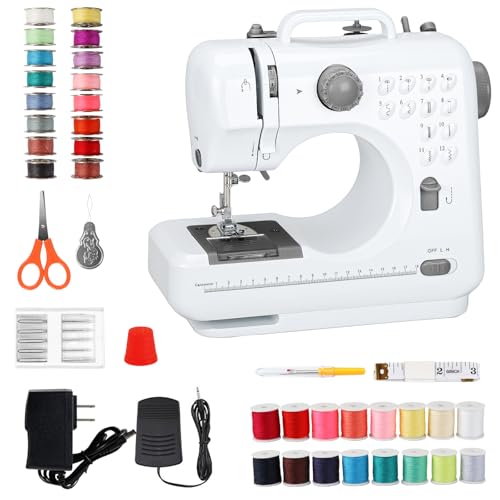
Ninonly Mini Portable Sewing Machine, Dual Speed (Gray)

Janome C30 Sewing Machine (White)

SINGER 4411 Heavy Duty Sewing Machine (Pink)

Janome MOD-15 Sewing Machine with 15 Stitches
Stoigeld SM-725 Portable Sewing Machine Kit
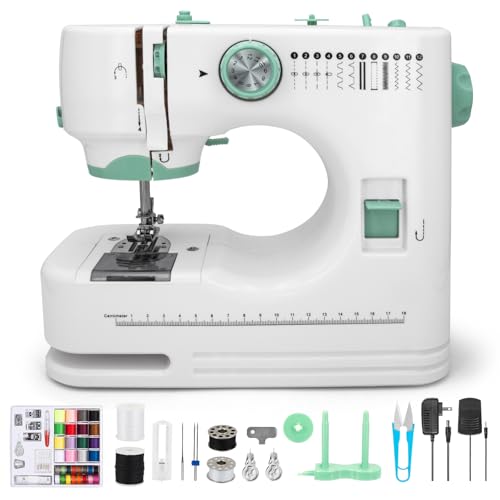
Xamanabu Beginner Sewing Machine with 12 Stitches & 6 Feet

StitchMaster Pro Sewing Machine, Twin Needle Compatible
Taking A Closer Look At The Options
Most beginner machines top out around a dozen stitches, so the XM3700’s 37 options put it in a different league for anyone whose ambitions might grow. Garment construction, decorative topstitching, heirloom work, even light quilting are all within reach without upgrading hardware.
The five included presser feet cover the tasks new sewists hit first: zippers, blind hems, buttonholes, and sewing buttons on directly. A built-in storage compartment keeps those feet and bobbins from wandering off into a drawer, which matters more than it sounds once a project gets going.
The Upside
- 37 stitches mean you won’t outgrow the machine after your first few garments
- Zigzag, zipper, blind stitch, buttonhole, and button feet arrive in the box
- Integrated storage keeps accessories organized between sessions
- Suits decorative stitching and simple quilting as skills progress
Things To Consider
- More stitches means a longer manual read before you feel fluent
- Like most plastic-bodied machines, regular lint cleaning around the bobbin area keeps tension consistent
Who Will Love This
Ambitious beginners who want room to explore decorative work and quilting without buying twice.
Where A Sibling Pick Shines
Someone wanting a simpler, cheaper start may prefer the Brother FB1757X below, which trims the stitch count but keeps the essentials.
Where the XM3700 leans generous, the FB1757X leans sensible. Its 17 built-in stitches cover garments, accessories, and home décor projects, which is honestly more than most first-year sewists will use. The dial-driven controls keep the learning curve gentle.
An LED-lit work area helps enormously when you’re unpicking seams at night or threading dark thread, and the free arm lets you slide sleeves and pant cuffs around for hemming. The four-step buttonhole takes practice but rewards patience with tidy results.
Notable Upsides
- 17 stitches handle most beginner garment and décor work comfortably
- LED lighting makes threading and seam inspection easier in dim rooms
- Free arm simplifies cuffs, sleeves, and other circular hems
- A reverse button reinforces seams so they survive washing
Points To Note
- The four-step buttonhole requires manual stops, unlike one-step designs on pricier models
- Owners commonly report needing to re-thread carefully after bobbin changes until muscle memory kicks in
Feature Snapshot
Right Fit For
First-time garment makers who want dependable basics and clear dials rather than a screen full of options.
Swap It Out When
Crafters planning heavy denim or canvas work should look at the SINGER 4411 later in this list instead.
This one solves a frustration every parent knows: buying a machine, then discovering needles, thread, and scissors cost extra. CraftBud bundles the whole kit, including 16 threaded bobbins, 16 spools, spare needles, a thimble, needle threader, seam ripper, tape measure, and an instruction guide.
The built-in light, foot pedal, and adjustable speed make it approachable for kids under supervision and nervous adults alike. It’s genuinely a learn-to-sew package rather than a bare unit, which is why it earns a spot here alongside the bigger names.
Where It Delivers
- Everything needed for a first project arrives together, no separate shopping trip
- Pre-threaded bobbins let beginners start sewing within minutes of unboxing
- Adjustable speed keeps young learners in control
- Built-in light improves visibility on small hands’ projects
Small Caveats
- Mini frames suit light fabrics best; thick denim will strain them
- Small parts mean adult supervision is wise around younger children
Who Should Grab It
Families setting up a weekend craft table, or anyone gifting a complete learn-to-sew experience.
Another Choice May Suit
Adults focused on clothing construction will get longer service from the Janome C30 reviewed next.
College students and RV travelers rarely have desk space to spare, and this gray mini respects that. It’s sized to sit on a corner of a desk without crowding anything, and the built-in handle plus lightweight frame mean it moves between rooms or vehicles without complaint.
Power flexibility is the headline: run it from an AC adapter at home or batteries when outlets are scarce. Twelve stitches and dual speed settings cover quick repairs, and an accessory kit comes along for the ride. In our view, that two-power-mode design is what separates this from similar minis.
Key Advantages
- Battery operation means sewing anywhere, from dorms to campgrounds
- Built-in handle makes carrying genuinely effortless
- Compact footprint fits crowded desks and shared spaces
- Two speed settings help beginners stay in control on tricky seams
Worth Noting
- Battery power drains faster than many expect during long sessions, so keep spares handy
- Light-duty internals aren’t built for layered or heavy fabrics
Details At A Glance
Made For
Students, renters, and travelers who need occasional mending power in tight quarters.
Look Elsewhere When
Anyone sewing daily at a dedicated table will find the Stoigeld SM-725’s bundled supplies more useful for home use.
Janome has a reputation for machines that feel steady under the needle, and the C30 fits that mold. With 30 built-in stitches spanning utility, stretch, and decorative options, it bridges the gap between pure beginner units and mid-range models nicely. The footprint, roughly 16 by 12 by 7 inches, sits comfortably on a standard sewing table.
For everyday alteration work, taking in waistbands, shortening curtains, patching knees, the predictable feed feels like the difference between steering a cart with a wobbly wheel and one that rolls straight. You may find the white finish shows dust more than darker machines, though a soft cloth handles it fine.
Useful Strengths
- 30 stitches include stretch options, useful for knits and activewear repairs
- Consistent feeding builds confidence on long straight seams
- Table-friendly dimensions suit dedicated sewing corners
Trade Offs
- Light-colored housing shows lint and dust quickly between cleanings
- Beginners may not need all 30 stitches right away
The Right Fit
Home sewists past the very first lesson who want a stable, versatile daily machine.
Reach For A Different Pick When
Shoppers wanting maximum simplicity at lower commitment should consider the Janome MOD-15 coming up shortly.
Most machines on this list flinch at six layers of denim. The 4411 doesn’t. Its strong motor and stainless steel bedplate push fabric through at up to 1,100 stitches per minute, which turns a stubborn jeans-hem job into a five-minute errand. The pink finish gives it personality, too, a rare thing in a category dominated by white boxes.
The trade-off for all that muscle is finesse. At high speed, precision work demands a light foot, literally and figuratively. Owners commonly report the machine rewards a slower pedal touch on delicate fabrics while devouring canvas and upholstery weight without hesitation.
Good Reasons To Consider
- Powerful motor chews through denim, canvas, and layered seams
- Stainless steel bedplate lets fabric glide smoothly under the needle
- Fast maximum speed shortens long straight runs dramatically
- Distinctive pink color stands out in a shared craft space
- Accessories included, so heavy-duty basics are covered out of the box
Things To Weigh Up
- High speed takes practice to control on fine or slippery fabrics
- Heavier build means less portability than the minis earlier in this list
The Numbers That Matter
Whose Shelf It Belongs On
Confident home sewists tackling denim, outdoor gear, upholstery, and costume builds regularly.
Consider Something Else When
Total newcomers still learning pedal control may prefer the gentler pace of the Xamanabu machine near the end of this list.
There’s a quiet argument for owning less machine: fewer dials, fewer decisions, fewer things to break. The MOD-15 embraces that philosophy with 15 stitches, adjustable stitch length, and a straightforward mechanical layout that hasn’t changed much because it works.
The five-piece feed dog setup grips fabric evenly, which is the kind of spec that sounds dull until you’ve fought a cheap machine that skews every seam. Compared with the C30 above, you give up stretch and decorative variety but keep the same steady Janome character for everyday mending.
A Few Highlights
- Adjustable stitch length adapts one stitch type to different fabrics
- Five-piece feed dogs hold material evenly for straight, honest seams
- Simple controls mean less time reading manuals, more time sewing
- Includes a four-step buttonhole for finishing garments properly
Less Ideal Details
- 15 stitches limit decorative and stretch work compared with the XM3700 or C30
- Owners commonly report the plastic exterior needs gentle handling during transport
Built With In Mind
Practical menders who value reliability and simplicity over a long feature list.
Where Another Pick Suits Better
Sewists working with knit fabrics benefit from the C30’s stretch stitches instead.
The Stoigeld arrives ready to teach. Alongside the machine itself come 20 pieces of fabric and 32 spools of thread, so a beginner can practice seams immediately instead of waiting on a supply order. At about 10.3 by 9.5 by 4.4 inches and roughly 4.2 pounds, it tucks onto a shelf or travels to a class easily.
Twelve built-in stitches and high-low speed selection cover the fundamentals. The honest caveat lives in the fabric limits: this is a household unit meant for thin cotton, linen, and light woven cloth. Denim hems belong on the SINGER 4411, not here.
Useful Touches
- Generous fabric and thread bundle removes the usual second purchase
- About 4.2 pounds makes carrying to classes or friends’ houses painless
- Two speed modes let cautious beginners build confidence gradually
- Works well as a gift thanks to the all-in-one packaging
Potential Drawbacks
- Manufacturer guidance points to light fabrics only; thick materials risk skipped stitches
- Compact size means a smaller work area for larger projects
Core Details
Perfect Match For
Teachers, gift givers, and beginners working mostly with cottons and light linens.
Not Your Match When
Home users needing heavier fabric capability should step up to the SINGER 4411 instead.
Some people hate foot pedals; their foot cramps, their rhythm stutters. The Xamanabu answers that with dual control: run it by push-button at low or high preset speeds, or switch to the pedal for gradual adjustment. Few machines in this price bracket offer both, and it genuinely lowers the barrier for hesitant starters.
Six presser feet expand what those 12 stitches can do, from zippers to buttonholes. One thing worth considering: the button-based mode caps you at two speeds, so delicate curve work still benefits from pedal practice eventually.
Strengths Worth Knowing
- Push-button mode removes the pedal-learning hurdle entirely
- Foot pedal offers gradual speed for finer control when ready
- Six included feet cover zips, buttons, and common garment tasks
- Low/high presets simplify early practice sessions
Areas To Watch
- Button mode offers only two fixed speeds, limiting nuance
- Learning both control methods takes a little getting used to
Who It Suits Best
Nervous beginners, older learners, or anyone with limited mobility who finds pedals awkward.
Skip It When
Sewists chasing twin-needle techniques will get more from the StitchMaster Pro closing out this list.
Twin needle compatibility is the sleeper feature here. A second needle stitched in parallel creates professional-looking hems on knitwear, something single-needle budget machines simply can’t do. Pair that with 14 stitches covering straight, zigzag, and blindstitch work, and this compact unit punches above its size.
Weighing only around 4.4 pounds with a built-in carry element, it moves between a closet and a kitchen table without drama. Dual-speed control serves both careful beginners on silk and quicker runs on thicker cloth, though sustained heavy denim work still belongs with the SINGER 4411.
Noteworthy Benefits
- Twin needle support adds polished parallel hems on knit fabrics
- 14 stitches span utility, zigzag, and blindstitch applications
- Roughly 4.4 pounds keeps storage and transport effortless
- Dual-speed control suits both learners and confident sewists
The Fine Print
- Lightweight build isn’t intended for repeated thick-layer sewing
- Twin needle work needs matching twin needles bought separately in most cases
Quick Facts
Best Suited To
Apartment dwellers and knitwear enthusiasts who want one compact machine with a professional trick up its sleeve.
A Better Fit Elsewhere
Families wanting a fully stocked starter kit will find the CraftBud bundle more complete.
What Matters Most Before Choosing Basic Sewing Machines For Home Use
Match The Machine To Your Fabric Habits
Be honest about what you sew. Light cottons and linens forgive almost any machine on this list, while denim, canvas, and multiple layers demand a motor like the SINGER 4411’s. Buying a mini for heavy upholstery work is the fastest route to frustration and skipped stitches.
Count The Stitches You’ll Actually Use
A dozen well-chosen stitches covers most household mending. Stretch stitches matter for knits, decorative options matter for quilting and crafts, and everything beyond that is preference. Pay for variety only when your projects call for it, as the XM3700 does for ambitious beginners.
Think About Where You’ll Sew
Dedicated craft room? A full-size machine like the Janome C30 earns its footprint. Shared dining table or dorm desk? Portability and battery options, as on the Ninonly mini, matter more than stitch counts. Storage space is a real constraint worth measuring before ordering.
Factor In The Learning Curve
Foot pedals take weeks to master, so push-button options such as the Xamanabu remove a genuine barrier for some learners. Bundled kits shorten the path to a first finished project. Choose the machine that matches your patience level today, not your imagined skill next year.
Key Considerations Across These Picks
Traps First Timers Fall Into
The biggest mistake is buying for fantasy projects instead of real ones. A heavy duty motor won’t help someone who only mends pillowcases, and a 12-stitch mini will disappoint anyone dreaming of denim jackets. Also, skipping the manual leads to tension problems that get blamed on the machine.
What Separates Premium From Basic
Higher-tier machines buy smoother motors, metal components where it counts, and conveniences like one-step buttonholes. Those upgrades pay off for frequent sewists. Occasional menders rarely notice the difference, so spending up only makes sense once sewing becomes a weekly habit.
Frequently Asked Questions
How many stitches does a beginner actually need?
Straight, zigzag, and a buttonhole option cover most household projects. Anything beyond twelve or so stitches is a bonus rather than a requirement.
Can a mini sewing machine handle denim?
Most minis are designed for light fabrics and will struggle with thick layers. For regular denim work, a heavy duty model like the SINGER 4411 is the safer choice.
Do these machines need much maintenance?
Basic care goes a long way: brush lint from the bobbin area regularly and keep the machine covered against dust. That routine prevents most common stitching problems.
Is battery power practical for regular sewing?
Batteries work fine for short repairs away from outlets, though long sessions drain them quickly. Plug-in power remains better for extended projects.
Are bundled accessory kits worth it?
For absolute beginners, yes, since thread, needles, and fabric often cost extra otherwise. Experienced sewists usually already own those supplies and can skip the bundle.
Closing Thoughts
The right machine is the one that fits your table, your fabrics, and your patience. Start with the Brother XM3700 if ambition is pulling you toward quilting and decorative work, choose the SINGER 4411 for heavyweight materials, or grab the CraftBud kit for a family-friendly introduction. Whichever you settle on, measure your space and read the manual before the first seam. Happy stitching.
