
Basket weaving is one of those crafts that rewards patience with something genuinely useful at the end. The right kit removes the guesswork: materials measured out, instructions illustrated, a finished basket you’ll actually keep on display. This roundup covers ten options across skill levels, from quick coaster projects to multi-basket starter sets, so you can match the kit to your hands and your schedule.
The Choices Worth Comparing

Coiled Pine Needle Basket Weaving Kit

VIRC Introduction to Basket Weaving Kit (5 Baskets)

Traditional Craft Kits Beginner Basket Weaving Kit Set of 6

Traditional Craft Kits Wicker Basket Weaving Kit

Traditional Craft Kits Twined Basket Weaving Kit, Gathering Style

Kids Sampler Basket Kit for Beginners

Traditional Craft Kits Coiled Basket Weaving Kit

VIRC Camp Basket Kit (Makes 20 Baskets)
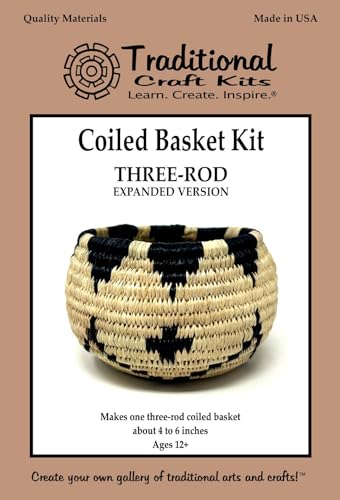
Coiled Basket Weaving Kit Expanded Version

Traditional Craft Kits Coiled Basket Kit for Beginners
Taking A Closer Look At The Options
There’s something quietly addictive about coiling: wrapping raffia around a spiral of pine needles, stitch by stitch, while the needles release a soft forest scent into the room. This set from Traditional Craft Kits leans fully into that experience, supplying natural California pine needles, palm raffia, a steel stitching needle, and a coiling gauge.
The gauge is the detail worth noticing. It keeps coil thickness consistent, which is where most self-taught coilers drift off track. Expect a finished basket roughly 4 to 6 inches wide, sized well as a trinket dish or desk catchall.
A Strong Showing
- Natural pine needles give the finished piece a subtle fragrance that lasts on a shelf
- The included coiling gauge helps beginners hold even thickness without constant measuring
- You design the shape yourself rather than following a rigid pattern
- Steel needle handles dense coils without bending the way cheaper tapestry needles often do
Things To Consider
- Coiling takes steady hands over multiple sessions; owners commonly report this is a slow-burn project, not an evening one
- Dry pine needles can snap during tight wraps, so keeping them slightly damp helps
Key Specs
Made For
Patient hobbyists who enjoy slow, meditative handwork and want a traditional material palette.
Where A Sibling Pick Shines
Weavers wanting a faster, smaller first taste of coiling will get there quicker with the Traditional Craft Kits Coiled Basket Kit for Beginners further down this list.
One finished basket proves you can weave. Five prove you’ve actually learned. VIRC’s introduction bundle packs five classic beginner baskets into one box, backed by instructions refined over three decades of teaching the craft.
Where the Traditional Craft Kits sets lean toward coiling and twining, VIRC focuses on classic reed-and-cane work, including hardwood handles and hoops. Repetition across five projects is what cements muscle memory here, and the surplus reed means a miswoven row doesn’t end the whole basket.
Where It Helps
- Five graduated projects turn one purchase into a genuine learning progression
- Fully illustrated step-by-step sheets suit visual learners better than text-only guides
- Extra reed and cane give you slack for mistakes and practice rows
- Hardwood handles and hoops add structure many entry kits skip entirely
Small Caveats
- Reed needs soaking before weaving, and owners note damp reed left overnight can mildew, so plan your sessions
- Five baskets is a commitment; expect several weekends of work overall
Who Should Grab It
Committed newcomers who’d rather learn once, properly, than bounce between single-project kits.
Reach For A Different Pick When
Households with younger crafters will find the Kids Sampler Basket Kit’s simpler bases and beads a friendlier starting point than five full reed baskets.
Most beginner kits teach one method and stop. This six-basket sampler from Traditional Craft Kits walks you through all four fundamental basketry approaches: three coiled variations plus plaited, twined, and wicker designs between 2.5 and 4 inches wide.
Think of it as a tasting menu. Everything ships in one storage bag with paper fiber rush, palm raffia, hemp twine, pine needles, clothespins, and tapestry needles, so your only additions are scissors and a bowl of water. Compared with the single-technique wicker kit later in this list, this set answers the question most newcomers actually have: which style do I enjoy?
Noteworthy Benefits
- Exposure to four distinct techniques helps you invest wisely in your next, larger kit
- Small 2.5 to 4 inch finishes mean each project closes quickly instead of stalling mid-weave
- The storage bag keeps loose fibers and needles contained between sessions
- Only household scissors and water are needed beyond the box
- Six finished pieces make thoughtful handmade gifts
Points To Note
- Each basket is small, so anyone craving a substantial storage basket will need to graduate afterward
- Juggling four methods in sequence can feel scattered if you prefer mastering one deeply
Details At A Glance
Right Fit For
Curious crafters who want to sample every major weaving style before committing to a specialty.
Swap It Out When
Anyone already sold on wicker specifically gets a larger, more focused result from the Traditional Craft Kits Wicker Basket Weaving Kit.
If the six-basket sampler feels like too much at once, this single wicker project is the gentlest door into the craft. You’ll weave a small basket about 4 inches wide and 2 inches tall using the classic over-and-under pattern, which is exactly the rhythm your hands need to learn first.
The supply list stays deliberately short: fiber split, fiber rush, and a clothespin to clamp your work while your fingers rest. Add household scissors and a pencil and you’re weaving within minutes of opening the bag. For many people, this is the project that decides whether basketry becomes a hobby.
Positive Takeaways
- The over-and-under pattern is the foundation for nearly every wicker piece you’d ever make
- A clothespin holds tension so early rows don’t unravel while you adjust
- Small footprint means the project fits on a kitchen table alongside dinner prep
Less Ideal Details
- At roughly 4 by 2 inches, the result is decorative rather than functional storage
- Rush and split materials should be stored dry; prolonged humidity reportedly makes them brittle over time
The Right Fit
Complete first-timers who want one low-pressure evening project before investing in bigger kits.
Another Choice May Suit
Weavers drawn to stitching rather than structural weaving will enjoy the fragrant pine needle process of the Coiled Pine Needle Basket Weaving Kit reviewed earlier.
Twining is older than pottery. Two flexible strands twist around stationary uprights, and cultures on every continent developed their own version of it. This gathering-style kit teaches open twining, where deliberate gaps become part of the design, producing a basket around 7 inches wide.
That openwork look is the payoff here: light passes through the walls, giving the finished piece an airy quality no solid-woven basket matches. Supplies come bagged as fiber rush and hemp twine, and the only tool you won’t find inside is, oddly enough, a standard kitchen fork, which the instructions call into service.
Useful Touches
- Largest finished size among the Traditional Craft Kits singles, at roughly 7 inches wide
- Open twining creates decorative gaps that double as ventilation for storing produce
- Hemp twine holds knots firmly once tensioned
- A genuine connection to one of humanity’s oldest textile techniques
Things To Weigh Up
- Keeping strand tension even takes practice; uneven twisting shows clearly in openwork designs
- Fiber rush prefers cool, dry storage, since owners report sagging in humid spaces
Quick Facts
Whose Shelf It Belongs On
Crafters fascinated by traditional techniques who want their first basket to carry visible history.
Not Your Match When
Group leaders needing many identical simple baskets will serve a crowd better with the VIRC Camp Basket Kit coming up next.
Kids watch adults weave and immediately want in. This VIRC sampler answers that with four pre-made bases in different shapes: 4-inch and 5-inch rounds, a 5-inch square, and a 5-by-8-inch oval, all worked with #3 round reed and decorated with beads.
The pre-drilled base approach matters for small hands. Instead of wrestling with a start-up row, a child begins weaving directly onto a stable foundation, which is where frustration usually kills the interest. Like the adult VIRC introduction set earlier, these instructions come from over thirty years of classroom refinement.
Advantages To Know
- Four base shapes let kids compare round, square, and oval construction side by side
- Beads turn plain reed coils into colorful, personal pieces
- Pre-formed bases remove the hardest step in traditional basket starts
- Illustrated instructions support young readers working independently
A Few Limitations
- Round reed splinters occasionally when over-bent, so adult supervision with younger children is wise
- Reed scraps accumulate; a small bin for leftovers keeps cleanup painless
Who Will Love This
Parents and grandparents sharing a craft afternoon with school-age kids who want results fast.
Consider Something Else When
Adult beginners after a more challenging solo project will get more depth from the Traditional Craft Kits Beginner Set of 6 covered above.
Coiling, briefly: flexible material spirals outward while a second strand wraps and stitches each loop to the last. It’s sewing more than weaving, and this beginner kit teaches it through a fragrant 2.5-inch pine needle basket.
Compared with the larger pine needle kit at number one, this one trims the project down to a true starter scale. Inside the bag sit natural pine needles, hemp twine, and a strong steel stitching needle; you bring water, a hand towel, and scissors. The towel isn’t decoration either. Wrapping slightly dampened needles keeps them supple and prevents the snapping that frustrates first-time coilers.
What Helps Most
- A 2.5-inch finish is achievable in a few relaxed evenings, not weeks
- Steel needle glides through dense coils without flexing or snagging
- The scent of pine needles turns crafting time into something closer to aromatherapy
Softer Spots
- The tiny finished size limits usefulness to rings, coins, or jewelry
- Stitching tension takes a few rows to settle, and early unevenness is visible
Built With In Mind
Busy adults curious about coiling who want a short, satisfying first project with traditional materials.
Look Elsewhere When
Coilers ready for decorative complexity will find far more technique depth in the Expanded Version kit near the end of this list.
Teaching twenty people to weave at once changes the requirements completely. This bulk kit from VIRC includes twenty 4-inch pre-drilled wood bases, decorative beads, one shared pattern, and enough #3 round reed for every participant to finish a basket.
The drilled-base design is why camps, schools, and vacation programs return to this format year after year. Every weaver starts on equal footing, the plain weave with round reed is forgiving, and the simple round border closes cleanly even in inexperienced hands. One instructor can circulate a room because everyone works the same steps simultaneously.
A Few Strong Suits
- Twenty complete baskets from a single purchase makes group budgeting straightforward
- Pre-drilled bases eliminate the trickiest startup step for large groups
- Beads let each participant personalize an otherwise uniform project
- Instructions were built to be taught, not just read
Factors To Consider
- All twenty baskets share one pattern, so repeat groups see the same design again
- Bulk reed needs soaking ahead of each session, which requires planning around class schedules
Feature Rundown
Best Suited To
Camp counselors, teachers, and program leaders running supervised craft sessions for groups of kids or teens.
Skip It When
Solo hobbyists will find the individual Traditional Craft Kits projects elsewhere on this list better matched to one pair of hands.
Once basic coiling clicks, the natural question is how the pros get those intricate banded patterns. This expanded edition answers it by teaching one-rod, two-rod, and three-rod coiling, where the number of bundled rods beneath each wrap changes both strength and surface texture.
Three-rod work in particular produces the raised, ridged lines you see in gallery-quality Southwestern-style baskets. The finished piece runs 4 to 6 inches wide, matching the flagship pine needle kit in scale but pushing your skills considerably further. Coming to this after the beginner coiled kit at number seven is the intended path, and honestly the smartest order of operations.
The Upside
- Three coiling methods in one kit stretch a single purchase across months of learning
- Multi-rod techniques enable decorative patterns impossible with basic wrapping
- A 4 to 6 inch canvas gives complex stitchwork room to show
Trade Offs
- True beginners may find multi-rod bundling overwhelming as a first project
- Finer decorative stitches mean slower progress; expect longer sessions per row
Perfect Match For
Intermediate coilers who have finished at least one basic basket and want gallery-level technique.
Not Your Match When
First-time stitchers still learning basic tension should start with the Traditional Craft Kits Coiled Basket Weaving Kit at number seven before stepping up here.
Some evenings call for a project with a hard stop. This smallest kit on the list finishes in roughly two hours, yielding either a 2.5-inch coiled basket about 1.5 inches tall or a flat 3.5-inch coaster, depending on how far you take the spiral.
The supply list is refreshingly lean: fiber cord, raffia, a tapestry needle, and color instructions. Fiber cord replaces pine needles here, which sidesteps the moisture management the needle-based kits require. And because the brand notes you can expand the basket with additional materials, a successful first attempt becomes the seed of a bigger project later rather than a dead end.
What Pays Off
- A two-hour completion window fits neatly into a single free evening
- The dual outcome, basket or coaster, adds replay value to one kit
- Fiber cord needs no soaking, unlike reed or pine needle projects
- Expandable design lets a confident finisher grow the same piece larger
Points To Keep In Mind
- The default output is very small, closer to ornament than utility
- Raffia ends can fray during wrapping, so trimming as you go keeps edges tidy
The Numbers That Matter
Best Suited To
Absolute first-timers and gift-givers who want a guaranteed-finishable project in one sitting.
Another Choice May Suit
Crafters wanting a scented, traditional-material experience will prefer the aromatic pine needles of the Coiled Pine Needle Basket Weaving Kit at the top of this list.
Choosing Between Basket Making Kits Without Regret
Match The Technique To Your Temperament
Coiling rewards patient, repetitive stitching; wicker demands steady structural thinking; twining suits people who like rhythm and flow. Picking a kit whose method matches how you naturally work matters more than any spec sheet. A mismatched technique is the main reason half-finished baskets end up in closets.
Count The Real Cost Of Entry
Most kits cover materials, but nearly all expect you to own scissors, and several call for a bowl of water, a towel, or even a kitchen fork. Reed-based kits also require soaking time before each session. Reading the tool list before ordering prevents a stalled start on day one.
Size Signals Commitment
A 2.5-inch basket teaches the same fundamentals as a 7-inch one, just faster. Small finishes build confidence; larger ones test endurance. Newcomers benefit from starting small and scaling up once their tension feels consistent.
Instructions Carry More Weight Than Materials
Illustrated, step-by-step guidance separates kits that teach from kits that merely supply. Brands with decades of classroom development tend to write clearer sequences, which shows up most in how gracefully they handle the difficult startup rows.
Key Considerations Across These Picks
Traps First Timers Fall Into
The most common slip is buying an advanced multi-technique kit out of enthusiasm, then stalling on unfamiliar terminology. Start with a single-method project and expand once your hands know the motion. Another frequent mistake: skipping the soak. Dry reed cracks, cracked reed unravels, and the whole basket suffers.
When Paying More Pays Off
Higher-tier kits earn their cost through breadth and instruction quality rather than fancier fiber. A six-basket sampler or a three-method coiling course costs more upfront but replaces three or four separate purchases. Serious learners recover that difference quickly; one-weekend dabblers usually don’t.
Frequently Asked Questions
Do I need prior crafting experience to use a basket making kit?
No. Every kit on this list assumes zero background and includes illustrated instructions written for first-timers. Single-project kits are the gentlest entry points.
How long does a typical beginner basket take to finish?
Small coiled projects run around two hours, while wicker and reed baskets generally span a few evenings. Larger multi-basket sets unfold over several weekends.
What extra tools will I need beyond the kit?
Household scissors appear on nearly every supply list, and some kits also ask for a bowl of water, a hand towel, or a pencil. A few twining projects borrow a kitchen fork.
Can kids really weave their own baskets?
Yes, especially with kits built around pre-drilled bases and round reed, which remove the hardest startup steps. Adult supervision helps with sharp ends and bead handling.
How should I store leftover weaving materials?
Keep reed, rush, and pine needles in a cool, dry place away from humidity, which causes brittleness and mildew. Resealable bags inside the original storage pouch work well.
Bottom Line
Your best match depends on how much time you want to give and which technique tempts you most. Total beginners should reach for a single small project like the two-hour coiled kit, while committed learners get more value from the six-basket or five-basket samplers. Groups have a clear answer in the VIRC camp format, and advancing coilers will grow into the expanded edition. Whichever you choose, clear an evening, put the phone in another room, and let your hands learn something old.
