
Screen printing looks intimidating from the outside, and that’s exactly why so many first-timers stall out before their first shirt. The right starter setup removes the guesswork: a frame, ink, a squeegee, and a method for getting your design onto the mesh. This roundup covers complete kits, bare-bones frames, hardware upgrades, and even a chemical-free vinyl route, so you can match the gear to how you actually like to work. Whether you’re printing band tees in a garage or decorating tote bags at the kitchen table, there’s an option here that fits.
The Essentials At A Glance

Speedball Advanced All-In-One Screen Printing Kit with LED UV Lamp

Speedball Intermediate Screen Printing Kit (Made in USA)
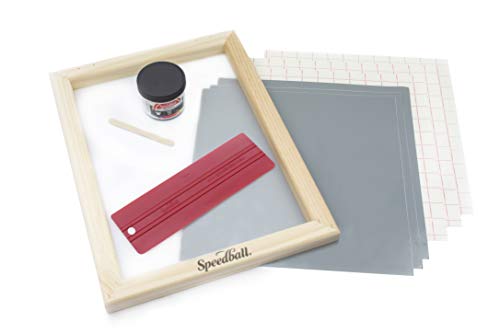
Speedball Beginner Craft Vinyl Screen Printing Kit

Caydo 8×10 Inch Wood Silk Screen Frame with Squeegee

MS WGO Butterfly Hinge Clamps, 2-Pack

LIGHOON Cyanotype Sun Print Paper Kit, 24 Sheets

Worown 8×10 Wood Silk Screen Frame with Squeegee
Taking A Closer Look At The Options
Photo emulsion is the method most professional printers use, and this kit hands you everything needed to try it on day one. The included LED UV exposure lamp matters more than people expect: exposing emulsion usually means hunting for strong sunlight or rigging up a work light, and having a dedicated lamp makes results far more predictable.
The 10×14-inch wooden screen gives you a decent print area for shirts and posters without hogging a whole table. Compared to the Speedball Intermediate kit below, this one trades extra consumables for the light source, which is the smarter trade once you’re committed to detailed designs.
Why It Works Well
- Built-in LED lamp removes the biggest variable in photo emulsion work
- All-in-one contents mean no separate shopping trips before your first print
- Wooden frame and base keep the screen steady during pulls
- A natural step up from drawing-fluid methods once you want finer detail
Things To Consider
- Emulsion requires careful handling and cleanup, so expect a learning curve
- You’ll need a dark space to coat and dry screens properly
Key Specs
Who Will Love This
Hobbyists ready to move past stencils and commit to photo emulsion from the start.
Where A Sibling Pick Shines
Total newcomers who want to experiment cheaply will get more mileage from the Speedball Intermediate kit’s broader consumable lineup.
This is the kit that teaches you two ways to put a design on a screen. Drawing fluid and screen filler let you paint a stencil by hand, while the Diazo photo emulsion and sensitizer cover the photographic route. That dual approach is why it earns a spot ahead of simpler bundles.
Two four-ounce fabric inks, black and red, come standard, along with a Red Baron squeegee, round brush, craft sticks, and a printed instruction booklet. For anyone printing custom tees at home, having both inks plus cleaning supplies like Speed-Clean in one box keeps the first few sessions moving.
What Makes Sense
- Includes both hand-drawn and photo emulsion methods in one purchase
- Two fabric ink colors let you start printing shirts immediately
- Diazo remover and Speed-Clean handle reclamation and cleanup
- Made in USA, with a long track record among art classrooms
Points To Note
- No exposure lamp, so emulsion work depends on sunlight or your own light source
- Ink quantities are modest; frequent printers will restock quickly
Feature Snapshot
Right Fit For
Beginners who want to sample multiple techniques before choosing a favorite.
Swap It Out When
Anyone who already owns a vinyl cutting machine will find the Speedball Craft Vinyl kit faster and less messy.
Most entry kits ask you to learn chemistry. This one asks you to press a button instead. You cut your design from vinyl on a craft cutting machine, apply it to the 10×14 mesh as a stencil, and pull ink through with the included Red Baron squeegee. No emulsion, no filler, no darkroom drying time.
The trade-off shows up in detail: vinyl stencils struggle with very thin lines and tiny type compared to photo emulsion. Still, for bold logos, names, and simple graphics on shirts or home decor, the workflow is about as forgiving as screen printing gets. Owners commonly report their first successful print happening within an hour of unboxing.
What It Does Well
- Zero chemicals, which matters in apartments and homes with kids
- Leverages a cutting machine you may already own for precise stencils
- Same 10×14 wood frame and fabric ink as pricier Speedball bundles
- Fastest path from idea to finished shirt in this entire list
Worth Noting
- Requires a separate vinyl cutting machine, which isn’t included
- Intricate, high-detail artwork won’t translate well through cut vinyl
Who Should Grab It
Cricut or Silhouette owners who want screen-printed results without touching emulsion.
Another Choice May Suit
Crafters without a cutting machine should look at the Caydo frame bundle, which pairs a screen with two squeegee tools at a lower commitment level.
Not everyone needs a box full of chemicals on day one. Sometimes you just want a screen, something to pull ink with, and room to experiment. The Caydo set delivers exactly that: an 8×10 wooden frame stretched with 110 white mesh, plus two different spreading tools.
That second tool is the quiet advantage here. The wooden squeegee suits standard ink pulls, while the plastic scraper handles thinner passes or cleanup work. Having both means you can feel out which pressure and angle suits your ink viscosity instead of guessing with a single blade. The smaller 8×10 footprint also stores easily in a drawer, unlike the larger Speedball frames.
Notable Upsides
- Two squeegee options let you match tool to project
- 110 mesh count balances detail and ink flow for beginners
- Compact size fits small desks and apartment storage
- Pairs well with paper stencils or cut vinyl you supply yourself
Small Caveats
- No inks or chemicals included, so plan a separate purchase
- Wooden frames can warp if stored damp; dry them thoroughly after washing
Quick Facts
Made For
Budget-conscious DIYers testing whether screen printing clicks before investing further.
Reach For A Different Pick When
Shoppers wanting a complete ink-and-chemistry package out of the box are better served by the Speedball Intermediate kit.
Registration, meaning keeping the screen in the exact same position between color layers, is where homemade setups fall apart. These butterfly hinge clamps solve that. Screw one pair to any sturdy board, hinge your frame into them, and the screen lifts up and drops back identically every single pull.
The chrome-plated steel construction resists rust, which matters because screen printing is a wet, ink-smeared hobby. Four mounting screws come in the pack, and installation takes minutes with a drill. In our view, this is the cheapest meaningful upgrade a beginner can make once they move past single-color prints onto a flat board.
Benefits That Matter
- Positive locking keeps multi-color layers aligned
- Chrome plating stands up to repeated washdowns
- Turns any table into a basic printing station
- Screws included, so setup needs no extra hardware run
Details To Watch
- Clamps only, no frame or ink; this is strictly an add-on
- You’ll need a solid base surface, since flimsy tables flex under pressure
Core Details
Whose Shelf It Belongs On
DIYers building a homemade press or planning two-plus color designs on rigid boards.
Consider Something Else When
First-timers still printing single-color shirts by hand won’t notice the benefit yet; start with the Worown frame instead.
Cyanotype is printmaking’s gentlest gateway. The paper comes pre-coated with a light-sensitive solution, so you arrange leaves, keys, or cut shapes on top, set the acrylic panel over everything, and let sunlight do the developing. A rinse in water fixes the image, leaving that classic deep blue.
Twenty-four sheets give a family or classroom plenty of attempts, and the included acrylic board keeps objects pressed flat for crisp edges. There’s no ink, no squeegee, and no mess beyond a water rinse. Honestly, it’s less screen printing than its cousin, but it teaches the same core idea: blocking light creates an image.
Useful Strengths
- Pre-sensitized paper means zero mixing or coating
- Acrylic panel included for sharp contact prints
- 24 sheets support group activities and do-overs
- Works anywhere with decent daylight, no equipment needed
A Few Limitations
- Results depend heavily on sun strength and exposure timing
- Paper format only; nothing here transfers to fabric
The Right Fit
Parents, teachers, and weekend crafters who want a low-mess introduction to light-based printing.
Look Elsewhere When
Anyone set on printing wearable designs should choose the Speedball Intermediate kit, since cyanotype paper stays on paper.
The Worown bundle sits shoulder to shoulder with the Caydo set earlier in this list, and the differences come down to finishing details. Both use an 8×10 natural wood frame with 110 white mesh, but Worown’s squeegee carries a rubber blade rather than a bare wood edge, which many owners find glides more smoothly and spreads ink more evenly.
The frame measures roughly 8 x 10 x 0.79 inches, nearly identical to Caydo’s, so storage and print area are a wash. Your choice here really hinges on blade preference and availability. Either way, this is a clean, minimal starting point for paper stencils and simple fabric work.
Reasons It Performs
- Rubber-blade squeegee offers smoother, more controlled ink pulls
- Natural solid wood frame resists deformation with normal care
- 110 mesh handles both fabric and paper projects
- Single-piece simplicity keeps the learning curve short
Practical Considerations
- Only one squeegee included, versus Caydo’s two-tool flexibility
- Inks and stencils must be sourced separately
Who It Suits Best
Apartment dwellers and casual crafters who value a tidy, minimal setup over a full workshop.
Not Your Match When
Multi-color planners will get more value from pairing the MS WGO hinge clamps with whichever frame they choose.
What Matters Most Before Choosing Beginner Screen Printing Kits
Match The Method To Your Artwork
Three paths dominate the entry level: hand-drawn stencils using drawing fluid, photo emulsion exposed with light, and cut vinyl applied directly to the mesh. Bold shapes suit vinyl and paper stencils, while fine linework and photographic images demand emulsion. Choosing the wrong method for your art style is the fastest route to frustration.
Size And Mesh Count Basics
A 10×14 inch screen covers most chest prints comfortably, while 8×10 frames suit patches, cards, and tote corners. Mesh count describes how many threads per inch the fabric holds; 110 mesh is a forgiving middle ground that lets thicker ink pass while still holding moderate detail. Finer meshes exist, but they punish sloppy technique.
Think About Cleanup Before You Buy
Emulsion kits require removers, scrubbing, and a dedicated dark corner for drying. Vinyl and paper-stencil routes rinse clean with water. Apartment printers and shared households tend to stay happier with the low-chemistry options, at least until the habit sticks.
Plan Your Second Purchase Now
Almost every starter eventually adds hinge clamps, extra ink colors, or a second frame. Picking a system with available refills, as Speedball’s line does, saves money and keeps your early prints consistent.
Key Considerations Across These Picks
Traps First Timers Fall Into
The classic mistake is buying a photo emulsion kit without a plan for exposure light or a dark drying spot. Another common slip is ordering a bare frame and forgetting ink entirely. Read the contents list twice, then add whatever’s missing before your first session.
What Separates Premium From Basic
Higher-tier kits charge more for completeness and control: a dedicated UV lamp, dual-method chemistry, and cleaning supplies all push the price up. That premium pays off the moment you stop fighting your equipment and start refining your prints.
Frequently Asked Questions
Can a total beginner really screen print at home?
Yes, especially with vinyl or paper-stencil methods that skip chemicals entirely. Photo emulsion takes a few practice runs but becomes routine quickly.
Do I need a special table or press?
A sturdy flat table works fine for single-color prints. Hinge clamps become worthwhile once you attempt layered, multi-color designs.
What does 110 mesh mean in practice?
It refers to 110 threads per inch woven into the screen fabric. That density balances easy ink flow with reasonable detail retention.
How long does a screen last?
With gentle cleaning and dry storage, a wood-framed mesh screen typically serves many sessions. Harsh scrubbing and damp storage shorten its life considerably.
Is cyanotype the same as screen printing?
No, though both are light-based printmaking cousins. Cyanotype develops images on coated paper using sunlight, while screen printing pushes ink through a mesh.
Bottom Line
Your best starting point depends on how you like to create. Vinyl-cutter owners should grab the Speedball Craft Vinyl kit, while hands-on learners get the fullest education from the Speedball Intermediate bundle. Committed hobbyists can jump straight to the Advanced kit with its LED exposure lamp, and cautious spenders will be happy with either compact frame. Whichever route you take, start with a simple one-color design and let the process teach you the rest.
