
Bias tape makers turn a strip of cut fabric into neatly folded binding in one pass, and they cost less than most patterns. Anyone who quilts, sews garments, or finishes raw edges knows how tedious hand-folding gets after the first yard. The seven options below cover single-size tools from Clover plus multi-size kits that bundle extras like awls and binder feet. Match the width to your project and you’ll wonder why you ever pressed folds by hand.
The Picks In Brief

Clover Fusible Bias 1/4-Inch Tape Maker (4011)

HONEYSEW Bias Tape Maker Kit with Binder Foot (BTM-S2)

Clover 464/25 Bias 1-Inch Tape Maker

Clover 464/12 Bias 1/2-Inch Tape Maker
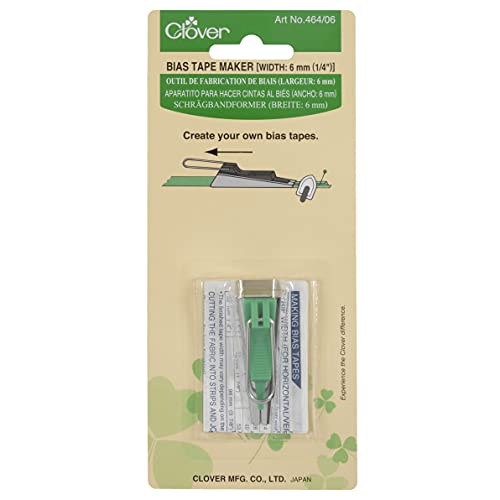
Clover Bias Tape Maker 6mm, Green

Jeimier 5 Sizes Bias Tape Makers Set

JZK Fabric Bias Binding Tape Maker Tool Set of 4
What Each Pick Brings To The Table
This Clover tool specializes in fusible bias tape, which means the finished binding carries an adhesive core activated by your iron. That’s a genuine time-saver on appliqué and stained-glass quilting, where you’d otherwise pin every curve before stitching. The quarter-inch finished width suits narrow stems, Celtic knots, and delicate trim lines.
In practice, you feed a cut bias strip through the slot, press as you pull, and the folds set with heat in one motion. It’s a single-purpose tool, so pair it with other widths if your project list varies.
Well-Handled Touches
- Fusible design lets binding stick in place before sewing, cutting pinning time dramatically.
- Quarter-inch output matches fine appliqué and sashiko-style detail work.
- Small enough to live in a notions tin without crowding anything else.
- Clover’s channel shape tends to fold evenly along curves, which matters on tight spirals.
Things To Consider
- One size only, so wider bindings require a second purchase.
- The adhesive layer needs steady heat; low-temperature irons may leave weak bonds on some fabrics.
Who Will Love This
Appliqué enthusiasts and Celtic quilters who want binding that holds itself down while they stitch.
A Better Fit Elsewhere
Sewists needing multiple widths will get more mileage from the HONEYSEW kit, which bundles four sizes plus accessories.
Where the Clover tools above sell one width at a time, this HONEYSEW set covers four: 6mm, 12mm, 18mm, and 25mm finished sizes. The bundled binder foot attaches to your machine and guides folded tape under the needle hands-free, which changes the whole workflow once you’ve made a few yards. An awl helps thread stubborn strips, and quilting clips plus pins round out the accessory list.
For anyone finishing napkins, bibs, or handbag edges in matching fabric, having every common width on hand removes the guesswork. You may find the plastic bodies feel lighter than Clover’s, but the price-to-content ratio is hard to argue with.
Real-World Strengths
- Four widths handle everything from spaghetti straps to quilt binding in one box.
- Included binder foot turns machine application into a guided, two-hand job.
- Awl and clips solve the threading and holding problems beginners hit first.
- Covers both metric and inch-based pattern instructions without conversion math.
Potential Sticking Points
- Build quality reads more budget-tier than Clover’s molded tools, based on widely reported owner feedback.
- Extra accessories mean more small parts to keep track of between sessions.
Key Specs
Right Fit For
Intermediate quilters and home sewists who want a complete binding setup rather than piecing tools together over months.
Swap It Out When
Purists who prioritize fold precision over variety should stick with the Clover 464/12, whose channels are famously consistent.
An inch of finished binding makes a statement, and this is the tool built to make it. Wide bias tape shows up in Celtic quilting, bag handles, table runner edges, and any project where the binding is part of the design rather than a hidden finish. Clover sizes its lineup from quarter-inch up to two inches, and the 464/25 sits near the top of that practical range.
The folding action is the same as its narrower siblings: feed, pull, press. What changes is how forgiving the wide channel feels, since there’s more room for the strip to sit correctly. Expect roughly double the cut-strip width, so plan your fabric cuts accordingly.
Positive Points
- One-inch output suits decorative binding where narrow tape would disappear.
- Wide channel is easier to thread and keeps folds aligned on long runs.
- Works with fabric of your choosing, matching any palette exactly.
- Compact footprint stores flat in a drawer alongside rulers.
Less Ideal Details
- Too wide for garment necklines and sleeve finishes, which need slimmer tape.
- Requires generous bias strips, so scrap-friendly projects favor smaller sizes.
Details At A Glance
Whose Shelf It Belongs On
Art quilters and bag makers who treat binding as a visible design element.
Where A Sibling Pick Shines
Everyday garment sewing calls for the Clover 464/12 instead, whose half-inch width fits curved seams far better.
Half-inch is the workhorse width of home sewing, and this Clover model is the one many experienced sewists reach for first. Necklines, armholes, waistbands, and quilt edges all fall comfortably inside what a half-inch finish handles well. Compared with the 1-inch 464/25 above, it needs half the cut-strip width, which stretches your fabric budget further.
The learning curve is short: cut strips at a 45-degree angle, thread them through, and iron as you draw the tool along. Most people are producing clean yards within their first session. It’s a single-size tool, though, so check your pattern requirements before committing.
Useful Strengths
- Half-inch finished width covers the majority of garment and quilting applications.
- Clover’s molding produces crisp, even folds that press flat without rework.
- Simple enough for a confident beginner’s first bias project.
- Uses fabric scraps efficiently thanks to the modest strip requirement.
A Few Limitations
- No fusible option here, so binding must be pinned or clipped before stitching.
- Single width only; multi-project sewists eventually add siblings.
Who Should Grab It
Home garment sewists who want one reliable tool for the widest range of standard finishes.
Reach For A Different Pick When
Anyone wanting several widths at once should look at the Jeimier five-size set, which adds a 3/8-inch option Clover doesn’t offer in this single format.
Six millimeters is barely a quarter inch, and that slimness is exactly the point. Straps for aprons and bags, piping accents, doll clothing, and delicate heirloom trims all demand tape this narrow, and folding it by hand is genuinely miserable. The green body distinguishes it at a glance from Clover’s other sizes, a small but smart touch when several models share a drawer.
Threading takes a steady hand and often a pin or awl tip, since the channel is tight. Once started, though, the pull-and-press rhythm is identical to the wider Clovers reviewed above.
What It Does Well
- Produces fine quarter-inch trim impossible to fold neatly by hand.
- Color-coded body prevents grabbing the wrong size mid-project.
- Tiny footprint suits travel sewing kits and crowded craft rooms alike.
- Same trusted Clover fold geometry as the larger models.
Softer Spots
- Narrow channel can be fiddly to start; owners commonly report using an awl or pin to feed the first inches.
- Limited to one specialized width, so it complements rather than replaces broader kits.
Quick Facts
Made For
Doll clothes sewists, bag makers adding slim straps, and anyone doing detailed trim work.
Consider Something Else When
Standard garment binding calls for the Clover 464/12, whose half-inch output suits everyday seams better than this specialist.
Five sizes in one set is the headline here, and the inclusion of a 3/8-inch option sets it apart from the HONEYSEW kit earlier in this list. That in-between width fills a real gap: too wide for delicate trim, too slim for quilt binding, yet exactly right for many garment edges. The range runs from 1/4-inch to a full inch, covering nearly every pattern specification you’ll encounter.
Once the threading technique clicks, each tool converts raw bias strips into finished binding quickly, saving substantial time versus hand folding. Build quality sits in the value tier, so treat them gently and they should hold up fine for hobby use.
Strong Points
- Five widths, including the uncommon 3/8-inch, match almost any pattern callout.
- Cuts binding production time dramatically once the pull-and-press rhythm clicks.
- Lets you bind entire quilts, garments, and crafts from matching fabric.
- Set pricing typically undercuts buying individual tools separately.
Points To Note
- Materials feel lighter than Clover equivalents, per commonly reported owner impressions.
- No auxiliary accessories like a binder foot or awl are mentioned in the listing.
- Five loose tools need a small bin or pouch to stay organized.
Core Details
Best Suited To
Project-hopping sewists whose pattern stack demands several different binding widths throughout the year.
Another Choice May Suit
First-time users who want guidance accessories should consider the JZK set, which pairs its four sizes with an awl for easier threading.
JZK builds its four-piece set around stainless steel bodies, a material step up from the plastic norm, and throws in an awl for threading. The sizes mirror the HONEYSEW kit: 6mm, 12mm, 18mm, and 25mm finished widths. What earns the beginner badge is the clear cut-width guidance, telling you to slice strips roughly double the finished size, so 24mm strips feed the 12mm maker and so on.
The intended workflow is straightforward: cut at a 45-degree angle, pin one end down, pull the tool while ironing creases in behind it. Plenty of tutorial videos exist for this exact technique, which softens the learning curve considerably.
Notable Gains
- Stainless steel construction resists the warping plastic tools sometimes develop near a hot iron.
- Four widths span delicate trim through full quilt binding.
- Simple doubled cut-width rule removes measurement guesswork for newcomers.
- Awl inclusion solves the most common first-attempt frustration.
Trade Offs To Consider
- No binder foot, so machine application stays a manual guiding job.
- Steel edges deserve careful storage away from fingers and fabric snag points.
Feature Snapshot
Who It Suits Best
Sewing newcomers who want durable tools plus a clear, teachable method from day one.
Not Your Match When
Experienced quilters wanting hands-free machine binding will prefer the HONEYSEW kit and its included binder foot.
Choosing Between These Binding Tools
Width First, Everything Else Second
Your pattern dictates the finished width, so start there. Garment sewing lives mostly in the 1/2-inch zone, quilting leans toward 1/4-inch and 1/2-inch, while decorative Celtic work and bag trim push toward a full inch. Buying a single-size tool makes sense when one width dominates your projects; a set pays off the moment your list spans three or more.
Material And Heat Tolerance
Plastic bodies dominate this category because they’re light and cheap, but they sit close to a hot iron by design. Stainless steel versions, like JZK’s, shrug off incidental contact better. Whichever you choose, keep the tool moving while pressing; resting a hot iron on any maker risks deforming the channel.
Accessories That Actually Matter
An awl sounds trivial until you’ve fought a 6mm channel for ten minutes. A binder foot matters even more for volume work, turning machine application into a guided process. Kits bundling these extras save separate purchases, though solo Clover tools still win on fold precision.
Matching Tool To Skill Level
First-timers benefit from sets with printed cut-width guidance and tutorial support. Confident sewists can buy exactly the single size a current project needs and expand later.
Key Considerations Across These Picks
Traps First Timers Fall Into
The classic error is cutting straight-grain strips instead of true 45-degree bias, which leaves tape that won’t curve around edges. Another frequent stumble is buying a single width that doesn’t match the pattern in hand. Check the required finished size before ordering anything.
When Paying More Pays Off
Premium single tools like Clover’s earn their cost through consistently crisp folds and durable molding. For someone binding quilts weekly, that precision compounds. Occasional menders get perfectly good results from budget sets, so spend up only when volume justifies it.
Frequently Asked Questions
What does a bias tape maker actually do?
It folds a cut fabric strip into neat, even binding with hidden raw edges in a single pulling motion. You press the folds with an iron as the strip exits the tool.
How wide should I cut my fabric strips?
A good rule is roughly twice the finished binding width, so a 12mm maker wants about a 24mm strip. Always confirm against your specific tool’s guidance.
Do I need a special sewing machine foot?
No, a standard foot works fine for most projects. A binder foot simply guides the folded tape automatically, which speeds up long runs considerably.
Can I make bias tape from any fabric?
Cotton and cotton blends behave best because they hold a pressed crease. Slippery synthetics tend to spring open and fight the folding process.
Is diagonal cutting really necessary?
Yes, for anything that curves. Bias-cut strips stretch slightly, letting binding wrap smoothly around necklines, armholes, and rounded quilt corners.
Closing Remarks
Every tool here solves the same problem, just at different widths and price tiers. Single-size Clover makers reward precision-focused sewists, while the HONEYSEW, Jeimier, and JZK sets cover multiple needs in one purchase. Start with the width your current project demands, add sizes as your pattern collection grows, and let the iron do the rest.
