
Black grounds change how color behaves. Brights pop harder, whites glow, and dark moody palettes finally make sense without fighting a white surface. Whether you paint acrylic pours in a spare room, teach a kids’ craft night, or stretch your own work, the seven options below cover mini squares, gallery-depth stretched canvas, rigid panels, round formats, bulk boards, and even raw fabric by the yard.
A Quick View Of The Lineup
A Quick View Of The Lineup

U.S. Art Supply 8″x8″ Mini Square Canvases, Pack of 4

U.S. Art Supply 16″x20″ Black Stretched Canvas, 4-Pack

U.S. Art Supply 18″x24″ Black Stretched Canvas, 4-Pack

U.S. Art Supply 8×8 Inch Black Canvas Board Panels, 6 Pack

IVON 4pcs Black Round Canvas, 12″ & 8″
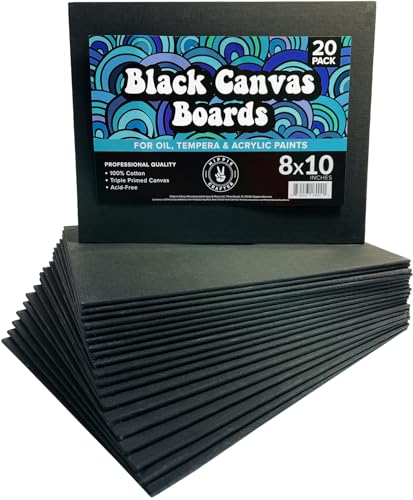
HIPPIE CRAFTER Black Canvas Panels, 20 Pack, 5×7 Inch

M Mute Touch 10oz Heavy Duty Cotton Canvas Fabric, 60″ x 40″
Inside Each Recommended Option
An 8-inch square is one of the friendliest formats going. Small enough to finish in an afternoon, big enough to practice composition, and light enough that a shelf or desk ledge becomes instant display space. This four-pack arrives pre-stretched with a 3/4-inch deep profile, so the sides read as finished edges once painted.
The black ground is triple primed over pure cotton, which means less prep and better paint adhesion straight out of the box. Compared with the larger stretched canvases later in this list, these trade wall presence for convenience, and for most casual projects that’s the right call.
Practical Pluses
- Triple primed surface accepts acrylic, oil, gouache, and pouring media without extra gesso coats.
- The 3/4-inch depth lets you skip framing and hang pieces as-is.
- Small footprint stores flat in a drawer, unlike bulky panel stacks.
- Square shape suits mandala art, dot painting, and symmetrical designs naturally.
Things To Weigh Up
- Four canvases go fast during group sessions, so heavy users may want multiple packs.
Key Specs
Who It Suits Best
New painters, gift makers, and anyone building a small-format portfolio will get the most from this pack.
Where A Sibling Pick Shines
Artists wanting more room to develop detail should reach for the U.S. Art Supply 16″x20″ Black Stretched Canvas instead.
Step up from the 8-inch minis and you land here. Sixteen by twenty inches is the classic mid-size studio ratio, wide enough for landscape-style compositions yet still manageable on an apartment easel. The 3/4-inch stretcher bars and triple primed cotton ground match the smaller pack, so your technique carries over without adjustment.
In a home studio setting, this is the size most people actually frame and hang. Four canvases per pack gives you room to experiment, and the black base saves the layering work a white canvas demands before dark backgrounds look rich.
Useful Highlights
- Standard proportions fit off-the-shelf frames if you want a border later.
- Medium-grain cotton holds brush texture well under opaque acrylics.
- Works with wet media like pouring paint and airbrush work alike.
Worth Bearing In Mind
- Stretched fabric can slacken slightly in humid rooms, a common report with any cotton canvas; re-tensioning keys or gentle misting on the back usually settles it.
- Larger surfaces consume noticeably more paint per piece than the mini squares.
Feature Rundown
Made For
Hobbyist painters producing finished wall pieces for their own homes benefit most from this format.
Another Choice May Suit
Classroom settings burning through supplies quickly will find the HIPPIE CRAFTER 20-pack of 5×7 panels far more economical.
Eighteen by twenty-four inches is where a canvas starts commanding a wall. Pour artists love this footprint because fluid cells have space to bloom, and figure or abstract painters gain real breathing room for gesture. The construction mirrors its siblings in this lineup: 100% cotton, medium grain, 3/4-inch profile, triple primed black.
One honest note: at this size, shipping and storage demand more care than the smaller packs, so clear some flat shelf space before ordering.
Positive Points
- Generous area suits fluid art, large florals, and statement abstracts.
- Same trusted priming system as the 16×20 version keeps results consistent across a series.
- Suitable for every skill level, from first-timers to working artists.
- Handles both wet techniques like gouache washes and dry media layering.
- Deep enough edges to leave unpainted for a modern gallery look.
Softer Spots
- Needs sturdy wall anchors; a finished piece gets heavy fast.
- Paint cost per canvas climbs sharply compared with the 8×8 panels.
The Numbers That Matter
Right Fit For
Advancing hobbyists and instructors demonstrating large-format technique will put this size to full use.
Consider Something Else When
Desk-bound creators short on space should pick the IVON round canvas set, which delivers visual impact in a compact circle.
Panels solve a problem stretched canvas can’t: warping. Cotton canvas glued over a rigid MDF backer stays dead flat, which matters enormously for acrylic pouring, where pools of liquid paint sit on the surface for hours. You also get six boards per pack versus four stretched pieces elsewhere in this roundup.
The trade-off is presentation. At just 1/16 inch thick, a panel has no finished edge, so plan on framing or displaying on a stand. For studies, swaps, gifts, and practice, that’s a fair exchange.
What It Does Well
- Rigid core eliminates the sagging and denting stretched fabric can develop.
- Acid-free 8-ounce black gesso protects artwork longevity over time.
- Six boards per pack lowers the cost per painting attempt.
- Flat profile slides into portfolios and mailers easily.
A Few Limitations
- No wrap-around edge, so framing or a display easel is basically required.
- Thin profile can flex slightly under very heavy paint loads, based on widely reported user feedback.
- MDF backing dislikes prolonged damp storage, so keep them dry.
Quick Facts
Who Should Grab It
Pour artists, students filling sketchbook assignments, and swap-group participants get outstanding utility per board.
Look Elsewhere When
Anyone wanting ready-to-hang depth without framing should choose the U.S. Art Supply 8″x8″ mini stretched set above.
Every rectangular canvas in this list suddenly feels predictable next to a circle. Round formats force fresh composition choices, and they suit celestial themes, mandalas, and ringed pour patterns beautifully. The mixed sizing helps too: two 12-inch circles anchor a gallery wall while the two 8-inch rounds fill gaps around them.
The black ground gives metallic and neon paints a stage, and owners commonly note the fabric accepts fluid media cleanly. Expect a learning curve on the curved edges, though.
A Favorable Mix
- Two sizes per set enable cohesive multi-piece displays.
- Circle shape adds genuine novelty to standard acrylic pour sessions.
- Flexible cotton weave handles brushwork and fluid techniques alike.
Potential Drawbacks
- Curved perimeter takes practice; straight-line compositions need rethinking entirely.
- Round shapes store awkwardly compared with stackable square panels.
- Fewer standard frame options exist for circular work, so plan custom framing costs.
Best Suited To
Pour enthusiasts and decorative painters chasing distinctive wall arrangements will enjoy this set most.
Skip It When
Traditionalists practicing realistic landscapes will be happier with the U.S. Art Supply 18″x24″ rectangles.
Twenty boards in one box changes the math for anyone teaching or hosting. Five by seven inches fits children’s hands, slips into standard document frames, and costs little enough that a ruined first attempt stings zero. Each board ships individually wrapped in cellophane, which keeps dust and fingerprints off the black surface until the moment of use.
The 100% cotton wrapping over a sturdy core takes acrylic, oil, watercolor, collage, and drawing media. In our view, this is the least intimidating entry point in the entire category.
Well-Handled Touches
- Individual cellophane wrapping preserves each surface until needed.
- Five-by-seven sizing matches inexpensive off-the-shelf frames.
- Bulk quantity supports classrooms, parties, and craft fairs comfortably.
Details To Watch
- Small format limits detailed compositions; ambitious scenes feel cramped.
- Panel construction again means framing or stands for display purposes.
Perfect Match For
Teachers, camp counselors, and parents running craft tables will burn through these happily.
Not Your Match When
Artists seeking larger practice surfaces should compare against the six-pack of U.S. Art Supply 8×8 panels instead.
This last entry isn’t a canvas at all, strictly speaking. It’s precut duck cloth, the plain-weave heavyweight cotton used for tote bags, drop cloths, upholstery accents, and yes, stretching your own paintings. At 10 ounces per square yard with an ultra-tight weave, the material resists tearing and holds up to sewing machine needles without fraying wildly.
The 60-by-40-inch cut arrives ready to use with no trimming, which saves real time over buying by the roll. One caveat worth knowing: raw duck cloth typically needs a coat of gesso before it becomes a paintable ground.
Real-World Strengths
- Precut dimensions eliminate measuring and cutting waste.
- Tight plain weave withstands stitching, stretching, and repeated handling.
- Doubles as protective covering for floors during messy projects.
- Black colorway hides stains between uses as a drop cloth.
- Heavyweight drape suits tote bags and home decor sewing directly.
Trade Offs
- Unprimed surface requires gesso application before painting begins.
- Heavy fabric needs a strong needle and patience on home machines.
Core Details
Whose Shelf It Belongs On
Sewists, DIY decorators, and painters who stretch their own substrates will find constant uses for this yardage.
Where Another Pick Suits Better
Shoppers wanting paint-ready surfaces with zero prep should stick with the HIPPIE CRAFTER panel pack.
What Matters Most Before Choosing Black Canvas Paintings
Surface Type And Depth
Stretched canvas offers taut fabric over wooden bars with a wrap-around edge you can leave visible. Panels glue that fabric onto rigid board, trading depth for flatness and stability. Deep profiles around 3/4 inch hang without frames, while thin panels slip into cheap standard frames. Decide how each finished piece will be displayed before committing.
Priming And Media Compatibility
A triple primed black ground means the manufacturer applied three coats of gesso, the binder layer that controls how paint grips fabric. Heavier priming, such as 12-ounce coverage, resists absorbency and keeps acrylic colors vivid. Oil painters should confirm the surface suits slow-drying media, since some budget panels are tuned for acrylics alone.
Size Strategy
Match dimensions to your actual wall or workspace rather than ambition. An 18×24 canvas consumes paint, storage space, and courage in equal measure. Beginners progress faster on 5×7 or 8×8 surfaces, where a failed idea costs minutes, not evenings. Bulk small packs beat single large purchases while skills are forming.
Format Personality
Circles, squares, and rectangles each pull compositions in different directions. Squares favor symmetry, rectangles suit traditional subjects, and rounds reward radial design. Buying a mixed-format set early reveals which geometry fits your instincts before you invest in quantity.
Key Considerations Across These Picks
Traps First Timers Fall Into
The classic error is ordering stretched canvas for pour painting, then watching fabric bow under liquid weight. Rigid panels handle pooling fluids far better. Another frequent misstep is ignoring display plans: thin panels look unfinished bare on a wall, so factor framing costs upfront. Finally, check priming weight; lightly primed black surfaces drink paint and mute your colors.
The Case For Spending Up
Higher-tier grounds carry heavier gesso layers, tighter weaves, and consistent tension across every piece in the pack. That consistency shows when you varnish a series or sell work, since uneven absorption creates blotchy patches no topcoat hides. For gifts and practice, budget panels serve fine; for anything destined for a wall long-term, the upgrade pays for itself in fewer ruined attempts.
Frequently Asked Questions
Do I need to prime a black canvas before painting?
No, every pre-stretched and panel option listed here arrives already primed. Raw fabric like the duck cloth entry does need gesso first.
What paint works best on a black ground?
Opaque acrylics and metallics perform strongest, since transparency lets the dark base dominate. Thin watercolor washes require deliberate layering to stay luminous.
Can I use white paint to lighten areas?
Yes, but expect multiple coats for true opacity. Titanium white covers black reliably within two to three passes depending on brand thickness.
How do I stop stretched canvas from sagging?
Keep finished pieces away from humid bathrooms and damp basements. Lightly misting the back tightens the weave, a trick painters have relied on for decades.
Are panels or stretched canvas better for beginners?
Panels win on cost, durability, and forgiveness during early experiments. Move to stretched formats once compositions and confidence justify the framing-friendly depth.
Closing Thoughts
Black grounds reward boldness, and the right substrate makes that boldness easier. Start small with the mini squares or bulk panels, graduate to the 18×24 stretched format when a wall calls out for something substantial, and keep the round set nearby for days when rectangles feel stale. Whatever you choose, the dark surface will do half the compositional work for you.
