
Blue is the workhorse color of fountain pen writing, and the right bottle changes how your daily notes feel on paper. Some inks prioritize clean office behavior and easy cleanup, others lean into shading and character for journaling or letter writing. This roundup covers six well-regarded blues across two trusted brands, from budget-friendly bottles to premium Japanese formulations, so you can match an ink to your pen, your paper, and your routine.
A Side-By-Side Look

Pelikan 4001 Historical Bottled Ink Royal Blue 62.5ml

Pelikan 4001 Bottled Ink Royal Blue 62.5ml

Pelikan 4001 TP/6 Ink Cartridges Royal Blue 6 Pack
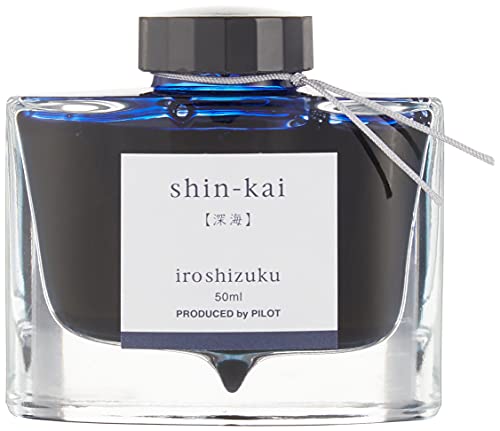
PILOT Iroshizuku Shin-Kai Deep Sea 50ml Bottle

PILOT Iroshizuku Kon-Peki Deep Blue 50ml Bottle

PILOT Iroshizuku Asa-Gao Dark Blue 50ml Bottle
The Strengths Of Each Pick
Few inks carry a pedigree like this one. The Royal Blue formula traces back more than a century, and Pelikan still bottles it in Germany at a modest 62.5ml size that slips easily into a desk drawer.
In daily use, this is the ink you reach for when a meeting runs long and the notes matter more than the flourish. The line definition stays crisp even on thinner office paper, which is where many brighter blues feather.
Everyday Advantages
- A formulation refined over generations, so behavior is predictable from bottle to bottle.
- Even flow keeps a medium nib writing smoothly through long sessions without skipping.
- The gentle chemistry suits vintage pens, since it is widely regarded as kind to older feeds and sacs.
- Royal Blue washes out of shirts far more readily than most saturated blues, a real perk around a busy classroom or office.
Small Caveats
- The color leans conservative, so it may feel plain next to the Pilot options later in this list.
- Bottles of this style can be awkward to fill near the bottom; tipping the bottle helps you use every drop.
Key Specs
Who Will Love This
Students and office writers who want a dependable, low-drama blue that behaves on ordinary paper.
Where A Sibling Pick Shines
Writers chasing richer character should look at the PILOT Iroshizuku Shin-Kai, whose blue-black depth suits journaling better than this straightforward royal shade.
This is the standard-issue version of the Pelikan classic, and honestly, that is its whole appeal. Same 62.5ml bottle, same German-made Royal Blue formula, minus the historical-edition packaging of the first pick.
For a first bottled ink, it removes nearly every risk. Fill a converter, write a page, and you get clean line definition with an even flow, no surprises waiting on cheap copier paper.
Where It Helps
- Gentle on nibs, which matters if your collection includes delicate gold points.
- Consistent saturation means the last page of a session looks like the first.
- Easy rinsing from converters and feeds makes pen swaps quick between meetings.
Things To Consider
- Owners commonly report the hue dries slightly lighter than wet-on-paper appearance suggests, worth checking against your favorite paper.
- No water-resistance to speak of, so keep it away from documents headed outdoors.
Right Fit For
New fountain pen users who want one trustworthy bottle for schoolwork, forms, and everyday correspondence.
Swap It Out When
If cartridges suit your routine better, the Pelikan 4001 TP/6 pack covers the same color in a cleaner format.
Not everyone wants a glass bottle rattling around a backpack. These TP/6 cartridges hold 0.8ml each and swap in seconds, which is why they are a staple in school bags and travel kits alike.
You give up some economy compared with the bottled picks above, but you gain a spill-proof format that fits standard international cartridge pens as well as Pelikan models.
Reasons It Performs
- Sealed cartridges stay clean through airport security checks and bumpy commutes.
- Swapping takes under a minute, no converter flushing required midday.
- Same gentle Royal Blue chemistry as the bottles, so nib care stays simple.
- Six per pack covers roughly a semester of steady note taking for most students.
Points To Note
- 0.8ml runs out faster than a filled converter, so heavy writers will burn through packs quickly.
- Plastic waste adds up versus refilling from a bottle, something eco-minded writers may weigh.
Feature Snapshot
Made For
Commuters, students, and anyone who carries a fountain pen daily but dreads ink on their hands.
Consider Something Else When
Desk-bound writers get better value per milliliter from the Pelikan 4001 Bottled Ink, provided they already own a converter.
Shin-Kai translates loosely to deep sea, and the name fits. This blue-black sits somewhere between corporate navy and midnight, shifting subtly depending on how heavily the nib lays ink down.
Where the Pelikan royal blues play it safe, Shin-Kai brings mood. On good paper you may notice gentle shading as the color pools at letter ends, a quality that elevates personal letters and journal entries.
Strong Points
- A sophisticated blue-black tone that reads professional yet never flat.
- Pilot’s Iroshizuku line is known for smooth, consistent flow across nib sizes.
- Subtle tonal variation rewards broader nibs and slower handwriting.
- The 50ml glass bottle looks sharp enough to leave on a desk.
Honest Caveats
- Darker than true blue, so skip it when you need unmistakable blue ink for forms.
- Like most Iroshizuku inks, dried residue can take a thorough flush to clear from a finicky feed.
Whose Shelf It Belongs On
Journal keepers and letter writers who want depth and nuance rather than pure office utility.
Another Choice May Suit
Anyone needing a brighter, friendlier blue for casual writing will prefer the Kon-Peki covered next.
Kon-Peki, named for a vivid cobalt pigment, might be the most talked-about ink in the Iroshizuku range, and one page explains why. The turquoise-leaning blue practically glows on cream paper.
Compared with the muted Shin-Kai just above, this one is loud in the best way. It turns routine grocery lists into something you almost enjoy rereading.
Points In Its Favor
- Brilliant, energetic blue that photographs beautifully for stationery posts.
- Excellent flow behavior across fine and broad nibs alike.
- Noticeable sheen and shading on higher-quality paper gives handwriting real dimension.
- The 50ml bottle lasts ages, since a little goes a long way with such strong saturation.
Softer Spots
- Too playful for formal business correspondence in many offices.
- On absorbent copy paper, some of the sparkle flattens out, so pair it with decent stock.
Perfect Match For
Creative journalers, card writers, and anyone who wants their handwriting to stand out on the page.
Reach For A Different Pick When
Traditionalists after a quieter dark blue will find the Asa-Gao below hits a more classical note.
Named for the morning glory flower, Asa-Gao delivers a rich, classic dark blue that splits the difference between Pelikan’s safe royal and Kon-Peki’s electric brightness. It reads grown-up without being somber.
In practice, that balance makes it the easiest Iroshizuku here to justify as an only-blue. Signatures look deliberate, margin notes look intentional, and the color stays legible on average office stock.
Key Advantages
- A versatile dark blue that works for both professional documents and personal letters.
- Smooth, well-lubricated flow typical of the Iroshizuku line reduces scratchiness on dry nibs.
- Subtle red sheen can appear on coated papers, adding quiet character.
- 50ml volume offers solid longevity for a premium ink.
Trade Offs To Consider
- Costs noticeably more per milliliter than the Pelikan bottles earlier in this list.
- Owners commonly report needing a periodic full pen flush to prevent slow starts during storage.
Quick Facts
Who Should Grab It
Professionals upgrading from starter inks who want one premium blue that handles every occasion gracefully.
Look Elsewhere When
Budget-conscious students should stick with the Pelikan 4001 Bottled Ink, which covers similar ground at a friendlier cost.
What Matters Most Before Choosing Blue Inks For Fountain Pens
Match The Ink To Your Paper
Paper dictates everything. Saturated inks like Kon-Peki shine on coated or cotton stock but flatten on absorbent copy paper, while gentler formulas such as Pelikan 4001 behave consistently across both. Test a sample page before committing a whole converter.
Bottle Versus Cartridge
Bottles cost less per milliliter and offer unlimited color choice, but they demand a converter and a sink nearby. Cartridges trade economy for speed and portability, which suits commuters and shared desks far better than home studios.
Think About Cleanup
Every ink eventually ends up on fingers, pockets, or a nib left uncapped too long. Washable blues rinse out easily, while deeper pigmented shades may need patient flushing. Vintage pens especially deserve mild, easy-clean formulas.
Key Considerations Across These Picks
Traps First Timers Fall Into
The most common mistake is buying a gorgeous saturated ink before owning decent paper, then blaming the pen. Another is storing a pen unused for weeks with premium ink loaded, which invites hard starts. Keep a rotation short and flush regularly.
What Separates Premium From Basic
Higher-tier inks pay for consistency, refined color blending, and smoother flow tuning. That shows up as fewer skips, richer shading, and bottles you trust with expensive nibs. Casual writers gain little; enthusiasts gain plenty.
Frequently Asked Questions
Are bottled inks compatible with all fountain pens?
Most bottled inks work with any pen fitted with a converter or built-in filling system. Cartridge-only pens need a converter accessory before bottled ink becomes an option.
Is Royal Blue a good first ink?
Yes, its forgiving flow and easy cleanup make it ideal for beginners. It also performs reliably on inexpensive paper.
Do darker blues resist water?
Standard dye-based blues offer little water resistance once dry. Treat important documents accordingly regardless of brand.
How often should a pen be cleaned?
A light flush every four to six weeks keeps most inks flowing cleanly. Switching colors always warrants a full rinse.
Can different blue inks be mixed?
Mixing risks unpredictable chemistry and clogging. Finish one ink completely before loading another.
Closing Thoughts
Blue remains the smartest starting point in fountain pen ink because it balances personality with practicality. Start with a Pelikan bottle for dependable everyday writing, add cartridges for travel, then graduate to an Iroshizuku shade once your paper collection earns it. Whichever route you take, a good blue makes daily writing feel less like a chore and more like a small ritual.
