
Stitching your first notebook by hand is one of those crafts that looks intimidating until you hold the right tools. The problem most newcomers hit is buying a kit that’s either missing the essentials or stuffed with gadgets they’ll never touch. This guide sorts through seven options that cover the real spread of needs, from a bare-bones needle set to a complete book-making package with paper and cloth included. Whether you’re repairing a favorite paperback or binding a journal from scratch, there’s a fit here for your bench and your budget.
The Essentials At A Glance

UPTTHOW 6Pcs Bookbinding Easy Scrapbooking Tool

Goiio 11 Pieces Bookbinding Kit Tools

GleamGlee Book Glue for Book Binding Repair

KOOTIKO Bookbinding Kit Supplies Starter Tools Set

JUPEAN Book Binding Kits Book Binding Materials

Jupean Book Binding Kits Book Making Kit
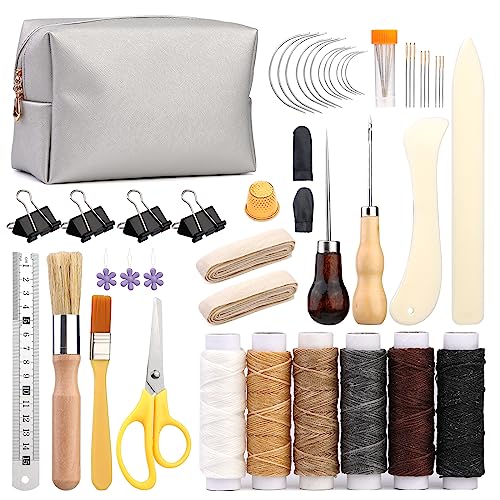
JUPEAN Book Binding Kits for Beginners Bookbinding Tools
More Details On Our Top Picks
This set isn’t a full kit, and that’s exactly its appeal. You get six resilient plastic templates in different shapes and widths, built for guiding awl punches so your sewing holes land evenly along the spine. Anyone who has eyeballed hole placement knows how quickly a crooked row ruins an otherwise tidy binding.
The shapes cover the common layouts: narrow rules for tight spacing, wider guides for chunkier signatures, plus corner and eyelet guides. Because they’re plastic rather than metal, you can bend them flat again after shipping without any loss of function.
Positive Points
- Six distinct shapes handle varied spine layouts without guesswork.
- Guided punching keeps stitch rows straight even on your first attempt.
- Flexible plastic survives being packed in a craft tote or drawer.
- Works equally well for scrapbooking, calendars, and notebooks.
Small Caveats
- You still need needles, thread, and an awl separately before any stitching starts.
- Templates may arrive slightly bent from transit; flattening them by hand is the usual fix.
Who It Suits Best
A crafter who already owns basic stitching tools and wants cleaner, more consistent hole patterns.
Reach For A Different Pick When
Total newcomers should start with the Goiio 11-piece kit instead, since it bundles needles, thread, and an awl alongside creasing tools.
Eleven pieces sounds modest next to the 138-piece Jupean kit later in this list, but every item here earns its spot. Six large-eye needles come in three lengths (6.9 cm, 6.2 cm, and 5.7 cm), which matters because large eyes accept thicker waxed thread that standard sewing needles reject. A wood-handled awl handles the hole punching, two plastic bone folders crease folds crisp, and fifty metres of waxed polyester thread will outlast plenty of projects.
The whole set stores inside a small plastic needle bottle, so nothing rattles loose in a desk drawer. That portability makes it a natural companion for craft nights away from home.
What Works In Its Favor
- Three needle lengths suit thin pamphlets through thicker multi-signature books.
- Fifty metres of waxed thread is enough for months of regular binding.
- Plastic bottle keeps small parts contained and easy to carry.
- Covers the core skills: punching, folding, creasing, and stitching.
Worth Noting
- The bone folders are plastic, not real bone, so heavy creasing pressure may wear edges faster over time.
- No cutting mat, ruler, or instructions are included.
Key Specs
Made For
First-timers learning coptic or saddle stitch who want a low-commitment entry point.
Where A Sibling Pick Shines
Crafters wanting a genuine ox bone folder will prefer the KOOTIKO starter set reviewed below.
Every bookbinder eventually needs adhesive, whether for attaching endpapers or rescuing a splitting paperback spine. This glue is formulated specifically for paper projects, forming a bond that stays flexible once cured. Flexibility is the detail that separates proper book glue from ordinary craft adhesives: a rigid bond cracks each time pages flex, while this stays put through daily handling.
It dries clear, so spills near visible edges won’t leave cloudy marks on your finished covers. One application is designed to hold permanently, which means fewer frustrating re-glues on repairs you actually care about.
A Favorable Mix
- Flexible cured bond moves with pages instead of cracking.
- Clear drying keeps repairs invisible on covers and spines.
- Suits restoration, custom binding, and general paper crafts alike.
Points To Note
- No applicator brush is listed, so plan to supply your own for thin, even coats.
- Glue-only purchase: pair it with a tool kit such as the Goiio set for complete setups.
Right Fit For
Anyone repairing well-loved books or gluing endpapers during handmade binding projects.
Swap It Out When
If your priority is tools rather than adhesive, the JUPEAN Book Binding Materials kit delivers a far broader hardware selection.
KOOTIKO’s headline feature is easy to miss in the spec sheet: a genuine ox bone folder, hand-smoothed so it glides over paper without scuffing. Plastic folders do the job, but real bone burnishes creases more crisply and lasts years of hard use. Around it sits a twenty-four piece assortment aimed squarely at DIY handmade books, school crafts, and straightforward book repair.
Thread variety is another strength here. Six rolls of roughly 1 mm (150D) waxed thread arrive in six colors, beige through black, letting you match stitching to cover material or make the seams a deliberate design feature.
Notable Upsides
- Genuine ox bone folder gives smoother, sharper creases than plastic alternatives.
- Six colored threads support matching or contrasting seam lines.
- Versatile enough for bookbinding, sewing, and other paper crafts.
- Handles both new builds and repair jobs.
Things To Consider
- Natural bone needs dry storage; damp conditions can affect the surface over time.
- Colored thread choice is fixed, so no swapping shades in or out.
Quick Facts
Who Will Love This
School craft leaders and home DIYers who want one dependable set spanning several paper disciplines.
Not Your Match When
Shoppers chasing maximum tool count per dollar may find better spread in the JUPEAN Book Binding Materials kit.
This JUPEAN offering competes on sheer breadth. Alongside four bone folders and four waxed thread rolls, you get a steel ruler, scissors, thimble, finger cots, binder clips, a gourd awl, and both straight and curved hand-sewing needles in multiple sizes. Curved needles deserve a quick explanation: their bent shaft reaches into a bound spine where straight needles can’t turn, making them essential for tighter sewn structures.
Compared with the KOOTIKO set above, you trade the single premium bone folder for four plastic ones and add cutting and measuring gear. In our view that trade favors anyone building a working bench from zero.
Practical Advantages
- Curved needles in four sizes open up advanced spine-stitching techniques.
- Scissors, steel ruler, and clips mean fewer separate purchases.
- Four bone folders let two people work side by side.
- Thimble and finger cots protect hands during long stitching sessions.
- Multiple thread rolls suit varied project colors.
A Few Limitations
- Plastic folders lack the heft of genuine bone for heavy burnishing.
- With many small parts, storage organization becomes your responsibility.
At A Glance
Built With In Mind
Budget-minded beginners who want a genuinely complete tool bench without paying premium-kit prices.
Consider Something Else When
Those who want materials like paper and book cloth bundled in should step up to the Jupean 138-piece Book Making Kit.
Most kits on this list assume you own paper. This one doesn’t: 100 sheets of A5 paper, five A4 cardboard blanks, gauze, four colors of book cloth, and two adhesives ship in the box alongside seven needles, a leather awl, scoring tool, cutting mat, craft knife, ruler, brush, five binding clips, and an instruction manual. That last item matters more than it sounds, because guided steps remove the guesswork that stalls most first bindings.
Everything arrives packaged in a sturdy storage case, so your workspace stays sane between sessions. Compared with the tool-only JUPEAN kit at position five, this is the difference between buying ingredients versus a ready meal.
Positive Takeaways
- Paper, board, cloth, and glue included, so projects start immediately.
- Instruction manual walks newcomers through each binding stage.
- Cutting mat and craft knife enable clean, safe trimming.
- Four book cloth colors allow personalized covers from day one.
Potential Sticking Points
- Fixed consumable quantities mean reordering paper and cloth once they run out.
- Heavier box than tool-only kits, less convenient to transport.
Product Snapshot
Perfect Match For
Gift-givers and absolute beginners who want to open one box and finish a real book the same weekend.
Look Elsewhere When
Experienced binders with stocked shelves should choose the JUPEAN Beginners Bookbinding Tools kit for pure tool value.
JUPEAN rounds out the list with its most generous tool assortment: thirty metres of waxed thread across six rolls, eighteen needles split between four curved sizes and three leather sizes, two gourd awls, two hairbrushes, a steel ruler, scissors, thimble, finger cots, needle threaders, binding ribbon, and clips. A storage bag ties it together, solving the small-parts chaos that plagues cheaper sets.
The dual-tip bone folders stand out here too. Pointed tips score precise fold lines while rounded tips smooth covers, giving you two behaviors from one tool. Leather needles widen the range beyond paper into journal covers and mixed-media work.
The Helpful Details
- 180 total metres of thread supports years of regular binding.
- Leather needles expand projects beyond plain paper books.
- Pointed-and-round bone folder tips combine scoring and smoothing.
- Three needle threaders cut down on fumbling fine thread.
- Storage bag keeps the entire collection portable.
Details To Watch
- No paper, board, or glue included, unlike the Jupean Book Making Kit.
- Large inventory may overwhelm someone wanting only the basics.
Feature Rundown
Whose Shelf It Belongs On
Hobbyists past their first few books who want depth and variety without rebuying tools constantly.
Another Choice May Suit
True day-one starters get a gentler landing with the Goiio 11-piece kit and its simpler, smaller footprint.
What Matters Most Before Choosing Bookbinding Kits For Beginners
Match The Kit To Your Skill Stage
Absolute beginners benefit most from kits that include instructions or consumables, like the Jupean Book Making Kit with its manual and paper stock. Tool-only sets reward people who already know which stitch they’re attempting. Buying beyond your current stage wastes money on equipment that sits idle for months.
Count The Consumables, Not Just The Tools
Thread length determines how long a kit serves you before restocking. Fifty metres covers a season of casual projects; 180 metres spans years. Paper and cloth matter equally for all-in-one boxes, since running out mid-project breaks momentum.
Check Needle Types Against Your Projects
Straight needles handle open signatures fine, but curved needles reach into closed spines where straight ones cannot pivot. Leather needles open up covered journals. A kit lacking these limits what you can learn next.
Weigh Storage And Portability
Kits with bottles, cases, or bags keep dozens of small metal parts from scattering through drawers. Crafters working at shared tables or attending workshops should prioritize contained storage heavily.
Key Considerations Across These Picks
Mistakes Worth Dodging
The classic error is buying a giant kit for a single curiosity project, then abandoning half of it. Start smaller unless the price gap is trivial. Another slip: ignoring whether glue is included when your goal is book repair rather than new construction.
The Case For Spending Up
Higher-tier kits bundle consumables and guidance, which converts directly into finished books instead of stalled attempts. Paying more also tends to buy genuine materials, like ox bone folders, that hold up under years of repeated creasing pressure.
Frequently Asked Questions
What does a bone folder actually do?
It presses sharp creases into paper and smooths glued surfaces without leaving marks. Real bone versions glide more smoothly than plastic ones.
Do I need waxed thread for bookbinding?
The wax coating helps thread grip knots and resist fraying through punched holes. Standard sewing thread works but tangles and wears faster.
Can these kits repair broken books too?
Most tool sets handle spine re-stitching and page reattachment. Add a flexible book glue like the GleamGlee option for adhesive-based repairs.
How many sheets do I need for one book?
A typical A5 journal uses twenty to sixty sheets depending on thickness preference. Larger kits provide enough for several complete volumes.
Are curved needles necessary for beginners?
They aren’t required for simple saddle or pamphlet stitches. They become valuable once you attempt bindings sewn through a closed spine.
Bottom Line
Your best entry point depends on where you’re starting from. Total newcomers should grab the Jupean Book Making Kit for its paper, glue, and instructions in one box. Tight budgets fit the JUPEAN Book Binding Materials set, while skill-builders get the deepest tool bench from the JUPEAN Beginners Bookbinding Tools kit. Whichever route you take, start with a simple pamphlet stitch and let the craft grow from there.
