
Stringing beads sounds simple until you’re three knots deep with fraying cord and no clasp in sight. The right materials change everything: elastic that springs back instead of sagging, cords that hold a braid tight, findings that make a bracelet look finished rather than homemade. This roundup covers seven solid options across beads, stretch cord, nylon thread, and crimping supplies, so you can build a kit that actually matches the jewelry you want to make. Whether you’re crafting friendship bracelets with kids or finishing polished pieces for gifts, there’s a fit here.
How The Shortlist Stacks Up

LEOBRO Pearl Beads Bracelet Making Kit 720PCS

Acejoz 2165 Pcs Crimp Beads Jewelry Making Kit

LovelyMoon Bracelet Making Kit 5000 Pcs Clay Beads
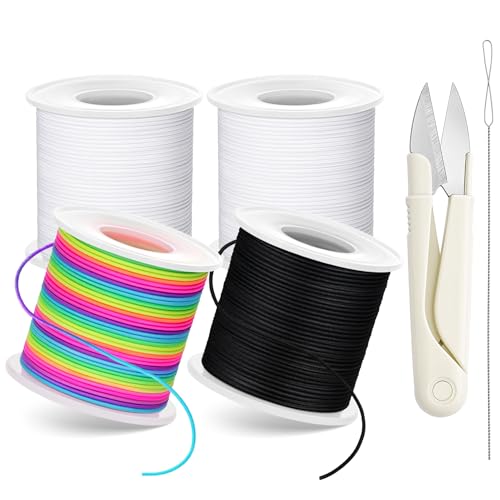
Inggix 1 mm Stretchy Bracelet String 660FT

Selizo 12 Rolls Nylon String Chinese Knotting Cord

Ilootm Friendship Bracelet Making Kit 16800pcs

JUPEAN 6 Size Stretchy Elastic Bracelet String
A Deeper Look At The Lineup
Pearl-and-gold combinations read as classic jewelry rather than craft project, and this kit leans into that. You get 720 pieces total: creamy white pearls in five graduated sizes from tiny 4mm accents up to chunkier statement beads, paired with gold spacers in five different patterns. Two rolls of elastic string are included, which means you can start stringing the moment the box opens.
The mixed sizing is what makes this set useful beyond a single design. Small pearls fill gaps between larger ones, giving finished bracelets that layered, professional look you’d otherwise need to source beads individually to achieve.
Practical Pluses
- Five pearl sizes let you build depth into a single strand instead of flat, uniform rows.
- Gold spacer patterns break up the white and add a boutique-style rhythm to designs.
- Elastic string comes bundled, so no separate cord purchase is needed to start.
- The storage box keeps sizes separated, which saves serious sorting time mid-project.
Things To Consider
- Small 4mm beads can roll away easily; work over a tray or towel.
- The included elastic is basic, so heavy designs may benefit from thicker cord like the JUPEAN set below.
Key Specs
Who It Suits Best
Adults who want refined, gift-worthy pearl bracelets without hunting down components piece by piece.
Where A Sibling Pick Shines
Crafters chasing bold color over elegance will get more mileage from the Ilootm Friendship Bracelet Making Kit and its 96 clay bead shades.
Most bead kits stop at decoration; this one handles the part that makes jewelry survive daily wear. Crimp beads are small metal tubes squeezed flat to lock cord or wire in place, and covers snap over them to hide the mechanics. Acejoz bundles 2,165 pieces of exactly that hardware, spread across silver, copper, gold, and gun black finishes so clasps never clash with your beads.
Everything here targets strung jewelry on wire or firm cord rather than stretchy elastic. Owners working with beading wire commonly report that having guardians, knot covers, and tubes in matching finishes removes the last excuse for unfinished-looking ends.
Well-Handled Touches
- Four metal finishes mean one kit matches gold-tone, silver-tone, and dark-accent designs alike.
- Lobster clasps are included, covering the attachment point most starter kits forget.
- Wire guardians protect cord where it meets the clasp, the spot where bracelets usually fail.
- Volume pricing per piece works out far better than buying findings separately.
Points To Note
- You’ll need your own crimping pliers technique; squeezing with regular pliers risks cracking tubes.
- Tiny components demand patience and good lighting during assembly.
The Right Fit
Intermediate makers using beading wire who want professional closures instead of knotted ends.
Another Choice May Suit
If your projects stay on stretch cord, the JUPEAN 6 Size Stretchy Bracelet String set serves you better than metal findings ever will.
Flat polymer clay beads, often called heishi beads after the shell discs they imitate, have become the default friendship-bracelet material for good reason: they lie flat against the wrist and take color beautifully. LovelyMoon ships 5,000 of them alongside elastic cord and the basic tools needed, packaged as one complete session-starter.
For kids in the six-to-twelve range, the appeal is straightforward. The beads are light, easy for small fingers to grip, and forgiving to string; a dropped design slides back onto the cord without drama. Compared with the LEOBRO pearl kit’s delicate 4mm rounds, these are noticeably easier for beginners to handle.
The Helpful Details
- Flat profile sits comfortably on the wrist, no poking or rolling.
- Cord and tools come included, so nothing extra is required before the first bracelet.
- Lightweight clay beads suit long crafting sessions with younger children.
- Large quantity supports group activities like parties or classroom projects.
Small Caveats
- Polymer clay beads scuff if stored loose; keep them compartmentalized.
- Color distribution varies by batch, so specific shades may run thinner than others.
Feature Snapshot
Best Suited To
Young crafters and complete beginners making casual friendship bracelets at home or school.
Skip It When
Adults wanting heirloom-style pieces should reach for the LEOBRO pearl kit’s more refined palette instead.
Cord runs out faster than beads ever do, which is why a 660-foot supply changes the math. Inggix provides four 165-foot rolls of 1mm elastic: two in white, one black, and one rainbow multicolor. That length translates to well over a hundred average-sized bracelets before you think about reordering.
The 1mm thickness threads cleanly through most standard bead holes, including seed beads that choke narrower cord. Scissors and a beading needle round out the bundle, and the needle matters more than it sounds; feeding elastic through a crowded strand without one is fiddly at best.
What Makes Sense
- 660 feet means years of casual use for most hobbyists.
- Rainbow roll adds playful options without buying a second color set.
- Beading needle eliminates the threading struggle on dense strands.
Trade Offs
- Single 1mm gauge won’t fit large-hole beads snugly; consider the JUPEAN multi-size set for varied holes.
- Elastic degrades with constant water exposure, so remove bracelets before swimming.
Quick Facts
Who Will Love This
High-volume makers churning out friendship bracelets who dread running out of cord mid-design.
Consider Something Else When
Braided, non-stretch styles call for the Selizo nylon cord set, whose satiny finish suits knotting far better than elastic.
Not every bracelet stretches. Kumihimo braids, macrame knots, and Chinese knotting all depend on cord that holds its shape under tension, and that’s precisely what this twelve-roll nylon set delivers. The material carries a subtle satiny sheen that catches light along a braid, an effect flat clay beads simply can’t produce.
Non-stretch nylon also resists fading and fraying, according to the manufacturer’s specs, and owners of knot-heavy projects tend to confirm it wears well through repeated handling. Beyond bracelets, the same cord serves wind chimes, tassels, garment trim, and general wrapping, which makes it the most versatile item on this list.
Everyday Wins
- Twelve colors support coordinated sets or single-statement pieces alike.
- Satiny finish gives braided bracelets a polished, store-quality surface.
- Non-stretch behavior keeps knot tension locked over time.
- Works across kumihimo, macrame, tassels, and decorative wrapping.
- Nylon construction shrugs off the fraying that plagues cheaper cotton cord.
Worth Noting
- Ends need heat-sealing or glue to prevent unraveling after cutting.
- No stretch means sizing must be right the first time; measure wrists before knotting.
Technical Highlights
Whose Shelf It Belongs On
Braiders, macrame hobbyists, and anyone whose designs showcase the cord itself as a design element.
Swap It Out When
Stretch-fit bracelets with mixed bead sizes are better served by the JUPEAN six-gauge elastic set.
Where the LovelyMoon kit covers basics, Ilootm goes encyclopedic: 16,800 pieces spanning 96 polymer clay shades, 24 glass seed bead colors, 400 letter beads, 100 face beads, and 150 mermaid-style charms. The color organization follows the four seasons, grouping spring greens, summer reds, fall oranges, and winter blacks and whites into distinct sections.
That seasonal structure is more useful than marketing fluff suggests. Matching a bracelet to an outfit or a holiday becomes a matter of opening one compartment rather than digging through chaos. Letter beads open up name and message bracelets, always a hit at sleepovers and camp.
Positive Takeaways
- Letter beads enable personalized name bracelets without a separate purchase.
- Seasonal color groupings simplify themed and outfit-matched designs.
- Glass seed beads add texture contrast against flat clay strands.
- Charms and face beads give kids focal points beyond plain color rows.
Less Ideal Details
- 16,800 pieces demand disciplined storage; one spilled tray creates real cleanup work.
- Scale may overwhelm a solo beginner; it shines brightest with two or more crafters sharing.
Who Should Grab It
Families, classrooms, and friend groups who want one shared kit that outlasts months of sessions.
Not Your Match When
A single crafter wanting a tidy starter set will find the LovelyMoon 5000-piece kit far less intimidating.
One cord diameter never fits every bead hole, and that mismatch is the quiet frustration of mixed-material designs. JUPEAN solves it with six gauges running from hairline 0.4mm up to substantial 1.0mm, letting delicate seed beads and chunky gemstones share a toolkit. Each diameter returns to shape after stretching rather than bagging out, which is the property that separates decent elastic from disappointing elastic.
The tooling deserves mention too: two open-eye needles in different lengths, two twisted needles sized to match the finer cords, scissors, a needle case, and a clear storage box. Compared with the Inggix value roll, you trade raw footage for precision, and for many makers that’s the smarter trade.
Where It Delivers
- Six diameters cover bead hole sizes from seed beads to large-hole stones.
- Matched twisted needles pair with fine cords for painless threading.
- Strong rebound keeps finished bracelets snug after repeated wear.
- Clear storage case keeps four needle types and scissors together.
Details To Watch
- Finer 0.4mm cord needs gentle knot tension; yanking can snap it.
- Total yardage per roll is lower than bulk spools like the Inggix 660FT set.
The Numbers That Matter
Who It Suits Best
Makers mixing bead types and hole sizes who want one elastic solution instead of five partial spools.
A Better Fit Elsewhere
Volume-focused friendship-bracelet production favors the Inggix 660FT roll, which prioritizes footage over gauge variety.
What Matters Most Before Choosing Bracelet Making Materials
Match The Cord To The Bead
The single most common mismatch in home jewelry making is cord diameter versus bead hole. Seed beads typically need 0.4mm to 0.6mm cord, while large-hole European-style beads want 0.8mm or 1.0mm. Buying one gauge and forcing it through every bead leads to snapped strands and wasted evenings. Check your existing stash first, then buy accordingly.
Stretch Or Structure
Elastic suits quick, comfortable slip-on bracelets. Non-stretch nylon or wire-backed designs suit anything with knots, clasps, or heavier beads. Deciding this before shopping prevents a drawer full of cord you’ll never use.
Count Versus Variety
Big-count kits look generous but only pay off when the color range fits your style. A 5,000-piece kit in shades you dislike is worse than a 700-piece kit you love. Prioritize palette over volume for personal use, and flip that priority for group crafting.
Finishing Hardware
Beads alone don’t finish jewelry. Crimp tubes, covers, and clasps turn loose strands into wearable pieces, which is why a findings kit earns its place beside any bead collection.
Key Considerations Across These Picks
Traps First Timers Fall Into
Grabbing the biggest bead count on the page is the classic error; storage and sorting become the real cost. The second trap is skipping tools, then hand-threading elastic through hundreds of beads without a needle. Both are avoidable with a quick inventory check before checkout.
Where The Extra Money Goes
Higher-tier kits spend budget on variety: multiple cord gauges, matched needles, organized compartments, and finishes that coordinate. That variety directly expands what you can build. Casual makers won’t feel the gap; anyone designing weekly will notice within a month.
Frequently Asked Questions
What size elastic cord fits most bracelet beads?
Most standard bead holes accept 0.8mm to 1mm elastic comfortably. Smaller seed bead holes call for 0.4mm to 0.6mm, which is why multi-gauge sets exist.
Can clay beads get wet?
Polymer clay itself tolerates moisture, but the elastic holding them usually doesn’t. Remove clay bead bracelets before swimming or showering to protect the cord.
How do I keep knotted nylon cord from unraveling?
Melt the cut end briefly with a flame or seal it with a dab of clear glue. Nylon responds well to heat sealing since it’s a synthetic fiber.
Are crimp beads necessary for stretch bracelets?
No, they’re designed for wire and firm cord. Stretch bracelets rely on a surgeon’s knot secured with a drop of glue instead.
How many beads do I need for one bracelet?
A typical adult bracelet uses roughly 40 to 60 flat 6mm clay beads, or about 25 to 35 larger 8mm pearls. Wrist size and bead width shift that number either way.
Bottom Line
Building a capable bracelet-making setup comes down to three decisions: a bead palette you’ll actually wear, cord matched to your bead holes, and finishing hardware that makes pieces last. Any combination from this list covers those bases, whether you start with the LEOBRO pearls for polish or the Ilootm kit for sheer creative range. Pick the one that matches how often you’ll sit down to craft, and let the collection grow from there.
