
Acrylic paint is forgiving on canvas but hard on brushes, so the tools you buy matter more than most beginners expect. A stiff, dried-out bristle or a ferrule that loosens after three sessions can stall a painting habit faster than any creative block. This roundup covers seven sets built for different painters: detail-focused artists, texture experimenters, classroom bulk users, and weekend crafters. Each one earns its place through specific build choices, not marketing copy.
Your Options, Compared
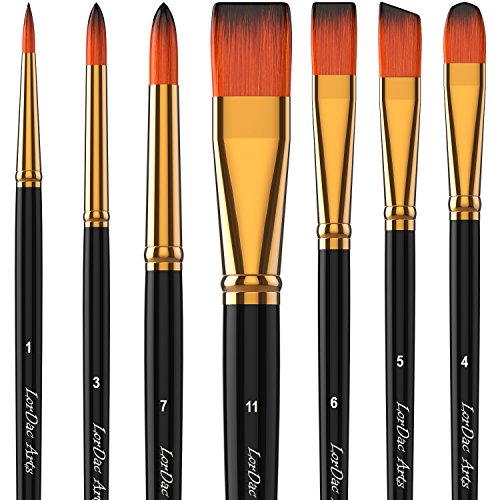
LorDac Arts 7-Piece Artist Brush Set with Case

GACDR Grainer Comb Brush Set, 4 Pieces

GACDR 1 Inch Flat Paint Brushes, 12 Pack

ARTEZA Acrylic and Oil Paint Brushes, 12 Count

Bates Flat Paddle Paint Brush Set, 3 Pack

GACDR Large Flat Paint Brushes, 4pcs 1.5 Inch

Nicpro 40 PCS Professional Acrylic Paint Brush Set
More Details On Our Top Picks
The LorDac Arts set leans on Taklon bristles, a synthetic fiber that holds its snap better than natural hair when acrylics dry into it. Seven brushes cover the core shapes, each labeled clearly so you can grab the right tool mid-session without squinting. The included carrying case makes this an easy companion for sketch groups, travel kits, or a shared studio shelf.
Taklon also sidesteps animal-hair hygiene concerns and cleans up fast with soap and water, though solvents work equally well for oil sessions. Compared with the bulk packs later in this list, this is the pick that treats brushes as long-term tools rather than consumables.
What It Does Well
- Taklon synthetic filaments resist solvent damage and breakage far better than natural hog hair.
- Excellent shape retention means your flat stays flat and your round stays pointed after months of use.
- Rinses clean quickly with soap and water, cutting cleanup time between color changes.
- Animal-product-free construction suits vegan studios and shared art spaces.
- The labeled handles remove guesswork during fast-paced painting.
Small Caveats
- Seven pieces is a modest count; painters wanting fan or dagger shapes will need to add singles.
At A Glance
Made For
A developing artist who paints across several media and wants durable, labeled brushes that survive a busy weekly routine.
Where A Sibling Pick Shines
Painters who need dozens of cheap flats for group projects should reach for the GACDR 1 Inch Flat 12-pack instead of paying up for fewer premium filaments here.
Most sets give you shapes; this one gives you effects. The four comb-tip grainers, sized from 1/4 inch up to 5/8 inch, split a loaded stroke into parallel lines, which is how you fake fur, feathers, grass blades, and wood grain without painting every strand by hand. Korean synthetic nylon keeps the comb teeth springy under wet acrylic.
In practice, you drag these across a base coat while it’s still tacky, pulling texture out of the layer beneath. It’s a niche skill, but once learned, it saves hours on wildlife subjects and faux-finish furniture. Unlike the LorDac Arts generalist set above, this kit does one job deliberately well.
Where It Delivers
- Four graduated widths let you scale texture from fine whiskers to wide plank grain.
- Filbert grainer design softens line edges for more natural fur transitions.
- Nylon filaments hold their comb pattern through repeated washings.
- Works across acrylic, watercolor, and oil, so the technique travels with your medium.
Things To Consider
- Comb tips trap dried paint between teeth; prompt rinsing keeps the split-stroke effect crisp.
- Beginners may find these frustrating before learning drag-and-release timing.
Right Fit For
Intermediate painters chasing realistic animal portraits, botanical scenes, or decorative wood-grain finishes.
Another Choice May Suit
Anyone still building fundamentals gets more mileage from the Nicpro 40-piece set, whose standard shapes cover the basics first.
Twelve identical 1-inch flats sounds limiting until you picture a classroom table, a scout troop craft night, or a mural primer session. When brushes cost little enough to hand out freely, nobody hovers protectively, and that changes how people actually paint. The aluminum double-crimped ferrules, meaning the metal collar is crimped twice onto the handle, resist the loosening that plagues cheaper bulk packs.
Each brush ships inspected to arrive free of shedding and stray fibers. You won’t get shape variety here; you’ll get dependable coverage, twelve times over, which is exactly what group settings demand.
Everyday Advantages
- Double-crimped ferrules keep heads attached through rough handling and repeated wash cycles.
- Factory inspection against shedding and mold means no surprise hairs stuck in a dried wash.
- A dozen units absorb loss, misuse, and sharing without pain.
- Consistent 1-inch width simplifies teaching uniform stroke techniques.
Potential Drawbacks
- No size or shape variation limits fine-detail work entirely.
- Bulk nylon bristles suit broad strokes better than blended, layered painting.
Quick Facts
Who Should Grab It
Teachers, camp counselors, and parents stocking craft drawers where quantity matters more than refinement.
Skip It When
Solo painters building a personal kit will find far more range in the ARTEZA 12-shape set reviewed next.
Where the GACDR bulk pack repeats one shape, ARTEZA spreads twelve brushes across seven distinct profiles: round, angle, filbert, flat, fan, rigger, and cat’s tongue, in useful sizes. That’s the vocabulary of a full painting practice in one purchase. A rigger, for the uninitiated, is a long thin brush made for continuous fine lines, while a cat’s tongue blends flat coverage with a tapered point.
Synthetic hair spreads heavy-body acrylic smoothly across canvas, panels, and boards without splaying. For someone moving past starter sets, this is the logical step up: same piece count as the LorDac Arts option, but broader shape coverage.
Useful Touches
- Seven brush families handle broad strokes, curved marks, clean edges, texture, fine lines, and small details.
- Synthetic filaments stand up to stiff acrylic loads without going limp.
- No need to source individual specialty brushes separately.
- Doubles for oil painting, stretching its value across media.
- Size variety within shapes supports both blocking-in and finishing passes.
Points To Note
- With twelve brushes to maintain, thorough post-session cleaning takes real discipline.
- No storage case is highlighted, so tip protection falls on you.
The Numbers That Matter
Who Will Love This
An intermediate painter working primarily on canvas who wants complete shape coverage without assembling it piecemeal.
Consider Something Else When
Artists focused purely on texture effects will get sharper results from the GACDR grainer combs than from this generalist lineup.
Big surfaces change the math. Priming a large canvas, varnishing a finished panel, or laying down a background wash calls for paddle-style brushes, and the Bates trio covers the ladder neatly at 1, 2, and 3 inches. Nylon bristles lay paint evenly rather than streaking, which matters most on smooth gessoed ground.
The short ergonomic handles give closer control than long-handled house brushes, a subtle difference you’ll notice on detailed edge work near tape lines. Think of these as the wide-load trucks of your brush fleet; nothing else in this roundup moves paint across square feet faster.
A Favorable Mix
- Three graduated widths handle edges, mid-size areas, and full-surface coats.
- Nylon bristles deliver smooth, even application with minimal lap marks.
- Short ergonomic handles reduce wrist fatigue during long priming sessions.
- Handles varnishes and sealers as readily as acrylic color.
Honest Caveats
- Only three pieces and zero small shapes; pair with a detail set for complete coverage.
- Wide paddles hold a lot of paint, so cleanup involves more rinsing than slim brushes.
Best Suited To
Muralists, large-canvas painters, and mixed-media artists who prime, seal, or varnish regularly.
Swap It Out When
Craft-scale projects fit better with the GACDR 1.5-inch four-pack, which offers slightly smaller flats in greater numbers.
This sits neatly between the Bates paddles above and the 1-inch bulk pack earlier: four brushes at 38mm (about 1.5 inches), built with the same double-crimped aluminum ferrule construction GACDR uses across its value line. That ferrule detail is the whole durability story here, since loose heads are the usual failure point on budget flats.
Four pieces is enough to dedicate one per color family during a multi-color craft project, sparing you constant washing. Owners commonly report these holding up well to kid-level abuse, which tells you plenty about build tolerance.
What Makes Sense
- Handcrafted double-crimped ferrules prevent heads from wobbling loose.
- Inspected against shedding, mold, and contamination before packaging.
- Four units allow one-brush-per-color workflows without extra cleanup.
- The 1.5-inch width balances coverage speed with maneuverability.
Less Ideal Details
- Single size only; detail work requires a separate set.
- Basic bristle grade won’t satisfy painters seeking fine stroke control.
Core Details
The Right Fit
Families, hobby crafters, and anyone prepping surfaces who wants sturdier flats than typical dollar-store options.
Look Elsewhere When
Painters needing maximum surface speed should move up to the Bates 3-inch paddle instead of working harder with smaller heads.
Forty pieces arranged in a labeled canvas roll is less a purchase than a small studio. Beyond the expected flats, rounds, filberts, angles, fans, and cat’s tongues, Nicpro adds dagger and dedicated detail brushes plus two oversized flats and a palette knife. Daggers cut sharp tapered strokes; the knife handles mixing directly on your palette.
Compared with the ARTEZA twelve-count, you gain the dagger profile, detail brushes, the roll-up organizer, and multiples of frequently worn shapes. In our view, that’s the sensible upgrade path for a committed hobbyist: everything lives in one roll, ready to hang on a hook or toss in a tote.
Key Advantages
- Full shape roster spans fine detailing through bold coverage in one kit.
- Labeled canvas roll keeps every brush visible, sorted, and protected.
- Two large flats cover priming duties usually missing from detail-heavy sets.
- Included palette knife rounds out mixing and texturing needs.
- Duplicates of common shapes extend the set’s working lifespan.
Trade Offs
- Forty brushes mean a longer cleaning routine after each session.
- The roll takes more storage space than a simple case.
Feature Rundown
Whose Shelf It Belongs On
Dedicated acrylic painters, art students, and creators who want a single organized kit rather than a drawer of mismatched singles.
Not Your Match When
Casual crafters overwhelmed by forty tools will find the simpler LorDac Arts seven-piece case a friendlier starting point.
Choosing Between These Brushes Without Regret
Match Bristle To Medium First
Synthetic filaments dominate this list for good reason: acrylic dries fast and stiffens whatever it touches, and synthetics release dried paint more easily than natural hair. Taklon and nylon both bounce back after washing, while hog bristle tends to splay under heavy acrylic loads. Watercolor-only painters can afford softer naturals, but acrylic demands snap.
Count Shapes Before Counting Pieces
A twelve-pack of one flat shape serves classrooms, not developing artists. Shape variety determines what marks you can make, so weigh a set’s roster of rounds, filberts, riggers, and fans against raw quantity. Beginners benefit from covering the basic six shapes before adding multiples.
Check The Ferrule, Not The Handle
The ferrule, the metal band joining bristles to handle, predicts lifespan better than any other component. Double-crimped aluminum resists loosening and rust, which matters because acrylic cleanup involves frequent soaking. Single-crimp budget ferrules are the first thing to fail in daily-use scenarios.
Storage Shapes Your Habit
A carrying case or canvas roll protects delicate tips between sessions and encourages you to return brushes properly. Loose sets end up jammed in cups, bent, and ruined. Frequent travelers and shared-space painters should treat organized storage as a feature worth prioritizing, not a luxury.
Key Considerations Across These Picks
Mistakes Worth Dodging
The most common error is buying quantity over shape coverage, ending up with ten nearly identical flats and no way to paint a fine line. Another trap: skipping ferrule quality checks and replacing loose-headed brushes within weeks. Letting acrylic dry in bristles ruins even expensive sets, so rinse promptly every time.
The Upgrade Payoff
Higher-tier sets spend money on filament grade, crimped ferrules, and organization. That translates to brushes that hold their edge for years instead of months and a labeled roll that keeps everything findable. Committed painters recover the difference quickly through replacements avoided.
Frequently Asked Questions
Do synthetic brushes really work as well as natural hair for acrylic?
Yes, and often better, since acrylic’s fast-drying binder damages natural hair over time. Synthetics like Taklon hold their shape and clean up with less effort.
How many brushes does a beginner actually need?
Six to eight shapes covers the fundamentals: flat, round, filbert, angle, fan, and a detail brush. Extra sizes help later, but shapes come first.
Can one set handle both acrylic and oil paint?
Several picks here, like the LorDac Arts and ARTEZA sets, are rated for multiple media. Just clean thoroughly between mediums, using appropriate solvents for oil sessions.
How do I stop my acrylic brushes from getting stiff?
Rinse immediately after each session and wash with soap and water before paint cures in the ferrule. Never leave brushes resting bristle-down in a jar.
Are cheap bulk brush packs worth buying?
For classrooms, kids’ crafts, and throwaway priming jobs, absolutely. For personal artwork where stroke control matters, invest in fewer, better-made brushes.
Closing Thoughts
Your best match depends on how you paint. Solo artists building lasting skills should start with the LorDac Arts set or step up to the Nicpro 40-piece roll, while group leaders and craft households get genuine value from the GACDR bulk flats. Texture chasers have the grainer combs waiting. Whichever direction fits, matching the set to your actual routine beats chasing the biggest number on the box every time.
