
Oil-based paint rewards the right brush and punishes the wrong one. The thicker consistency means a floppy synthetic head leaves streaks, while a dense filament blend lays color down flat and holds its shape through long trim sessions. Whether you’re repainting baseboards, staining a fence, or cutting in around a ceiling line, the seven options below cover the full range from budget chip brushes to precision edging kits.
A Fast Comparison Of The Options

Coltree 5-Pc Flat & Angle Paint Brush Set

Pro Grade 3 Inch Angled Paint Brush, 2 Pack

Genixart Double Thick Chip Paint Brush, 3 Inch
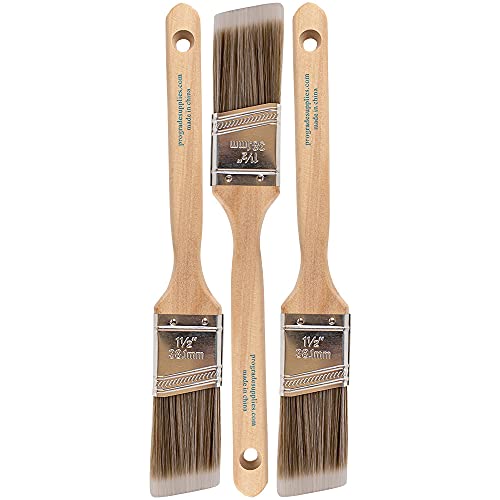
Pro Grade Angled Paint Brushes 1.5 Inch, 3 Pc

Nicpro 10 PCS Flat Paint Brush Set

GACDR Slant Lining Fitch Trim Brushes, Pack of 6

Bates- 4 Inch Soft Tip Paint Brush
What Each Pick Brings To The Table
Starting a room from scratch usually means juggling three different brush widths, and that’s the problem this Coltree set solves out of the box. You get five heads spanning one inch up to 2.5 inches, mixing flat profiles for broad panels with angled ones for corners and trim.
The thick bristle load is the detail that matters most here. A denser filament pack carries more paint per dip, which cuts your trips back to the can and reduces the streaking oil-based formulas are known for. In our view, that makes this the sensible starter kit for anyone furnishing a first toolkit rather than buying piece by piece.
Standout Benefits
- Five distinct widths mean one purchase covers edging, sash work, and wall sections without a second order.
- Dense bristles hold a fuller paint load, so you spend more time rolling strokes and less time reloading.
- Rated for both oil-based paints and water-based stains, giving you flexibility across different project types.
- Bristles are designed to resist shedding, which saves you the tedious pick-out work mid-coat.
Things To Consider
- Oil-based cleanup demands mineral spirits, so budget time and solvent for proper brush care after each session.
- Owners commonly report that value sets like this benefit from gentle washing to keep bristles aligned over repeated uses.
Key Specs
Made For
DIY painters tackling their first full room who want every brush width they’ll need in a single purchase.
Where A Sibling Pick Shines
Shoppers focused purely on wide wall coverage will get more done faster with the Bates- 4 Inch Soft Tip Paint Brush instead.
Three inches is the sweet spot when a whole wall needs cutting in before the roller comes out. This Pro Grade pair gives you two identical angled heads, so one can sit in solvent while the other keeps working, a rhythm painters fall into on longer jobs.
The tapered tip narrows toward the end, which sounds minor until you’re tracing a ceiling line eight feet up a ladder. That finer point gives you the steering control a blunt-edged brush simply doesn’t offer, and the wooden comfort grip keeps your hand steady through an afternoon of overhead work.
What Makes Sense
- A thick synthetic filament blend loads heavily, translating to fewer dips and a more even finish across large panels.
- The angled, thinner tip sharpens precision along trim lines and touch-up spots where accuracy matters.
- Wooden comfort-grip handles reduce hand fatigue during extended painting sessions.
- Two brushes in the pack let you rotate between cleaning cycles without stopping the job.
Small Caveats
- At three inches wide, these feel oversized for narrow sash windows or tight cabinet frames.
- Synthetic filaments hold residual oil paint stubbornly, so prompt mineral-spirit washing keeps them soft.
Feature Snapshot
Right Fit For
Experienced DIYers repainting entire rooms who want serious coverage speed along ceilings and tall wall edges.
Swap It Out When
Detail-heavy trim carpenters will prefer the smaller Pro Grade Angled Paint Brushes 1.5 Inch, 3 Pc pack reviewed below.
Stain work changes the math entirely. Fence boards and deck slats eat cheap brushes alive, and spending premium money on a tool destined for the trash after one weekend rarely makes sense. That’s exactly the niche this Genixart chip brush fills.
The double-thick build is what separates it from flimsy single-layer chip brushes, holding noticeably more stain per pass so you can move down a fence rail without constant reloading. Beyond wood stain, owners put it to work as a varnish applicator, masonry brush, limewash spreader, and even paste brush, which speaks to how forgiving the wide flat profile is.
Noteworthy Benefits
- The 3-inch flat head covers fence pickets and deck boards in fewer passes than narrower trim brushes.
- Double-thick construction holds a heavier liquid load, cutting reload frequency on absorbent outdoor wood.
- Versatile enough for varnish, limewash, masonry coatings, and paste applications beyond plain staining.
Honest Caveats
- This is built as a disposable-class tool, so expect a shorter working life than the Pro Grade options in this list.
- You may find the bristle finish rougher than refined trim brushes, making it a poor match for fine interior detail.
Built With In Mind
Weekend warriors staining fences, sheds, and decking who’d rather toss the brush than scrub it clean.
Another Choice May Suit
Interior painters wanting a reusable, streak-free finish will get better mileage from the Coltree 5-Pc Flat & Angle Paint Brush Set.
Trim painting lives and dies by control, and 1.5 inches is the width professional painters reach for on baseboards, door casings, and window frames. This three-pack from Pro Grade takes the same filament recipe as the larger 3-inch model earlier in this list and shrinks it into a nimbler package.
Because all three brushes share one size, they’re interchangeable rather than specialized. That’s a deliberate trade: you lose the range of the Coltree five-piece set, but you gain redundancy, keeping a fresh brush ready while two dry out between coats. Interior and exterior projects both suit these, since the synthetic blend stands up to oil-based enamel as readily as latex.
A Few Highlights
- The 1.5-inch angled profile traces trim edges cleanly, reducing bleed onto walls and floors.
- Three identical brushes support a wash-dry-reuse rotation across multi-coat projects.
- Wooden comfort grips match the larger Pro Grade model, so switching between sets feels consistent.
- Thick filament blend holds ample paint, smoothing out your stroke rhythm on detailed runs.
Points To Note
- Single-size packs won’t serve broad wall work, so pair them with a wider brush for large surfaces.
- Like most synthetics, the tips can splay slightly over many cleaning cycles unless stored hanging or flat.
Quick Facts
Who Should Grab It
Detail-oriented painters refinishing baseboards, casings, and cabinetry who value consistency over variety.
Reach For A Different Pick When
Cutting in sharp interior corner lines calls for the GACDR Slant Lining Fitch Trim Brushes later in this roundup.
Everything so far has been contractor territory, but oil paint belongs just as much on canvas as on walls. This Nicpro kit shifts scale dramatically, offering ten flat brushes graded from size #1 up through #10, small enough for facial detail work yet broad enough for laying in background color.
The dense synthetic hair absorbs water well and releases paint evenly, which matters whether you’re thinning oils with medium or switching to acrylics and gouache between sessions. Because the set spans such a wide size range, a student can grow into it for years, while a parent gets enough brushes to share with kids without fighting over the good one.
A Favorable Mix
- Ten graduated sizes (#1 through #10) carry a painter from fine detail to broad base coating with one kit.
- Dense synthetic hair offers strong water absorption and paint retention for uninterrupted strokes.
- Compatible with acrylics, watercolors, oils, and gouache, so media changes don’t demand new tools.
Worth Noting
- These are artist-scale brushes, far too small for wall or trim painting despite sharing the oil-paint label.
- Fine tips on the smallest sizes may need reshaping after heavy use, a common trait of synthetic craft hair.
Whose Shelf It Belongs On
Art students, hobby painters, and families who want a complete flat-brush progression covering every canvas task.
Consider Something Else When
Home improvement projects call for trade-scale tools like the Genixart Double Thick Chip Paint Brush, not studio brushes.
Where the Pro Grade trim pack handles general trim duty, this GACDR set zooms into the finest end of the spectrum. Lining fitch brushes are the slim, firm tools sign painters and decorators use to pull razor-straight lines, and getting six of them, split across 0.5-inch, 0.75-inch, and 1-inch widths, opens up work the wider brushes in this list simply can’t attempt.
The micro-tipped synthetic bristles are engineered for control rather than coverage, which is precisely the point. Corners, ceiling junctions, and tight molding reveals respond well to the smallest heads, and because each size arrives twice, you can dedicate one brush per color on two-tone schemes without cross-contamination headaches.
Positive Takeaways
- Firm micro-tipped bristles give exceptional steering along edges, ceilings, and inside corners.
- Two of each size lets you assign separate brushes to different colors on multi-tone jobs.
- Strong paint retention supports smooth, streak-free passes even at narrow widths.
Less Ideal Details
- Widths top out at one inch, so large surface areas remain off-limits to this set.
- Fine fitch bristles reward careful rinsing; owners commonly report tip distortion when brushes are left soaking.
Details At A Glance
Who Will Love This
Perfectionists chasing clean two-color boundaries, accent-wall edges, and intricate molding detail.
Look Elsewhere When
Broad wall and door coverage belongs to the Bates- 4 Inch Soft Tip Paint Brush, not these fine liners.
Four inches is as wide as hand brushing gets, and this Bates brush commits fully to that mission. Where the Pro Grade 3-inch pair balances coverage against control, this single wide head prioritizes raw speed, swallowing big wall sections in long, even passes that a narrower brush would take twice as long to match.
The soft-tip synthetic filaments are rated for both latex and oil-based paints plus stains, and the thinner tip ends preserve some cutting ability despite the generous width. It arrives ready to use straight from the package and washes out easily afterward, which keeps turnaround quick between coats.
Useful Strengths
- The 4-inch span covers walls and large trim runs roughly a third faster than a 3-inch head.
- Thick quality filaments carry a heavy paint load, saving time and minimizing streaks.
- Works with latex and oil-based paints and stains, so one brush spans several project types.
- Tapered tip ends retain usable cutting control for a brush this wide.
Trade Offs To Consider
- The sheer width makes it clumsy around sockets, switches, and narrow window mullions.
- As a single-brush purchase, there’s no backup while it dries between coats.
The Numbers That Matter
The Right Fit
Confident DIYers repainting large rooms quickly who want maximum coverage from every dip.
Not Your Match When
Tight trim and corner work favors the GACDR Slant Lining Fitch Trim Brushes, whose narrow heads fit where this one can’t.
What Matters Most Before Choosing Brushes For Oil Based Paint
Bristle Type Sets The Ceiling
Oil-based paint is heavier than latex, so bristle density determines everything downstream. A thick synthetic filament blend holds more material per dip, spreads it more evenly, and resists the splaying that ruins a finish halfway through a coat. Thin, sparse bristles drag and leave lap marks that no amount of sanding fully forgives.
Natural China bristle was once the default for oils, though modern synthetics now handle solvent-based formulas well and clean up with less fuss. Match the filament to the job, not the marketing.
Width Should Follow The Surface
Oversized brushes waste paint and invite drips; undersized ones turn a weekend into a month. Reserve 3-inch and 4-inch heads for walls and doors, keep 1.5 inches for trim, and lean on sub-inch fitch brushes for cutting lines. Buying a mixed set often beats guessing wrong twice.
Handle Comfort Is Real Endurance
An hour of overhead cutting-in exposes every flaw in a grip. Wooden handles with a contoured profile reduce fatigue noticeably compared to bare plastic, and that difference compounds across a full room. Weight matters too, since a heavy ferrule pulls the brush down at arm’s length.
Cleanup Commitment Counts
Every oil-based session ends with mineral spirits, patience, and proper drying storage. Shoppers unwilling to maintain that routine should either budget for disposable chip brushes or accept shortened lifespans from their good ones.
Key Considerations Across These Picks
Where Shoppers Go Wrong
The classic slip is buying one do-everything brush and forcing it into every role. A 4-inch wall brush will butcher window sash, and a fitch liner will never finish a door panel. Size to the task, and skip ultra-cheap bulk packs whose bristles shed into wet oil paint, where picking them out costs more time than the brush saved.
Why Top Tier Costs More
Higher-priced brushes buy denser filament packing, epoxy-set ferrules that resist shedding, and shaped tips that hold their edge after dozens of washes. For occasional touch-ups, a budget option does fine. Anyone painting weekly earns the upgrade back in saved time and cleaner finishes within a few projects.
Frequently Asked Questions
Do synthetic bristles really work with oil-based paint?
Yes, modern synthetic filaments are formulated to handle solvent-based paints without softening or losing shape. Dense blends also release oil paint smoothly, producing an even coat comparable to natural hair.
How should I clean a brush after using oil-based paint?
Swirl the brush in mineral spirits until the solvent runs clear, then wash with warm soapy water and reshape the bristles. Hang or lay it flat to dry so the tips stay straight.
Is a bigger brush always faster?
Only on large, open surfaces. Wide heads overload in corners and on trim, causing drips and sloppy lines that cost more time than they save.
Can I use the same brush for oil and water-based paints?
Many synthetic brushes, including several in this list, are rated for both. Just clean thoroughly between mediums, since residue transfers and contaminates the next finish.
When should I replace a paintbrush instead of cleaning it?
Chip brushes and heavily stained applicators are designed to be tossed after messy jobs like fence staining. Replace any brush with bent, frayed, or hardened bristles, since damage shows up directly in the finish.
Bottom Line
Your project dictates the pick more than any ranking does. Full-room repaints favor the Coltree set or the Bates 4-inch, trim specialists belong with Pro Grade’s 1.5-inch trio, and fine-line work belongs to GACDR. Stain-and-forget outdoor jobs justify the Genixart chip brush, while artists should head straight for Nicpro. Start with the surface in front of you, and the right brush follows naturally.
