
Pyrography doesn’t need a big spend to get started. The right budget burner gives you steady heat, comfortable grips, and tips that hold detail on wood, leather, and gourds without draining your wallet. This roundup covers seven affordable options, from simple single-pen kits to dual-pen stations, plus one brass incense burner for those whose craft leans toward fragrance rather than art. Whether you’re personalizing cutting boards or shading a landscape onto basswood, there’s a fit here for your bench.
A Fast Comparison Of The Options

Preciva Dual-Handle Wood Burning Kit 40W
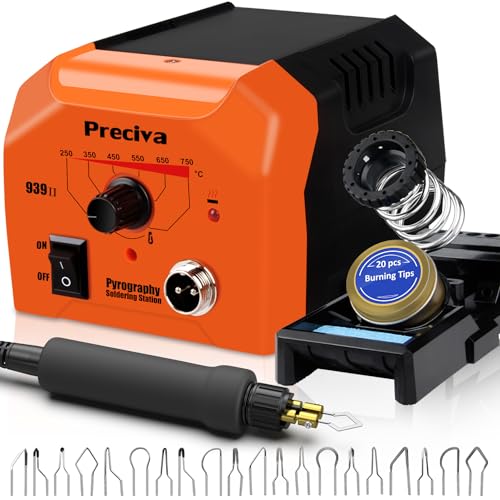
Preciva Wood Burning Pen Kit 40W

Tekchic 60W Pyrography Tool with 20 Wire Tips

YIHUA 939D-II Pyrography Station (Green)
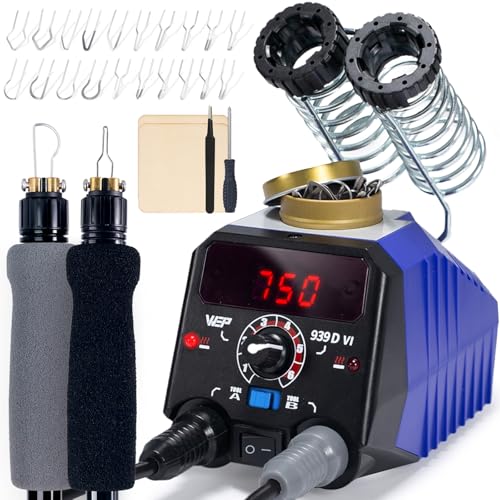
WEP 939D-VI Dual Pen Wood Burning Kit

WEP 939D-II 86-IN-1 Wood Burning Kit
Brass Incense Burner with Wood Handle
The Picks, Examined More Closely
Most entry-level burners make you swap tips mid-project, which means waiting for metal to cool. Preciva’s answer is a host unit with an A/B button that switches between two interchangeable handles, so one pen can cool in its dock while you keep drawing with the other. That’s a genuine time-saver on longer commissions.
The 40-watt transformer brings the tip up to working temperature quickly, and the adjustable range spans roughly 482°F to 1382°F. Twenty included tips cover lettering, shading, and texture work across wood engraving projects.
Everyday Perks
- Two handles mean no downtime while a hot tip cools between swaps.
- Wide temperature window suits both delicate leather lines and deep wood burns.
- Rapid warm-up keeps short evening crafting sessions productive.
- Twenty tip shapes let you move from outlines to fills without extra purchases.
Things To Consider
- Two handles add clutter to a small desk, so plan your storage before unboxing.
- Owners commonly report the tips need gentle cleaning after resinous woods to stay crisp.
Who It Suits Best
Crafters juggling multiple pieces at once who want pro-style workflow without station-level cost.
Where Another Pick Suits Better
Total beginners may prefer the simpler Preciva Wood Burning Pen Kit 40W, which trims the setup down to one straightforward pen.
This is the kit most first-timers should reach for. One pen, one dial, twenty tips, and a temperature range of 482°F to 1382°F that covers nearly everything a newcomer will attempt on wood or leather. There’s nothing intimidating about the layout, which matters more than any spec sheet when you’re learning pressure control.
The heat-resistant handle stays comfortable through longer sessions, a detail your grip will appreciate around the thirty-minute mark. Compared with the dual-handle version above, you give up multitasking but gain simplicity and a lighter footprint on the desk.
Useful Highlights
- Simple dial control makes temperature changes intuitive while you work.
- Heat-resistant grip reduces hand fatigue during extended practice sessions.
- Twenty tips cover writing, shading, and stamping right out of the box.
Worth Noting
- A single pen means every tip change interrupts your momentum until the metal cools.
- Like most solid-point tools, expect a brief wait between adjusting the dial and feeling the new temperature at the tip.
Key Specs
Made For
Newcomers to pyrography who want a complete, low-fuss starter kit for weekend projects on wood and leather.
Consider Something Else When
If your projects demand continuous tip swapping, the Preciva Dual-Handle model’s A/B switching removes that friction entirely.
Wire-nib burners behave differently from solid-point pens: a thin resistance wire heats almost instantly and cools just as fast, giving you sketch-like responsiveness. The Tekchic runs at 60 watts, a step up in muscle from the 40W Preciva pens, and that headroom shows when you’re pulling long shading strokes across hardwood.
A voltage adjustment knob lets you dial heat precisely for each tip and material. Twenty wire tips ship in the box, covering script, fill, and texture patterns. In our view, this is the strongest pure-value pick here for anyone past the absolute beginner stage.
Notable Gains
- 60-watt output delivers quick heat response for smooth, uninterrupted drawing.
- Wire nibs recover temperature fast, so lines stay consistent stroke after stroke.
- Voltage knob offers fine-grained control matched to each tip shape.
- Twenty tips arrive included, keeping total ownership cost low.
Trade Offs
- Wire nibs are more fragile than solid points and can snap under sideways pressure, a widely reported issue among new users.
- No digital readout, so finding your preferred setting takes some trial on scrap wood first.
At A Glance
Right Fit For
Intermediate hobbyists doing freehand lettering and wildlife shading who want wire-nib speed on a modest budget.
Not Your Match When
Users who want a digital temperature display and dual-pen flexibility will find more to like in the YIHUA 939D-II station below.
Here’s where the category gets serious. The YIHUA is a proper benchtop station with two pens: a solid-point drawer running 200–480°C and a wire-nib detailer spanning 250–750°C. Both can operate at the same time or independently, which turns background burning and fine linework into a single seated session.
A temperature display replaces guesswork, and the stable pen holder keeps hot tips off your work surface. Twenty nibs plus solid points come bundled, alongside scrap wood for practice. Against the Tekchic, you trade a bit of portability for repeatability, and for many artists that’s the right trade.
Advantages To Know
- Two pens support different tip types for varied scopes of work in one setup.
- Both pens can run together, letting you alternate techniques without unplugging anything.
- On-screen temperature readouts make settings reproducible across sessions.
- Stable holder improves bench safety during long projects.
Minor Gripes
- The solid-point pen takes a few minutes to reach its set temperature, slower than the wire-nib side.
- A station occupies permanent desk space, unlike handheld-only kits.
Quick Facts
Who Will Love This
Dedicated home artists producing commissioned pieces who want studio-grade control without studio pricing.
Look Elsewhere When
Crafters who value a huge accessory pile over display precision may get more mileage from the WEP 939D-II 86-in-1 kit next.
The WEP 939D-VI takes the dual-pen idea and adds an A/B toggle, so switching pens is a button press rather than a cable swap. Its two detachable pens share one station body, and the 250–750°C / 482–1382°F range covers everything from whisper-light leather marks to deep wood charring.
The bundle is thoughtfully assembled: a dual-barrel holder, tip collector tin, tweezers, screwdriver, spare screws, and two practice wood pieces. Leather workers in particular benefit here, since the upper temperature band handles vegetable-tanned hides cleanly. Compared with the YIHUA, you lose the numeric display but gain a tidier toggle-based workflow.
Everyday Advantages
- A/B toggle swaps pens instantly, keeping detailed and broad work flowing together.
- Detachable pens simplify storage and future pen replacement.
- Dual-barrel holder parks both pens safely at the bench edge.
- Temperature knob adjusts smoothly across a wide wood-and-leather range.
Points To Note
- Without a digital readout, matching yesterday’s exact heat setting relies on the knob markings alone.
- Wire nibs still deserve careful handling; bending them during storage is a common way owners shorten tip life.
Core Details
The Right Fit
Leather crafters and wood artists ready to step up from single-pen kits to a true dual-tool station.
A Better Fit Elsewhere
Anyone who wants on-screen temperature numbers should weigh the YIHUA 939D-II instead, since its display removes the guesswork.
Seventy-one tips is the headline here: 51 solid points paired with 20 wire nibs, all fitting two soft-grip detachable pens on a single 2-in-1 station. Add two letter-and-number stencils, pliers, a screwdriver, sponge, tip sleeves, storage tin, and unfinished wood blanks, and you have essentially an entire hobby shelf in one box.
That breadth makes this the natural experiment kit. You can try calligraphy nibs one night and stamping points the next without ordering anything else. The trade-off is organization; with this many small parts, a labeled case becomes your best friend within the first week.
Where It Delivers
- 51 solid points plus 20 wire nibs cover virtually every pyrography technique.
- Soft-grip pens reduce hand strain during long decorative sessions.
- Stencils and blank wood let you start practicing immediately.
- Top-mounted holder and tip tin keep the bench reasonably tidy.
Small Caveats
- Sorting and storing 71 tips takes real discipline; many owners add their own organizer trays.
- With so many parts, occasional loose-fitting tips are a commonly reported annoyance worth checking before each session.
Feature Snapshot
Built With In Mind
Hobbyists who love options and want to explore every burning technique before committing to specialized gear.
Skip It When
Minimalists who’d rather master ten good tips than manage seventy-one should stick with the leaner Preciva pen kit.
Not every burner belongs on a craft bench. This polished solid-brass censer, standing roughly five inches tall, is built for dhoop cones and resin incense rather than pyrography. The wooden handle detaches, letting you carry the vessel safely while charcoal or resin smolders inside, then set it aside once things settle.
It suits meditation corners, home altars, and anyone drawn to traditional fragrance rituals. Brass develops patina over years of use, which many owners consider part of its charm rather than a flaw. Pair it with the pyrography picks above if your creative space doubles as a quiet retreat.
Practical Pluses
- Solid brass construction feels substantial and ages gracefully with use.
- Removable wooden handle lets you reposition it safely while hot.
- Compact five-inch footprint fits shelves, altars, and small tables easily.
Honest Caveats
- Resin burning leaves residue inside the bowl, so plan on periodic cleaning with warm water and a soft cloth.
- At five inches, capacity limits larger charcoal discs; smaller sizes fit more comfortably.
Product At A Glance
Whose Shelf It Belongs On
Meditation practitioners and fragrance enthusiasts who want a traditional censer with a safe carrying handle.
Reach For A Different Pick When
Anyone shopping strictly for pyrography should choose the WEP 939D-VI instead, as this piece burns incense, not designs.
What Matters Most Before Choosing Budget Wood Burners
Match The Tip Type To Your Style
Solid-point tips heat slowly and hold temperature steadily, which suits stamps, bold lines, and beginner-friendly control. Wire nibs respond almost instantly, favoring freehand shading and script. Decide which behavior matches your projects first, because it shapes everything else in the purchase.
Power And Recovery Time
Wattage drives how quickly a tip returns to temperature after each stroke. A 40W pen warms in seconds and holds steady for casual use, while 60W units recover faster across hardwood. Heavier stations trade portability for consistency, which matters on long commissions.
Temperature Range And Control
A range near 482°F to 1382°F covers light leather marks through deep wood charring. Digital displays make settings repeatable; knobs rely on your memory and markings. Either works, though reproducibility saves frustration when revisiting an old design months later.
Accessories Versus Focus
Kits bundling stencils, wood blanks, and dozens of tips lower the barrier to experimentation. Leaner kits cost less and force skill-building with fewer tools. Honest self-assessment here prevents a drawer full of unused nibs six months from now.
Key Considerations Across These Picks
Traps First Timers Fall Into
The most common slip is buying on tip count alone, then discovering the pen itself feels clumsy in hand. Grip comfort and heat recovery affect every session; accessory piles don’t. Skipping scrap-wood practice before touching a finished piece is the second classic mistake, since every burner behaves slightly differently.
When Paying More Pays Off
Higher-tier stations buy dual pens, wider ranges, and displays that remove guesswork. Casual crafters rarely need that overhead, but anyone selling finished work recovers the difference in saved time. The upgrade earns its keep through workflow, not raw power.
Frequently Asked Questions
Are budget wood burners suitable for beginners?
Yes, modern entry-level kits include adjustable temperature controls and enough tips to learn every basic technique. Starting affordable lets you develop skills before investing in premium stations.
Can these tools burn leather as well as wood?
Models with ranges reaching 1382°F handle vegetable-tanned leather comfortably at lower settings. Always test on scraps first, since leather scorches faster than most woods.
How long do replacement tips last?
Solid points often serve for years with normal care, while thin wire nibs wear sooner and can bend under pressure. Gentle handling and proper storage extend tip life considerably.
Do I need ventilation while burning?
Working near an open window or fan is wise, since smoke builds quickly during extended sessions. Good airflow protects both your lungs and your line visibility.
What maintenance does a wood burner require?
Wipe tips clean of carbon buildup with fine sandpaper or a polishing pad once cooled. Keep the unit dry and store tips separated to prevent damage.
Bottom Line
Budget pyrography gear has never been more capable, and this list proves it. Beginners should start with the Preciva pen kit, growing artists will appreciate the WEP 939D-VI’s dual pens, and tinkerers get unbeatable variety from the 86-in-1 bundle. Match the tool to how you actually craft, and even the least expensive option here will serve you well for years of creative evenings.
