
Singing on a sidewalk is a different sport than singing in a studio. You need an amp that runs on battery power when there’s no outlet in sight, cuts through traffic noise without turning harsh, and fits over your shoulder on a crowded train. The seven options below cover that range, from featherweight practice boxes to full-range rigs serious street performers rely on week after week.
Your Options, Compared

Donner DKA-20 Keyboard Amplifier 20 Watt

Coolmusic BP80 Battery Powered Acoustic Amplifier 100W
HeadRush FRFR-GO 30W Portable Guitar Amp
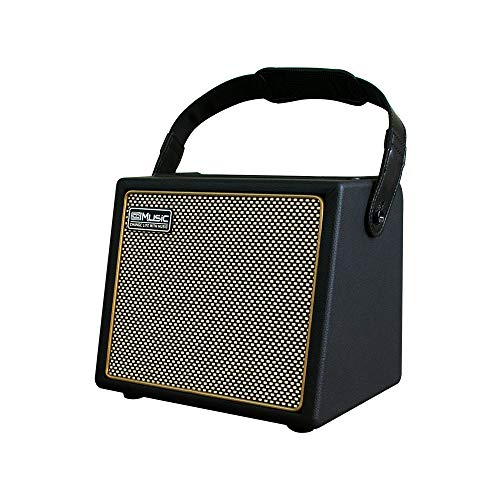
Coolmusic 30W Rechargeable Acoustic Guitar Amp
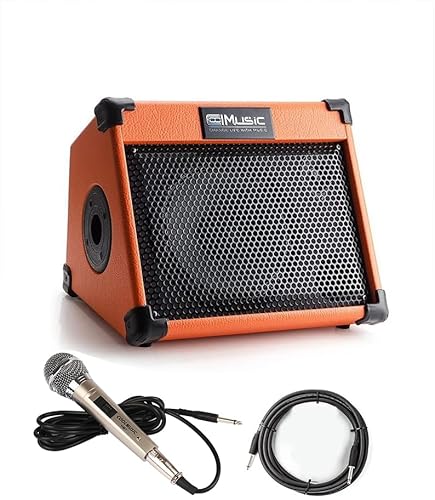
Coolmusic 20W Bluetooth Acoustic Amp with Mic

JOYO Vibe Cube BA-30 Bass Combo White

Fishman Loudbox Mini PRO-LBT-500 Brown
Meet The Standout Selections
The Donner DKA-20 starts life as a keyboard amp, but its two-channel layout makes it a quiet favorite among vocalists doubling on keys or bass. An 8-inch woofer paired with a 2-inch tweeter gives you low-end weight and enough treble clarity that lyrics stay intelligible at moderate volume.
For singers playing café corners or park benches near a wall outlet, the 20-watt output covers small crowds without strain. Controls sit on top where you can reach them mid-song, and the aux input handles backing tracks from a phone.
Notable Gains
- Two channels mean vocals and keys run through one box instead of two.
- The woofer-plus-tweeter pairing keeps spoken intros and sung lines clear rather than muddy.
- Aux-in lets you roll backing tracks straight from your phone between songs.
- Top-mounted knobs are easy to tweak while performing.
Things To Consider
- It needs mains power, so it’s a poor match for spots without an outlet nearby.
- Owners commonly note the cabinet finish scuffs if it rides loose in a car trunk, so a padded bag pays off.
Key Specs
Who It Suits Best
Keyboard-playing vocalists who perform at powered venues like cafés, markets, and open-mic nights will get the most from this unit.
Where A Sibling Pick Shines
Singers needing true cordless freedom should look at the Coolmusic BP80, whose built-in battery removes the outlet hunt entirely.
Where the Donner stops at the edge of an extension cord, the Coolmusic BP80 keeps going. Its rechargeable battery and 100-watt output make it the loudest cordless option here, built for open plazas where wind and foot traffic eat quieter amps alive.
An 8-inch woofer and 3-inch tweeter handle vocals, guitar, sax, or keys, and six inputs mean a duo or trio can share one rig. The trapezoid wooden cabinet isn’t just styling; the angled shape gives the interior more air volume than a plain rectangle, which helps resonance without adding bulk.
What Earns Its Place
- Battery power frees you from hunting outlets on any corner or plaza.
- Six inputs support a full duo or trio setup through a single amplifier.
- Independent reverb and chorus per channel let you shape voice and instrument separately.
- Three-band EQ on each channel tames feedback before it starts outdoors.
- Bluetooth streaming covers breaks and pre-show playlists.
Small Caveats
- At 100 watts it’s the heaviest carry here; a luggage cart or rolling bag saves your shoulder.
- Wood cabinets look great but need care around rain and damp pavement.
Feature Rundown
Made For
Street performers running duos or trios who need genuine volume and zero dependence on outlets.
Swap It Out When
Solo players wanting something lighter for short sessions will find the Coolmusic 30W rechargeable model easier to haul.
FRFR stands for full-range, flat-response, meaning the speaker reproduces whatever you feed it without coloring the tone. For vocalists using amp-modeling pedals or multi-effects processors, that neutrality is exactly what you want: your patch sounds the same through the HeadRush FRFR-GO as it does in your headphones.
Thirty watts into dual 3-inch speakers won’t drown out a busy intersection, so think intimate settings: subway platforms with decent acoustics, farmers markets, courtyard gigs. The rechargeable battery and Bluetooth round out a genuinely grab-and-go package.
Where It Delivers
- Flat-response design preserves the character of modeled tones and processed vocals.
- Rechargeable battery supports impromptu sessions anywhere.
- Bluetooth lets you preview tracks or stream accompaniment wirelessly.
- Compact dual-speaker format slips into a backpack alongside your pedalboard.
Points To Note
- With only 30 watts and small drivers, expect modest projection in loud open-air spots.
- It’s voiced for modelers first; plugging a raw dynamic mic in may feel thin compared with dedicated acoustic amps.
The Right Fit
Guitarist-vocalists who build their sound inside a modeling pedal and want one light box for both signal paths.
Another Choice May Suit
Players prioritizing raw vocal warmth over tonal accuracy should step up to the Fishman Loudbox Mini later in this list.
This 30-watt Coolmusic sits in the sweet spot between its smaller sibling below and the big BP80 above. You get cordless operation, a 6.5-inch speaker aimed at faithful acoustic reproduction, and two channels so voice and guitar plug in together.
In our view, this is the sensible starting point for solo singer-guitarists testing the busking waters. The mic channel carries its own bass and treble controls plus reverb, which is more vocal shaping than most amps at this size bother to include.
A Strong Showing
- Rechargeable design means no cables, no outlets, no excuses.
- The dedicated mic channel’s 2-band EQ and reverb give vocals real polish.
- Two simultaneous channels suit the classic voice-plus-guitar format.
- Bluetooth adds backing-track playback between songs.
Honest Caveats
- 30 watts fills a quiet square but strains against heavy traffic noise.
- Some owners report the rechargeable cell degrades after a couple of years of heavy use, so charge cycles matter.
- Only basic tone shaping on the instrument side compared with three-band rivals.
Quick Facts
Who Will Love This
Solo singer-guitarists playing parks, promenades, and café patios who want cordless convenience at a reasonable spend.
Reach For A Different Pick When
Performers needing to power a whole band should move up to the Coolmusic BP80 and its six-input layout.
Most first-time buskers discover they own everything except a microphone. This 20-watt Coolmusic ships with one included, plus an audio cable, which turns it into a complete starter kit rather than another component to research.
Two channels accept guitar and mic at once, and the three-band EQ spans bass, mid, and high, giving newer players room to learn what each control actually does. Built-in reverb adds a touch of space that flatters untrained vocal delivery, a small kindness worth having.
The Case For It
- Microphone and cable come in the box, so you can perform on day one.
- Full three-band EQ teaches tone-shaping basics cheaply.
- Bluetooth, USB, and aux options cover every common playback source.
- Light 20-watt format is easy to carry on public transit.
Less Ideal Details
- Volume tops out well below the 30W and 100W models here, limiting it to calm environments.
- The bundled microphone is serviceable rather than special; upgrading later improves results noticeably.
Right Fit For
Complete beginners making their first street-performance attempts in quiet squares, campuses, and pedestrian zones.
Consider Something Else When
Once regular weekend gigging begins, the Coolmusic 30W rechargeable model offers the extra headroom you’ll want.
Not every busker list includes a bass amp, but loop-driven solo acts live and die by low end. The JOYO BA-30 squeezes 30 watts, a 4-inch speaker, and a passive LF radiator into a cube roughly the size of a toaster, delivering punchier bottom than its footprint suggests.
The tone section goes deeper than most: beyond standard bass, mid, and treble knobs, a MID FREQ control shifts the center point of the midrange, and a compressor evens out dynamics automatically. Bluetooth 5.1 and OTG recording round out a modern feature set.
Useful Strengths
- The LF radiator adds low-frequency punch you’d normally need a bigger cabinet for.
- Adjustable mid frequency allows surgical tone shaping, rare at this size.
- Built-in compressor smooths aggressive playing without extra pedals.
- OTG direct recording suits creators filming street sessions.
Trade-Offs To Consider
- It’s voiced for bass first; vocals through it can sound lean without external processing.
- The 4-inch driver has physical limits in wide-open, windy locations.
Whose Shelf It Belongs On
Loop-pedal artists and livestreaming bassists who layer vocals over deep, self-generated grooves.
Not Your Match When
Vocal-first performers will get better mic voicing from the Fishman Loudbox Mini elsewhere on this list.
Fishman built its reputation on acoustic pickup systems, and the Loudbox Mini carries that lineage into a portable combo. It’s designed to reproduce acoustic instruments and vocals faithfully, which translates directly to busking: your voice sounds like your voice, not a PA approximation of it.
Bluetooth connectivity handles backing tracks cleanly, and being Fishman’s lightest portable amp, it travels well despite the premium build. Compared with the Coolmusic units earlier in this list, you’re paying for voicing quality and long-term reliability rather than raw wattage.
Advantages To Know
- Natural, accurate voicing flatters both vocals and acoustic guitar equally.
- Lightweight for its class, easing daily commutes to your pitch spot.
- Wireless track playback integrates neatly into solo sets.
- Fishman’s build reputation suggests years of road use with basic care.
Worth Bearing In Mind
- It typically costs more than the value-oriented picks here, so the investment suits committed performers.
- No battery operation means you’ll still plan pitches around available power.
Core Details
Built With In Mind
Working acoustic musicians who busk regularly and treat their sound as their livelihood.
Look Elsewhere When
Battery-powered freedom matters more than refined tone; the Coolmusic BP80 delivers that trade-off deliberately.
What Matters Most Before Choosing Busking Amps For Vocals
Power And Projection
Wattage roughly maps to how far your voice carries. Twenty watts suits quiet pedestrian zones; 100 watts holds its own beside traffic. Match the number to your typical pitch environment rather than buying maximum power on principle.
Battery life deserves equal attention. A rechargeable amp that dies mid-set ends your earning day early, so check claimed runtime against your usual session length.
Channel Count And Inputs
Solo acts need two channels minimum: one for mic, one for instrument. Duos and trios should prioritize four or more inputs, since sharing a single amp beats hauling two.
Look for independent EQ per channel. Shared tone controls force compromises that flatten both your voice and your guitar.
Weight And Portability
You’ll carry this thing daily, often on transit. Every pound counts twice on the walk home. Rolling bags and padded cases extend both your stamina and the amp’s cabinet life.
Effects That Earn Their Knobs
Reverb flatters vocals outdoors more than any other effect. Chorus helps solo guitar. Anything beyond that is nice, not necessary, unless your act depends on it.
Key Considerations Across These Picks
Traps First Timers Fall Into
Newcomers often buy on wattage alone and ignore channel layout, then discover their mic and guitar fight over one tone knob. Another frequent slip is forgetting weather: wood cabinets and rain don’t mix, so plan storage and covers from day one.
What The Higher Tier Buys
Spending up generally buys voicing quality, build materials, and reliability rather than raw loudness. A premium amp like the Loudbox Mini sounds natural at low volumes, which cheaper units struggle to do. Regular earners recoup that difference quickly; occasional players may not notice it.
Frequently Asked Questions
How many watts do I need for street vocals?
Twenty watts covers calm pedestrian areas, while 50 to 100 watts handles noisy intersections. Judge by ambient noise at your usual pitch, not by numbers alone.
Can one amp handle both my microphone and guitar?
Yes, provided it offers at least two independent channels with separate tone controls. Every pick in this roundup supports that arrangement except where noted.
Is battery power really necessary for busking?
It depends entirely on your location. Parks and plazas rarely offer outlets, so rechargeable models remove a major logistical headache for mobile performers.
Do I need effects like reverb for outdoor singing?
Reverb is the single most useful effect outdoors because open air strips natural ambience from vocals. Light amounts add body without sounding artificial.
How do I protect an amp from weather damage?
Keep it off wet pavement, cover it during drizzle, and store it dry between sessions. Wood-cabinet models especially benefit from a padded, water-resistant carry bag.
Closing Thoughts
Your best choice comes down to where you play and how often. Quiet squares favor the compact Coolmusic 20W starter kit, busy streets reward the battery-powered BP80, and committed professionals will hear the difference the Fishman Loudbox Mini makes every single set. Start honest about your venues, and the right amp follows naturally.
