
Starting calligraphy is a strange mix of excitement and frustration: your first letters look nothing like the examples, and half the battle is simply having tools that cooperate. That’s what these seven sets solve. Some teach you letter by letter with a guided book, others hand you a full dip-pen setup like a stationer from another century, and a few focus on white and metallic inks for dark paper projects. Each one fits a different kind of beginner, so the goal here is matching the kit to the way you actually want to practice.
The Picks In Brief

SpiceBox Learn Calligraphy Set for Beginners (Multi Colors)

Lagarto Feather Pen and Ink Set, 11.4″, 6 Steel Nibs
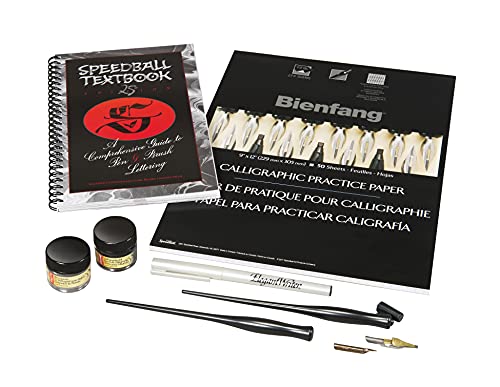
Speedball Art Products 3062 Complete Calligraphy Kit

Calligraphy Set, 7 Pcs Fountain Pen with Replaceable Nibs

Fhyhej 6 Pack Gold Silver White Gel Pens

White Ink Pens Set, Gel & Dual-Tip Acrylic Markers

White Pens Set, White Gel Pens & Acrylic Paint Pen, 7 Pack
The Picks, Examined More Closely
Most starter kits hand you tools and wish you luck. This one pairs its pens with an instruction book, which changes the first week entirely: instead of guessing at stroke order, you follow a structured path through Chancery lettering, one of the most forgiving historical scripts for new hands.
The multi-color pen selection keeps practice from feeling like homework. Adults rebuilding handwriting habits after years of keyboard typing tend to get the most out of this format, since the book does the teaching while the pens do the work.
A Strong Showing
- Instruction book walks you through each letter rather than leaving you to reverse-engineer examples
- Everything needed to start arrives in one box, so there’s no second shopping trip before page one
- Chancery script is widely considered an approachable entry point for adult learners
- Multiple pen colors make drills less monotonous over long practice sessions
Things To Consider
- Beginners focused purely on dip-pen technique may outgrow the included pens quickly
Who It Suits Best
Adults starting from zero who want a guided curriculum instead of loose supplies.
A Better Fit Elsewhere
Shoppers wanting traditional nib-and-ink technique should look at the Speedball 3062 Complete Calligraphy Kit instead.
Where the SpiceBox set teaches, the Lagarto performs. At 11.4 inches long with a blue feather body, this quill-style dip pen looks like it belongs on a writing desk in a period drama, and plenty of owners buy it as much for the shelf as for the page.
Functionally, it’s a proper learning tool. Six interchangeable steel nibs span roughly 0.6mm to 3.0mm, letting you move from fine detail lines to broad swash strokes without buying anything else. The workflow takes getting used to: load the nib, dip into the inkwell, write until the ink runs low, repeat. Expect some blotches early on.
Where It Excels
- Nib sizes from about 0.6mm up to 3.0mm cover delicate flourishes and bold headlines alike
- Inkwell and feather pen stand keep the desk tidy between sessions
- Genuine dip-pen experience builds the control modern pointed-pen scripts demand
- Display-worthy design doubles as home or office decor when not in use
Small Caveats
- Dip pens require re-inking every few words, which tests patience during long practice runs
- Ink cleanup around the nib and well is part of the routine, so keep paper towels nearby
Feature Snapshot
Made For
Romantics and gift shoppers who want calligraphy to feel ceremonial, not clinical.
Consider Something Else When
Anyone practicing daily for speed will prefer the cartridge-fed Wonwood_direct fountain pen set.
Speedball has supplied lettering artists for generations, and this kit shows why the name carries weight. It bundles a practice pad, a classic straight nib holder, and an oblique holder, the angled barrel used for pointed-pen scripts like Copperplate where the nib sits off-axis relative to your hand.
That two-holder setup matters more than it sounds. Straight holders suit broad-edge Gothic and italic work; oblique holders suit flowing scripts. Owning both from day one means you can sample multiple calligraphic families before committing to a specialty, which is exactly how most working lettering artists found their style.
The Practical Payoff
- Both straight and oblique holders included, covering broad-edge and pointed-pen techniques
- Practice pad gives you appropriate paper immediately, avoiding the bleed-through frustration of ordinary printer stock
- Speedball’s long track record in art supplies suggests dependable nib quality
- Single-pack format keeps the purchase simple for gift giving
Potential Drawbacks
- Less hand-holding than the SpiceBox book, so self-directed learners do better here
- Dip-style nibs mean periodic cleaning to prevent dried ink clogging the tines
Key Specs
Right Fit For
Committed beginners ready to explore several traditional scripts seriously.
Not Your Match When
Hobbyists who want color variety will get more mileage from the Wonwood_direct seven-pen fountain set.
This set answers the biggest complaint about dip pens: constant re-dipping. Seven fountain pens arrive fitted with nibs stepping from 0.5mm up to 2.9mm, and because they’re cartridge-fed, you write continuously instead of stopping every few words like you would with the Lagarto quill.
The refill flexibility is the real hook. Forty cartridges across eleven colors handle everyday journaling, while six included converters let you draw ink from any bottled source. A converter, for the uninitiated, is a small plunger mechanism inside the pen that sucks up liquid ink, opening the door to hundreds of ink colors beyond the cartridges provided.
Good Reasons To Consider
- Seven nib widths from 0.5mm to 2.9mm suit everything from note-taking to poster lettering
- Forty cartridges in eleven colors keep pages varied without extra purchases
- Six converters accept bottled ink, a genuine upgrade path as skills grow
- No dipping means longer uninterrupted practice, ideal for building muscle memory
Points To Keep In Mind
- Cartridge pens generally offer less line variation than true flex or broad-edge dip nibs
- With seven pens in circulation, rinsing nib sections periodically prevents dried ink buildup
- Eleven colors can tempt beginners into decorating before mastering basic strokes
Quick Facts
Who Will Love This
Journalers and students who want colorful, low-maintenance practice on a daily basis.
Reach For A Different Pick When
Traditionalists chasing authentic dip-pen feel belong with the Speedball 3062 kit.
Not every lettering session needs a full kit. Sometimes you just want metallic lines that glow against black cardstock, and that’s precisely this six-pack’s job. The 1mm fine points lay down gold, silver, and white gel ink smoothly, with flow reported as consistent rather than skippy.
Treat this as a companion purchase rather than a standalone starter kit. Paired with any of the teaching sets above, it handles the accent work: highlights on finished pieces, addresses on dark envelopes, detailing over watercolor once it dries. On its own, there’s no instruction or width variety, which is why the price stays friendly.
Everyday Perks
- Metallic and white inks show up vividly on black paper where standard pens vanish
- Consistent gel flow suits both lettering outlines and fine illustration detail
- Works well over dried watercolor for finishing touches
- Six-pen pack spreads across pencil cases, desks, and craft bags
Worth Noting
- Fixed 1mm point offers no line-width variation, limiting formal script styles
- No instructional content, so absolute beginners still need a teaching resource
Whose Shelf It Belongs On
Casual crafters adding sparkle to dark-paper projects without investing in a full setup.
Swap It Out When
Artists needing multiple white tip sizes should step up to the Fhyhej ten-piece White Ink Pens Set.
Think of this as the serious version of pick five. Ten white instruments cover six gel tip sizes from 0.5mm to 1.2mm, dual-tip acrylic markers combining fine points with dot ends and chisel edges, a brush pen spanning 1 to 5mm, and a 0.7mm acrylic paint pen. One ink color, ten personalities.
The archival, acid-free formulation matters for anyone selling or gifting finished work: archival ink resists fading over time, so lettering on black greeting cards or framed pieces holds up years later. Brush-tip control does take practice, so expect a wobbly first week on the widest tips.
Reasons It Performs
- Six gel widths allow precise matching of line weight to letterform size
- Dual-tip markers switch between detail and fill work without changing tools
- Acid-free archival ink supports keepsake-quality finished pieces
- Brush pen covers expressive modern calligraphy on dark surfaces
A Few Limitations
- Acrylic tips need prompt recapping or they dry out faster than gel points
- White-only palette won’t serve projects calling for metallic accents
Details At A Glance
Built With In Mind
Detailed illustrators and card makers working primarily on black or kraft surfaces.
Another Choice May Suit
Minimalists wanting fewer pieces should consider the Fhyhej seven-pack White Pens Set below.
This seven-piece set trims the previous Fhyhej offering down to essentials while adding one surprise: a black brush-tip acrylic marker tucked among all the white. Two gel pens (1.0mm and 0.6mm), two dual-tip paint pens, and two brush pens ranging from 1mm up to 6mm cover most white-on-dark lettering jobs.
The waterproof archival claim is the differentiator. Watercolor artists commonly layer washes over white lettering, and waterproof ink survives that contact where standard gel would smear. Compared to the ten-piece set above, you lose some gel tip granularity but gain portability and a simpler kit to keep capped and organized.
Notable Gains
- Brush tips reaching 6mm produce bold poster-scale white lettering
- Waterproof archival ink tolerates layering with wet media afterward
- Included black brush marker adds contrast options for mixed designs
- Compact seven-piece count travels easily in a craft tote
Factors To Consider
- Only two gel tip sizes, so ultra-fine 0.5mm work isn’t covered
- Large brush tips demand steady pressure control that takes time to develop
Core Details
Who Should Grab It
Rock painters, card makers, and scrapbookers who want dependable white coverage in a grab-and-go pack.
Look Elsewhere When
Detail-focused artists needing six gel widths will prefer the Fhyhej White Ink Pens Set reviewed above.
What Matters Most Before Choosing Calligraphy Kits For Beginners
Match The Tool To The Script You Want
Broad-edge nibs produce thick-and-thin contrast through nib angle, suiting Gothic and italic hands. Pointed nibs create contrast through pressure, suiting Copperplate and modern calligraphy. Decide which look pulls you in first, then confirm the kit includes the right nib family before committing.
Consider Your Practice Environment
Dip pens and inkwells reward a dedicated desk with good lighting and patience for cleanup. Cartridge fountain pens forgive a kitchen table and a fifteen-minute window between obligations. Honest self-assessment here prevents a beautiful kit from gathering dust in a drawer.
Paper Quality Gets Overlooked
Ink behaves differently across papers. Smooth, heavier stock minimizes feathering, where fibers pull ink outward into fuzzy edges. Kits bundling a practice pad remove the guesswork; otherwise, budget for a proper pad alongside your pens.
Think About Where You’re Heading
A guided book kit builds fundamentals fastest. A multi-nib professional set grows with you for years. Casual crafters after envelope addressing or gift tags may only need metallic gel pens. Buying for your actual goal, not an imagined one, saves money and frustration.
Key Considerations Across These Picks
Traps First Timers Fall Into
The most common misstep is buying a gorgeous dip-pen set with no instruction and quitting within a week. Pair any tool-only kit with a tutorial resource. The second trap: practicing on cheap copy paper, then blaming your technique for bleeding, blotchy results.
When Paying More Pays Off
Higher-tier kits earn their cost through nib quality and range. Precision-cut steel nibs hold their edges longer and release ink more predictably than bargain alternatives, which translates directly into cleaner letters and fewer ruined pages. Serious learners recover that difference quickly; weekend dabblers usually don’t need it.
Frequently Asked Questions
Which script should a complete beginner learn first?
Chancery italic is the usual recommendation because its broad-edge strokes are forgiving and visually rewarding. Most guided books start there for good reason.
Do I really need special paper for calligraphy?
Yes, thin or textured paper causes feathering and bleed that ruin letterforms. A smooth practice pad makes an immediate visible difference.
What’s the difference between a dip pen and a fountain pen?
A dip pen must be reloaded from ink every few words, while a fountain pen holds cartridges or bottled ink internally. Fountain pens suit longer sessions; dip pens offer more traditional line character.
Can left-handed people learn calligraphy with these kits?
They can, though left-handers often prefer oblique holders or adjusting paper angle to avoid smudging. Starting with a slower-drying approach helps.
How long before my lettering looks good?
Most adults see usable improvement within a few weeks of short, regular practice sessions. Consistency beats marathon weekend attempts.
Closing Remarks
The right choice depends less on the kit and more on your temperament. Guided learners thrive with the SpiceBox set, romantics fall for the Lagarto quill, and committed students get the most mileage from the Speedball 3062. Whichever direction pulls you, pick one, clear a small desk corner, and give yourself a month of short sessions before judging your progress.
