
Soy wax is stubborn about color. Its pale, creamy base soaks up dye differently than paraffin, which is why the wrong dye leaves you with blotchy candles or a shade that fades before the first burn. This roundup covers liquid dyes, pre-measured chips, and one wax-and-wick starter bundle, so you can match a product to how you actually pour, whether that’s weekend hobby batches or a small home studio shipping orders.
The Lineup, Simplified

HTVRONT Candle Dye 16 Colors Liquid Wax

Hearth & Harbor Candle Dye Blocks for Soy Wax, 24 Colors

Reddig-Glo Brown Candle Dye Chips 10 Pack

Reddig-Glo Black Candle Dye Chips 10 Pack
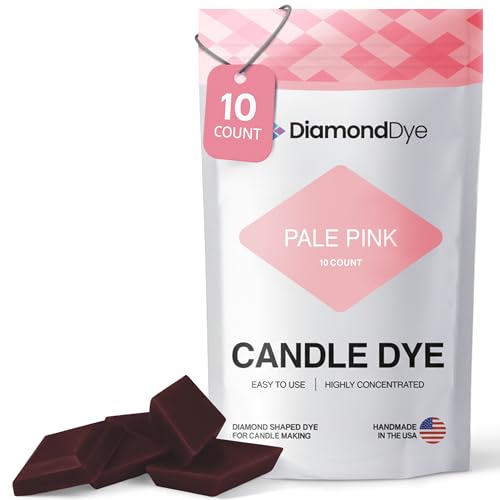
Reddig-Glo Pale Pink Candle Dye Chips 10 Pack

FUHITIM Soy Candle Wax 5 lbs Bag

HOMY ARTY Candle Wax Dyes 32 Colors
More On The Choices That Made The List
Liquid dye changes the whole rhythm of a pour session. Instead of waiting for a chip to melt into your melted soy wax, you stir in drops and watch the shade shift in seconds, which makes matching last month’s batch far less guesswork. Each 10ml bottle is rated to tint up to 2.2 pounds of soy, so a 16-bottle set covers serious volume.
The included drop guide showing 1, 3, and 9 drop results gives beginners an anchor point, though soy’s natural ivory tone means your final shade may sit slightly softer than swatch photos suggest.
What Stands Out
- A few drops per bottle tints over two pounds of wax, so supplies stretch across many batches.
- No melting wait time, unlike chip formats such as the Reddig-Glo packs further down this list.
- The 1/3/9 drop reference helps you reproduce a shade instead of eyeballing it.
- Sixteen bottles blend together for custom colors beyond the base palette.
- Gentle stirring distributes pigment evenly, cutting down streaky tops.
Things To Consider
- Liquid pigments can settle between sessions, so give each bottle a shake before pouring.
- A couple of shades, notably Fuchsia and Rose Pink, read differently in person than expected.
Key Specs
Who It Suits Best
Hobbyists and small-batch sellers who want repeatable, tunable shades without melting delays will get the most from this set.
Where Another Pick Suits Better
First-timers who want wax, wicks, and holders bundled together should look at the FUHITIM kit below instead.
Twenty-four blocks in one box is a different kind of convenience than HTVRONT’s liquids. You sacrifice drop-level precision but gain a shelf-stable format that never leaks or separates, which matters in a craft drawer that gets jostled. Blocks also travel well to workshops and craft fairs.
The working method stays simple: once your soy starts melting, drop in a piece of block, stir gently, and hold the wax near 185°F until everything combines smoothly. That temperature target doubles as a useful habit for anyone still learning melt-point discipline with soy.
Real Benefits
- Each of the 24 shades comes as its own richly pigmented block, ready to snap apart.
- Colors combine freely, so one box yields far more than two dozen finished hues.
- Adding a partial piece lets you dial intensity up or down within reason.
- The 185°F guidance builds good temperature habits that carry over to any dye brand.
Worth Noting
- Blocks need extra heat and stirring to dissolve fully compared with liquid options like HOMY ARTY’s.
- Portioning from a shared block means keeping hands and tools clean to avoid cross-shade smudges.
At A Glance
Made For
Gift makers and seasonal pourers who rotate through many colors a year will appreciate having every holiday shade on hand.
Consider Something Else When
Makers focused on one signature shade will find better value in a single-color Reddig-Glo pack rather than paying for 24 hues they won’t use.
Consistency is where these chips earn their spot. Every diamond-shaped chip is manufactured to identical size, so two chips per pound of soy produces the same brown today as it did last month. Anyone selling candles knows how much rework inconsistent color creates, and uniform dosing removes most of it.
Dosing math stays friendly too: one chip per pound for paraffin, two for soy. Stir into wax held between 165°F and 185°F until fully dissolved, and you’re done. Brown suits coffee-scented, vanilla, and woodsy fragrance lines especially well, since warm neutrals flatter those scent families.
The Practical Payoff
- Identical chip sizes make batch-to-batch shade matching nearly automatic.
- Works in both soy and paraffin with clear per-pound dosing rules.
- Made and packed in the USA, which some makers prefer for supply reliability.
Trade Offs
- Chips must dissolve completely, so underheated wax can leave specks; patience at 165-185°F pays off.
- A single-shade pack offers no blending variety the way multi-color sets do.
Quick Facts
Right Fit For
Small sellers producing earth-toned product lines repeatedly will value the repeatability most.
Not Your Match When
Experimenters wanting dozens of hues in one purchase should reach for the HOMY ARTY 32-color set instead.
True black is famously hard to achieve in soy. Pale wax tends to pull gray or muddy unless the pigment load is high, and that’s exactly what a dedicated black chip solves. Same formula family as the brown pack above: USA-made, diamond-shaped, and dosed at one chip per pound of paraffin or two per pound of soy.
In our view, black deserves its own SKU rather than being mixed from other colors, because blending darks often leaves residue and unpredictable undertones. Stir into wax at 165-185°F until every trace dissolves, then pour promptly for a smooth matte surface.
Reasons It Performs
- Pre-formulated black avoids the muddy grays that mixed darks often produce in soy.
- Matching chip sizing keeps deep shades consistent across production runs.
- Dual-wax compatibility means leftover chips work in future paraffin projects too.
Small Caveats
- Dark dyes show undissolved particles more readily, so full melting at temperature matters more than with lighter shades.
Who Should Grab It
Makers building moody, minimalist, or masculine-leaning candle lines will find this the easiest path to clean black pours.
Look Elsewhere When
Pastel-focused creators will get more use from the pale pink Reddig-Glo pack coming next than from a heavy dark pigment.
Soft pints of blush are deceptively tricky. Overdose pink dye by even a little and you land on bubblegum instead of the delicate rose tone wedding and spa clients ask for. A dedicated pale pink chip removes that tightrope walk, giving you a calibrated starting point rather than a strong pink diluted by trial and error.
Everything else mirrors the brown and black packs in this lineup: uniform diamonds, USA-made, one chip per pound of paraffin or two per pound of soy, dissolved fully in the 165-185°F window. Ten chips cover roughly five pounds of soy at standard dosing.
Positive Takeaways
- Calibrated pastel strength means fewer ruined batches from overshooting the shade.
- Same reliable dosing structure as the other Reddig-Glo singles in this list.
Points To Note
- One shade only, so layering looks may require pairing it with another single-color pack.
- Pastels can shift warmer depending on your wax’s natural tone, worth confirming with a test pour first.
The Right Fit
Creators supplying bridal showers, baby registries, and boutique gift shops will find this shade earns its keep fast.
A Better Fit Elsewhere
Anyone needing a full romantic palette rather than one blush tone gets broader coverage from Hearth & Harbor’s 24-block set.
Every dye on this list needs a canvas, and this FUHITIM bag provides it along with the hardware beginners usually forget. Five pounds of all-soy wax pairs with 100 cotton wicks, 100 adhesive stickers for anchoring wicks to jar bottoms, and two metal wick-centering holders. Roughly translated, that’s enough material for dozens of standard 8oz jars.
All-soy composition matters here because it burns evenly and cleanly, giving dyes a consistent ivory base to work against. Pair it with any pick above and you have a complete first-session setup, no separate shopping trip required. Storage is straightforward: keep the bag sealed and dry between pours.
Everyday Perks
- Five pounds of pure soy supports many batches before restocking.
- 100 cotton wicks plus stickers remove the fiddliest part of jar setup.
- Metal centering holders keep wicks straight while wax cools.
- Even, clean burn behavior gives dyes and fragrances a stable foundation.
- One purchase replaces four separate shopping decisions.
Potential Drawbacks
- No dye included, so budget for a color set alongside it.
- Soy wax needs proper curing time after pouring, commonly several days, before burning.
- Bulk bags demand cool, dry storage to prevent clumping over months.
Product Snapshot
Whose Shelf It Belongs On
Complete newcomers making their very first jars benefit most, since nothing else needs buying to start.
Swap It Out When
Experienced pourers with existing wax stock only need dye, making the HTVRONT liquid set the smarter companion purchase.
Thirty-two liquid shades is the widest palette here, and it goes well beyond primaries. Alongside staples like red, teal, and indigo, the set includes fluorescent options, matcha green, plum purple, amber yellow, and hot coral, which opens doors for trend-driven designs that standard sets can’t touch.
Like the HTVRONT liquids, these skip the melting stage entirely. You control both dosage and density drop by drop, which makes gradient layers and ombre jars considerably easier to execute. Compared side by side, HTVRONT offers finer concentration documentation while HOMY ARTY trades that for sheer range, a trade many mixing enthusiasts happily accept.
Notable Upsides
- 32 shades including fluorescents and trendy tones cover almost any design brief.
- Drop-by-drop control enables gradients and layered effects without extra tools.
- No melt-in waiting, so workflow speed matches the HTVRONT liquids.
- Broad base palette reduces how often you need to blend custom mixes.
Minor Gripes
- With this many bottles, organizing and labeling caps becomes its own small chore.
- Exact coverage-per-bottle figures aren’t published, so plan a test pour before committing a large batch.
- Fluorescent shades behave differently under lighting than classic tones, worth knowing before client work.
Feature Rundown
Who Will Love This
Design-forward makers running trend-responsive shops will lean on this palette weekly.
Another Choice May Suit
Minimalists who stick to three or four signature colors save money and drawer space with Reddig-Glo single-shade packs.
What Matters Most Before Choosing Candle Dyes For Soy Wax
Liquid Versus Chip Formats
Liquid dyes dissolve instantly and give you drop-level control, which is why HTVRONT and HOMY ARTY suit detail-oriented work like gradients. Chips cost less attention during mixing but demand proper heat, generally the 165-185°F range these Reddig-Glo packs specify, to dissolve without speckling. Your choice mostly comes down to whether precision or simplicity drives your process.
Dosage And Repeatability
Look for published dosing rates before committing. A bottle rated for 2.2 pounds of soy, or a chip sized for one pound of paraffin, turns color matching into arithmetic instead of guesswork. Sellers running the same SKUs weekly should weight repeatability heavily, since mismatched batches generate the most customer complaints.
Wax Compatibility
Soy behaves differently from paraffin because its natural creaminess lightens every pigment. Dyes formulated for both waxes, like the Reddig-Glo line, give flexibility if you experiment across materials. Pure-soy formulations tend to deliver truer final shades in soy specifically.
Start-With-Everything Bundles
Newcomers often underestimate how much hardware candle making requires beyond dye. A bundle like the FUHITIM bag, which includes wicks, stickers, and holders, prevents mid-project stalls. Experienced pourers already stocked on hardware should spend that budget on color range instead.
Key Considerations Across These Picks
Traps First Timers Fall Into
The most common mistake is overdosing dye in soy, then wondering why the cured candle looks darker than the hot pour. Always run a small test batch and let it cure fully before scaling up. Another slip: ignoring melt temperature, which leaves undissolved specks that ruin an otherwise clean surface.
Why Top Tier Costs More
Higher-concentration dyes cost more per unit but stretch across more pounds of wax, so cost per candle often lands lower. Concentrated liquids also reduce blending time, which adds up quickly for anyone producing at volume. Paying up makes sense once output becomes regular rather than occasional.
Frequently Asked Questions
How much dye does soy wax typically need?
Most manufacturers recommend roughly one chip per pound for paraffin or two per pound for soy, since soy’s pale base absorbs pigment faster. Liquids usually require just a few drops per pound, following the brand’s reference guide.
Can I mix dye brands in one candle?
Mixing brands works chemically in most cases, but results are harder to reproduce later. Sticking with one system keeps your formulas documented and consistent.
Why did my colored soy candle fade?
Fading usually traces back to insufficient dye concentration, prolonged sunlight exposure, or overheating the wax during coloring. Store finished candles away from direct light and dose according to the manufacturer’s guide.
Do liquid dyes work in paraffin too?
Many liquid candle dyes are formulated for multiple wax types, though coverage rates vary by material. Check the product’s stated compatibility before substituting it into paraffin projects.
How long should dyed soy candles cure?
A common practice is letting soy candles cure several days before burning, which allows fragrance and color to bind fully. Curing requirements vary by wax blend and additive load.
Bottom Line
Match the dye format to how you actually work. Liquid sets like HTVRONT and HOMY ARTY reward makers who chase precise, custom shades, while Reddig-Glo’s single-color chips serve anyone repeating proven recipes. Beginners should anchor their setup with the FUHITIM wax bundle and add color from there. Whatever you choose, run one small test pour first; your future batches will thank you.
