
Pouring your own candles sounds simple until the wax scorches, the wick drifts, or you realize halfway through that you own no pouring pot at all. That’s where a proper setup earns its keep. This roundup covers the gear worth having on your counter in 2026, from bulk jars to an electric melter built for volume. Whether you’re gifting candles or testing a small-batch business idea, one of these six will fit how you actually work.
An Overview Of The Picks

SHOWIN 10 OZ Thick Candle Jars 15 Pcs with Wood Lids

SAEUYVB Candle Making Kit 5 lbs Candle Wax

VEVOR 10Lbs Wax Melter for Candle Making
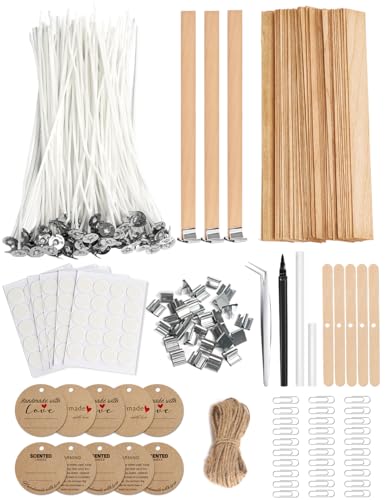
Multiwins 130 Pcs Candle Wicks Kit

Silicone Mold Making Kit 66 oz, 15A Platinum Silicone Rubber

DARJEN 12 Pcs 10 oz Glass Candle Jars with Lids
A Breakdown Of The Leading Choices
Fifteen matching vessels in one order changes the math for anyone pouring in batches. At 10 oz apiece, this grey glass set covers a whole weekend of gifts, and the bamboo-style wood lids give finished candles a boutique shelf presence without extra decorating work.
The glass itself is thick-walled and rated for hot pours, with an airtight seal ring under each lid so leftover candles stay dust-free between burns. Compared with the pink DARJEN set further down, this one reads more minimalist and neutral, which suits modern interiors better.
Notable Gains
- The 10 oz size burns long enough for daily use while staying compact on bathroom counters and nightstands.
- Airtight lid rings keep poured candles protected from dust and help scent hold longer in storage.
- Clear glass lets candlelight pass through fully, so lit candles glow warmly across living rooms and bedrooms.
- Glass holds up to repeated use, so emptied vessels can be cleaned and refilled instead of tossed.
Small Caveats
- Wax residue clings to jar corners after burning, and owners commonly report warm water plus patience works best for cleanup.
Quick Facts
Who Will Love This
Anyone making candles as gifts or decor who wants fifteen consistent, good-looking vessels in a single purchase.
A Better Fit Elsewhere
Pouring for a small shop calls for the VEVOR 10Lbs Wax Melter, since its bulk capacity outpaces jar-only setups quickly.
Starting from zero usually means three separate orders and a week of waiting. This kit collapses all of it into one box: five pounds of soy wax flakes, a 900 ml stainless steel pouring pitcher, fifty wicks, sixty wick stickers, four wick holders, a spoon, and a thermometer.
Soy wax is the friendliest material for newcomers because it melts at lower temperatures than paraffin and cleans off surfaces more easily. With a thermometer included, you can watch the melt rather than guessing by eye, which is where most first batches go wrong.
Key Advantages
- Five pounds of soy flakes yields dozens of standard candles, enough practice runs to build real technique.
- The stainless pitcher doubles as a melt vessel, so there’s no separate double-boiler juggling on the stove.
- Included thermometer takes temperature guesswork out, protecting both scent throw and wick performance.
- Wick stickers and holders keep cotton centered during the pour, preventing the classic floating-wick failure.
Things To Consider
- No jars are included, so pair it with either the SHOWIN set or the DARJEN set before your first pour session.
- Stainless pitchers need prompt cleaning; hardened soy residue is far easier to remove while still slightly warm.
Who Should Grab It
Complete beginners who want every tool in one purchase and don’t yet own any candle equipment.
Swap It Out When
Hobbyists who already own tools but want custom-shaped candles should reach for the SHORE RESIN silicone mold kit instead.
Stovetop melting stops being practical around the time you’re pouring ten candles a week. The VEVOR melter handles ten pounds of wax in a single batch through its 6.5-liter tank, which turns a two-hour melt session into something closer to twenty minutes of hands-off heating.
Nine temperature levels give you control that a stovetop simply can’t match, letting you dial in the exact range your wax blend needs. An easy-pour spout means fewer drips down the tank’s side, and the smooth interior wipes clean between sessions. Beyond candles, the same tank suits soap bases, balms, and cream products, so craft sellers get genuine multi-use value from one appliance.
Where It Delivers
- Ten-pound batch capacity supports steady production for market stalls and online orders.
- Nine-level temperature control protects delicate wax blends from scorching during long melts.
- The pour spout cuts spills significantly compared with lifting and tipping a heavy pitcher.
- Works for soap, lip balm, and cosmetic bases too, stretching one appliance across several crafts.
Worth Noting
- This is a dedicated appliance, so it claims permanent counter or shelf space in smaller kitchens.
- Full tanks of melted wax are heavy; plan your workstation layout before filling to capacity.
Feature Rundown
The Right Fit
Sellers and serious DIYers producing candles weekly will find this pays for itself in saved time.
Reach For A Different Pick When
Occasional makers pouring once a month are better served by the SAEUYVB starter kit, whose pitcher approach costs less and stores easier.
Running out of wicks mid-project is a special kind of frustration. This kit stocks 130 of them, split between 100 pre-waxed cotton wicks at four inches and 30 wooden wicks at five inches, so you can test crackling-wood burns against classic cotton without a second order.
The supporting cast matters just as much here: five wick holders, thirty metal bases, a hundred double-sided stickers, placing tubes, tags, tweezers, and even a pen for labeling. Double-sided stickers anchor the wick tab firmly, which prevents the common problem of wicks drifting upward when hot wax pours in. Compatibility spans soy, coconut, and beeswax across jars, pillars, and votives.
Everyday Perks
- Cotton and wood wicks in one supply lets you experiment with burn styles and sound.
- Strong-adhesive stickers stop wick float, saving candles that would otherwise need repouring.
- Works across soy, coconut, and beeswax, so one stock covers every wax you’re likely to try.
- Tags and a pen turn finished candles into ready-to-gift items with minimal effort.
Points To Note
- Wooden wicks behave differently from cotton and may take a few test burns to trim correctly.
- With 130 pieces, storage matters; keep them flat and dry so pre-waxed cotton doesn’t warp.
Details At A Glance
Whose Shelf It Belongs On
Regular makers churning through supplies monthly get the strongest return on this bulk wick assortment.
Another Choice May Suit
Newcomers still deciding whether they enjoy the craft may prefer the SAEUYVB kit, which bundles wicks alongside wax and tools.
Jar candles are only half the craft. For shaped candles, melts, and wax figures, you need molds, and this 66 oz platinum-cure silicone kit lets you make your own from any object you like. Two 33 oz parts mix at a simple one-to-one ratio, stirred thoroughly for several minutes before pouring over your master piece.
Platinum silicone is the grade worth paying for: it cures without the shrinkage issues cheaper tin-cure rubbers show and releases castings cleanly. Around half an hour of working time at room temperature gives you room to position everything properly. Once cured, the mold handles wax, resin, soap, plaster, clay, and concrete, so one investment covers several hobbies.
The Case For It
- 66 oz total volume builds large molds or many small ones from a single purchase.
- Equal-part mixing removes measuring complexity that trips up first-time mold makers.
- Roughly 30 minutes of open working time leaves space for careful positioning and bubble checks.
- Finished molds suit wax, resin, soap, plaster, clay, and concrete projects alike.
Honest Caveats
- Mixing must be thorough; under-mixed silicone is widely reported as the top cause of tacky, uncured spots.
- Cured molds store best away from direct sunlight, which degrades silicone over long stretches.
Right Fit For
Crafters wanting custom candle shapes beyond standard containers, especially those already comfortable with measured mixing.
Look Elsewhere When
Container-candle makers have no need for casting rubber; the SHOWIN jar set covers that workflow directly.
Twelve jars instead of fifteen, but with a personality the SHOWIN set doesn’t attempt. These pink vessels carry a polka-dot ribbed texture that refracts flame light into a soft patterned glow, giving finished candles a decorative quality straight out of the mold, so to speak.
Construction leans heavy-duty: thick walls absorb the thermal shock of a hot pour without cracking, which is the failure mode cheap thin glass falls into. That sturdiness also photographs well, a quiet advantage for anyone listing candles online. The 10 oz sizing matches standard wick recommendations, so pairing with the Multiwins cotton wicks is straightforward.
What Earns Its Place
- Thick-wall glass shrugs off hot wax pours that would stress thinner vessels.
- Ribbed texture scatters candlelight attractively, adding visual value without decoration work.
- The pink finish suits spring gifting, bridal events, and pastel-themed rooms naturally.
- Premium-feeling weight makes handmade candles read as retail-quality products.
Less Ideal Details
- The color limits versatility; neutral or masculine-leaning decor schemes won’t match as easily.
- Ribbed exteriors collect dust in grooves, so a soft brush helps during display cleaning.
Core Details
Made For
Weekend pourers who sell or gift candles with a softer, decorative aesthetic in mind.
Consider Something Else When
Neutral modern interiors call for the grey SHOWIN jars, whose minimalist look blends into almost any room.
What Matters Most Before Choosing Candle Making Kits
Match The Kit To Your Actual Output
Occasional hobbyists doing four candles a month do fine with a pitcher-and-stove workflow like the SAEUYVB provides. Anyone scaling toward markets or online shops hits a ceiling fast, and that’s precisely when an electric melter such as the VEVOR becomes necessary rather than indulgent. Count your realistic monthly output honestly before spending.
Container Quality Decides Your Results
Thin glass cracks under thermal shock from a 180-degree pour, wasting wax and risking mess. Thick-walled vessels like both jar sets here absorb heat gracefully and survive repeated reuse. Weight in the hand is a reliable proxy for wall thickness when listings don’t specify.
Wick Selection Shapes Burn Quality
The wick controls how evenly a candle burns and how well scent throws. Cotton suits container candles broadly, while wooden wicks add crackle and a wider flame. A mixed assortment, as the Multiwins kit offers, lets you match wick to jar diameter instead of forcing one size everywhere.
Think In Systems, Not Single Purchases
Jars alone don’t make candles, and wax alone doesn’t either. The strongest setups combine a wax source, matched containers, appropriate wicks, and temperature control. Buying complementary pieces, like pairing the SAEUYVB kit with either jar set, avoids the gap-filled shopping cart problem entirely.
Key Considerations Across These Picks
Traps First Timers Fall Into
Ordering wax without containers, or vice versa, is the classic stumble; check what each kit actually includes before checkout. Skipping the thermometer is the second mistake, since overheated soy wax ruins scent throw and no amount of fragrance fixes scorched wax.
When Paying More Pays Off
Higher-tier gear buys throughput and consistency. Nine-level temperature control and ten-pound capacity justify their cost the moment production becomes routine, while budget starter kits remain the smarter entry point while skills are still forming.
Frequently Asked Questions
How much wax does a 10 oz jar hold?
Roughly 8 oz by weight once you account for headspace below the rim. Plan about 20% less wax than the jar’s fluid capacity suggests.
Can I melt candle wax in a regular kitchen pot?
Yes, using a double-boiler method, though temperature control stays imprecise. A dedicated melter or pouring pitcher with a thermometer gives far more consistent results.
Are wooden wicks harder to use than cotton?
Slightly, mainly because trimming them correctly takes practice. They also need a longer initial burn to establish a full melt pool.
Why does my candle wax crack after cooling?
Rapid cooling or pouring at too low a temperature causes surface cracks. Pour warmer and let candles cool slowly at room temperature.
Is platinum silicone really better for homemade molds?
For repeated castings, yes. It cures with minimal shrinkage and releases cleanly, which matters most when a mold will be used many times.
Bottom Line
Six picks, six different jobs. Start with the SAEUYVB kit if you own nothing, add the SHOWIN or DARJEN jars for vessels, stock up on Multiwins wicks as output grows, and graduate to the VEVOR melter once candle making becomes a habit rather than a curiosity. Mold-makers have the SHORE RESIN kit waiting. Match the tool to the stage you’re actually at, and every pour gets easier.
