
Starting out in candle making usually ends one of two ways: a smooth first pour that hooks you, or a grainy, tunneled mess that sends the kit to the back of a closet. The wax you choose decides which of those happens. This roundup covers seven beginner-friendly options, from all-in-one kits to single-bag wax refills, so your first batch behaves like it should.
The Leading Options At A Glance

SAEUYVB 2 lbs Soy Wax Candle Making Kit

Ohcans Candle Making Kit for Beginners with Pouring Pot
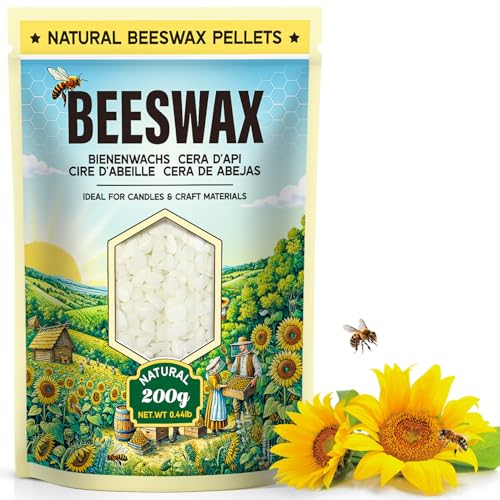
UNOTENA Beeswax Pellets for Candle Making 0.44lb

Sukh 15oz Natural Soy Wax Flakes

KQU 3lbs Soy Wax Kit with Electric Melting Pot

FUHITIM Soy Candle Wax Kit 10 lbs Bag

CARGEN 430g Paraffin Wax Pellets
Taking A Closer Look At The Options
A brand-new candle maker rarely knows which tools matter until halfway through a messy first pour. That’s the gap this SAEUYVB bundle closes: two pounds of natural soy wax arrive alongside a 900ml stainless steel pouring pot, fifty pre-cut 3.9-inch wicks, adhesive stickers, five wooden centering holders, and a spoon. Nothing else needs ordering before you start.
In a small apartment kitchen, the whole workflow fits on one counter. Two pounds of wax translates to roughly a dozen standard jar candles, enough practice runs to learn how melt point and cooling speed change your results.
Where It Excels
- Everything ships together, so there’s no waiting on separate tool orders before your first attempt
- The 304 stainless pot pours cleanly without the drips cheaper aluminum pitchers tend to leave
- Wooden wick holders keep wicks centered while wax sets, preventing off-center burns
- Two pounds gives you room to fail a few batches without reordering
- Soy wax cleans up with soap and warm water, unlike harder blends
Things To Consider
- No thermometer is listed among the contents, so temperature control relies on your judgment or a separate purchase
- The pot’s 900ml capacity means melting in stages once you move past small batches
Key Specs
Who It Suits Best
Total newcomers who want a single purchase that covers every step of a first candle.
A Better Fit Elsewhere
Makers who want built-in temperature readings will find the Ohcans kit, reviewed next, a more complete match.
Where the SAEUYVB kit above keeps things lean, this Ohcans set adds the two details beginners most often miss: a thermometer and an anti-hot silicone mat. Temperature is the difference between smooth tops and cratered ones, and the mat protects whatever surface you’re working on during a hot pour.
The wax supply is smaller at 12.4 ounces, so treat this as a learning kit rather than a production setup. The manufacturer suggests containers between 1.9 and 2.4 inches in diameter, worth checking against your jar collection before ordering.
Well-Handled Touches
- The included thermometer removes the biggest source of failed first candles, overheated wax
- Silicone mat catches spills and peels clean once cooled, saving your countertop
- Longer 5.1-inch wicks suit deeper vessels better than standard cuts
- Stainless steel wick holders come as a pair, useful when pouring two jars at once
Small Caveats
- At 12.4 ounces of wax, you’ll get maybe six to eight small candles before restocking
- The narrow recommended container range limits which jars work well
Product Snapshot
Made For
Careful beginners who’d rather measure twice than gamble their first batch on guesswork.
Where Another Pick Suits Better
Anyone planning weekend-long production runs will get far more mileage from the KQU electric-melter kit later in this list.
Beeswax plays by different rules than soy. It burns longer, carries a naturally honeyed scent of its own, and works just as happily in lip balms and skin products as it does in tapers. This UNOTENA option comes in pellet form, which melts faster and measures more accurately than blocks, a real advantage when you’re still dialing in ratios.
The 0.44-pound size here is the smallest of three available options, so think of it as a sampler. Pellet form also means no chopping, no scoring, no knife work near hot equipment, which matters more than it sounds once you’ve done it the hard way. Blending a portion into soy wax is a popular way to firm up softer candles while keeping costs down.
Advantages To Know
- Pellets melt evenly and portion precisely, cutting prep time versus cutting blocks
- Works across candles, balms, and skincare projects from one bag
- Natural honey aroma means some candles need no added fragrance at all
Points To Note
- The 0.44lb size runs out quickly, so frequent use means stepping up to the 2lb or 5lb variant
- Beeswax demands higher melt temperatures than soy, which can surprise first-timers using soy-calibrated habits
- It typically needs wider wicks than soy alone, a detail worth researching before pouring pillars
Right Fit For
Hobbyists who want one natural wax covering candles plus small bath-and-body experiments.
Consider Something Else When
Pure scent-throw priority points toward the Sukh soy flakes below, which are formulated to absorb fragrance oils heavily.
This is the pick for people whose main goal is smell. The manufacturer specifies that these soy flakes hold fragrance loads up to ten percent, meaning roughly an ounce of scent oil per pound of wax. That’s a high ceiling for container candles, and it’s why aromatherapy-focused makers gravitate toward this style of wax over generic blends.
The subtle milky base note also helps rather than fights your chosen fragrance. Fifteen ounces fills about four to six small jars, a sensible trial size for testing scent combinations before committing to bulk bags like the FUHITIM option further down.
Key Advantages
- Ten percent fragrance capacity supports bold, room-filling scented candles
- Flake form melts quickly and scoops cleanly for accurate measuring
- Gentle neutral base lets delicate fragrance notes read clearly
- Smaller bag keeps storage simple in cramped craft corners
Less Ideal Details
- No wicks, pots, or accessories are bundled, so plan on sourcing those separately
- Owners commonly report needing patience with cure time before judging final scent throw
Feature Card
Best Suited To
Scent-first makers refining fragrance recipes in small test batches.
Reach For A Different Pick When
First-timers wanting tools included should jump back to the SAEUYVB kit at the top of this list instead.
Every other kit on this list assumes a stove and a double-boiler workaround. The KQU skips that entirely with an electric melting pot that includes its own thermometer, so the whole operation plugs in beside your workspace. For anyone making candles regularly, that difference compounds fast.
Supply-wise it’s generous: three pounds of additive-free soy wax, one hundred cotton wicks with matching stickers, ten centering devices, and a wooden spoon. That volume supports genuine batch production, think holiday gifts or a small market stall trial. Compared with the smaller Ohcans kit earlier, this one trades compactness for throughput.
Notable Gains
- Electric melter with built-in thermometer frees you from stovetop juggling entirely
- Three pounds of wax yields dozens of candles, ideal for gift-making seasons
- One hundred wicks and ten centering devices support parallel pouring sessions
- Additive-free soy formulation appeals to makers avoiding paraffin blends
What To Weigh
- The electric unit needs counter space and an outlet, less suited to tiny kitchens
- Cleaning melted residue from the melter takes more effort than wiping a pour pitcher
- Larger batches mean larger losses while you’re still learning pour technique
Quick Facts
Who Will Love This
Hobbyists past the curiosity stage who want steady output without kitchen gymnastics.
Not Your Match When
Occasional makers dipping a toe in will find the lighter FUHITIM entry-level kit a calmer starting point.
Ten pounds changes the math. At that volume, each practice candle costs pennies in wax, which is exactly what you want while learning, since early attempts rarely deserve premium materials. FUHITIM positions this as an entry-level practice kit covering the core steps: melting, wicking, and pouring, with basic supplies included rather than a full professional arrangement.
The honest framing matters here. This isn’t the most accessorized option, and unlike the KQU kit it doesn’t bring an electric melter to the table. What it brings is volume and low stakes. Makers often report that repetition, not gear, is what finally produces level tops and centered burns, and ten pounds buys a lot of repetitions.
What Stands Out
- Bulk wax supply makes experimentation feel consequence-free
- Covers fundamental skills without demanding a full studio investment
- Soy base keeps cleanup simple between sessions
- Enough material to sustain weeks of regular practice
Practical Considerations
- Supplies are described as basic, so experienced ambitions may outgrow them quickly
- Storing ten pounds of wax requires cool, dry shelf space away from sunlight
- No heating appliance appears to be included, plan your melting method ahead
The Numbers That Matter
The Right Fit
Determined learners committed to repeated practice who value supply volume over gadgetry.
Where A Sibling Pick Shines
Makers wanting integrated heating should compare the KQU electric-melter kit, which bundles that capability directly.
Soy dominates beginner shelves, but paraffin still earns its place for specific jobs. These white pellets from CARGEN carry a moderate melting point, which makes handling forgiving, and the material’s natural hardness suits pillar candles, votives, and tapers, shapes where soft soy tends to slump. The beads take added fragrance willingly but work unscented too.
Paraffin is petroleum-derived, worth knowing if ingredient origin factors into your choices. Beyond candles, the listing notes broader household uses, giving leftover wax somewhere to go. Against the UNOTENA beeswax earlier, this is the budget-conscious structural alternative: harder finish, easier melt behavior, lower cost per ounce.
Strengths Worth Knowing
- Moderate melting point keeps the process approachable for newcomers
- Firm finished texture holds pillar and taper shapes reliably
- Pellet format measures and melts without any cutting
- Accepts fragrance oils or performs fine left plain
Details To Watch
- Petroleum origin won’t suit makers preferring plant-based materials
- The 430g bag covers only a handful of medium projects before repurchasing
Whose Shelf It Belongs On
Beginners targeting freestanding candles rather than jar pours, especially on a tight materials budget.
Swap It Out When
Jar-candle specialists after strong scent throw will prefer the Sukh 15oz soy flakes covered earlier.
What Matters Most Before Choosing Candle Waxes For Beginners
Match The Wax To The Vessel
Container candles and freestanding candles want different materials. Soft waxes like soy excel in jars because they adhere to glass, while firmer options such as paraffin and beeswax hold their shape in pillars and tapers. Choosing the wrong pairing is the most common reason early candles crack or slump.
Mind The Fragrance Load
Not every wax absorbs scent equally. Capacity figures, like the ten percent ceiling specified for the Sukh flakes, tell you how much fragrance oil the wax can bind before sweating or pooling occurs. Light-scent makers can ignore this; aromatherapy enthusiasts cannot.
Count What’s Actually Included
Kit listings vary widely in generosity. Some bundle thermometers, mats, and a hundred wicks; others ship wax alone. Before comparing anything, list what you already own and price the gaps separately, because a bare wax bag plus missing tools sometimes costs more than a fuller bundle.
Plan For Practice Volume
Skill in this hobby comes from repetition. Small bags teach technique slowly, since each batch feels precious. Bulk options lower the emotional cost of failure, and for most learners, that freedom accelerates progress more than any single accessory does.
Key Considerations Across These Picks
Traps First Timers Fall Into
The classic error is buying tools before understanding wax behavior. A fancy pouring pitcher won’t save a candle poured at the wrong temperature, yet beginners routinely skip the thermometer. The second trap is sizing: ordering a ten-pound bag before confirming you enjoy the process, or conversely, buying 15 ounces when you already know you’re hooked. Match quantity to commitment honestly.
Why Top Tier Costs More
Higher-priced kits earn their tags through integration and capacity. Electric melters with built-in thermometers, silicone work surfaces, and hundred-count wick supplies all add manufacturing cost, and they remove friction that cheap setups leave in your path. Paying up makes sense once candle making becomes routine; before that, a modest starter bundle teaches the same lessons for less.
Frequently Asked Questions
Which wax type is easiest for a complete beginner?
Container soy wax is generally the gentlest starting point because it melts at lower temperatures and cleans with soap and water. Kits bundling wicks and a pouring pot shorten the learning curve further.
How much wax do I need for my first candles?
A single standard 8-ounce jar uses roughly 6 to 7 ounces of wax by weight. One pound therefore covers two to three typical jars, enough for a meaningful first session.
Do I really need a thermometer?
Yes, in most cases. Pour temperature strongly affects surface texture and adhesion, and guessing is the most frequently cited cause of rough tops among new makers.
Can I mix different waxes together?
Blending is common and practical, such as adding beeswax to soy for firmness. Ratios affect melting and burning behavior, so change one variable at a time and record results.
How long should candles cure before burning?
Soy candles generally benefit from one to two weeks of resting so fragrance binds fully with the wax. Burning sooner usually works but delivers weaker scent throw.
Closing Thoughts
The right choice depends less on ranking and more on honesty about where you stand. Curious and cautious? Start with the SAEUYVB or Ohcans kits and let the included tools guide you. Already committed? The KQU melter or the FUHITIM bulk bag will serve you far longer. Whatever you choose, buy once, pour often, and let your second batch be better than your first.
