
A budget spray gun used to mean orange-peel finishes and clogged tips, and plenty of first-timers still burn money learning that lesson the hard way. The good news is the entry tier has genuinely improved: brass air caps, stainless needles, and multiple nozzle sizes now show up well under what a shop-grade setup runs. This roundup covers seven affordable options for DIYers painting cars, furniture, fences, and walls at home. Each one earns its place for a different reason, whether that’s nozzle versatility, cup capacity, or cleanup speed.
A Snapshot Of The Selections
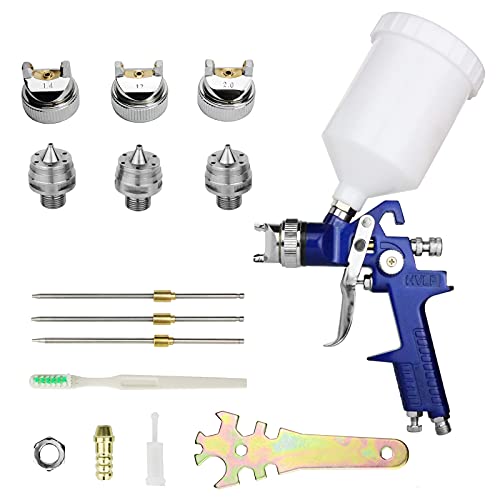
Hotorda HVLP Spray Gun Kit with 1.4/1.7/2.0mm Nozzles, 600cc Cup
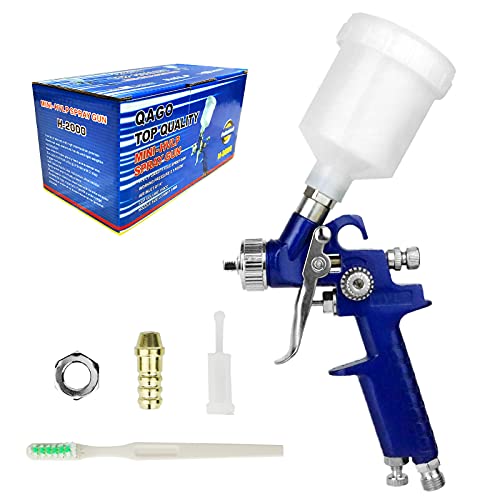
Tosucs HVLP Gravity Feed Spray Gun 1.0mm Tip, 125ml Cup

ENDOZER Professional HVLP Spray Gun Set
ELPIDIO Paint Sprayer, HVLP Spray Gun

Throohills HVLP Siphon Feed Spray Gun Set (Blue)

ENDOZER Mini HVLP Spot Repair Spray Gun 125CC

Zeinlenx HVLP Spray Gun Kit, 10 Disposable Cups
The Details Behind The Selections
Nozzle size decides how thick a coating you can push through a gun, and this Hotorda kit sidesteps the guesswork by shipping three matched sets: 1.4mm for clearcoats, 1.7mm for base coats, and 2.0mm for primer. That spread covers most of what a home garage or workshop throws at it, from automotive panels to furniture tops and interior walls.
The 600cc gravity-fed cup holds roughly enough material to coat a car door panel or a couple of cabinet faces before refilling. Compared with the smaller Tosucs gun later in this list, you’ll stop far less often mid-panel, which matters when you’re chasing a wet edge.
A Strong Showing
- Three interchangeable nozzle-and-needle sets handle thin clears up to heavy primers without buying extra guns
- Gravity feed means leftover paint drains into the cup instead of being siphon-wasted, stretching your material further
- 600cc capacity cuts refill stops on medium jobs like doors, hoods, or dresser bodies
- Suits base coats, wall paint, and craft work in one purchase rather than several single-purpose tools
Things To Consider
- You’ll need an air compressor with steady output; thin compressor tanks cause pulsing patterns on long passes
- Owners commonly report thorough solvent flushing after every session keeps the fine 1.4mm tip from drying out overnight
Key Specs
Made For
A DIYer tackling varied projects around the house who wants one gun that adapts from primer to clearcoat without extra purchases.
A Better Fit Elsewhere
Anyone doing only small spot repairs will get finer control from the ENDOZER Mini HVLP Spot Repair Spray Gun’s dedicated 1.0mm detail tip.
Where the Hotorda kit goes broad, the Tosucs goes small and precise. Its single 1.0mm tip is built for thinner materials, and the 125ml cup keeps the gun light in hand, which helps when you’re still learning trigger control on a chair frame or a mirror housing.
Gravity feed does real work here too. With the cup mounted on top, residual paint drains down toward the nozzle instead of pooling, so less product gets thrown away between sessions. A filter is included to strain dirt particles before they reach the tip, and anyone who has picked dried debris out of a pattern mid-job knows why that accessory earns its place.
What Makes Sense
- Lightweight 125ml cup reduces hand fatigue during practice sessions and small parts work
- Included filter strains particles before they clog the fine tip, protecting finish quality
- Gravity design wastes noticeably less leftover material than bottom-feed setups
Points To Note
- The small cup needs frequent topping off, so panel-sized car jobs turn into a stop-start routine
- One tip size only; thicker primers may need thinning to flow cleanly through the 1.0mm opening
- Cleaning the narrow fluid path promptly after use matters more here than on wider-tip guns
Who It Suits Best
First-time sprayers practicing on trim pieces, crafts, and small furniture where precision beats volume.
Reach For A Different Pick When
For whole-car priming or large wall sections, the Throohills Siphon Feed Set’s 1000cc cup handles far bigger volumes comfortably.
This ENDOZER set reads like someone took notes on what wears out first in cheap guns and fixed it. The air hood is brass rather than plated alloy, a material choice aimed at resisting wear and corrosion over repeated teardown cycles, and the nozzle plus needle are specified as genuine stainless steel.
The 15-hole air cap design spreads airflow for more uniform atomization, which translates directly into fewer streaks when you lay down base coat on a fender or lacquer on a tabletop. A 600ml gravity cup, standard 1/4-inch NPT inlet, matching quick adapter, and separate fluid and pattern controls round out a package that behaves like a step above its price bracket.
Notable Upsides
- Brass air hood resists corrosion better than common alloy alternatives across years of solvent exposure
- Stainless nozzle and needle hold their finish longer under abrasive pigments
- 15-hole cap promotes even atomization, reducing striping on wide passes
- Independent fluid and fan controls let you dial pattern width without touching paint flow
- Quick-connect adapter speeds compressor hookup between sessions
Worth Bearing In Mind
- Gravity cups sit on top, so watch overhead clearance inside tight booths or low garage bays
- Like any multi-part gun, gasket care during disassembly keeps the air seal tight over time
Product Snapshot
The Right Fit
A weekend painter stepping up from hobby gear who wants corrosion-resistant internals without paying professional-gun prices.
Consider Something Else When
Shoppers who mostly spray water-based house paint on walls may prefer the ELPIDIO sprayer’s electric plug-in format instead of a compressor setup.
Not everyone owns an air compressor, and that’s exactly the gap this electric ELPIDIO fills. Plug it into a household outlet and you’re spraying, no tank, hose, or moisture trap required. Four nozzle sizes, from a fine 1.0mm up to a wide 3.0mm, let the same unit move from cabinet doors to fence boards.
The standout detail is the cleaning and blowing joint, a fitting that lets you flush the system or blow surfaces clear without improvising with rags and brushes. Cleanup is where cheap sprayers usually die, so a purpose-built flush path extends the working life considerably. Three pattern settings, horizontal, vertical, and circular, adapt the fan to the surface shape.
The Practical Payoff
- Electric operation skips the compressor entirely, cutting startup cost and setup time
- Four tip sizes span delicate trim work through broad exterior surfaces
- Dedicated cleaning/blowing joint simplifies the post-job flush that keeps these guns alive
- Three spray patterns match orientation to doors, rails, and rounded legs
Some Limits To Know
- An electric motor adds weight compared with a bare pneumatic gun during long overhead sessions
- Automotive-grade clearcoat results depend heavily on technique; this format favors latex and enamels
- Power cord length dictates workspace layout near outlets
Core Details
Who Should Grab It
Homeowners refreshing cabinets, doors, fences, and garden furniture who want plug-and-spray convenience over compressor-based finishing.
Swap It Out When
For automotive base-and-clear work demanding compressed-air atomization, the ENDOZER Professional Set delivers the finer finish such coatings expect.
Siphon feed changes the physics: the cup hangs below the gun and air rushing past draws paint upward, trading some transfer efficiency for serious capacity. This Throohills set leans fully into that trade with a 1000cc aluminum cup, roughly two-thirds larger than the Hotorda’s 600cc, meaning entire fenders or door shells get coated in one pour.
The kit arrives genuinely complete. Alongside the usual 1.4, 1.7, and 2.0mm stainless nozzles you get a pressure regulator, six paint strainers, and a brass airflow cap, so there’s little left to source before the first job. It’s aimed squarely at basecoats, clearcoats, and thicker coatings where smooth, even laydown matters.
Where It Excels
- 1000cc aluminum cup sustains long continuous passes across full panels
- Pressure regulator included lets you tune inlet air without extra purchases
- Six strainers keep debris out of the fluid path on multi-coat jobs
- Brass airflow cap pairs durability with consistent pattern shape
- Handles high-viscosity coatings that stall narrower-tip guns
Trade Offs To Weigh
- Siphon systems leave more residual paint in the cup than gravity designs, adding slight material cost per session
- A full liter of paint makes the assembled gun heavy; plan rest breaks on long days
- More components mean a longer rinse-out routine after each color change
Quick Facts
Right Fit For
Garage painters respraying whole vehicles or large furniture runs who value uninterrupted coverage over minimal paint waste.
Another Choice May Suit
Detail-oriented touch-up work suits the Zeinlenx kit better, whose disposable cups avoid cross-color contamination entirely.
Blending a quarter panel doesn’t need a full-size gun, and using one usually oversprays half the car. This mini ENDOZER exists for those moments: a 125ml gravity cup, a fine 1.0mm stainless nozzle and needle, and a compact five-hole brass hood tuned for tight, controlled atomization.
Its stated operating window runs from about 20 to 43 PSI, flexible enough to pair with smaller compressors many home garages already own. Sharing the same brass construction and 1/4-inch NPT quick adapter as its bigger Professional sibling reviewed earlier, it slots naturally beside that gun as the detail companion in a two-gun setup.
The Value In It
- Fine 1.0mm tip lays narrow bands ideal for stone-chip repair and trim touch-ups
- Five-hole hood concentrates airflow for precise blending on small areas
- Wide 20-43 PSI range tolerates modest home compressors
- Tiny cup means fast color changes when hopping between touch-up shades
Small Caveats
- At 125ml capacity, anything beyond spot work means constant refilling
- Thin materials only; heavy primers will likely need reduction to spray clean
Whose Shelf It Belongs On
Auto enthusiasts and detailers handling chips, scuffs, and blended repairs where a full-size gun wastes paint and control alike.
Not Your Match When
Whole-panel refinishing calls for the Throohills Siphon Feed Set, whose liter-sized cup was made for sustained coverage.
Every painter eventually meets the cleanup tax: twenty minutes of solvent flushing between colors, every single day. The Zeinlenx kit attacks that problem head-on with a disposable cup system, ten lined cups that swap out in seconds so switching from black base to clear means swapping a lid, not scrubbing a pot.
Underneath the convenience sits a properly built gun: brass air cap, high-grade stainless needle and nozzle, and four tip sizes including a 2.5mm option nobody else here offers, useful for high-build primers and textured coatings. Against the Throohills set, you give up raw cup size but gain a wider tip range and dramatically faster turnover between colors.
The Helpful Details
- Ten disposable cups make multi-color days nearly cleanup-free
- Unique 2.5mm nozzle tackles high-build primers and heavier coatings
- Four-tip range spans fine detail through aggressive coverage
- Brass cap with stainless internals holds pattern quality over repeated use
- Sealed cup liners reduce contamination risk between mixed batches
Details To Watch
- Disposable liners are a recurring cost once the supplied ten run out
- Gun body still needs its own periodic solvent bath despite the liner system
Feature Rundown
Built With In Mind
Custom painters and serial refinishers cycling through multiple colors per project who value turnaround time over cup capacity.
Look Elsewhere When
Budget-conscious occasional users spraying one color all season will find the Hotorda kit’s reusable 600cc cup simpler and cheaper to run.
What To Look For In An Affordable Spray Gun
Nozzle Size And Coating Match
Tip diameter governs what flows through cleanly: 1.0mm suits thin clears and stains, 1.4 to 1.7mm handles base coats, and 2.0mm or wider pushes primer. Buying one gun with swappable tips beats owning three single-purpose units for most home shops. Check that replacement needles are available, since a bent needle ends a cheap gun’s life quickly.
Feed Type: Gravity Vs Siphon
Gravity guns mount the cup on top, wasting less paint and suiting smaller compressors, but add overhead height. Siphon guns hang the cup below, offering big capacity for whole-vehicle work at the cost of leftover residue and slightly higher air demand. Match the feed style to your compressor and your typical panel size.
Materials That Survive Solvent
Brass air caps and stainless steel needles resist the corrosion that eats cheaper alloy parts within months of regular lacquer or reducer exposure. These two details predict longevity better than almost anything else on a spec sheet, so treat them as baseline requirements rather than bonuses.
Cleanup Reality
The honest ownership cost of any spray gun is washing it out after every session. Disposable-cup systems and built-in cleaning joints cut that chore dramatically, while traditional cups demand disciplined solvent flushes. Choose based on how often you’ll actually spray, not just on how the gun performs mid-coat.
Key Considerations Across These Picks
Traps First Timers Fall Into
The classic mistake is pairing a gun with an undersized compressor, then blaming the tool for pulsing, streaky patterns. Check your tank and CFM output before ordering. Another common slip: skipping the test pass on cardboard and going straight onto the panel, which turns setup errors into sanding work.
When Paying More Pays Off
Higher-tier guns spend their extra cost on brass internals, tighter machining tolerances, and better atomization consistency. Casual seasonal painters rarely feel that difference, while anyone laying down automotive clearcoat week after week will notice flatter finishes and fewer mid-job tip dry-outs. Spend up only when frequency and finish demands justify it.
Frequently Asked Questions
Do cheap HVLP spray guns actually produce smooth finishes?
Yes, provided the nozzle size matches the coating and the compressor supplies steady air. Technique and preparation matter more than price once those basics align.
What size air compressor do I need?
Most entry guns want a compressor delivering around 3 to 5 CFM at 40 to 50 PSI for continuous spraying. Small pancake tanks work for short bursts but pulse on long passes.
Can I spray latex wall paint through these guns?
Electric models like the ELPIDIO handle latex readily, while pneumatic guns typically need thinning and a 2.0mm or larger tip. Always strain the paint first either way.
How do I clean a spray gun after use?
Empty the cup, then flush solvent or water through until the discharge runs clear, followed by a partial teardown to wipe the needle and air cap. Doing this immediately prevents dried paint from ruining the fine passages.
Are disposable cup systems worth the ongoing cost?
For anyone changing colors frequently, the saved cleaning time repays the liner expense quickly. Single-color users get better value from a traditional reusable cup.
Closing Remarks
Picking between these seven comes down to your workload more than any ranking. Whole-car repaints point toward the Throohills siphon set, detail blending toward the ENDOZER mini, and compressor-free weekends toward the ELPIDIO. Whatever you choose, budget equal attention for cleanup habits, because that’s where cheap guns succeed or quietly die. Start with cardboard, adjust your fan and fluid controls, and let the finish tell you when you’ve got it right.
