
Hand cranking a hat by needle takes hours. A circular knitting machine turns the same project into minutes of steady winding, which is why these tools have quietly become studio staples for crafters who sell at markets or just churn out gifts. This guide sorts seven machines across three tiers: electric cord makers, German-engineered crank units, and budget-friendly Sentro-style looms.
The Lineup, Simplified

Caydo Automatic i Cord Knitting Machine Pro
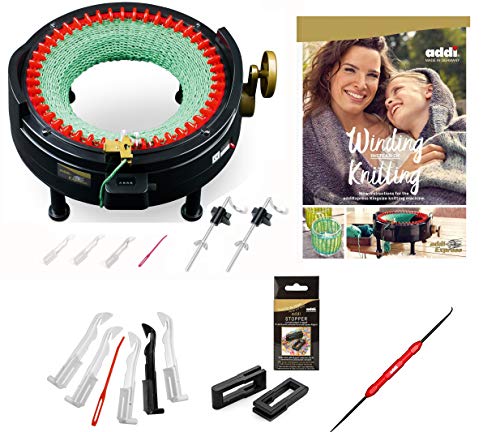
addi Express King Size Knitting Machine Kit 46 Needles

addi Express Professional Knitting Machine Extended Edition

Sentro 48 Needle Knitting Machine with Row Counter

addi I Want IT All Knitting Machine Pro Set

SENTRO Knitting Machine 48 Needles, Double Knitting Loom

MIAOKE 40 Needles Knitting Machine Round Loom
Inside Each Recommended Option
An i-cord is a narrow knitted tube used for bag handles, drawstrings, garlands, and trim. The Caydo makes those tubes electrically, so your hands stay free while yards of cord pile up. Anyone selling plant hangers or macrame accessories knows how quickly cord demand outpaces patience.
Compared with the crank machines later in this list, this one trades versatility for speed on a single job. You may find that narrow focus limiting once you want hats or panels, but for pure cord volume it removes the hand fatigue entirely.
Practical Advantages
- Electric operation means no cranking, so long cord runs stop being a wrist workout.
- Tangle-free feeding lets you step away briefly instead of babysitting every row.
- Sits squarely in the weaving and spinning corner of the craft aisle, so yarn compatibility is its home turf.
- Cuts production time dramatically for market sellers who need consistent cords in bulk.
A Few Limitations
- i-cords are its whole repertoire; owners wanting tubes wider than trim width should look at the Sentro or addi models instead.
- Motorized parts mean occasional cleaning around the needle bed to keep feed smooth over time.
Who Will Love This
Craft sellers and decorators who burn through i-cord by the yard and want their evenings back.
Where A Sibling Pick Shines
The addi Express Professional covers flat and round projects beyond cords, suiting beginners who want one machine for many item types.
The King Size is the widest machine here, and that extra real estate changes what you can make. Forty-six needles produce circular pieces roughly 10 to 15 inches across, plus flat panels about 18 inches wide, which puts adult hats, cushions, and sweater sections within reach without seaming tricks.
It’s built in Germany, and that shows in the crank feel reported by long-term owners: firm, even, and quiet compared with lighter plastic looms. The kit bundles a manual row counter, pattern book, express hook, replacement needles, and a stopper, so you’re equipped from day one.
Points In Its Favor
- Handles yarn counts 4 through 8, giving you freedom across worsted and chunky weights.
- An 18-inch flat panel width suits pillow fronts and garment panels most smaller machines can’t manage.
- German manufacture tends to translate into durable gearing and consistent stitch formation over years of use.
- The included counter keeps rows honest on longer projects like blankets.
Things To Consider
- As an international product, labeling and instructions may arrive in different terms than local versions, worth checking before ordering.
- The larger footprint needs dedicated table space, unlike the compact MIAOKE further down.
At A Glance
Right Fit For
Intermediate crafters producing wearables or home goods at volume who won’t compromise on panel width.
Swap It Out When
Budget-conscious first timers will get more value from the SENTRO 48-needle model while learning the basics.
This is the compact sibling of the King Size reviewed above, running 22 needles instead of 46. Circular pieces come out around 4 to 6 inches across and flat panels run 6 to 8 inches wide, which lands squarely in sock, gauntlet, baby hat, and small accessory territory.
The extended edition adds an improved mechanical row counter, a small upgrade that matters more than it sounds. Losing track of rows is the most common beginner mistake, and a mechanical counter solves it without batteries. The full kit includes a pattern book, five replacement needles, threading tool, four feet, two clampers, two stoppers, and addi’s tension guide set, so nothing essential is missing from the box.
Positive Points
- The improved mechanical row counter tracks progress reliably, cutting the re-count frustration new users report most often.
- Turn-the-handle simplicity means a first scarf can happen within minutes of unboxing.
- The tension guide set helps even yarn feed, which is where most dropped stitches start.
- Same 4-to-8 yarn count range as its bigger sibling, so stash yarn works fine.
Softer Spots
- Small output size rules out adult garments in single panels; plan patchwork assembly for bigger pieces.
- Plastic gears benefit from occasional light maintenance to keep the crank smooth over years.
Feature Snapshot
Who It Suits Best
Absolute beginners and gift makers focused on socks, small hats, and quick wins rather than full garments.
Consider Something Else When
Anyone planning adult-size hats and wide panels should step up to the addi Express King Size Kit instead.
Where the addi machines commit you to one geometry, the Sentro switches between tube knitting and flat panels with a mode change. That dual-mode design is the reason this 48-needle unit earns its spot: hats come off the tube setting, scarves and blanket squares come off the panel setting.
The smart row counter records each woven row as you crank, keeping fabric length consistent across sessions. In practice that means matching sleeve pairs or repeating stripe patterns stops depending on memory. Hand-eye coordination improves naturally too, which parents and teachers often mention as a side benefit.
Real Benefits
- Dual tube and panel modes cover hats, scarves, bags, and patchwork from one machine.
- The built-in counter ensures repeatable row counts between crafting sessions.
- Forty-eight needles give generous width for a machine in this price bracket.
- Crank operation stays silent, so evening couch knitting never disturbs anyone.
Details To Watch
- Owners commonly report dropped stitches when yarn tension runs loose, so steady, even cranking pays off.
- Plastic construction feels lighter than the German-made alternatives; gentle storage extends its life.
Core Details
Whose Shelf It Belongs On
Versatile hobbyists who bounce between round and flat projects and want one dependable workhorse.
Not Your Match When
Pure cord makers will find the Caydo Automatic i Cord Machine far more efficient for their specific output.
Buying both addi machines separately costs more than this bundled set, and that’s the entire argument for it. You receive the 46-needle King Size and the 22-needle Express Pro together, both fitted with the newer improved counter, covering everything from sock-width tubes to 18-inch panels.
The bundle goes beyond hardware. Two packs of replacement needles, a stopper, the addiExpress hook, and three pattern books ship alongside: Winding Instead Of Knitting, addi Express, and Turbo-Knitting 2. For someone committed to machine knitting as a serious hobby, that library alone shortens the learning curve considerably.
A Strong Showing
- Both machine sizes in one purchase eliminates the upgrade decision entirely.
- Three pattern books provide structured projects spanning skill levels.
- Spare needles on hand mean a bent needle never stalls a deadline project.
- Improved counters on both units keep multi-session projects accurate.
Potential Sticking Points
- Two machines demand real storage space, a genuine concern in small apartments.
- The upfront spend only makes sense for committed users; casual dabblers waste half the set.
Made For
Dedicated machine knitters ready to own the full addi ecosystem and work across every project scale.
Another Choice May Suit
Newcomers unsure about the hobby should start with the standalone addi Express Professional before committing to both machines.
This SENTRO model targets households rather than studios. The manufacturer rates it suitable for children over 12, and the hand-crank design backs that up: thread the yarn into the spindles, turn the handle, and a flat or round stitch forms in seconds. No motor, no heat, no complicated setup.
It shares the 48-needle count with the Cyandream Sentro reviewed earlier, so output width is comparable, and it handles hats, scarves, and socks. The difference is positioning: this version leans into the DIY board angle and beginner accessibility, making it a natural classroom or family-activity choice. The plastic build is described as odorless and environmentally considered, which reassures parents sharing table space with teens.
Useful Touches
- Rated for ages 12 and up, opening the hobby to younger family members safely.
- Instant flat-or-round switching keeps group projects moving without technical detours.
- Simple spindle threading means less supervision than motorized or complex setups.
Worth Noting
- No row counter is mentioned for this version, so tracking rows falls to sticky notes or memory.
- Lightweight plastic base benefits from clamping or steadying during enthusiastic cranking.
The Key Facts
The Right Fit
Parents, teachers, and group leaders introducing tweens and teens to machine knitting without a steep investment.
Reach For A Different Pick When
Serious adult hobbyists needing row counting should choose the Sentro 48 Needle model with its built-in counter instead.
Every lineup needs an entry point, and this is it. The MIAOKE runs 40 needles on a simple hand crank, sitting just below the Sentro models in width while costing meaningfully less. For anyone testing whether machine knitting clicks before spending real money, the math favors starting here.
The high-quality plastic body is described as odorless and safe, and the crank produces flat or round stitches with the same thread-and-turn motion as its pricier cousins. Honest caveat: at this tier you trade refinement for affordability, so expect lighter construction and simpler finishing than the addi units deliver.
Everyday Wins
- Low entry cost makes it a low-stakes way to learn crank technique.
- Forty needles still turn out usable hats, scarves, and pet-sized projects.
- Odorless plastic construction suits shared living spaces and kids’ rooms.
Small Caveats
- Lighter build quality means gentler handling; owners report plastic parts reward careful storage.
- No row counter or advanced features, so longer projects require manual tracking.
Quick Facts
Best Suited To
Cautious first timers, students, and anyone gifting a starter machine without a large commitment.
Look Elsewhere When
Crafters wanting durability and precision should invest in the addi Express Professional instead.
What Matters Most Before Choosing Circular Knitting Machines
Match The Needle Count To Your Projects
Needle count dictates output width more than any other spec. Twenty-two needles cover socks and small accessories, forty-plus handles adult hats comfortably, and forty-six reaches into garment panels. Sketch your actual project list before shopping; buying wide for scarf-only use wastes money and table space.
Decide Between Crank And Electric
Hand-crank machines like the addi and Sentro lines offer control and quiet operation. Electric options such as the Caydo prioritize raw speed for repetitive outputs like i-cords. Your hands, your schedule, and your project mix settle this question faster than any spec sheet.
Weigh Yarn Compatibility Early
Most machines here accept yarn counts 4 through 8, spanning worsted to chunky weights. Thinner or thicker yarns cause dropped stitches and jamming regardless of brand. Check your existing stash against the stated range before committing, since mismatched yarn is the top frustration owners report.
Key Considerations Across These Picks
Wrong Turns To Avoid
The classic error is buying a 46-needle machine when every planned project fits a 22-needle frame, then letting it gather dust. The reverse hurts too: squeezing adult hats onto a small machine and fighting constant dropped stitches. Also check what’s actually in the box, since some kits omit counters or hooks that others include.
The Case For Spending Up
Higher-tier machines earn their price through gearing precision, row counters, and included accessories. German-built addi units cost more because tolerances stay tight over thousands of crank rotations. Casual users rarely notice; anyone producing weekly output will feel the difference within a month.
Frequently Asked Questions
Can a circular knitting machine replace hand knitting?
No, it complements rather than replaces it. Machines excel at fast stockinette tubes and panels, while shaping, cables, and fine detail still demand hand skills.
What yarn works best in these machines?
Smooth, medium-weight yarn in the count 4 to 8 range feeds most reliably. Fuzzy, slippery, or very thin yarns tend to drop stitches.
Are these machines suitable for children?
The SENTRO model is rated for ages 12 and up under supervision. Younger crafters do better with adult help threading and cranking steadily.
How long does a typical hat take?
On a 40 to 48 needle crank machine, experienced users commonly finish a basic beanie well under an hour. First attempts take longer while tension habits form.
Do I need a row counter?
For anything longer than a scarf, yes. Built-in mechanical or smart counters prevent the miscounted rows that ruin matched sets and repeated patterns.
Wrap Up
Your best match depends on output, not hype. Cord-focused sellers should look hard at the Caydo, garment makers at the addi King Size, and undecided newcomers at either the addi Professional or a Sentro 48. Start with the machine that matches the projects already on your list, and let the hobby grow from there.
