
Anyone who sews knits, hems pants, or finishes raw edges knows the frustration of a home sewing machine that can’t quite do it all. A dedicated overlocker or coverstitch-style machine takes that last step off your plate, trimming, seaming, and hemming in a single pass so garments look store-bought instead of homemade. Below are seven machines worth your attention in 2026, from beginner-friendly sergers to an industrial-speed workhorse, each matched to a different kind of sewist.
Your Options, Compared
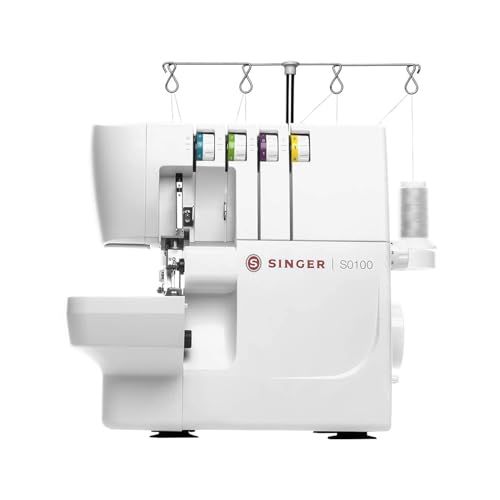
SINGER S0100 High Speed Serger
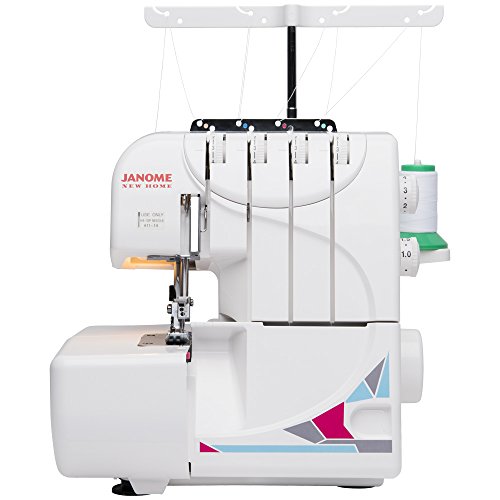
Janome MOD-8933 Serger

REX RX-518 Blindstitch Machine

Juki MO-50E 3 or 4 Thread Serger

FEIYUE FY505 Serger Overlock Machine

VEVOR Serger Overlock Sewing Machine White

Qiokoith 220v Industrial Serger Machine
The Strengths Of Each Pick
Threading is where most first-time serger owners quit, and SINGER sidesteps that wall by shipping the S0100 pre-threaded. You unbox it, plug it in, and start finishing seams the same afternoon. That single detail changes the whole learning curve.
In practice, the 2-3-4 thread flexibility covers delicate napkin hems, stretchy knit seams, and decorative fleece edges without swapping machines. Compared with the FEIYUE FY505 later in this list, the S0100 trades some frame heft for a smoother out-of-box experience.
What It Does Well
- Ships pre-threaded, so you can start sewing immediately rather than fighting looper threading on day one.
- Three thread configurations let you match stitch density to fabric weight, from sheer hems to bulky fleece.
- High-speed stitching keeps long seam runs moving quickly through garment projects.
- SINGER brand support makes replacement parts and manuals easy to track down.
Things To Consider
- Sergers of any brand need regular lint cleaning around the loopers, and owners commonly report this model produces plenty of it during heavy use.
Who It Suits Best
Absolute beginners who want a name-brand serger that works straight out of the box.
Where Another Pick Suits Better
Sewists wanting adjustable differential feed for wavy knits will get more from the Janome MOD-8933.
Where the SINGER wins on setup, the Janome MOD-8933 wins on control. Its lay-in threading system uses color-coded guides, which turns rethreading after a broken thread from a headache into a two-minute job. Differential feed, a mechanism that feeds the top and bottom fabric layers at different speeds, keeps knits from stretching into ripples.
This convertible 3-and-4-thread machine suits the developing fashion enthusiast well: denim hems, knit tops, and rolled edges all fall within its range. In a small sewing room, its compact footprint matters too.
Noteworthy Benefits
- Lay-in threading with color-coded tension dials cuts rethreading time dramatically once you learn the paths.
- Differential feed prevents puckered seams on lightweight knits and stretched-out hems on jersey.
- Convertible 3 or 4 thread setups adapt between sturdy construction seams and lighter edge finishes.
- Compact body fits crowded craft rooms and stores away easily between projects.
Worth Noting
- There is no built-in rolled hem dial here, so decorative narrow hems take more manual adjustment than on the Juki MO-50E.
- Thread tension needs a patient first calibration; expect to run test scraps before committing to good fabric.
At A Glance
Made For
Hobby sewists past their first machine who sew a mix of knits and wovens weekly.
Look Elsewhere When
Total newcomers who dread threading may prefer the pre-threaded SINGER S0100 instead.
This one breaks from the serger pack entirely. The REX RX-518 is a blindstitch machine, meaning it catches just a few threads on the fabric surface while hiding the bulk of the stitch underneath, which is how trouser cuffs and skirt hems end up invisible from the outside. An all-metal build gives it the sturdiness of older commercial gear in a portable desktop size.
Tailors doing alterations, drapery makers, and anyone hemming dresses or coat bottoms regularly will find no substitute elsewhere on this list. A skip-stitch feature handles both 1-to-1 and 2-to-1 catch ratios, and the swing-away bed plate opens extra workspace for larger pieces like curtains.
Real Benefits
- All-metal construction shrugs off the daily wear that wears out plastic-bodied machines.
- Skip-stitch settings switch between firm hems and barely-there catches depending on fabric weight.
- Handles synthetics, knits, and woolens across light to medium weights.
Points To Note
- It does one job beautifully; you still need a separate machine for general seaming and overlocking.
- Blind hemming has a real learning curve, and skipped stitches on thin fabrics are a commonly reported frustration until technique settles.
- Being a niche import, finding local service can take more effort than with mainstream brands.
Right Fit For
Alteration shops and home tailors whose workload centers on invisible hems and cuffs.
Swap It Out When
General-purpose seam finishing calls for a true overlocker such as the Juki MO-50E.
Juki builds industrial sewing equipment, and that DNA shows up here in an economically priced home package. The MO-50E pairs lay-in tensions with an automatic lower looper threader, the single hardest thread path on any serger, which alone removes the biggest complaint people have about the category.
An adjustable calibrated knife lets you set exactly how much fabric gets trimmed per pass, useful when working close to a marked seam line. Add a built-in rolled hem and retractable upper knife, and you have a machine geared toward daily garment sewing rather than occasional use.
Strengths Worth Knowing
- Automatic lower looper threader eliminates the most fiddly part of serger setup.
- Calibrated knife adjustment gives precise control over cutting width seam by seam.
- Built-in rolled hem mode switches to narrow decorative edges without attachments.
- Retractable upper knife lets you serge without cutting, handy for delicate edges.
- Adjustable differential feed tames stretchy and slippery fabrics alike.
Honest Caveats
- The feature list leans utilitarian; cosmetic touches and accessories are sparser than on newer models like the VEVOR.
- Owners commonly recommend keeping spare needles on hand, as heavy knit work dulls them faster than woven projects.
Quick Facts
Who Will Love This
Regular garment sewists who value mechanical dependability over bells and whistles.
A Better Fit Elsewhere
Production-minded users chasing raw speed should look at the Qiokoith industrial unit below.
Most budget sergers cut corners on the frame. The FY505 goes the other way, building a sturdy metal chassis that stays stable at speed and resists the vibration that loosens cheaper plastic bodies over time. For a first serger bought on a tight budget, that foundation counts for a lot.
Its 2/3/4 thread capability matches what the pricier SINGER offers, letting you move between wide safety stitches, narrow seams, and rolled edges on different fabric types. The honest trade-off is polish: expect simpler documentation and fewer convenience features than the Janome provides.
Bright Spots
- Metal frame construction holds up to heavy-duty sessions and keeps stitching steady.
- Three thread configurations handle varied fabric thicknesses and stitch styles.
- Entry-level cost leaves room in your budget for quality thread cones, which matter more than most beginners expect.
Trade Offs
- No differential feed is listed, so very stretchy jerseys may need careful handling compared with the Janome MOD-8933.
- Support and manual quality lag behind established brands, so self-teaching resources carry more weight.
The Right Fit
Cost-conscious beginners and occasional menders who want metal-built durability without paying for extras they won’t use.
Consider Something Else When
Knit-heavy wardrobes benefit from the differential feed on the Janome MOD-8933 instead.
Speed and visibility define this VEVOR. A 112-watt motor drives up to 1,250 stitches per minute, comfortably ahead of typical home sergers, and an LED lamp lights the needle zone so evening sewing doesn’t strain your eyes. Strong suction-style presser feet grip fabric firmly through fast passes.
You also get adjustable stitch length and width across 3 or 4 thread setups, enough range for everything from quick repairs to clean edge finishing on production runs. Against the Juki MO-50E, this machine trades some brand pedigree for modern conveniences and outright pace.
The Helpful Details
- 1,250 SPM top speed shortens long hemming and seaming sessions noticeably.
- Built-in LED light keeps the stitching area clearly visible in dim rooms.
- Heavy-duty metal frame dampens vibration during extended high-speed runs.
- Adjustable stitch length and width tune output to each fabric type.
Small Caveats
- High-speed serging amplifies threading mistakes; a misrouted thread shows up fast at 1,250 SPM.
- VEVOR’s documentation is thinner than legacy brands’, so plan on community tutorials for advanced adjustments.
Core Details
Built With In Mind
Home-based sellers and prolific sewists churning through batches of garments on a schedule.
Reach For A Different Pick When
Quiet operation ranks highest, since the Juki MO-50E tends to run calmer in shared living spaces.
Nothing else here approaches 3,000 stitches per minute. This three-thread industrial overlocker trims and seams in one motion at roughly double the VEVOR’s pace, with quenched bearings and electroplated pulleys resisting rust through long production days. A low-noise motor and fixed presser foot design help prevent skipped stitches on thick material.
One critical detail before anything else: this unit runs on 220V power only, not standard North American 110V outlets. You’ll need a compatible circuit or your own transformer. Knob-adjusted stitch length spans 1.5mm to 3.2mm, and the maker notes it handles thick denim without jamming.
The Case For It
- 3,000 SPM throughput suits small workshops producing garments by the dozen.
- Automatic edge cutting merges trimming and seaming into a single pass.
- Rust-resistant bearings and pulleys point toward sustained commercial duty.
- Wide 1.5-3.2mm stitch length range adapts from delicate edges to dense denim seams.
A Few Limitations
- 220V-only power means most US homes need a transformer before the first stitch.
- Three threads only; four-thread safety stitching isn’t available, unlike every other serger on this list.
- Support relies on direct seller contact rather than an established service network.
Product Snapshot
Whose Shelf It Belongs On
Small-batch producers and alterations businesses already equipped for 220V power.
Skip It When
Household sewists on standard outlets will find the VEVOR far more practical.
What Matters Most Before Choosing Coverstitch Machines
Match The Machine To Your Fabric Mix
Knit-heavy wardrobes demand differential feed, the mechanism that stops jersey from stretching into waves. Denim and canvas call for metal frames and strong motors instead. Write down the five fabrics you actually sew most, then filter accordingly.
Count Your Threads Wisely
Four-thread setups create stronger, wider safety seams for garment construction. Two and three threads suit hems, rolled edges, and lighter finishes. A convertible machine covers both, but costs more than a fixed configuration.
Factor In Threading And Maintenance
Sergers carry three to four cones simultaneously, and threading them is the category’s notorious pain point. Pre-threaded delivery, color-coded paths, and automatic looper threaders all reduce that friction. Plan on regular lint removal around the knife and loopers regardless of brand.
Respect Your Power Setup
One pick in this list requires 220V power. Standard North American homes supply 110V, so verify voltage compatibility before ordering anything industrial-grade.
Key Considerations Across These Picks
Where Shoppers Go Wrong
The classic error is buying a serger for jobs it can’t do, like topstitching or buttonholes, then blaming the machine. Another common slip: ignoring voltage labels on imported industrial units. Check the spec sheet twice before checkout.
What Separates Premium From Basic
Higher-tier models spend your money on automatic threaders, differential feed calibration, quieter motors, and better documentation. Casual menders rarely feel those gaps; anyone sewing weekly will notice within a month.
Frequently Asked Questions
Do I still need a regular sewing machine alongside a serger?
Yes, in almost every case. Sergers finish edges and construct seams but can’t do topstitching, zippers, or buttonholes.
What’s the difference between a serger and a true coverstitch machine?
A serger trims and encases fabric edges while seaming. A coverstitch machine creates the parallel double-needle hemming found on store-bought knit hems without cutting.
How hard is serger threading really?
It looks intimidating but follows color-coded paths once learned. Features like pre-threaded delivery and automatic looper threaders shorten the process considerably.
Can these machines handle denim and heavy canvas?
Several can, particularly the metal-framed models here. The Qiokoith unit specifically advertises jam-free denim work at adjustable stitch lengths.
How often does a serger need maintenance?
Lint cleanup around the loopers and knife after every few projects keeps stitching clean. Needles deserve replacing roughly every eight hours of active sewing.
Wrap Up
Your best choice depends on where you sit as a sewist. Beginners get the smoothest start with the pre-threaded SINGER, while growing hobbyists gain the most headroom from the Janome MOD-8933. Tailors have the REX RX-518, batch producers the VEVOR or Qiokoith, and the Juki MO-50E remains the dependable middle ground. Match the machine to the fabric on your table, and the finished hems will speak for themselves.
