
Cutting in along ceilings, trim, and corners separates a passable paint job from one that looks professional. The right brush, pad, or extender turns those nerve-wracking edges into controlled strokes, while the wrong tool leaves you with lap marks, bristles in the finish, and a sore hand. This lineup covers ten tools that tackle the cutting-in part of painting differently, so you can match the gear to the room, the surface, and the patience level you’re working with.
Your Options, Compared

Zibra Precision Detail Paint Brush, Pro Grade, 2-inch

Shur-Line 2007053 Premium Corner Painter (Red)
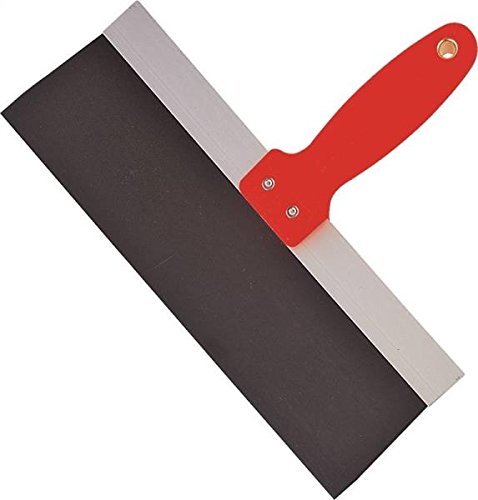
Edward Tools Blue Steel Taping Knife 12-inch

DIYSELF 2 Pack Razor Blade Scraper with 10 Spare Blades

ROLLINGDOG 2.5 Inch Angled Paint Brush

Touch Up Cup Roller Saver Paint Scraper Cleaner Tool

Multi Angle Paint Brush Extender V2 (Black)

Vermeer 2.5 Inch Angled Paint Brush, 3 Pack
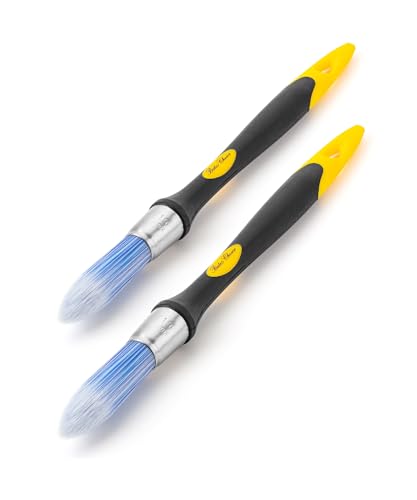
Bates Trim Paint Brush 0.45 Inch, 2 Pack

Paint Edger Trimmer Tool with 2 Pads
A Deeper Look At The Lineup
The Zibra Precision Detail brush earns its name by doing one thing well: it lets you steer the bristles into a clean line where wall meets trim. The angled head and small 2-inch width give you the leverage to cut in along door frames, window casings, and ceiling lines without dragging paint onto the surface you’re trying to protect. For homeowners tackling a single accent wall or a Saturday touch-up, that precision matters more than raw coverage speed.
Compared to the Shur-Line corner pad we’ll look at next, this is a traditional brush rather than a roller-style applicator, so it rewards a steady hand over mechanical guides. Owners working in well-lit rooms with crisp edges will appreciate the control. It also works across latex, oil-based paints, and stains, which makes it versatile when you’re switching products mid-project.
Useful Touches
- Angled filament shape lays down a clean line along trim and ceiling edges.
- Compact 2-inch head gives you better sight lines than a wider brush.
- Works with latex, oil, and stain, so you won’t swap tools between products.
- Short handle suits tight spots like behind toilets or inside cabinets.
Honest Caveats
- Smaller brush head means more dip cycles on long, straight runs.
- Precision brushes demand a steady grip, so beginners may need a few practice strokes.
- Not a substitute for a roller when covering large wall areas.
Who It Suits Best
Detail-oriented DIYers repainting a single room or a set of window frames.
Look Elsewhere When
You’re cutting in a full living room perimeter, where the Vermeer 2.5 Inch Angled Paint Brush 3 Pack covers more ground per dip.
Where most brushes fight inside corners, the Shur-Line corner painter leans into them. A woven pad applicator sits at the end of a pivoting plastic handle, letting you press both edges of a corner in a single pass. For walls that meet at a 90-degree angle, this is the kind of tool that turns a tedious chore into a quick lap. It also threads onto standard extension poles, which is a quiet win on tall stairwell walls.
The trade-off is mechanical: the pad is replaceable rather than the tool itself being endlessly durable. Owners who switch between light and dark colors will need a fresh pad or a thorough rinse to avoid cross-contamination. Compared to the Zibra detail brush, this trades fine artistry for raw speed on corners, so it pairs well rather than overlaps with a traditional angled sash.
What Pays Off
- Pivoting handle adjusts to the angle of each corner, reducing wrist strain.
- Woven pad paints both sides of an inside corner in one motion.
- Threaded base accepts extension poles for ceiling-height work.
- Plastic comfort grip stays cool during long sessions.
Points To Keep In Mind
- Pad wears down and needs replacing under heavy use.
- Less precise than a brush on textured walls or wavy trim.
- Best inside corners only; outer corners still need a brush.
Best Suited To
Homeowners repainting a full room with standard inside corners and minimal texture.
Reach For A Different Pick When
You’re working on a heavily textured wall, where the ROLLINGDOG 2.5 Inch Angled Paint Brush will get paint into the grain more reliably.
Strictly speaking, a taping knife isn’t a paint brush, but it earns a spot here because the cutting-in process often starts with mudding or scraping. The Edward Tools blue steel blade brings a tapered edge that lets you work close to inside corners without gouging the opposite wall, which is the exact skill cutting-in work depends on. The 12-inch width covers long seams in fewer passes than a 6-inch knife.
Blue steel is the same material pros have used for years on drywall because it flexes predictably and resists rust better than plain carbon. The high-visibility handle is a small touch, but a useful one when you’re hunting for the tool on a drop cloth. It pairs naturally with the Shur-Line corner painter: the knife handles the prep, the pad lays down the finish.
Useful Highlights
- Tapered blade edge works tight into corners without scraping the opposite wall.
- Blue steel flexes for smoother compound application and resists rust.
- High-visibility handle is easy to find on busy job sites.
- Wide 12-inch blade covers drywall seams efficiently.
Practical Considerations
- Too large for small patch repairs or detail mudding.
- Steel blade still needs wiping down after each session to prevent spotting.
Right Fit For
DIYers hanging fresh drywall or repairing large wall sections before they paint.
Skip It When
You’re only doing a one-room repaint with no drywall work, where a brush-only kit is lighter to manage.
Good paint lines start before the brush ever touches a wall, and that’s where a razor scraper comes in. The DIYSELF two-pack with ten spare blades covers the unglamorous prep work: lifting drips, peeling tape adhesive, removing window paint build-up, and shaving off old caulk beads. A three-stage adjustment locks the blade inside the housing for safe storage, extends it for working strokes, and exposes the holder when you need to swap in a fresh edge.
Having two scrapers matters more than it sounds, because once one gets gummed up with wet caulk or latex, you can hand off to the second and keep moving. The carbon steel blades stay sharp through multiple sessions, and ten spares stretch across several weekend projects. Compared to the Zibra detail brush, this is the tool you reach for the day before painting, not during the painting itself.
A Favorable Mix
- Three-stage adjustment covers safe storage, working position, and blade swaps.
- Carbon steel blades hold an edge across multiple prep sessions.
- Two scrapers in the pack keep you working when one gets gummed up.
- Compact enough to fit in a tape-and-filler apron pocket.
Trade-Offs To Consider
- Sharp blade demands careful handling around finished trim.
- Not useful once the wall is masked and the paint is open.
Who Should Grab It
Anyone repainting a room with old caulk, paint drips, or adhesive residue that needs removing first.
Where A Sibling Pick Shines
For cleaning roller covers between coats, the Touch Up Cup Roller Saver Paint Scraper Cleaner Tool is a better fit.
Cutting in a full room taxes your hand more than the wall itself does, and that’s the problem ROLLINGDOG designed this brush to solve. The Doberman Claw handle has a skinny middle that sits between your thumb and forefinger, with a wider tip that keeps the brush from rolling off a drop cloth. The laser-engraved hexagonal pattern adds grip without the rubberized coating that tends to peel off cheaper brushes after a few washes.
Inside that handle sits a solid round tapered filament that holds more paint than a flat-cut brush, so you’re dipping less often. Synthetic bristles handle latex and oil-based products alike. For longer cutting-in sessions, this is a friendlier hand-feel than the Zibra detail brush, and the 2.5-inch width covers baseboard runs faster without losing the angled tip.
Strong Points
- Hexagonal handle engraving reduces palm sweat and slipping during long sessions.
- Skinny-middle, wide-tip shape rests naturally between thumb and forefinger.
- Tapered filament holds more paint per dip, reducing trips back to the can.
- Synthetic bristles are compatible with all common paint types.
Where It May Fall Short
- Wider than a detail brush, so it crowds very narrow trim.
- Handle ergonomics take a session or two to appreciate.
Made For
People repainting multiple rooms in one weekend and feeling the strain in their grip by the second coat.
Consider Something Else When
You’re working on very narrow window mullions, where the Bates Trim Paint Brush 0.45 Inch fits the gap better.
The Touch Up Cup Roller Saver isn’t a cutting tool, but it belongs in the kit because the way you handle excess paint affects how clean your cut-in lines stay. A single swipe along the roller cover squeezes most of the paint back into the tray or can, so you’re not transferring drips onto the trim line you just brushed. For anyone using a brush and roller in the same room, it cuts waste and cleanup time at the same stroke.
It works best as a companion to the Zibra or ROLLINGDOG brushes rather than a stand-alone replacement. If your project is mostly cutting in with little to no rolling, the value drops. The plastic body wipes clean with a wet rag, which matters when switching between colors on the same weekend.
The Value In It
- One swipe removes most paint from a roller cover, cutting waste.
- Plastic body rinses clean with water between color changes.
- Keeps drips off freshly cut-in edges when moving from roller to brush.
Small Caveats
- Not useful for brush-only projects with no roller involved.
- Plastic construction can feel flimsy under heavy-handed squeezing.
Perfect Match For
Weekend painters using both a brush for edges and a roller for the field, and tired of wasted paint.
A Better Fit Elsewhere
If your project is purely a brush-and-pad job, the Edward Tools Blue Steel Taping Knife is a more useful companion.
High ceilings and stairwell walls turn cutting in into an acrobatics problem, and the Multi Angle Extender V2 solves it by putting your brush at the end of a standard extension pole. The head rotates 180° and locks at any angle in between, so you can run a line along a ceiling without standing directly under it. For vaulted rooms and two-story foyers, this kind of reach avoids ladders entirely.
The trade-off is that a brush on a long pole is harder to control at fine detail, so it’s a complement to a handheld brush rather than a replacement. It also adds a degree of flex to the stroke, which means slower passes and lighter pressure. Owners tackling standard 8-foot ceilings may find it overkill, but tall spaces are where it earns its place.
The Practical Payoff
- 180° head rotation fits ceiling edges, stairwells, and tall trim.
- Attaches to standard extension poles already in most home kits.
- Removes the need for ladders on most ceiling-line work.
Some Limits To Know
- Long-pole control is less precise than handheld for tight corners.
- Adds flex to the brush stroke, so you may need to slow your pace.
Whose Shelf It Belongs On
Homeowners with vaulted ceilings, two-story foyers, or tall stairwell walls that need regular touch-ups.
Swap It Out When
You’re cutting in a standard-height room, where the Vermeer 2.5 Inch Angled Paint Brush 3 Pack stays quicker and more accurate.
A single brush gets gummy and tired by the second room, which is why a 3-pack of 2.5-inch angled brushes makes sense for whole-house jobs. The synthetic filament blend holds enough paint to handle long baseboard runs without constant dipping, and the thinner tip gives you enough control for window and door edges. The wooden comfort grip is a small, familiar touch that doesn’t try to over-engineer the handle.
Compared to the ROLLINGDOG brush, the Vermeer gives up some handle innovation in exchange for volume. Three fresh brushes also let you rotate as one wears down, so you’re never working with a frayed edge mid-project. For a homeowner painting three or more rooms, that buffer is the real value.
Good Reasons To Consider
- Three brushes per pack covers multi-room projects without mid-job replacement.
- Thick synthetic filament holds more paint, reducing dip frequency.
- Thin tapered tip reaches into door jambs and window edges cleanly.
- Wooden handle is comfortable and balanced for extended use.
What To Weigh
- Three brushes is more than needed for a one-room touch-up.
- Wooden handle lacks the textured grip of the ROLLINGDOG design.
Who Will Love This
DIYers repainting a whole house or multiple large rooms in a single stretch of weekends.
Not Your Match When
You’re only painting one small room, where a single Zibra Precision Detail Paint Brush is the more focused buy.
Most cutting-in brushes run 1.5 to 2.5 inches wide, which is more than enough for baseboards but way too much for window mullions. The Bates 0.45-inch brush lives in that narrow gap where a wider brush would smudge onto the glass. It’s the kind of tool you reach for after the main cutting-in is done, to clean up the spots the bigger brush couldn’t reach.
Synthetic bristles lay down a smooth, even stroke without shedding, and the non-slip handle stays put when your fingers are tacky with paint. Two brushes per pack means one can be damp while the other works, useful when switching between water-based and oil-based products. Compared to the Zibra detail brush, this is narrower and more focused, not a generalist.
What Works In Its Favor
- 0.45-inch head fits window mullions, narrow trim, and detail spots.
- Non-slip ergonomic handle reduces finger fatigue on detail work.
- Two brushes per pack covers color changes and color swaps.
- Synthetic bristles resist shedding for a smoother finish.
Honest Caveats
- Very narrow head means many more passes on long baseboard runs.
- Not a replacement for a full-size brush on the main cutting-in pass.
Built With In Mind
Anyone painting windows with divided lights, narrow chair rails, or gingerbread trim that demands a fine touch.
Where Another Pick Suits Better
For long baseboard runs, the Vermeer 2.5 Inch Angled Paint Brush 3 Pack covers far more ground per dip.
Wheeled edgers take the hand-eye coordination out of straight lines. The GESENWIN Paint Edger rides along baseboards and ceiling edges on small guide wheels, while a felt pad lays down a clean stripe of paint. The connection mechanism is designed to keep the wheels seated under pressure, which is where cheaper edgers tend to fall apart. Two pads are included so you can swap when one gets loaded with color.
It shines on long, straight runs, especially baseboards in older homes where the wall meets the trim at less-than-perfect 90 degrees. It does less well on inside corners and detailed trim, which is still brush territory. Compared to the Shur-Line corner pad, this is a long-run tool rather than a corner specialist.
Notable Gains
- Guide wheels keep the paint pad tight against baseboards and ceiling edges.
- Two pads per pack supports color changes and color swaps.
- Stable wheel connection holds up under pressure on long runs.
- Cuts fatigue on baseboard-heavy rooms with multiple straight runs.
Potential Compromises
- Less effective on inside corners than the Shur-Line corner painter.
- Takes practice to keep the wheels tracking along wavy trim.
The Right Fit
Homeowners with long, straight baseboard runs who want straighter lines with less hand strain.
Not Your Match When
Your room is corner-heavy with little straight baseboard, where a brush or corner pad will be faster.
What To Look For Before You Buy
Brush Shape and Bristle Type
Angled brushes (also called sash brushes, where “sash” refers to the original window frame use) give you the most control when cutting in, because the slanted tip mirrors the angle of the wall-to-trim joint. Synthetic filaments work for water-based latex and oil-based coatings alike, while natural bristles are mostly suited to oil-based products. For most homeowners, a synthetic angled brush covers the broadest range of projects.
Size and Handle Comfort
A 2 to 2.5-inch head is the sweet spot for cutting in along baseboards and ceilings. Smaller brushes (0.45 inch) handle detail trim but tire you out on long runs, while larger ones (3 inches and up) feel fast but lose accuracy. Handle shape matters more than people expect: a contoured or textured grip keeps the brush from sliding when your hand is wet with paint.
Specialty Tools for Specific Jobs
Brushes aren’t always the answer. Corner painter pads speed up inside corners, wheeled edgers handle long straight baseboards, and extension attachments reach ceiling lines without a ladder. Match the specialty tool to the part of the room that takes the most time, rather than buying one for every edge.
Pad and Scraper Maintenance
Pads, scrapers, and rollers all share a maintenance pattern: clean them before the paint cures, store them flat, and replace them when they start to fray. A two-pack of blades or pads pays for itself by keeping a fresh edge on hand mid-project, and it’s far less frustrating than stopping work to hunt for replacements.
Smart Choices Before You Commit
Common Shopping Slip Ups
Many shoppers grab the cheapest angled brush and expect pro results, only to find bristles shedding into the wet paint within minutes. A better move is to pick a brush with a tapered filament and a known brand, and to dedicate it to a finish coat rather than using it for primer and paint alike. Skipping pad or blade replacements to save a few dollars also backfires, because a worn edge drags paint and leaves a fuzzy line.
Where The Extra Money Goes
Higher-end brushes and edgers cost more up front, but the difference shows up in three places: better filament retention (meaning fewer bristles end up on the wall), more comfortable handles for longer sessions, and sturdier connections on extension tools. For a one-room touch-up, mid-tier is plenty. For a whole-house repaint, the upgrade pays for itself in time saved and fewer do-overs.
