
A handheld paint sprayer can turn a weekend fence stain into a three-hour job instead of a two-day one. The trick is matching the sprayer to the job, since a gravity-feed gun built for car panels is a poor match for a backyard deck. This shortlist covers household projects, exterior siding, furniture refinishing, and automotive touch-ups, with seven options that each solve a specific kind of paint job well.
How The Shortlist Stacks Up
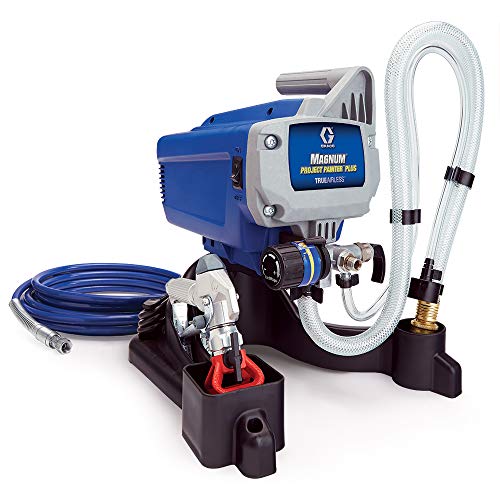
Graco Magnum 257025 Project Painter Plus Paint Sprayer

Wagner Spraytech Control Pro 130 HEA Paint & Stain Sprayer, Low Overspray

Tilswall Pinto LVLP Spray Gun for Car Painting, Basic Kit

SRQLNTT HVLP Air Paint Spray Gun Set, 2-Spray with Air Regulator

819 HVLP Air Spray Gun Kit with 1.3/1.7/2.0 mm Nozzles

Wagner Spraytech Control Spray QX2 HVLP Stain Sprayer, 3 Spray Patterns

Wagner Spraytech FLEXiO 570 HVLP Paint & Stain Sprayer, iSpray Nozzle
Why These Options Stand Out
For homeowners staring down a full siding repaint or a long stretch of picket fence, the Graco Magnum Project Painter Plus earns its place at the top of the food chain. Airless sprayers like this one push paint at high pressure directly from a one- or five-gallon bucket, which means you stop refilling a small cup every few minutes. The flexible suction tube reaches right into the bucket, and the fully adjustable pressure control lets you dial down for stain or up for thick latex.
Compared with the smaller handheld units on this list, this Graco handles projects measured in gallons rather than square feet. The metal frame and USA-built construction give it the kind of durability that justifies keeping it in a garage for years.
What Pays Off
- Bucket-fed design removes the stop-and-refill rhythm of cup-style sprayers.
- Adjustable pressure handles unthinned paints and stains across a wide range.
- Supports long hose runs, so reaching second-story peaks is far less awkward.
- Stainless steel fluid path inside Graco pumps tends to resist corrosion over many seasons.
Worth Noting
- Airless pressure demands careful masking, since overspray drifts farther than HVLP output.
- Cleanup of the pump and hose takes longer than a simple handheld gun.
Who It Suits Best
Homeowners tackling a whole-house exterior, a long deck, or a sizeable fence every season.
Swap It Out When
The Wagner FLEXiO 570 makes more sense for interior walls and furniture where overspray control matters more than raw flow.
The Control Pro 130 uses High Efficiency Airless (HEA) technology, which is a pressure-tuned airless design that breaks paint into softer droplets than a traditional airless rig. The payoff is dramatically less bounce-back and mist drifting onto your neighbour’s shrubs. Setup is closer to a household appliance than a professional rig, which makes this a friendly entry point for first-time sprayer owners.
Where the Graco Magnum above leans into raw volume, the Wagner Control Pro 130 leans into finesse. It sprays unthinned paints and stains straight from the can, so you skip the frustrating step of measuring viscosity and adding water.
Noteworthy Benefits
- Reduced overspray keeps masking simple and protects nearby landscaping.
- Direct-from-the-container capability removes thinning guesswork for most paints.
- Continuous flow design handles full-day exterior runs without constant stops.
- Sturdy wheeled base moves easily around a yard or job site.
Trade Offs
- Heavier than a handheld HVLP, so stairs and ladder work get tiring.
- Hose length limits how far you can wander from the pump.
Made For
DIYers painting a two-story exterior, a long deck, or a sizeable fence without the spray drift of a traditional airless rig.
Not Your Match When
The Wagner QX2 is a better pick for quick stain jobs on a single fence section or pergola.
Step away from the house and into the garage, and the rules change. LVLP stands for Low Volume Low Pressure, and that lower pressure is what gives car painters the soft atomisation needed for clear coats and metallics without dry spray. The Tilswall Pinto is a basic but thoughtfully built entry point, with a fully stainless steel fluid path that avoids the rubber seals commonly blamed for premature seal failure in budget guns.
It needs a compressor to run, which is a real commitment that most fence sprayers do not require. The trade-off is finish quality on panels, furniture, and smaller projects where you want a controlled, glossy result.
Benefits That Matter
- Stainless steel internals outlast plastic-seal alternatives in solvent-heavy use.
- Lower atomisation pressure produces a smooth, automotive-style finish.
- Lightweight body reduces fatigue during long detail sessions on a single panel.
Points To Keep In Mind
- Requires a compatible air compressor with adequate CFM, which adds to total cost.
- Not suited for broad wall or fence coverage, where airless volume wins.
Best Suited To
First-time car refinishers who want a beginner-friendly gun that handles clear coats without a steep learning curve.
A Better Fit Elsewhere
The 819 HVLP Kit with three nozzle sizes is the smarter choice for those who need flexibility across primer, base, and clear coat stages.
Some shops prefer a dedicated primer gun and a dedicated top-coat gun rather than swapping nozzles back and forth. The SRQLNTT set leans into that workflow by bundling a 1.0mm mini gun for detail and touch-ups with a 1.4/1.7mm full-size gun for broader panels. Both use die-cast aluminum bodies with brass air caps and stainless nozzles, which means solvent cleanup is straightforward and corrosion is not a daily worry.
The included air regulator saves a separate purchase and helps maintain consistent atomisation, which is the difference between a glassy finish and orange peel. Compared to the single-gun Tilswall Pinto, this set trades simplicity for a more complete shop setup.
Bright Spots
- Two-gun pairing covers both detail work and broader panel coverage.
- Brass air caps and stainless nozzles stand up to repeated solvent cleaning.
- Die-cast aluminum body balances light weight with solid hand feel.
- Built-in regulator keeps pressure steady across long spraying sessions.
Minor Gripes
- Two guns take more space in a small shop than a single-gun setup.
- Still requires a compressor with enough CFM to feed both guns if used back to back.
Who Should Grab It
Home garage hobbyists who want a primer gun and a finish gun without buying each piece separately.
Consider Something Else When
The Tilswall Pinto is the better call for a single-purpose beginner who only needs one reliable gun right now.
Auto refinishing lives and dies by matching nozzle size to coating type. The 819 kit ships with 1.3mm, 1.7mm, and 2.0mm nozzles, which covers clear coats, base coats, and primers in one package. Paint flow and spray pattern are both adjustable via dedicated knobs, so you can dial atomisation without swapping the air cap between stages.
Unlike the SRQLNTT set above, this one stays with a single gun body, which keeps the workflow simpler if you mostly work alone. It is also rated for both water-based and solvent-based coatings, which matters for shops that switch between modern waterborne base coats and traditional primers.
Good Reasons To Consider
- Three nozzle sizes handle primer, base, and clear coat stages without a second gun.
- Independent pattern and flow knobs let you fine-tune atomisation per coating.
- Works with both water-based and solvent-based formulas for shop flexibility.
- Suited to automotive, wall, roof repair, and light industrial spraying.
Points To Note
- Requires a compressor; not a self-contained unit like the household Wagner models.
- Nozzle swaps take a few minutes and benefit from a clean workspace.
Whose Shelf It Belongs On
Detailers and DIY auto painters running a compressor who want one gun that handles every stage of a paint job.
Look Elsewhere When
The Wagner QX2 is the right call for outdoor staining work where an air compressor is not part of the setup.
The QX2 is purpose-built for stain projects, and the design shows it. Three spray patterns let you match the output to the surface: a narrow pattern for chair spindles, a wider pattern for fence pickets, and a horizontal pattern for deck boards. It is a handheld HVLP unit, which means you carry it rather than dragging a cart, and that low weight makes a Saturday of staining a lot less exhausting.
For most homeowners, a fence or pergola project is the only time they pull out a sprayer all year, and the QX2 fits that rhythm. It does not pretend to be a whole-house paint rig like the Control Pro 130 above, and that focus is the point.
Useful Highlights
- Three pattern settings adapt to spindles, flat boards, and broad panels.
- Handheld form factor reaches tight spots a wheeled unit cannot access.
- Setup is essentially plug-and-fill, with no compressor required.
- Designed for fast coverage on outdoor wood surfaces.
Honest Caveats
- Smaller cup means more frequent refills on long fence runs.
- Not intended for thick latex wall paint, where an airless sprayer performs better.
The Right Fit
Homeowners planning a weekend deck or fence stain who want a tool that lives in a closet and pulls out twice a year.
Skip It When
The Graco Magnum Project Painter Plus is the better investment for anyone also planning a full exterior repaint.
The FLEXiO 570 is the sprayer that has lived in countless garages for years because it does almost everything. The iSpray nozzle handles broad surfaces like ceilings, walls, and siding, while a second detail nozzle tackles furniture and trim. It pulls paint unthinned, which is a small miracle for anyone tired of straining latex through a paint filter.
Compared with the more focused QX2, the FLEXiO trades pattern simplicity for versatility. Cleaning is faster than a brush, with a few removable parts that rinse out under a faucet rather than needing solvent baths.
Points In Its Favor
- Two included nozzles cover broad surfaces and detail work in one purchase.
- Sprays unthinned paints and stains, removing a step from the workflow.
- Handheld turbine design avoids the hose-dragging of cart-style sprayers.
- Adjustable controls keep overspray low for indoor wall and ceiling work.
Small Caveats
- Turbine noise is noticeable and louder than a roller session.
- Not ideal for whole-house exteriors, where an airless rig covers faster.
Who Will Love This
DIYers who split their time between indoor accent walls, furniture refreshes, and small exterior projects.
Reach For A Different Pick When
The Wagner Control Pro 130 is the better tool for anyone facing a two-story siding job where overspray control is critical.
What Matters Most Before Choosing Handheld Spray Painters
Match the sprayer type to the project. Airless sprayers like the Graco Magnum and Wagner Control Pro 130 push high-volume paint for big exterior jobs, while HVLP (High Volume Low Pressure) units like the QX2 and FLEXiO trade speed for finer atomisation suited to furniture, fences, and interior walls. LVLP guns, which are a lower-pressure offshoot of HVLP, are the right tool when a smooth automotive or cabinet finish matters more than square-foot coverage per hour.
Decide whether a compressor fits your workflow. The household Wagner and Graco units are self-contained; plug them in and go. The Tilswall, SRQLNTT, and 819 kits all require an air compressor with adequate CFM, which adds cost, storage, and noise. That trade-off is worth it for finish quality, but only if your shop is already set up for pneumatic tools.
Look for unthinned paint capability. Not every sprayer can handle latex or thick stain straight from the can, and thinning introduces inconsistency between batches. Models that spray unthinned paint, like the Control Pro 130 and the FLEXiO 570, save time and reduce error.
Think about cleanup and storage. Household units typically rinse out with water in a few minutes, while compressor-fed guns often need solvent flushing after solvent-based coatings. Plan storage space for the sprayer, any extra nozzles, and a small supply of cleaning brushes before the first job.
Smart Shopper Traps Across This Category
Mistakes Worth Dodging
A common slip is buying an airless rig for a small furniture project, then spending more time masking the room than actually spraying. Conversely, picking a handheld HVLP for a two-story siding job leads to arm fatigue and slow coverage. Match the tool to the surface area, not the other way around.
Another trap is forgetting that HVLP and LVLP guns need a compressor with consistent CFM. A small pancake compressor that runs continuously will interrupt your spray pattern and ruin the finish. Check the gun’s CFM requirement against the compressor’s sustained output before committing.
Where The Extra Money Goes
Higher-tier airless sprayers, like the Control Pro 130, justify their cost through reduced overspray, more consistent pressure control, and longer pump life. Premium HVLP turbines in the FLEXiO 570 line run quieter and deliver more even atomisation, which shows up in fewer coats per wall. For most weekend projects, a mid-tier unit is the right call, but pros and frequent users feel the difference in time saved and finish quality over a full season.
Frequently Asked Questions
What is the difference between HVLP and airless sprayers? HVLP sprayers use a high volume of air at low pressure to atomise paint, which produces less overspray and finer finishes. Airless sprayers use high pressure to force paint through a small tip, which delivers higher volume and faster coverage on large surfaces.
Can handheld paint sprayers handle latex wall paint? Many modern handheld HVLP and airless units spray unthinned latex, but cup-size handheld HVLP units work best for small projects rather than whole-room coverage. For full rooms, an airless or higher-volume HVLP rig performs far better.
Do I need an air compressor for an HVLP spray gun? Household HVLP sprayers like the Wagner FLEXiO and QX2 have a built-in turbine, so no compressor is needed. Automotive-style HVLP and LVLP guns do require an external compressor to supply air.
How do I clean a paint sprayer after use? Water-based paints rinse out with warm water through the nozzle and cup, while solvent-based coatings require the appropriate thinner or reducer. Running clean solvent or water through the gun until the output runs clear prevents clogs and extends pump or nozzle life.
How long do handheld paint sprayers typically last? Lifespan depends heavily on use frequency and cleaning habits. With proper cleaning and storage, household HVLP and airless units commonly last many years, while compressor-fed HVLP guns with stainless internals can last even longer in garage settings.
