
Coloring stays one of the cheapest creative outlets, and the right marker changes everything about how a session feels. You want pigment that lays down smoothly, tips that match your style, and a palette wide enough to keep you from mixing the same brown for the fifteenth time. The six sets below cover most of what home artists, students, and hobby painters actually reach for, from broad acrylic paint pens to specialized alcohol portrait markers. Each one is chosen for a different reason, and the honest trade-offs get called out along the way.
The Picks In Brief

Sharpie Creative Markers Variety Pack 36 Count

Sharpie Creative Markers Combo Pack 24 Count
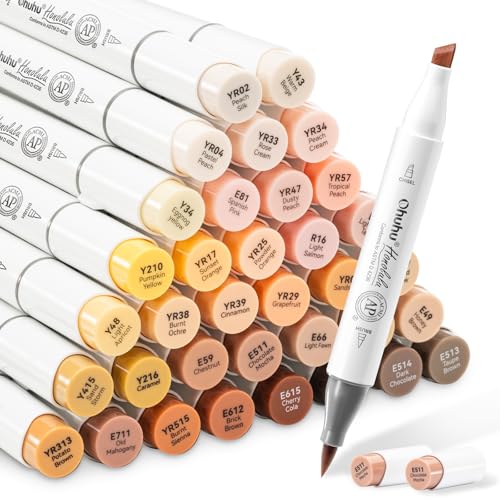
Ohuhu Alcohol Markers 36 Skin Colors Brush & Chisel

Sharpie Creative Markers 12 Count Bullet Tip

ARTISTRO 48 Acrylic Paint Markers Set

posca Markers Bundle 16 Medium 5M
More Details On Our Top Picks
Thirty-six markers in one box gives you the kind of headroom most casual projects need, and the assorted tips mean you can switch from filling backgrounds to outlining details without swapping brands. The water-based acrylic ink lays down like a marker but covers like a thin paint, which is useful on mixed surfaces such as wood, ceramic, or a stretched canvas. Compared to the smaller 12-count set reviewed later, this one trades portability for range.
For a hobbyist who jumps between sketchbooks, painted rocks, and weekend craft nights, that range matters more than ultra-fine detail work. The non-bleed claim on paper holds up for most standard sketchbook weights, though you may find feathering on very thin copy paper. It is a sensible default kit for someone starting out and wanting shelf space saved.
Standout Benefits
- 36-count palette covers most casual projects without forcing constant mixing
- Mixed tip assortment handles both wide fills and crisp lines
- Acrylic formula works across paper, wood, ceramic, glass, and canvas
- Marker-style control makes it approachable for non-painters
Things To Consider
- Bulk format is less convenient to pack for travel or a class
- Non-bleed behavior depends on paper weight, so thin sheets can feather
Feature Snapshot
Right Fit For
Hobbyists and casual crafters who want one kit to cover most paper, wood, and ceramic projects without buying extras.
Consider Something Else When
You mostly draw portraits and need a flesh-tone palette, in which case the Ohuhu 36 Skin Colors set is the better match.
The combo pack earns its place by pairing bullet and brush tips in a single barrel, which is a real upgrade for anyone doing lettering or loose illustration. The earth-tone-heavy assortment fills a gap that bright primary sets leave open, and the same water-based acrylic formula carries across wood, ceramic, and canvas. Where the 36-count set is about range, this one is about precision in fewer pens.
For illustrators sketching in a journal or designers mocking up packaging concepts, having a brush tip for expressive strokes and a bullet tip for tight lines removes the need to grab a second marker mid-flow. Owners commonly store these horizontally or tip-down to keep both nibs primed, and caps snap firmly enough to survive a tote bag. The trade-off is a smaller palette than Item 1, so color blending is a more regular habit.
Strengths Worth Knowing
- Dual bullet and brush tips in one marker save tool-switching
- Earth-tone variety supports natural and portrait subjects
- Same multi-surface acrylic formula as the larger Sharpie sets
- Brush tip is genuinely responsive for hand-lettering
Worth Noting
- Brush tip benefits from a brief activation shake before first use
- 24-color range means more mixing for unusual hues
Whose Shelf It Belongs On
Illustrators, journalers, and lettering artists who care more about stroke variation than raw color count.
Look Elsewhere When
You need a wide, bright primary range for kids’ crafts, in which case the Sharpie 12-count set is a simpler starter.
Alcohol markers behave differently from the acrylic pens elsewhere on this list: the ink dries almost instantly and blends wet-on-wet for smooth gradients, which is why portrait artists reach for them. The 36 skin-tone range sidesteps the usual frustration of trying to mix a believable forehead shade from random colors, and a colorless blender is included for softening transitions. A double tip layout pairs a brush nib for organic edges with a chisel nib for larger fills.
Refillability gives the set longer-term value than disposable pens, assuming you build a refilling routine. Alcohol ink has a noticeable odor and bleeds through thin paper, so marker paper or a bleed-proof sketchpad becomes essential rather than optional. This is a tool for someone committed to figure work, not a generalist craft kit.
Benefits That Matter
- 36 skin tones cover a believable range of complexions without mixing from scratch
- Brush and chisel tips handle both expressive strokes and broad backgrounds
- Refillable design extends marker life over years of regular use
- Alcohol blending creates smooth gradients that acrylic pens cannot match
Trade Offs
- Alcohol ink has a strong odor and needs good ventilation
- Bleeds through standard copy paper, requiring dedicated marker pads
- Niche palette limits usefulness outside portrait and figure work
Key Specs
Who Should Grab It
Portrait artists, character illustrators, and figure-drawing students who want a flesh-tone palette ready to go.
Skip It When
You mostly color on paper crafts and rocks where acrylic paint pens like the ARTISTRO 48 set are a better fit.
Twelve markers is the smallest format in this lineup, and that is the point. Parents and teachers can hand the box to a child without worrying about a roll-away marker avalanche, and the bullet tip is forgiving for small hands still learning pressure control. The water-based acrylic formula behaves the same as the larger Sharpie sets, so the surface range covers paper, wood, ceramic, glass, and rock.
For classroom projects or a kitchen-table art session, the 12-count is easier to manage than the 36-count variety pack. Kids tend to lose or leave caps off markers regardless of brand, so starting small keeps the cost of replacement manageable. The honest read is that serious coloring will outgrow this set quickly, and most households add more colors within a few months.
A Few Highlights
- Compact 12-count size is easy to share in classrooms
- Bullet tip is intuitive for kids and new artists
- Same multi-surface acrylic formula as the larger Sharpie Creative sets
- Lower replacement cost when markers go missing
Points To Keep In Mind
- Limited palette means frequent color mixing
- Bullet tip only, so no brush or chisel variation
Feature Card
Made For
Classroom teachers, parents, and kids who want a tidy starter set before committing to a larger collection.
Swap It Out When
The child outgrows the basic palette and wants more colors or tip variety, in which case the Sharpie 36-count variety pack is the natural step up.
Forty-eight acrylic colors with dual brush and fine tips is generous, and the set positions itself for calligraphy, lettering, and DIY projects rather than straight illustration. The fine tip handles the small detail work that brush tips struggle with, while the brush end covers wide strokes and fills. It is the largest palette in this roundup and the most flexible for mixed media sessions.
Unlike the Sharpie sets earlier, ARTISTRO leans into the calligrapher audience, and that shows in the included tip sizes. Acrylic paint markers tend to need a brief priming pump before the ink flows, which is normal for the category but worth knowing. Storage matters more with 48 markers, so a dedicated caddy or drawer helps keep the caps paired with the right barrels.
The Upside
- 48 colors reduce how often you stop to mix basic shades
- Dual brush and fine tips cover both expressive and precise work
- Acrylic formula works on paper, canvas, wood, and stone
- Strong fit for calligraphy and hand-lettering practice
Room For Improvement
- Each marker benefits from a brief activation pump before use
- 48 markers require a real storage plan to stay organized
- Some users report tip wear after heavy brush-tip use
Best Suited To
Calligraphy enthusiasts, lettering artists, and DIY crafters who want the broadest acrylic palette in one purchase.
Not Your Match When
You need clean controlled lines for portrait work, where the Ohuhu alcohol skin-tone set is a sharper tool.
Posca markers have a loyal following in sign painting, sneaker customization, and window art for good reason. The water-based, alcohol-free formula is lightfast and waterproof once dry, which means outdoor projects and glass work hold up longer than with most acrylic pens. The reversible bullet tip is a quietly clever feature: when one end wears, you pull the nib out and flip to a fresh side, effectively doubling marker life.
This bundle splits 16 markers into 8 cool tones and 8 dark tones, which is a curated selection rather than a full spectrum. For someone working on moody illustrations, layered lettering, or night-scape art, that balance is useful out of the box. Owners commonly store Posca markers horizontally to keep both nib sides primed, and the non-toxic formula makes them classroom-friendly.
The Practical Payoff
- Reversible bullet tip doubles effective marker life
- Water-based, alcohol-free formula is non-toxic and low-odor
- Waterproof and lightfast once dry for outdoor or window art
- Curated cool and dark tone balance suits mood-driven projects
Points To Note
- 16 colors is smaller than the broader acrylic sets above
- Bullet tip only, so no brush or chisel variation
- Reversible tip requires a firm pull to swap nib sides
Quick Facts
Who Will Love This
Sign painters, window artists, and crafters working on outdoor or dark-themed projects where waterproof pigment matters.
Reach For A Different Pick When
You need a broad, bright primary range for general coloring, where the Sharpie 36-count variety pack covers more ground.
What To Weigh Before Choosing Markers For Coloring
Ink Type And How It Behaves
Acrylic paint markers, water-based ink pens, and alcohol markers all behave differently on paper. Acrylic lays down opaque and paint-like, water-based ink is closer to a traditional marker, and alcohol markers blend wet-on-wet for smooth gradients. Your subject and surface usually dictate the choice, and mixing types in one session is common.
Tip Style And Stroke Range
Bullet tips give consistent line width, chisel tips handle fills and edges, and brush tips allow expressive variation. Many sets now combine two tips in one barrel, which saves space and reduces tool-switching. If your work involves lettering or detailed illustration, dual-tip markers pay for themselves quickly.
Surface Compatibility
Not every marker behaves on every surface. Acrylic and Posca-style paint pens handle wood, ceramic, glass, and stone, while standard water-based markers work best on paper. Check the surface list before committing, especially for craft projects on non-paper materials.
Palette Size And Mixing Habits
Larger sets save time on color mixing, but they cost more and demand more storage. Smaller sets encourage mixing skills and cost less to replace when a marker dries out. For beginners, a 12 to 24-count set is a reasonable starting point, and a 36 to 48-count set rewards committed practice.
Key Considerations Across These Picks
Where Shoppers Go Wrong
The most common slip is buying a marker set before deciding on a primary surface. Acrylic and Posca pens behave well on wood and ceramic, but alcohol markers bleed through thin paper and demand dedicated pads. Match the ink type to your most frequent project, not to the prettiest color swatch.
What The Higher Tier Buys
Larger sets, dual-tip barrels, and refillable alcohol markers cost more up front, and the upgrade shows up in three places: less time mixing, longer marker life, and broader surface compatibility. For casual coloring, a 12 to 24-count set is plenty. For committed hobbyists, the extra range and tip flexibility pay back over months of use.
Frequently Asked Questions
What is the difference between acrylic and alcohol markers?
Acrylic markers use a water-based paint that sits on top of the surface and dries opaque, while alcohol markers use a fast-drying solvent-based ink that soaks into the paper and blends smoothly. Acrylic is better for non-paper surfaces, and alcohol is the standard for portrait illustration.
Are paint markers safe for kids?
Most water-based acrylic paint markers, including the Sharpie Creative and Posca sets, are non-toxic and safe for supervised use. Alcohol markers have stronger fumes and are better suited to ventilated adult workspaces.
Can these markers be used on canvas?
Acrylic paint markers like the Sharpie Creative, ARTISTRO, and Posca sets work on stretched and pad canvas. Alcohol markers like the Ohuhu set also work, but the ink absorbs more aggressively and may bleed beyond the painted area.
Do I need a special paper for alcohol markers?
Yes, standard copy paper bleeds through almost instantly with alcohol ink. A dedicated marker pad with bleed-proof or coated paper keeps lines crisp and protects the work surface below.
How do I store paint markers to make them last?
Store acrylic and Posca markers horizontally or tip-down to keep the nib saturated, and always recap firmly after use. Alcohol markers should be stored horizontally as well, and the colorless blender benefits from occasional tip cleaning to prevent ink buildup.
