Anyone who has started a counted cross stitch project knows the fabric makes or breaks the experience. An 18 count aida gives you a tighter grid than the standard 14 count, which means smaller stitches, finer detail, and finished pieces that look more delicate. The catch is that not every cloth handles the same way once it’s in your hoop or under your needle.
This roundup covers ten options spanning single large panels, multi-packs in assorted colors, and one evenweave alternative for stitchers ready to branch out. Whether you’re framing a first sampler or cutting pieces for a whole craft fair season, there’s a fit here for your project list.
The Shortlist At A Glance
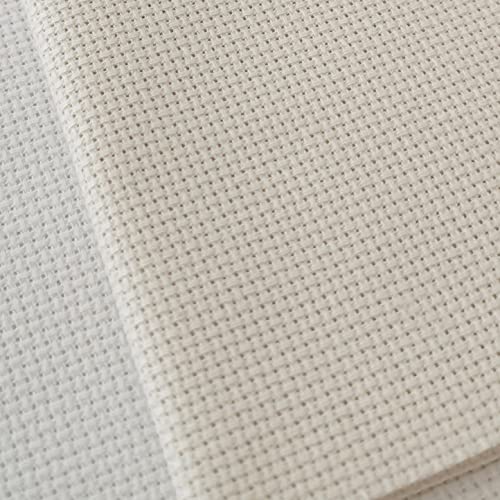
KCS 19″ x 28″ 18CT Cotton Aida Cloth (Antique White)

KCS 19″ x 28″ 18CT Cotton Aida Cloth (Natural Oatmeal)

KCS 19″ x 28″ 18CT Cotton Aida Cloth (Black)

Charles Craft Silver Label Aida 18 Count 15″X18″ White

CANFOISON Aida Cloth Big Size 18 Count 39×60″

DMC Charles Craft Monaco Cloth 28 Count 15″X18″ White
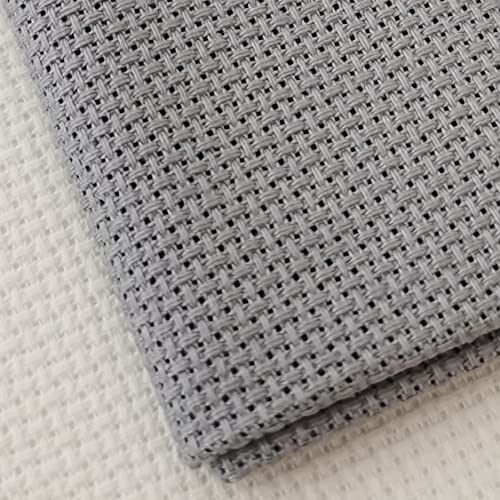
KCS 59″ x One Yard 18 Ct Cotton Aida (Light Steel Grey)

KCS 2 pc 15″ x 18″ Aida Cloth (Light Blue+Royal Blue, 18CT)

KCS 3 pc 12″ x 18″ 18CT Aida Cloth (Antique White+Cream+Khaki)

KCS 3 pc 15″ x 18″ Rolled Fabric Box 18CT
More Details On Our Top Picks
This antique white panel covers a lot of ground at 19 by 28 inches, enough for a full sampler plus generous margins for framing. The cotton weave arrives starched and stiff, so many stitchers work without a hoop straight out of the package.
A quick soak softens the fabric if you prefer a drapey finish. For most people planning a wedding record or birth announcement, that combination of size and structure is exactly what you want.
Strong Points
- Large single piece leaves room for wide borders and framing allowances
- Starched finish holds its shape during long stitching sessions
- 100% cotton takes blocking well before you frame the finished piece
- Antique white flatters both muted and bright floss palettes
Things To Consider
- The panel ships folded, so expect crease lines that usually press out with light ironing
- A prewash is wise before stitching, since some dye lot variation can occur
Key Specs
Who It Suits Best
Intermediate stitchers tackling one substantial framed piece rather than a batch of small ornaments.
Where Another Pick Suits Better
Stitchers wanting several small pieces at once will get more mileage from the KCS 3 pc 12″ x 18″ set further down this list.
Same panel dimensions as the antique white version above, but the oatmeal tone changes the whole mood of a finished piece. Warm neutrals like this suit farmhouse-style lettering, botanical charts, and anything destined for a kitchen wall.
The stiff, starched hand means you can skip the hoop for flat work, and a dip in water relaxes the fabric when you’re ready to soften it. In our view, this shade hides minor handling marks better than pure white, which matters on long projects.
What We Like
- Oatmeal color pairs naturally with terracotta, sage, and cream floss
- Full 19″ x 28″ area supports wide-format designs
- Holds stiffness for hoop-free stitching on flat surfaces
Worth Noting
- Dark floss colors show less contrast here than they would on black aida
- Folded packaging means pressing out fold lines before you start
Made For
Home decor stitchers who lean toward warm, rustic palettes and want one big canvas for a statement piece.
Consider Something Else When
High-contrast designs with black or navy floss read better on the KCS Black panel reviewed next.
Dark fabric changes how you stitch, not just what you stitch. On this black 18 count panel, jewel-toned and metallic floss practically glow, and Halloween or celestial charts look dramatic without any background fill stitching.
The trade-off shows up at the needle: counting holes against a dark ground strains the eyes, so good task lighting becomes non-negotiable. Owners commonly report laying a white towel underneath helps the holes stand out. The starched finish and 19 by 28 inch cut match the two lighter KCS panels above.
Bright Spots
- Makes bright and metallic threads pop dramatically
- No background stitching needed for night-sky or gothic designs
- Same generous sizing as the lighter KCS panels
- Finished pieces hide dust and handling between sessions
Small Caveats
- Counting holes demands strong lighting and patience
- Lint and pet hair show easily, so store it covered while working
Right Fit For
Confident stitchers with good lighting who love bold, high-contrast finished art.
Look Elsewhere When
Eye comfort comes first for you, the Natural Oatmeal panel offers similar sizing with far easier hole visibility.
Charles Craft has been a fixture in needlework shops for decades, and this Silver Label tube reflects why. The 15 by 18 inch cut arrives rolled rather than folded, so there are no crease lines to fight before your first stitch.
The weave is noticeably even, with clearly defined holes that make counting straightforward at 18 stitches per inch. Compared to the KCS panels, this one feels softer out of the package, which suits people who find heavily starched fabric uncomfortable to pull through. The smaller footprint fits ornament hoops and card-sized projects nicely.
Reasons To Buy
- Rolled packaging keeps the fabric smooth from day one
- Crisp, visible holes simplify counting on a dense grid
- Long-established brand with consistent weaving quality
- 15″ x 18″ size matches most small-to-medium chart requirements
Points To Note
- One piece only, so bulk projects mean reordering
- White shows every stray thread snippet, keep a lint roller nearby
At A Glance
Who Will Love This
Detail-focused hobbyists working single small-to-medium charts who value a smooth, brand-consistent fabric.
Swap It Out When
You need multiple colorways at once, the KCS 3 pc Antique White, Cream, and Khaki set covers three shades in one order.
At 39 by 60 inches, this white panel is less a single project and more a personal fabric bolt. Cut it into a dozen coaster-sized squares, one huge wall hanging, or a mix of both, and you’ll still have leftovers.
The premium cotton weave is aimed at stitchers who want their work to last, and the classic white suits stamped patterns and dyed finishes alike. Per-piece cost drops sharply compared to buying individual panels like the Charles Craft above. The honest caveat: such a large sheet needs careful storage to stay clean, and you’ll want a rotary cutter and ruler for tidy edges.
Plus Points
- Enormous yield, dozens of small projects from one purchase
- Premium cotton selected for lasting finished work
- Cut any dimension your chart calls for, no size compromises
- Classic white works with every floss palette
Room For Improvement
- Requires clean, dedicated storage space between projects
- Cutting your own pieces adds a prep step smaller panels avoid
Quick Facts
Perfect Match For
Volume stitchers, craft-fair sellers, and teachers prepping materials for a group.
Not Your Match When
You’d rather start stitching tonight, the pre-cut Charles Craft Silver Label removes all prep work.
Here’s the curveball on this list: Monaco isn’t aida at all. It’s an evenweave, meaning threads run in an evenly spaced plain weave rather than the blocked grid aida provides. You stitch over two threads instead of one block, which produces a finer, more fabric-like finished texture.
At 28 count, stitching over two threads lands you at the same 14-stitches-per-inch density as beginner aida, making it a gentle step up. Beyond cross stitch, this cotton handles punch needle, crewel, ribbon embroidery, and machine embroidery. The catch is that counting over threads takes more attention than counting blocks, so total beginners may find it fiddly at first.
Highlights
- Smooth, refined surface for delicate finished textures
- Handles multiple techniques beyond cross stitch
- 28 count over two threads mimics familiar 14 count spacing
- DMC backing means dependable, even weaving
Softer Spots
- No blocked holes, so thread counting takes practice
- Smaller 15″ x 18″ cut limits large designs
Whose Shelf It Belongs On
Confident stitchers ready to graduate from block-grid aida toward finer, more traditional needlework.
Another Choice May Suit
Beginners still learning to count should stick with the blocked grid of the KCS Antique White panel.
This one bridges the gap between single panels and the giant CANFOISON sheet. At 59 inches wide by a full yard deep, you get serious yardage in a softer grey tone that sits comfortably between white and charcoal.
Light steel grey is quietly practical: it doesn’t glare under lamp light the way white does, yet holes remain easy to see, unlike on the black KCS panel. The starched finish supports hoop-free stitching, and water softens it on demand. Depending on your chart sizes, one yard realistically yields four to eight medium projects.
Upsides
- Full-yard length covers multiple cut projects economically
- Grey tone reduces eye strain compared to bright white
- Stiff weave works without a hoop until softened
- Neutral shade complements cool-toned floss families
Minor Gripes
- Ships folded, so plan on pressing before cutting
- Single colorway, no variety within the purchase
Spec Overview
Who Should Grab It
Regular stitchers who burn through fabric and want mid-size yardage in a low-glare neutral.
Reach For A Different Pick When
Maximum volume matters more than convenience, the CANFOISON 39×60 panel offers nearly double the area.
Colored aida solves a real problem: white backgrounds demand full coverage stitching, while tinted fabric lets negative space do the work. This pair gives you baby blue and royal blue, each cut at 15 by 18 inches, sized for hoops and small frames.
Packaging deserves a mention here. Both pieces arrive rolled inside a plastic box rather than folded, so no crease lines await your iron. Nautical charts, snowflake designs, and sky-themed samplers feel right at home on these shades. The royal blue piece behaves a bit like the black panel earlier, needing decent light for hole counting, though less severely.
Standout Traits
- Two coordinated blues cover light and dark design moods
- Rolled box packaging eliminates fold creases entirely
- Tinted backgrounds reduce required background stitching
- Standard 15″ x 18″ cuts fit common hoop sizes
Honest Caveats
- Only two pieces, larger batches require another order
- Darker royal blue slows hole visibility in dim rooms
Best Suited To
Decor stitchers building themed pieces, especially coastal, winter, or nursery-blue palettes.
Where A Sibling Pick Shines
Warm neutral projects belong with the KCS three-piece Antique White, Cream, and Khaki set instead.
Three related neutrals in one order is a quietly smart way to build variety into small projects. Each piece measures 12 by 18 inches, ideal for bookmarks, ornaments, mini hoops, and greeting-card inserts, and the trio spans antique white, cream, and khaki.
For anyone teaching a friend to stitch, having three shades lets you demo how floss reads differently on each background. The starched, hoop-friendly finish matches the rest of the KCS line, and a soak softens it whenever needed. Compared to buying three separate panels, this bundle keeps costs and shipping simple.
Positives
- Three complementary neutrals expand design options instantly
- Small cuts suit quick-win projects and practice pieces
- Great value versus purchasing panels individually
- Stiff weave supports hoop-free stitching
- Handy for comparing floss colors across backgrounds
Trade Offs
- 12-inch width rules out larger chart formats
- Folded shipping means light pressing before use
Details At A Glance
The Right Fit
Beginners, gift makers, and anyone who prefers finishing small pieces quickly over month-long marathons.
Skip It When
Your current chart exceeds 12 inches wide, the KCS 19″ x 28″ Antique White panel gives you the room.
Pastel lovers, this trio was made for you: one light blue, one pink, and one light green piece, each 15 by 18 inches, rolled into a reusable plastic box. That packaging doubles as storage, keeping dust off unused fabric between projects.
These shades shine on nursery pieces, spring florals, and children’s room decor where white would feel stark. Like the blue pair reviewed earlier, the rolled format means zero creases, a small thing that saves real pressing time. One heads-up worth knowing: this listing’s stock comes and goes, so availability may vary depending on when you check.
Best Bits
- Three pastel shades coordinate for themed sets
- Plastic box keeps fabric clean and crease-free
- Larger 15″ x 18″ cuts than the 12-inch trio
- Tinted grounds minimize background stitching
Areas To Watch
- Listing availability fluctuates, so stock may be intermittent
- Pastels limit contrast with pale floss colors
Built With In Mind
Nursery decorators and pastel enthusiasts stitching coordinated sets for gifting or kids’ spaces.
Where Another Pick Suits Better
Neutral-palette projects fit the KCS Antique White, Cream, and Khaki trio more naturally.
What Matters Most Before Choosing 18 Count Aida Cloths
Match The Count To Your Eyes And Chart
Eighteen stitches per inch packs roughly 30% more detail into the same space as 14 count aida. That density rewards intricate charts but asks more of your eyesight and lighting setup. Newer stitchers sometimes buy 18 count because it looks refined, then struggle with hole visibility. Start honest about your lighting conditions.
Size Up Your Finished Piece First
Measure your chart’s stitch count, divide by 18, then add at least three inches per side for framing. A 150-stitch-wide design needs about 14 inches of fabric width minimum. Buying undersized fabric is the most common regret in this category, and oversized panels like the CANFOISON sheet exist precisely to remove that risk.
Finish And Stiffness Change How You Work
Many budget cloths ship starched and board-stiff, which lets you stitch flat without a hoop. Some stitchers love that stability; others find it hard on the hands. Water softens starched fabric in minutes, so treat stiffness as adjustable rather than fixed.
Color Choice Shapes The Workload
White and cream demand full background coverage for polished results. Tinted grounds like grey, blue, or black let unstitched areas become part of the design, cutting your thread time significantly. Dark fabrics trade that savings back in eye strain, so weigh both sides.
Key Considerations Across These Picks
Traps First Timers Fall Into
The biggest misstep is ordering fabric smaller than your chart allows for framing margins. Second is ignoring packaging: folded cloths arrive creased and need pressing, while rolled ones start smooth. Check which format you’re getting before checkout.
What Separates Premium From Basic
Higher-tier cloths invest in finer cotton, more consistent weaving, and cleaner hole definition. That consistency pays off on dense 18 count grids, where uneven blocks make counting miserable. For heirloom pieces, the upgrade earns its keep; for practice swatches, basic panels do the job fine.
Frequently Asked Questions
What does 18 count mean on aida cloth?
It refers to 18 woven blocks per inch of fabric. Each block holds one cross stitch, so more count equals smaller, denser stitches.
Can beginners stitch on 18 count fabric?
Yes, though many start on 14 count for easier hole visibility. Good lighting makes 18 count very manageable from day one.
Do I need a hoop with these fabrics?
Several options here arrive starched stiff enough for hoop-free flat stitching. Soaking in water softens them whenever you prefer drapey fabric.
How do I remove fold creases before stitching?
Press lightly with a warm iron over a cloth, or mist and smooth by hand. Rolled-packaged options avoid the problem entirely.
Is 28 count Monaco the same as 18 count aida?
No, Monaco is an evenweave stitched over two threads. Over two, it approximates 14 count density with a finer finished texture.
Wrap Up
Your best choice comes down to project shape more than brand loyalty. Large framed pieces favor the 19 by 28 inch KCS panels, volume stitchers save money with the CANFOISON sheet or the one-yard grey cut, and small-project fans get the most flexibility from the multi-color bundles. Whichever direction your needle points, match the fabric size to your chart first, then let color and finish follow. Happy stitching.