Big paper changes how you draw. At 18×24 inches, your arm finally moves the way a drawing demands, and gesture studies stop feeling cramped. This roundup covers full-size pads for charcoal, pencil, and pastel, plus the boards and carriers that make working at this scale practical, whether you’re in a life-drawing class, a studio corner, or a classroom full of students.
The Shortlist At A Glance

TX liteart 23″x26″ Oversized Drawing Board

Strathmore 300 Series Wire Bound Charcoal Pad 18×24
Strathmore 400 Series Heavyweight Drawing Pad 18×24

Falling in Art 13×17 Sketch Board

Reskid 25-Sheet 18×24 Drawing Paper Pack

JusArt 18×24 Foldable Portfolio Bag
Strathmore 300 Series Sketch Pad 18×24


Strathmore 400 Series Smooth Drawing Pad 14×17

Strathmore 300 Newsprint Pad 18×24
More Details On Our Top Picks
Most sketch boards top out around 19×25 inches, which gets awkward once your paper hits 18×24. This TX liteart board runs a full 23 by 26 inches, so even oversized sheets sit flat with margin to spare. An integrated handle makes it realistic to carry to a park bench or a figure-drawing session without a second trip.
The clip-and-band setup holds sheets from both ends, which matters outdoors where wind is the real opponent. In our view, that combination of sheer size and portability is what earns this board its spot over smaller rivals like the Falling in Art pick below.
Strong Points
- Oversized 23×26 surface fits large pads and loose sheets with room to tape down edges
- Built-in handle means you can walk to a life-drawing session hands-free-ish instead of wrestling a rigid panel under one arm
- Clip plus rubber bands secure paper at two points, so pages stay put in breezy outdoor conditions
- Lightweight build keeps long standing sessions from turning into a shoulder workout
Things To Consider
- At this footprint it won’t slide into a standard tote, so plan storage space before ordering
- Owners commonly note the surface can flex slightly under heavy pressure compared with denser wooden boards
Who Should Grab It
Plein air painters, urban sketchers, and anyone whose largest pad measures 18×24 or bigger.
Where A Sibling Pick Shines
Desk-bound artists who mostly work at home will find the compact Falling in Art 13×17 Sketch Board easier to store and just as steady.
Charcoal lives or dies by tooth, the tiny ridges in paper that catch pigment. This pad uses a traditional laid finish, meaning fine parallel lines pressed into the sheet during manufacturing, and those ridges grab soft charcoal and pastel far better than smooth stock ever could. The 64 lb weight gives each sheet enough body to survive blending and lifting without buckling.
Because the paper is acid-free, finished pieces resist yellowing over time, which matters more than most beginners expect. Compared with the newsprint pad later in this list, this is the surface you move to once a pose starts becoming a drawing.
What We Like
- Laid finish holds multiple layers of charcoal and pastel without going muddy too fast
- Acid-free sheets keep completed work from discoloring on the shelf
- Wire binding lies flat or folds back fully, handy on an easel or lap board
- Natural white tone reads neutrally under both warm and cool studio light
Minor Gripes
- Only 24 sheets per pad, so heavy users burn through it quickly
- The pronounced texture may feel rough under fine mechanical-pencil detail work
Quick Facts
Made For
Intermediate charcoal and pastel artists who want their big gestures to actually stick to the page.
Swap It Out When
Graphite-first sketchers who erase constantly will get better mileage from the heavier Strathmore 400 Series Heavyweight Drawing Pad.
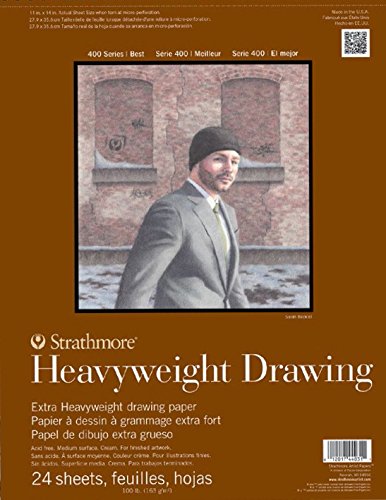
Erase ten times on thin paper and you’ll see why weight matters. At 100 lb, roughly 163 gsm, these cream-colored sheets shrug off repeated reworking, something the lighter 50 lb sketch pads simply can’t match. The medium tooth sits between slick and gritty, giving graphite enough grip for deep tonal range while still taking clean lines.
The warm cream tone flatters pencil shading in a way stark white doesn’t, softening contrast just slightly. For finished portfolio pieces rather than throwaway drills, this is the pad worth the step up in cost from the 300 Series options here.
Highlights
- 100 lb stock tolerates aggressive erasing, layering, and reworking without pilling or warping
- Medium tooth supports rich tonal depth, useful for rendered portraits and value studies
- Cream color reduces harsh glare and gives drawings a gallery-ready warmth
- Holds up well to light washes and marker accents beyond plain graphite
Softer Spots
- Heavier paper adds noticeable bulk, so the pad takes up more bag space than student-grade alternatives
- Cost per sheet runs higher, which stings during high-volume practice phases
Feature Snapshot
Right Fit For
Dedicated graphite artists building portfolio-quality pieces who need paper that forgives mistakes.
Another Choice May Suit
Students burning through sheets in weekly classes should lean on the cheaper Strathmore 300 Series Sketch Pad instead.
Not every session needs a giant board. This 13×17 option from Falling in Art covers standard sketch pads with room to clip, and its cutout handle plus featherlight build make it the one you actually toss in a backpack. The metal clip anchors the top of your sheet while two elastic bands hold the bottom edge flat.
The smooth face doubles as a mini workbench, steady enough for café sketching or lecture-hall note doodling. You give up the sprawl of the TX liteart board above, but you gain something that disappears into daily carry, and for many students that trade is obvious.
Plus Points
- Genuinely lightweight, comfortable to hold upright for extended sketching sessions
- Sturdy metal clip paired with dual rubber bands keeps sheets taut from two directions
- Smooth surface works as a stable backing for pens and pencils alike
- Cutout handle makes one-handed carrying between classes effortless
Small Caveats
- Too small for 18×24 sheets, so it’s a companion piece rather than a replacement for larger boards
- Rubber bands lose elasticity over months of use and are not user-replaceable in a standard size
Who Will Love This
High school and college students who sketch between classes and want zero carry burden.
Look Elsewhere When
Anyone working primarily on 18×24 paper should choose the TX liteart 23″x26″ Oversized Drawing Board for proper coverage.
Classrooms chew through paper, and bound pads slow everyone down. Reskid ships 25 loose 18×24 sheets designed to feed straight into easels, which is exactly what a busy elementary room or after-school program needs. Kids pull a sheet, clip it up, draw big, repeat, no spiral to fight and no torn edges mid-page.
The lightweight stock handles crayon, marker, and tempera-style projects without complaint, though it’s clearly built for volume rather than archival finish work. Made in the USA, and sized to match every large-format pad in this list, it slots neatly beside any board here.
Bright Spots
- Loose-sheet format feeds easels directly, ideal for group settings where speed matters
- 25 generous sheets per pack stretch further than a typical bound pad
- Lightweight paper is easy for small hands to manage and cheap to replace
- Standard 18×24 sizing matches common classroom easels and frames
Points To Note
- Thin stock wrinkles under wet media, so reserve it for dry and light-wash projects
- No binding means loose sheets need a folder or portfolio for storage
At A Glance
Whose Shelf It Belongs On
Teachers, daycare coordinators, and parents stocking an easel corner for energetic young artists.
Not Your Match When
Adults wanting archival-quality finished surfaces should pick the Strathmore 400 Series Heavyweight Drawing Pad instead.
A finished 18×24 drawing is fragile cargo, and rain or a crowded bus can undo weeks of work. JusArt’s foldable portfolio case solves that with a water-resistant shell, reinforced leather corners, and an adjustable shoulder strap that leaves both hands free. When empty, it folds flat, which is rare among rigid-sided cases.
The interior swallows pads, posters, and loose sheets up to 18×24 without curling them. Honest caveat: soft-sided cases protect against weather and scuffs, not crushing, so don’t stack luggage on top. As a companion to any pad in this roundup, it’s the piece that gets your work home intact.
Reasons To Buy
- Waterproof construction shields drawings from sudden weather on the commute
- Adjustable shoulder strap distributes weight comfortably on longer walks
- Leather-reinforced corners resist the fraying that kills cheaper portfolios
- Folds flat when empty, easy to stash in a locker or closet
Trade Offs
- Soft sides offer limited crush protection compared with hard-shell cases
- Zipper durability is a common weak point on fabric portfolios generally, so gentle handling pays off
Who It Suits Best
Students and working artists who transport large-format work on foot or public transit regularly.
Consider Something Else When
Studio-bound artists who rarely travel can skip this entirely and put the budget toward the Strathmore 400 Series Heavyweight Drawing Pad.
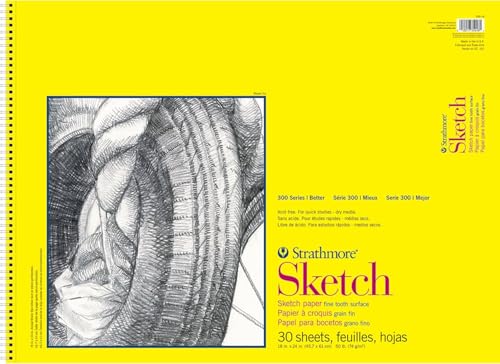
This is the workhorse most art teachers reach for, and the reason is simple economics. Thirty sheets of 50 lb sketch paper at 18×24 gives students a full term of quick studies and technique drills without anyone rationing pages. The fine-tooth surface takes clean pencil lines and erases acceptably for practice-grade work.
Side wire binding lets the pad fold back on itself, handy on cramped classroom desks. It won’t deliver the tonal depth of the 400 Series Heavyweight pad reviewed earlier, and it isn’t meant to. Think of it as the training ground where volume beats polish.
Standout Traits
- 30 full-size sheets offer serious practice volume at a student-friendly cost
- Fine tooth surface produces crisp, consistent pencil lines for observational drawing
- Side wire binding folds flat against desks and easels
- Lightweight paper keeps the pad easy to carry alongside textbooks
Areas To Watch
- 50 lb stock pills under heavy erasing, so finished pieces belong elsewhere
- Charcoal coverage can look patchy compared with dedicated laid-finish papers
Built With In Mind
Beginners and art-class students filling pages with gesture studies, contour drills, and quick compositional sketches.
Reach For A Different Pick When
Artists ready to render finished tonal work should graduate to the Strathmore 400 Series Heavyweight Drawing Pad.
Where the Strathmore 300 Sketch Pad offers 30 sheets, Canson’s XL pad pushes that to 50, and that difference compounds fast for daily sketchers. The fine grain texture stays smooth and even across the sheet, giving you predictable shading whether you’re using soft graphite, compressed charcoal, or pastel pencils.
At 50 lb it remains firmly in practice-paper territory, light enough to carry to a park or coffee shop without thought. Side wire binding folds back cleanly. For anyone splitting time between pencil detail and broader charcoal blocking, this pad covers both without forcing a choice.
Positives
- 50 sheets nearly double the runway of comparable student pads
- Fine grain texture delivers smooth, uniform shading across dry media
- Handles pencil, charcoal, and pastel equally well, reducing pad juggling
- Light 50 lb weight suits sketching away from a desk
Worth Noting
- Thin sheets show indentations from firm pen pressure on following pages
- Not acid-free rated for long-term archival display, per typical XL-series positioning
Core Details
The Right Fit
High-volume sketchers and mixed-media dabblers who want one dependable pad for everything dry.
Skip It When
Archival-minded artists should opt for the acid-free Strathmore 300 Series Charcoal Pad for lasting work.
One entry here breaks the 18×24 mold deliberately. Strathmore’s 400 Series Smooth pad comes in at 14×17, and its completely even surface is built for a different job: precise line work. Pen, ink, technical pencil, and marker all behave predictably on it, with excellent erasability when a contour needs correcting.
The medium-weight cream stock carries the same 400 Series pedigree as the heavyweight pad earlier in this list, just tuned for control rather than texture. Illustrators doing clean linework, comic layouts, or ink studies will find the smaller format easier to scan and frame, too. Texture lovers, look elsewhere.
Upsides
- Smooth surface yields razor-clean ink and pen lines without feathering surprises
- Excellent erasability keeps corrections invisible on finished linework
- Medium-weight stock feels substantial without adding bulk
- 14×17 format scans and frames conveniently for illustrators
Honest Caveats
- Offers no tooth, so charcoal and pastel coverage looks thin and uneven
- Smaller than true 18×24 formats, limiting full-arm gesture work
Who Should Grab It
Illustrators and ink artists prioritizing precision over expressive texture.
Where Another Pick Suits Better
Expressive charcoal workers belong with the Strathmore 300 Series Wire Bound Charcoal Pad and its grippy laid finish.
Gesture drawing is a numbers game, and newsprint exists so those numbers stay affordable. Fifty rough-surfaced 32 lb sheets give you a full term of two-minute poses without guilt, in the natural tan tone classic to figure studios everywhere. The rough texture grabs charcoal and sketch sticks nicely for such an economical paper.
Tape binding tears off cleanly between poses. Nobody frames newsprint, and it yellows with age, but that was never the point. Paired with any board in this list, it’s the cheapest way to log the hundreds of repetitions that actually build drawing skill.
Best Bits
- 50 sheets per pad make high-volume gesture practice genuinely economical
- Rough surface accepts charcoal and sketch sticks better than expected at this grade
- Warm natural tone mimics traditional figure-studio paper
- Tape binding removes sheets cleanly for pinning up critiques
Small Caveats
- Newsprint yellows and becomes brittle over years, unsuitable for keeping finished work
- 32 lb weight tears easily under vigorous erasing
Details At A Glance
Perfect Match For
Figure-drawing students and teachers running timed pose sessions who need bulk paper on a budget.
Another Choice May Suit
Artists preserving final pieces should spend on the Strathmore 300 Series Charcoal Pad’s acid-free laid sheets.
What Matters Most Before Choosing 18×24 Drawing Pads
Match The Surface To Your Medium
Tooth, the microscopic texture of a sheet, decides how much pigment your paper holds. Smooth stock favors pen and fine pencil, while laid and rough finishes grip charcoal and pastel. Buying a smooth pad for soft charcoal is the fastest way to end up frustrated, since the medium simply slides off.
Weight Predicts Durability
Paper weight, measured in pounds per ream, signals how much abuse a sheet survives. Student pads run 32 to 50 lb, fine for single-pass sketching, while 64 to 100 lb stock tolerates erasing, blending, and layered rendering. Heavy practice users should accept thinner paper; finish-oriented artists shouldn’t.
Boards And Carriers Complete The Setup
An 18×24 pad is only half the equation. A rigid backing board with clips turns any lap, bench, or easel into a workstation, and a protective portfolio keeps finished sheets flat and dry on the move. Budgeting for both prevents the crumpled-drawing problem before it starts.
Volume Versus Quality Per Sheet
Count sheets honestly against your habit. Daily drill work burns through 50-sheet newsprint faster than a 24-sheet premium pad, and paying premium rates for throwaway warm-ups wastes money. Split your spending: cheap bulk for practice, heavyweight stock for pieces worth keeping.
Key Considerations Across These Picks
Traps First Timers Fall Into
The most common slip is buying one premium pad for everything, then hesitating to use it because each sheet feels precious. Skill grows through repetition, so pair an inexpensive practice pad with a small stash of quality stock. Another frequent miss: ignoring tooth entirely and wondering why charcoal looks pale.
What Separates Premium From Basic
Higher-tier pads charge for fiber quality, consistency, and longevity. Acid-free construction, heavier basis weights, and uniform surfaces cost more to produce, and they show up as cleaner erasing, truer tones, and artwork that survives decades. Pay the upgrade price only for work you intend to keep.
Frequently Asked Questions
Are 18×24 pads suitable for beginners?
Yes, and many instructors prefer them because the large format forces whole-arm movement early. Beginners should pair a big pad with an inexpensive board for support.
Can I use markers on these drawing pads?
Light marker work works on heavier stocks like the 100 lb Strathmore sheets. Thin newsprint and 50 lb sketch paper tend to bleed and wrinkle under wet media.
Why does paper tooth matter for charcoal?
Tooth describes the surface texture that physically catches pigment particles. Without it, soft media sits loosely on top and smears or falls away.
Do I need a drawing board with my pad?
A rigid board isn’t mandatory at a desk, but it transforms field sketching and couch sessions. Clip-on boards also keep sheets from shifting during bold strokes.
How should I store finished 18×24 drawings?
Keep them flat in a portfolio case, interleaved with clean sheets, away from direct sunlight. Rolled storage works short-term but risks creasing heavier papers.
Closing Thoughts
Big paper rewards big commitment, and the right setup removes every excuse between you and the page. Start with a budget-friendly pad for daily reps, add a board if you sketch anywhere beyond a desk, and save the heavyweight stock for drawings you’re proud of. Your future portfolio will thank you for the repetition today.