
A 24×36 canvas is where painting stops feeling like a hobby sketch and starts feeling like a statement. Whether you’re filling a living room wall, working through a series of abstracts, or pouring fluid acrylics at scale, the surface under your brush matters more than most beginners expect. This roundup covers ten large-format options, from classic stretched cotton to rigid birch panels, so you can match the surface to the way you actually paint.
The Shortlist At A Glance

KINGART Stretched White Canvas Set 24×36 Inch 2-Pack

milo Stretched Artist Canvas 24×36 inch 4 Pack

milo Stretched Artist Canvas 24×36 inch 2 Pack

ESRICH Stretched Canvas for Painting 24×36 Inch 2 Pack

ARTEZA Stretched Canvas 24 x 36 Inches Pack of 2
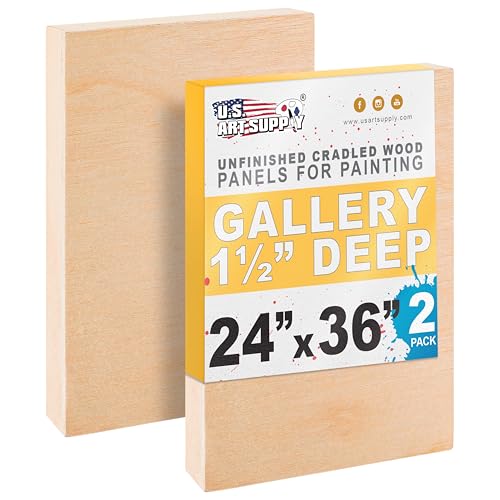
U.S. Art Supply 24 x 36 Unfinished Cradled Wood Panels

Pre Stretched Canvases for Painting 24×36 2 Pack

milo Pro Stretched Artist Canvas 24×36 inch Pack of 4

Falling in Art 2 Pack 24×36 Unfinished Birch Wood Panels Kit

Aodaer 4 Pack Wood Panels 24 x 36 Inch
More Details On Our Top Picks
This two-pack hits the sweet spot for painters who want a classic stretched canvas without paying gallery prices. The 100% cotton fabric carries a medium grain, which gives acrylics something to grip while staying smooth enough for blended oil passages. Triple gesso priming means you can unbox and start laying color the same afternoon.
The 5/8-inch pine bars keep things slim, so finished pieces sit close to the wall and frame easily. Back-stapling tucks the fasteners out of sight along the rear edge, which keeps the sides clean if you paint them instead of framing.
Strong Points
- Triple gesso priming saves you prep time and primer cost
- Medium cotton tooth holds both thin washes and thick impasto
- Back-stapled edges look tidy whether framed or left bare
- Two matching surfaces suit diptychs or a practice-plus-final workflow
Things To Consider
- The shallow 5/8-inch profile offers less wrap depth than gallery canvases
- Large formats can arrive with slight corner pressure, so inspect on delivery
Key Specs
Who It Suits Best
Hobbyists and intermediate painters working in acrylic or oil who want dependable, ready-to-use surfaces in pairs.
Where Another Pick Suits Better
Artists who prefer a deeper, frameless gallery look will get more from the milo Stretched Artist Canvas 24×36 inch 4 Pack with its 1.5-inch profile.
Four canvases at once changes how you paint. You stop rationing surfaces and start experimenting, which is exactly what this milo pack encourages. Each board uses heavier 11 oz cotton stretched over a 1.5-inch pine frame, so the finished piece reads as a substantial object even before framing.
That deep profile also means no frame is required at all. Paint the edges, hang it directly, and the canvas gains a shadow-box presence that flat panels can’t match. Compared to the slimmer KINGART set above, this is the choice for painters who want their work to feel finished straight off the easel.
What We Like
- Four-pack pricing makes large-format practice affordable
- 11 oz cotton resists sagging better than lightweight weaves at this size
- 1.5-inch depth hangs beautifully without an outer frame
- Triple priming supports acrylics, oils, and wet media alike
Worth Noting
- Deep-profile canvases take up real storage room between sessions
- Some owners report checking tension after shipping and re-tightening keys
Made For
Artists building a body of work at the same size, or teachers stocking a classroom with consistent surfaces.
Consider Something Else When
Tight budgets or first-time experiments are better served by the two-pack version of the same milo canvas below.
Same canvas as the four-pack above, half the commitment. This two-count version keeps everything that makes the milo format appealing: 11 oz cotton, triple gesso priming, and that deep 1.5-inch pine profile that turns a painting into a piece of furniture for your wall.
In our view, this is the smarter entry point for anyone unsure how often they’ll paint at this scale. You still get the gallery-depth look and the durable heavy weave, without finding storage space for four blank 24×36 boards.
Highlights
- Identical build quality to the larger milo pack at a lower entry point
- Heavy 11 oz weave stays taut on wide frames
- Gallery depth displays well bare or framed
Trade Offs
- Per-canvas cost runs higher than the four-pack for serial painters
- Only two surfaces, so mistakes mean waiting on a reorder
Right Fit For
Weekend painters and gift-makers who want one or two polished, frameless wall pieces rather than a studio stockpile.
Not Your Match When
Classroom or workshop settings burn through surfaces faster than two at a time; step up to the milo four-pack instead.
Group paint nights need forgiving surfaces, and that’s where this ESRICH pair earns its keep. The acid-free cotton comes pre-primed and accepts nearly anything guests will bring: acrylics, tempera, gouache, even watercolor washes laid down loosely. Nobody at a paint party wants to fuss with sizing or primer, and here they won’t have to.
The standard profile keeps these light enough for one person to carry and cheap enough to hand out without anxiety. Against the pricier milo picks, you trade some weave heft for accessibility, which is usually the right trade in a social setting.
Upsides
- Handles tempera, gouache, watercolor, oil, and acrylic without complaint
- Acid-free priming protects finished pieces from yellowing
- Lightweight and manageable for group events and kids’ sessions
Minor Gripes
- Thinner cotton may flex noticeably under heavy palette-knife work
- Finish level suits casual use more than fine-art presentation
Who Will Love This
Hosts of paint-and-sip nights, art teachers, and families who want big blank surfaces nobody’s afraid to ruin.
A Better Fit Elsewhere
Precision oil painters chasing a flawlessly smooth ground should look at the JenJen Tradition five-times-primed canvases further down this list.
ARTEZA has built its name on consistent student-to-intermediate supplies, and these large canvases carry that reputation. Each one arrives pre-primed white over wooden stretcher bars, ready for acrylic, oil, gouache, or tempera the moment you clear desk space. Two identical surfaces make planning a matched pair, or keeping a backup mid-project, refreshingly simple.
Compared with the ESRICH pair, the appeal here is brand-level predictability: owners commonly report uniform priming and reliable tension across orders. That consistency matters once you’re selling or gifting work and can’t afford surprises.
Bright Spots
- Pre-primed white ground skips hours of preparation
- Wooden bar construction adds depth and hangs securely
- Matching pair suits diptychs and series planning
- Broad paint compatibility covers most studio setups
Points To Note
- Profile depth is moderate, so very thick pours may need extra support
- Large canvases ship individually boxed; check corners on arrival
At A Glance
Perfect Match For
Intermediate artists who want predictable quality from a familiar supply brand for ongoing personal work.
Look Elsewhere When
Pour artists needing a completely rigid substrate will be happier with the U.S. Art Supply cradled panels coming next.
Fluid art changes the rules. Poured acrylic weighs a lot wet, and fabric flexes under that load, which is why serious pour artists drift toward cradled wood panels like these. A cradle is simply a solid panel glued to a wooden frame; the result is a surface that cannot stretch, flex, or bow the way canvas does.
These arrive unfinished, with a smooth birch face awaiting your own gesso or primer coat. That extra step buys you total control over absorbency, which matters for resin, encaustic-style layering, and glass-smooth pours. The 1.5-inch gallery depth means the finished slab hangs proudly without a frame.
Reasons To Buy
- Rigid birch face eliminates the sag risk of large stretched canvas
- You control the priming, ideal for pours and resin work
- Gallery-depth cradle displays beautifully with zero framing
- Two-panel pack supports larger project runs
Softer Spots
- Unprimed surface requires a gesso session before any paint touches it
- Heavier than canvas of the same size, so plan wall hardware accordingly
Quick Facts
Built With In Mind
Acrylic pour artists, resin creators, and mixed-media makers who need absolute rigidity at large scale.
Swap It Out When
Traditional brush painters who want a paint-ready fabric tooth will find the KINGART set far less fussy.
Most budget canvases get three coats of gesso. These get five, coated in acid-free acrylic titanium white, and the difference shows up the moment you drag a brush across the surface. Five layers fill the weave almost completely, leaving a dense, even ground with none of the tiny pinholes that let oil paint sink unevenly.
The 9.9 oz primed cotton sits between student-weight fabric and heavyweight duck, giving enough body for detailed oil work without the cost of professional-grade linen. For portrait and realism painters, that smoothness is worth the modest premium over the ESRICH pair.
Plus Points
- Five gesso coats produce an unusually smooth, hole-free ground
- Acid-free titanium priming protects colors long term
- Midweight cotton balances durability and price
- Suits oils, acrylics, gouache, and tempera equally
Small Caveats
- Ultra-smooth finish offers less grip for heavy impasto textures
- Two-pack quantity limits experimentation runs
Whose Shelf It Belongs On
Oil painters and detail-oriented realists who care about surface quality more than bulk quantity.
Another Choice May Suit
Artists wanting more tooth for textured strokes will prefer the medium-grain KINGART canvases at the top of this list.
Think of this as the milo gallery canvas reworked for volume studios. You still get the same 11 oz triple-primed cotton, but the pine frame drops to a 3/4-inch studio profile, which stacks flatter, ships cheaper, and stores four-deep in a closet without eating a shelf.
That slimmer depth does change presentation. Finished pieces read closer to the wall and generally want a frame for formal display, unlike the 1.5-inch versions earlier in this list. Production painters producing commissioned work in batches tend to accept that trade gladly.
Standout Traits
- Four canvases keep a production pipeline moving
- 11 oz heavy-duty weave handles large-format tension well
- Slim 3/4-inch profile simplifies stacking and storage
- Triple priming supports multiple wet media
Areas To Watch
- Shallow profile usually needs framing for polished display
- Less visual weight than gallery-depth alternatives
Feature Snapshot
The Right Fit
Working artists completing commissions or series who prioritize volume and storage efficiency over frameless display.
Reach For A Different Pick When
Display-first painters should choose the deeper milo Stretched Artist Canvas 24×36 inch 2 Pack instead.
Not every 24×36 surface ends up covered in paint. This Falling in Art kit leans into that reality with birch-faced cradle panels whose recessed backs double as trays for brushes, sewing notions, or craft supplies. One purchase, two plausible lives.
The 1-inch depth sits between the slim milo Pro profile and the chunkier U.S. Art Supply cradle, giving enough substance to hang confidently while staying manageable. Like all raw panels here, they need priming before paint, so factor in a gesso afternoon before your first stroke.
Best Bits
- Birch face takes stain, paint, pyrography, and decoupage gracefully
- Cradled back works as storage or shadow-box display
- Rigid construction suits collage and heavy mixed media
Honest Caveats
- Unfinished wood demands priming before most media
- One-inch depth offers less dramatic wall presence than 1.5-inch cradles
Who Should Grab It
Crafters and mixed-media artists who value versatility, including those using panels for home decor projects beyond fine art.
Where A Sibling Pick Shines
Dedicated pour painters wanting maximum depth should compare the U.S. Art Supply 1.5-inch cradled panels reviewed earlier.
Four unfinished wood panels at roughly 0.8 inches thick round out this list for the DIY crowd. These aren’t cradled canvases with gallery pretensions; they’re honest craft boards sized for pouring practice, decoupage furniture accents, signage, and school projects where a rigid, sandable surface beats fabric every time.
Because they’re raw wood, you’ll sand lightly and prime before painting, a small chore that pays off in adhesion. Compared with the Falling in Art kit, you gain two extra panels and lose the recessed-back storage trick, a fair swap depending on your priorities.
Positives
- Four-panel count suits classrooms and repeated DIY runs
- Flat, sandable faces accept primer, stain, and paint cleanly
- 0.8-inch thickness feels sturdy without excess weight
Room For Improvement
- No cradle backing, so edges show when hung flush
- Requires full prep work before any medium application
Core Details
Best Suited To
DIY decorators, teachers, and hobbyists running repeated craft projects who need affordable rigid blanks in quantity.
Skip It When
Fine artists wanting a refined cradled presentation will prefer the Falling in Art birch panels with their cleaner edges.
What Matters Most Before Choosing 24 X 36 Canvas
Surface Type First
Stretched cotton remains the default for brush painters because it flexes slightly under strokes and frames conventionally. Rigid wood panels win for acrylic pouring, resin, and heavy collage since wet media loads can bow fabric over time. Decide your primary medium before anything else, because it eliminates half this list immediately.
Priming And Prep Time
Gesso is the white acrylic ground that seals canvas fibers. Triple-primed surfaces let you paint the day your order arrives, while unfinished birch panels demand a sanding and priming session first. Busy painters should lean pre-primed; artists chasing specific absorbency will welcome the blank slate.
Profile Depth And Display Plans
Shallow profiles around 5/8 to 3/4 inch sit close to walls and frame easily, while 1.5-inch gallery depths hang beautifully bare. Measure your wall space honestly, since a 24×36 piece plus frame commands serious visual territory in smaller rooms.
Quantity Versus Commitment
Multi-packs lower per-unit cost but assume you’ll actually use every surface. Beginners benefit from starting with a two-pack, then scaling up once a size and medium feel settled.
Key Considerations Across These Picks
Traps First Timers Fall Into
The most common slip is buying deep gallery canvases for paintings destined for traditional frames, wasting money on hidden depth. The second is skipping inspection on arrival; large-format surfaces occasionally arrive with dinged corners, and reporting damage promptly keeps replacements simple.
What Separates Premium From Basic
Higher-tier canvases spend their extra cost on heavier weaves, additional gesso coats, and kiln-dried stretcher bars that resist warping. Casual painters rarely notice; anyone selling work or using heavy impasto will feel the difference within a few sessions.
Frequently Asked Questions
Is a 24×36 canvas too big for beginners?
Not inherently, though it consumes more paint per session. Many learners find the scale freeing since small mistakes matter less across a broad composition.
Do these canvases need priming before painting?
Pre-primed options like the KINGART and milo sets are ready immediately. Unfinished wood panels require sanding and a gesso coat first.
Can I hang a 24×36 canvas without a frame?
Yes, especially gallery-depth profiles around 1.5 inches, which look intentional bare. Slimmer profiles generally present better with framing.
Which surface works best for acrylic pouring?
Rigid cradled wood panels such as the U.S. Art Supply option resist the flexing and sagging that poured media can cause on fabric.
How should I store unused large canvases?
Keep them upright, face to face, in a dry room away from direct heat. Avoid stacking heavy objects on top to protect the stretcher bars.
Wrap Up
Choosing among these ten comes down to one question: how do you paint? Brush-driven acrylic and oil work thrives on the KINGART or milo stretched sets, pour artists belong with the U.S. Art Supply panels, and craft projects fit the Aodaer boards. Match the surface to your medium, buy the smallest sensible quantity first, and let your next large canvas earn its wall.